Bur Oak Tree: The Mighty Native Shade Oak With the Biggest Acorns
The bur oak tree (Quercus macrocarpa), also spelled burr oak, is a native white oak that grows 70 to 80 feet tall, with thick corky bark and the largest acorns of any native oak. Bur oak is hardy in USDA zones 3–8 and grows best in full sun. TN Nursery ships bare-root bur oak trees Buy 1 Get 1 Free.
Bur oak is a member of the beech family, Fagaceae, and belongs to the white oak group. The species name macrocarpa means "large fruit," and gardeners also call the tree mossycup oak and mossy-overcup oak for the fringed cap that covers each acorn. The bur oak grows wild from the Canadian prairies and New Brunswick south to Texas and Tennessee, and it is the signature tree of the Midwest oak savanna.
-
Botanical name: Quercus macrocarpa, beech family (Fagaceae), white oak group
-
Also called: burr oak, mossycup oak, mossy-overcup oak
-
Mature size: 70–80 feet tall and 60–80 feet wide
-
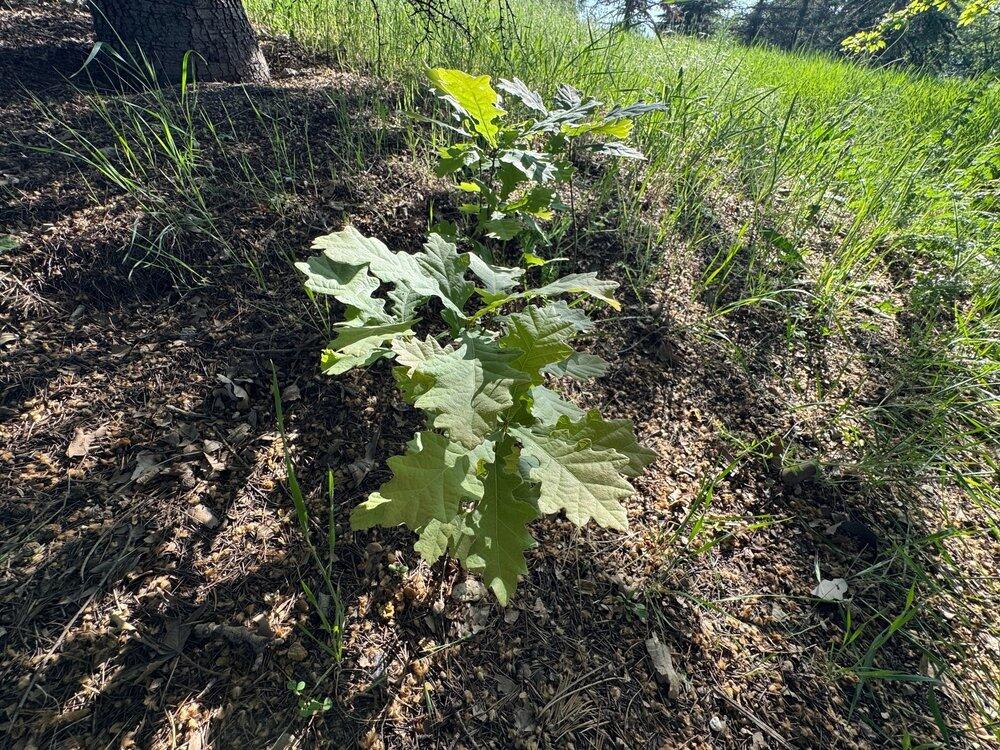
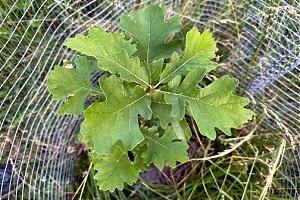
Leaves: 6–12 inches long, fiddle-shaped, with deep rounded lobes near the base
-
Acorns: up to 1½ inches long, set in a deep cap with a mossy, fringed edge
-
Bark and twigs: thick, deeply ridged gray bark; young twigs often wear corky wings
-
What ships: bare-root trees in 1–2 ft, 2–3 ft and 3–4 ft sizes, as Buy 1 Get 1 Free, Buy 3 Get 2 Free or 25-tree wholesale bundles
How Fast Does a Bur Oak Tree Grow?
A bur oak tree grows at a moderate rate of about 1 foot per year once established, after first sending a deep taproot down into the soil. A young bur oak can push its taproot 4 feet deep in the first season while the top settles in.
That deep root is what makes a bur oak so drought hardy for the rest of its long life. Typical bur oak tree growth in a sunny, open site:
| Age after planting |
Typical height |
What to expect |
| Year 1 |
planting size (1–4 ft) |
deep taproot forms |
| 5 years |
about 6–9 ft |
steady yearly top growth |
| 10 years |
about 12–16 ft |
broad crown and corky twigs |
| 30+ years |
35 ft and taller |
first acorn crops and wide shade |
What Does a Bur Oak Acorn and Leaf Look Like?
A bur oak acorn is up to 1½ inches long, the largest acorn of any oak native to North America, and sits in a deep cap edged with a shaggy, moss-like fringe.
A bur oak leaf is 6 to 12 inches long, with deep rounded lobes near the base and a broad, wavy-edged tip, so the leaf looks a bit like a violin. Bur oak fall color is yellow to golden brown. Bur oak acorns ripen in a single season and drop in September and October, with heavy crops every few years.
Bur Oak vs. White Oak: What Is the Difference?
Bur oak and white oak are both white-group oaks with rounded leaf lobes and acorns that ripen in one season. A bur oak has much larger, fringe-capped acorns, larger fiddle-shaped leaves and corky twigs, and a bur oak takes dry, alkaline and clay soils in stride.
For a mixed oak grove, plant a bur oak with a white oak tree on deep, well-drained ground and a pin oak in the lower, damper corner.
Where Should You Plant a Bur Oak Tree?
Plant a bur oak tree in full sun, with at least 6 hours of direct light a day, in well-drained soil from sand to heavy clay, with a pH of 5.0 to 8.0. Bur oak thrives in open lawns, pastures, parks and farm lanes with room to spread.
Give a bur oak plenty of space: plant it at least 50 feet from buildings, drives and power lines, and space trees about 50 feet apart along a lane. Choose the spot carefully, because the deep taproot makes a bur oak a tree to plant once and enjoy for generations.
What Grows Well With a Bur Oak Tree?
Prairie and savanna natives grow well with a bur oak tree. A hickory tree shares the bur oak's long life and nut crops, and an American hazelnut fills the edge with nuts for wildlife. Toward the sunny drip line, black-eyed Susan and butterfly milkweed bring the color of the old oak savanna. Planting a wildlife tract, reforestation project or windbreak by the hundred? Our bur oak seedlings are priced for bulk planting. Browse more choices in our nut trees collection.
How Do You Plant a Bare-Root Bur Oak Tree?
Plant a bare-root bur oak while the tree is dormant, from late fall through early spring, in a narrow, deep hole that lets the taproot go straight down. Set the root collar level with the soil and water deeply.
At our Altamont, Tennessee nursery, we dig each bur oak while dormant and pack the roots in moist material, so the tree arrives leafless, dormant and ready to plant.
- Soak the roots in a bucket of water for 2 to 4 hours.
- Dig a hole deep enough for the full taproot and twice as wide as the side roots.
- Lower the taproot straight down and set the root collar level with the ground.
- Backfill with the native soil, firming gently, and water slowly until the soil is soaked.
- Spread 2 to 3 inches of mulch in a 3-foot ring and keep grass back from the trunk for the first few years.
Planting & Growing Information
Botanical Name: Quercus macrocarpa
Plant Family: Fagaceae (beech family), white oak group
Ships: Bare root, 1–2 ft, 2–3 ft and 3–4 ft
Planting Zone: 3–8
Height at Maturity: 70–80 feet
Spread: 60–80 feet
Growth Rate: Moderate, about 1 foot per year once established
Sun or Shade: Full sun, 6+ hours daily
Water Needs: Low to moderate; very drought tolerant once established
Soil: Well-drained sand, loam or clay, pH 5.0–8.0, including alkaline soil
Bloom Season: April–May (catkins)
Fall Color: Yellow to golden brown
Native Range: Central and eastern North America, from the Canadian prairies to Texas
Care: Water deeply once a week the first summer and keep grass back from the trunk. Prune only dead or broken limbs in winter.
Plant Attributes: Drought-hardy shade oak, largest native acorns, thick corky bark, lives 200–300 years
Bur Oak Tree FAQ
Do deer eat bur oak acorns?
Yes. White-tailed deer, wild turkeys, squirrels, wood ducks and black bears all eat bur oak acorns, and the bur oak supports hundreds of kinds of native caterpillars that feed nesting songbirds.
Are bur oak acorns edible?
Yes. Bur oak acorns are edible after the nutmeats are soaked in water to leach out the tannins, a traditional preparation for acorn flour.
Is burr oak the same as bur oak?
Yes. Burr oak and bur oak are two spellings of the same tree, Quercus macrocarpa, which is also called mossycup oak.
How long does a bur oak tree live?
A bur oak tree commonly lives 200 to 300 years, and some bur oaks live more than 400 years.
What zones do bur oak trees grow in?
Bur oak trees grow in USDA hardiness zones 3 through 8.
Grown and Shipped by TN Nursery
TN Nursery has grown hardy native plants since 1959, more than 65 years of experience, and has supplied plants to major U.S. landmarks like the Washington Monument and Arlington National Cemetery. At our Altamont, Tennessee nursery, we grow, dig and ship bur oak trees to yards, farms and parks across the country. Want to learn more first? Read Top Burr Oak Seedlings for Wildlife Yards, Acorn Tree Guide: Which Oaks to Plant for Wildlife and How Long Do Oak Trees Live? on our garden blog, or browse our shade trees.