
The short answer
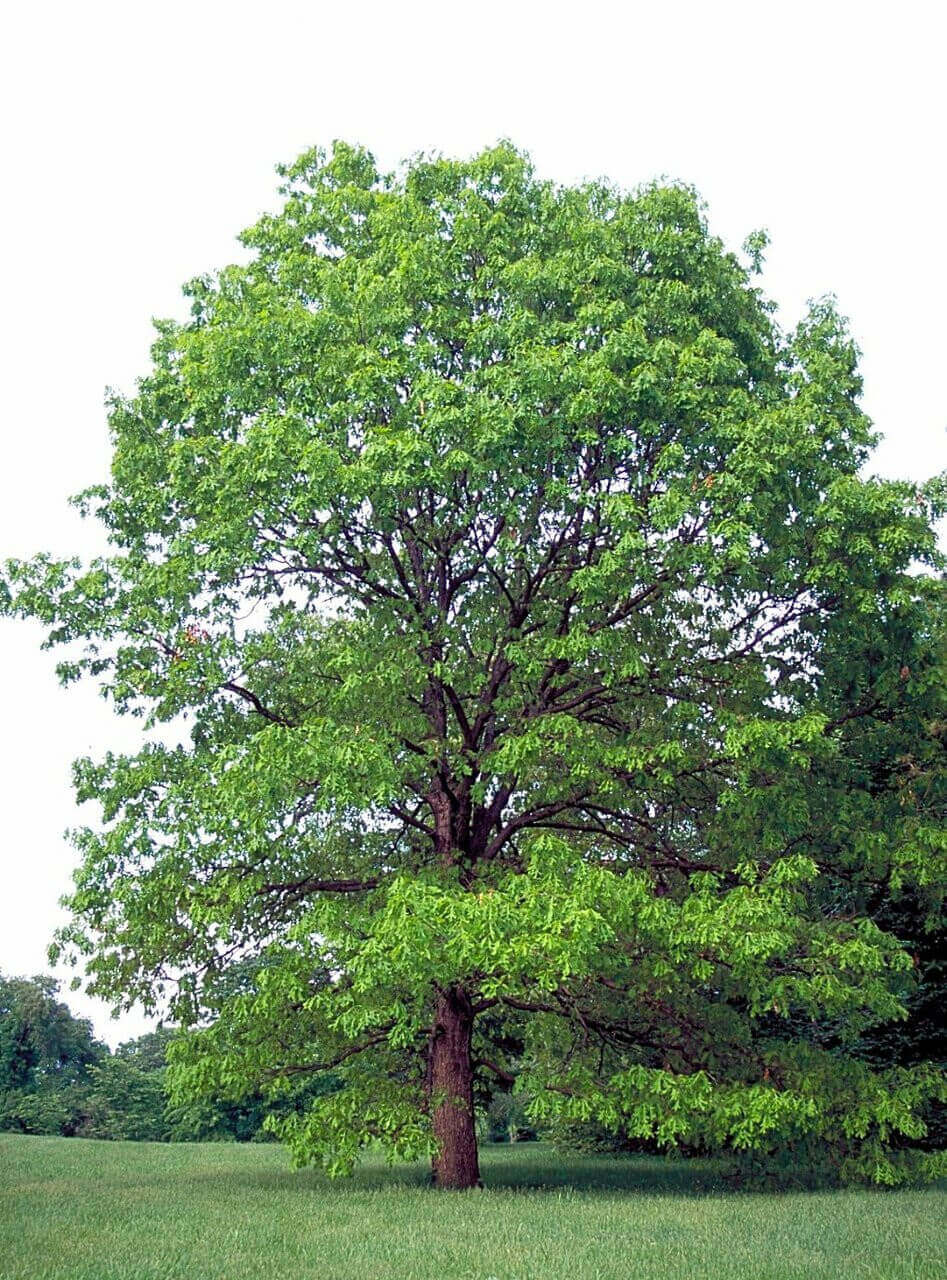
An acorn tree is an oak. Every oak (genus Quercus) bears acorns, and the oaks split into two groups: white oaks, whose acorns ripen in one season, and red oaks, whose acorns take two. Plant one of each and wildlife gets acorns early in fall and again through winter. A seedling usually needs about two decades to bear.
When people search for an acorn tree, they are looking for an oak. There is no separate tree by that name: acorns are the nuts of oaks, and each species makes its own size and shape of acorn in its own woody cap. That makes the real question which oak suits your yard. Oaks are among the most valuable native trees you can plant for wildlife. Deer, wild turkeys, squirrels and many birds eat the acorns, and the leaves feed caterpillars that songbirds raise their young on. An oak also gives deep shade, strong wood and fall color for generations. This guide walks through the two oak groups, how to match a species to your ground, and how to plant bare-root seedlings so they settle in well. Every oak named here is one we offer, and you can compare them in our oak seedlings collection.
How to plant acorn trees
1. Choose the white oak or red oak group
Every acorn tree belongs to one of two groups. White oaks, such as white oak and bur oak, have rounded leaf lobes and acorns that ripen in a single season. Red oaks, such as northern red oak, pin oak and black oak, have bristle-tipped lobes, and their acorns take two growing seasons to mature, as Iowa State University Extension explains. Planting one of each spreads food from early fall into winter.
Tip: White oak acorns are usually eaten first; red oak acorns often last into winter.
2. Match the oak to your ground
Oaks live for generations, so the right spot matters more than fast growth. Most acorn trees thrive in full sun and deep, well-drained soil. Bur oak belongs to the white oak group, is known for its hardiness and grows a wide canopy that often spreads more than it climbs. For damp or heavy ground, see the wet-soil oaks below.
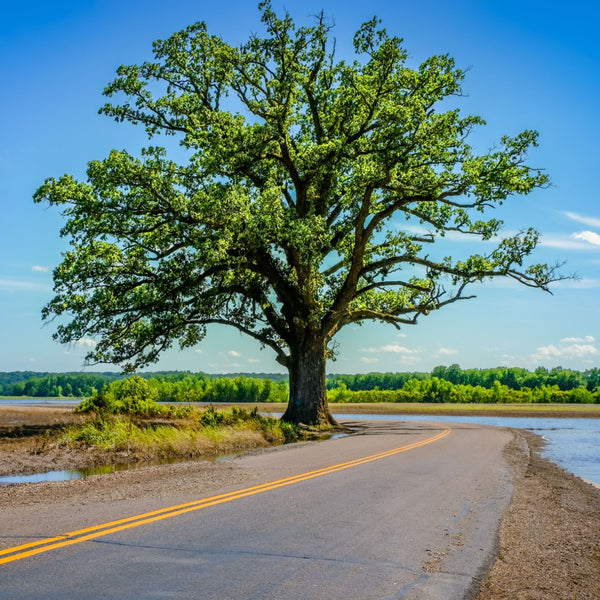
3. Plant bare-root seedlings while they are dormant
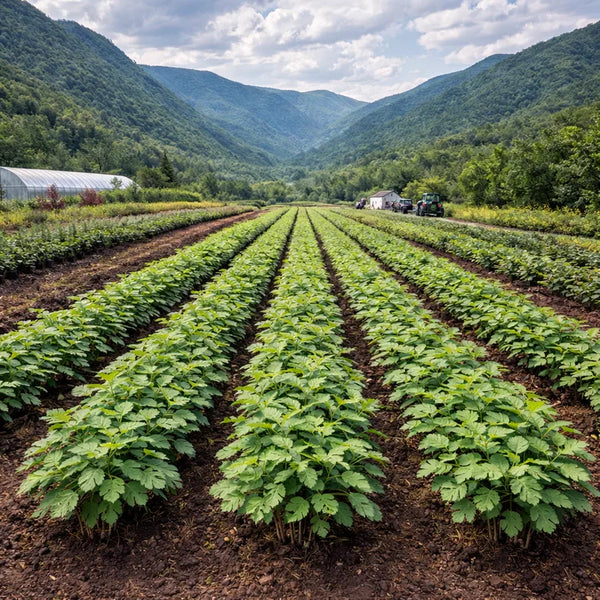
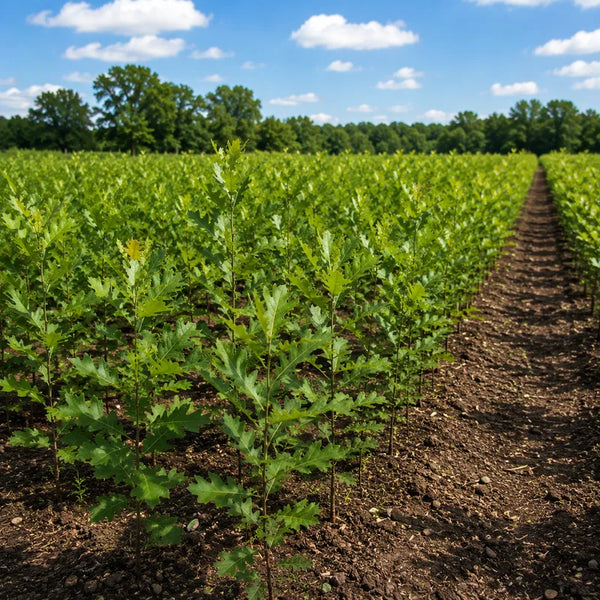
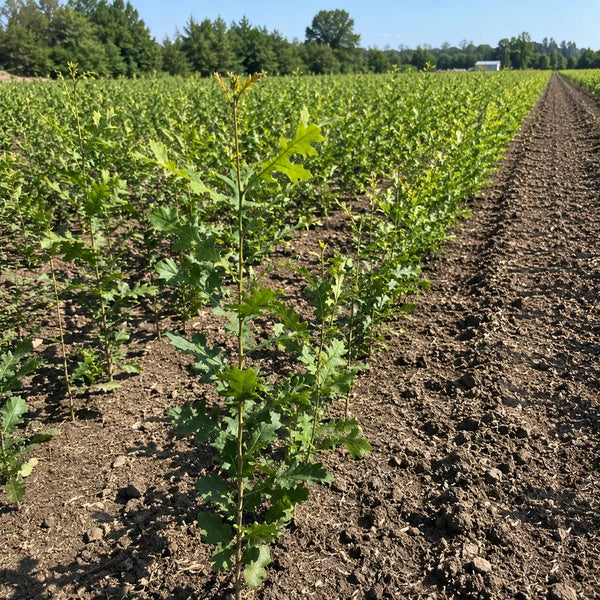
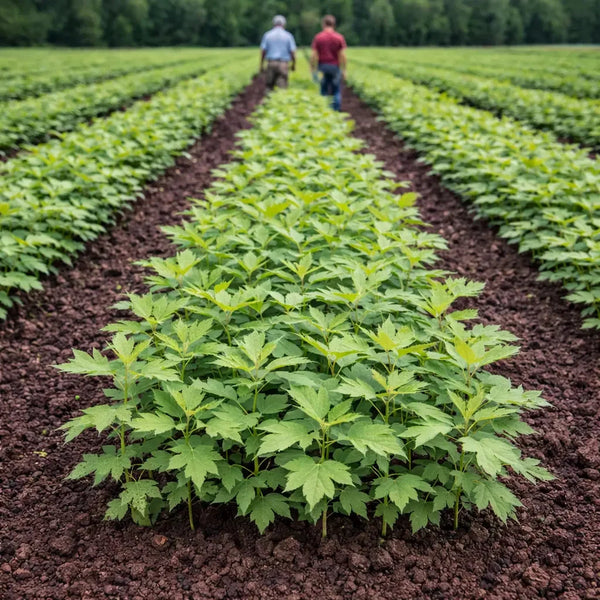
Plant while the seedlings are dormant, in late fall or early spring. Clear weeds and old growth from each spot and loosen the soil so new roots can spread. Dig a hole wide enough to fan the roots out without bending them. Set the seedling at the same depth it grew before, firm the soil around the roots and water well to settle it.
Tip: Keep bare roots damp and shaded until the moment they go in the ground.
4. Water, space and protect young oaks
Water deeply through the first weeks after planting to ease transplant shock, then during dry spells for the first couple of seasons. A ring of mulch, kept a few inches from the stem, holds moisture and keeps grass back. Give each oak plenty of room, since most grow into large, wide-crowned trees. Tree tubes or wire cages help where deer browse.
5. Wait for the first acorns
An oak is a long game. A seedling commonly takes many years, often around two decades, before it bears its first acorns, and heavy crops come later as the tree matures. Even then, yields swing from year to year, with heavy crops followed by lighter years. Planting several oaks of both groups evens out the supply for wildlife.
Acorn trees for wet or heavy soil
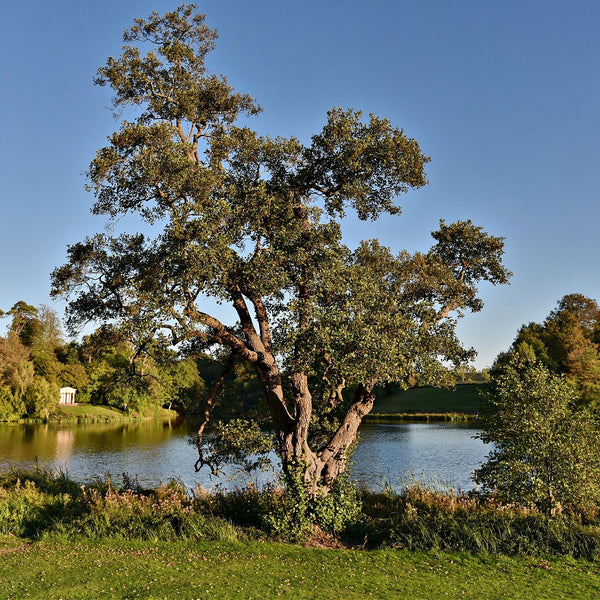
Low spots and ground that stays damp after rain call for oaks that love those conditions. Pin oak is one of the faster-growing native oaks, adapts well to many sites and turns brilliant scarlet red in fall, with real value for wildlife. It belongs to the red oak group, so its acorns take two seasons to ripen. Swamp white oak brings a white oak to the same planting and grows into a large tree with a broad canopy. Plant the pair together and a damp corner of your land feeds wildlife across fall and winter.
Care and keeping
For the first two summers, check the soil around each young oak weekly and water deeply when the top few inches feel dry. Keep a wide circle free of grass and weeds, refresh the mulch each spring, and hold off on pruning until the tree is well established.
Frequently asked questions
What type of tree produces acorns?
Oak trees produce acorns. Every species in the oak genus, Quercus, bears them, from white oak and bur oak to red oak, pin oak and black oak. Each species has its own acorn size, shape and cap, which is one of the easiest ways to tell oaks apart in fall.
What animals eat acorns?
Deer, wild turkeys, squirrels, raccoons, ducks and many songbirds eat acorns, and they are an energy-rich food heading into winter. White oak acorns are lower in tannin and are often eaten first in fall, while red oak acorns tend to keep on the ground and feed wildlife later in the season.
How long does it take for an oak tree to produce acorns?
Most oaks start bearing acorns at around 20 years old, sometimes later, and their biggest crops come once the tree is mature. On the tree itself, white oak acorns ripen in one season and red oak acorns take two, so a red oak's crop was set the year before.