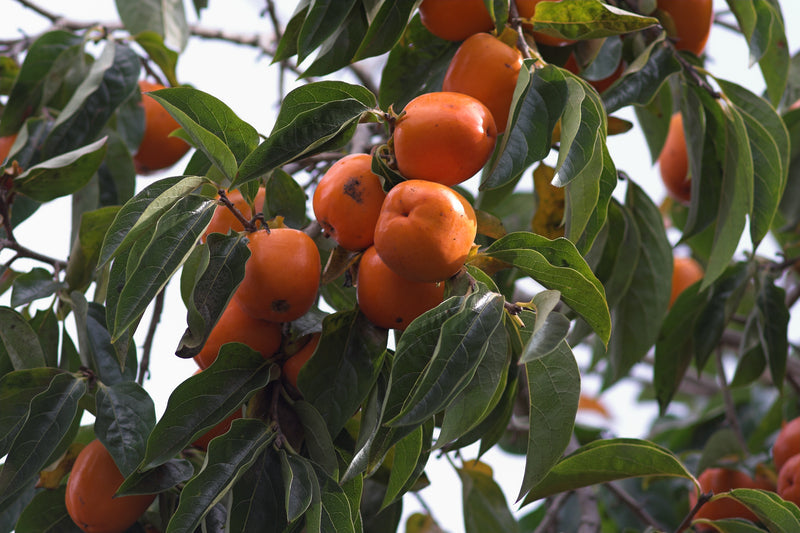
Wildlife food plot plants by season: plant cool-season forages such as clovers, oats, wheat, cereal rye and turnips in late summer to early fall; plant warm-season forages such as cowpeas, soybeans and grain sorghum in late spring; and add fruit and nut trees like pawpaw, persimmon, oaks and hickories so deer, turkey and songbirds have food from June through winter.
What should you plant in a wildlife food plot each season?
Plant cool-season forages in August through October, warm-season forages in April through June, and native warm-season grasses from mid-December into April. Fruit and nut trees go in during the dormant season and feed wildlife for decades once they bear.
University of Missouri Extension recommends spreading food plots over 2 to 5 percent of a property and combining warm- and cool-season forages, because each group feeds animals at a different time of year. The same guide points to two nutritional stress periods for deer: late summer to early fall, and mid- to late winter. A good plan covers both.
Season-by-season summary
| Season | What to plant now | What is feeding wildlife now |
|---|---|---|
| Late winter to spring (Dec–Apr) | Native warm-season grasses such as big bluestem, indiangrass and switchgrass (Arkansas window Dec 15–Apr 10); bare-root trees and shrubs while dormant | Standing cool-season plots of wheat, oats, rye and clover; red oak acorns that persist into late winter |
| Late spring (Apr–Jun) | Corn (Apr–Jun); cowpeas, soybeans and grain sorghum (May–Jun) | Red mulberry (May–Jun), serviceberry (Jun), clover regrowth |
| Summer (Jun–Aug) | Turnips, rape and kale begin in August | Blackberry and blueberry (Jun–Jul), American plum (Aug), warm-season forages |
| Early fall (Aug–Oct) | Most cool-season forages: clovers, oats, wheat, cereal rye, brassicas | Elderberry, dogwoods, pawpaw, persimmon, hazelnut, chestnut, oaks and hickories |
| Late fall to winter (Oct–Jan) | Austrian winter peas (Oct 1–Nov 1 in Arkansas); dormant-season tree planting | Pecan (Oct), witch hazel (Nov–Dec), brassica roots after a deep freeze, fruit that hangs on hawthorn, crabapple, holly and sumac |
When do you plant cool-season food plots?
Most cool-season forages are planted in August and September in Missouri and from September into October or November in Arkansas. These "green browse" crops grow in fall and spring and carry deer and turkey through winter, when native food is scarce.
Missouri Extension notes that small grains such as wheat or oats sown with clover give a reliable winter food source, and the grain shelters the clover while the clover supplies nitrogen to the grain.
| Forage | Type | Planting window, Missouri (MU) | Planting window, Arkansas (UA) | Broadcast rate, lb/acre | Soil pH | Wildlife that use it |
|---|---|---|---|---|---|---|
| Crimson clover (Trifolium incarnatum) | Reseeding annual legume | July–November | N: Sept 1–Oct 15; S: Sept 15–Nov 1 | 20–25 | 5.5–6.5 | Deer, turkey, quail, rabbit, songbirds |
| Red clover (Trifolium pratense) | Short-lived perennial legume | August or April | Sept 1–Oct 1 | 10 | 5.5+ | Deer, turkey, quail, rabbit, songbirds |
| Ladino white clover (Trifolium repens) | Perennial legume | September or Feb–March | N: Sept 15–Oct 15; S: Oct 1–Nov 1 | 1–3 | 6.0+ | Deer, turkey, quail, rabbit, songbirds |
| Arrowleaf clover | Annual legume | September | Sept 15–Oct 15 | 10–15 | 6.0–6.5 | Deer, turkey, quail, rabbit, songbirds |
| Alsike clover | Perennial legume, handles wet soil | August or April | — | 4–6 | 6.0–6.5 | Deer |
| Oats (Avena sativa) | Annual grain | August–September | Sept 1–April 1 | 80–120 | 5.8–6.5 | Deer, turkey, quail, dove, rabbit, squirrel, waterfowl, songbirds |
| Winter wheat (Triticum aestivum) | Annual grain | August–September | Sept 1–April 1 | 100–150 | 5.8–6.5 | Deer, turkey, quail, dove, rabbit, squirrel, waterfowl, songbirds |
| Cereal rye (Secale cereale) | Annual grain, tolerates poor soil | August–September | Sept 1–April 1 | 90–120 | 5.8–6.5 | Deer, turkey, quail, rabbit, waterfowl, songbirds |
| Turnip (Brassica rapa) | Annual brassica | August–September | September | 3–6 | 6.0–6.5 | Deer (roots eaten after a deep freeze) |
| Rape / canola (Brassica napus) | Annual brassica | August–September | Aug 1–Sept 15 | 4–9 | 5.3–6.8 | Deer, turkey, rabbit |
| Kale | Annual brassica, cold-hardy | August–September | Aug 1–Sept 15 | 4–5 | 5.5–6.5 | Deer |
| Forage radish | Annual brassica | August–September | — | 12 | 6.0–6.5 | Deer |
| Austrian winter pea | Annual legume | — | Oct 1–Nov 1 | 20–30 (UA) | — | Deer, turkey, quail, rabbit |
| Vetch | Annual legume | — | Sept 1–Nov 1 | 25–30 (UA) | — | Deer, turkey, quail, dove, rabbit |
Rates are Missouri broadcast rates unless marked UA (University of Arkansas). Inoculate legume seed with the matching inoculant before planting.
When do you plant warm-season food plots?
Warm-season forages are planted in spring after the threat of frost, usually late April through June. They supply protein for does nursing fawns and bucks growing antlers, and grain crops like corn and sorghum hold energy-rich seed into fall and winter.
| Forage | Planting window (MU) | Seeding rate, lb/acre | Soil pH | Notes from extension |
|---|---|---|---|---|
| Corn (Zea mays) | April–June | Drill 10–15 | 5.8–7.0 | High in carbohydrates, lower in protein; needs good soil |
| Cowpea (Vigna unguiculata) | May–June | Broadcast 60–90, drill 40–60 | 5.2–7.5 | Handles drought and acidic soil; plant enough to absorb browsing |
| Soybean (Glycine max) | May–June | Drill 50–75 | 5.5–7.0 | Green forage in summer, beans used through winter; protect the first 30–45 days |
| Grain sorghum (Sorghum bicolor) | May–June | Drill 8 | 5.6–7.0 | Seed heads favored by deer after the first freeze |
| Alyceclover + American jointvetch | May or June | Broadcast 10 each | 5.5–6.5 | Good summer deer forage in a mix |
Which native grasses and wildflowers belong around a food plot?
Native warm-season grasses and wildflowers give nesting and brood cover next to the plot. University of Arkansas Extension lists big bluestem, indiangrass and switchgrass for winter-to-spring seeding, with black-eyed Susan and coreopsis sown in fall.
| Plant | Planting window (Arkansas) | Seeding rate, lb/acre | Wildlife |
|---|---|---|---|
| Big bluestem (Andropogon gerardii) | Dec 15–Apr 10 | 5–10 PLS drilled | Quail, turkey, deer, songbirds |
| Little bluestem (Schizachyrium scoparium) | Dec 1–Apr 20 (north) | 5–10 PLS drilled | Quail, turkey, deer, songbirds |
| Indiangrass (Sorghastrum nutans) | Dec 15–Apr 10 | 6–10 PLS drilled | Quail, turkey, deer, songbirds |
| Switchgrass (Panicum virgatum) | Dec 15–Apr 10 | 5–6 PLS drilled | Quail, dove, turkey, deer, songbirds |
| Virginia or Canada wildrye | Sept–Nov | 8 PLS drilled | Quail, turkey, deer, songbirds |
| Black-eyed Susan (Rudbeckia hirta) | Sept–Dec | 10 broadcast | Songbirds, deer |
| Lanceleaf coreopsis | Sept–March | 10 broadcast | Songbirds, deer |
When do fruit and nut trees feed wildlife?
Woody plants extend a food plot into a year-round food supply: soft mast (fleshy fruit) ripens from May through December, and hard mast (acorns and nuts) drops in September and October and lasts into winter. This chart lists fruiting months from University of Missouri Extension guide G9427.
| Plant | Mast type | Fruiting months | Mature height (ft) | Wildlife that eat it |
|---|---|---|---|---|
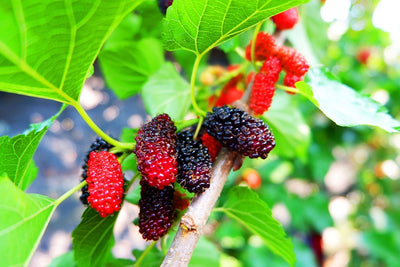
| Red mulberry (Morus rubra) | Soft | May–June | 35–50 | Deer, fox, squirrel |
| Downy serviceberry (Amelanchier arborea) | Soft | June | 15–25 | Deer, dove, quail, squirrel, turkey |
| Blackberry (Rubus spp.) | Soft | June–July | 5–6 | Deer, quail, rabbit, turkey |
| Highbush blueberry (Vaccinium corymbosum) | Soft | June–July | 5–8 | Deer, quail, rabbit, turkey |
| American plum (Prunus americana) | Soft | August | 7–25 | Deer, fox, quail, raccoon, squirrel, turkey |
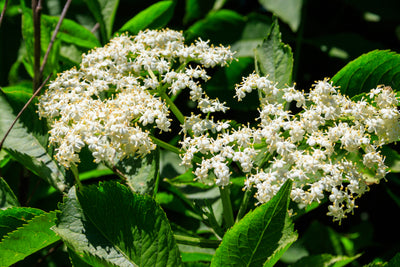
| American elderberry (Sambucus nigra subsp. canadensis) | Soft | Aug–Sept | 4–8 | Deer, dove, pheasant, quail, rabbit, turkey |
| Roughleaf dogwood (Cornus drummondii) | Soft | Aug–Oct | 6–15 | Deer, pheasant, quail, turkey |
| Flowering dogwood (Cornus florida) | Soft | Aug–Nov | 15–30 | Quail, turkey; eaten by at least 36 bird species (Ohio State) |
| American hazelnut (Corylus americana) | Hard | September | 10–16 | Deer, fox, pheasant, quail, squirrel, turkey |
| Chinese chestnut (Castanea mollissima) | Hard | September | 30–40 | Deer, ducks, ruffed grouse, squirrel, turkey |
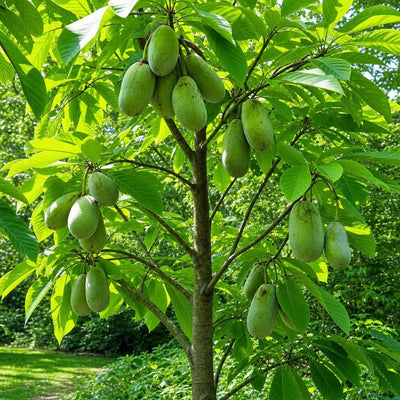
| Pawpaw (Asimina triloba) | Soft | Sept–Oct | 15–20 | Deer, fox, rabbit, raccoon, squirrel, turkey |
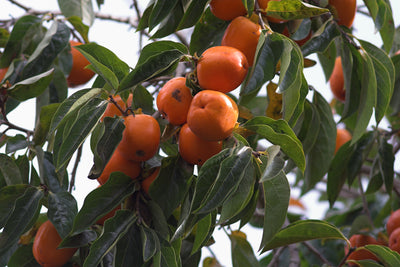
| American persimmon (Diospyros virginiana) | Soft | Sept–Oct | 35–60 | Deer, fox, quail, raccoon, squirrel, turkey |
| Blackhaw viburnum (Viburnum prunifolium) | Soft | Sept–Oct | 12–15 | Deer, fox, quail, rabbit, squirrel, turkey |
| Red osier dogwood (Cornus sericea) | Soft | Sept–Oct | 6–9 | Deer, quail, turkey |
| Bur oak (Quercus macrocarpa) | Hard | Sept–Oct | 60–80 | Deer, dove, ducks, fox, grouse, pheasant, quail, rabbit, raccoon, squirrel, turkey |
| Willow oak (Quercus phellos) | Hard | Sept–Oct | 40–75 | Same wide range as bur oak |
| Overcup oak (Quercus lyrata) | Hard | Sept–Oct | 40–60 | Same wide range as bur oak |
| Shagbark hickory (Carya ovata) | Hard | Sept–Oct | 70–80 | Deer, fox, rabbit, raccoon, squirrel, turkey |
| Northern pecan (Carya illinoinensis) | Hard | October | 50–100 | Deer, fox, raccoon, squirrel, turkey |
| American witch hazel (Hamamelis virginiana) | Soft | Nov–Dec | 6–10 | Deer, pheasant, quail, rabbit, squirrel, turkey |
Ohio State University Extension adds that white oak, black walnut, American beech and hickories hold food into winter, and that pawpaw produces the largest fruit of any native plant. Penn State Extension lists winterberry holly as a winter food source and staghorn sumac as fruit that persists from summer into spring.
Should you plant white oaks or red oaks for wildlife?
Plant both. White oak acorns are sweeter and get eaten quickly in fall, while red oak acorns are more bitter and last into late winter, according to Ohio State Extension.
Missouri Extension explains a second reason: red oak group acorns take two years to mature, so a late spring frost that kills this year's flowers will not wipe out next fall's red oak crop. Oaks also bear heavily only about one year in three or four, so mixing white oak, red oak, pin oak and hickory evens out the lean years. Our oak seedlings make a mixed planting affordable.
What feeds wildlife in late winter?
Late winter is the hardest season, and the best answers are standing cool-season plots, brassica roots, red oak acorns and fruit that clings to the branch. Penn State Extension names hawthorn, crabapple, holly, highbush cranberry and staghorn sumac as plants whose fruit stays on through winter because wildlife pass it over in fall while other food is plentiful.
For a bird-focused list, see our winter fruit calendar for birds.
How big should a wildlife food plot be?
Plan on plots of roughly ½ to 5 acres. Missouri Extension suggests ½ to 5 acres, with 3 to 5 acres holding up better under heavy browsing, and University of Arkansas Extension gives 1 to 3 acres as a rule of thumb, with grain plots no smaller than ¼ acre.
- Placement: Missouri Extension suggests setting plots 30 to 50 feet off a woodland edge and letting a soft transition of shrubs and vines grow in between. Keep plots away from public roads and property lines.
- Shape: Irregular shapes with brushy edges give animals cover close to food.
How do you prepare soil for a food plot?
Test the soil at least three months before planting and lime about six months ahead if the test calls for it. Missouri Extension recommends a soil pH of 6.5 to 7 for most food plot plantings.
- Collect four to six samples about 4 inches deep from across the plot, mix them and send them to your extension soil lab.
- Apply lime and fertilizer by the test, not by guesswork.
- Prepare a firm, clean seedbed. Small seeds like clover and brassicas need good soil contact.
- Adjust seeding for pure live seed (PLS): divide the target rate by the PLS percentage on the seed tag.
- Inoculate legumes with the correct strain right before planting.
How do you add trees and shrubs to a food plot edge?
Plant bare-root fruit and nut trees during the dormant season along plot edges, fencerows and woodland openings in full sun. Shrubs such as elderberry, hazelnut and dogwood bear within a few years, while Ohio State Extension notes oaks may take more than 25 years to produce acorns, so plant both now.
Missouri Extension recommends tree shelters or wire cages for two to three years to keep browsing animals off new plants, plus water during dry spells. Several species fruit better with a pollination partner, including pawpaw, persimmon, elderberry, hazelnut and black walnut, so plant two or more. Our step-by-step guide on how to plant bare-root trees covers spacing and depth, and the native tree planting calendar gives frost-date timing for every state.
Browse our wildlife friendly plants, nut trees and low-cost tree seedlings for hedgerows and edge plantings. To match fruit trees to your climate, see native fruit and nut trees by USDA hardiness zone.
What we see at our nursery
TN Nursery is a family-owned, third-generation nursery in Altamont, Tennessee, founded in 1959 by Roscoe Tate. On our 170 acres we grow about 2 million pawpaw trees a year from about 2 tons of seed, and pawpaw is our number one selling tree. We have also grown more than 200,000 redbuds. In a wildlife planting, pawpaw and persimmon fill the September and October window between summer berries and the acorn drop, as the fruiting chart above shows. If you are new to pawpaws, start with where pawpaw trees grow best, and for small acreage ideas read how to create a food supply on one acre.
How we made this guide
We compiled planting windows, seeding rates and soil pH ranges from University of Missouri Extension (G9493) and University of Arkansas Extension (FSA9096). Fruiting months, plant heights and wildlife users come from University of Missouri Extension (G9427), with hard and soft mast seasons from Ohio State University Extension (F-0060) and winter fruit notes from Penn State Extension. Where the two states differ, we show both windows side by side. Dates are regional, so confirm timing with your county extension office.
Reviewed by the TN Nursery growing team, November 20, 2026.
Frequently asked questions
What is the best food plot for deer in winter?
A cool-season mix of a small grain such as wheat, oats or cereal rye with clover is a dependable winter plot. Brassicas such as turnips and rape add late-winter food, since deer eat turnips after a deep freeze.
When should I plant a fall food plot?
Most cool-season forages are planted in August and September in Missouri and from September into October or November in Arkansas. Brassicas go in earliest, about 8 to 10 weeks before frost for forage radish.
What trees should I plant for deer and turkey?
Plant a mix of soft mast such as persimmon, pawpaw, plum and dogwood with hard mast such as white oak, red oak and hickory. The mix spreads food from late summer through winter.
How much of my land should be in food plots?
University of Missouri Extension recommends spreading food plots over about 2 to 5 percent of a property. Missouri Extension adds that plots of 3 to 5 acres are generally more beneficial for deer.
How long until oak trees produce acorns for wildlife?
Ohio State University Extension notes that oaks may take more than 25 years to produce acorns. Shrubs such as elderberry and hazelnut bear within a few years, so plant both.
Share this guide
Teachers, bloggers, hunting clubs, conservation groups and extension volunteers are welcome to use these charts in lessons, newsletters and landowner workshops. Please credit TN Nursery and link to this page so readers can find the full tables and sources.
Sources
- University of Missouri Extension, G9493: Enhancing White-Tailed Deer Habitats on Your Property: Food Plots
- University of Missouri Extension, G9427: Establishing Fruit and Nut-Bearing Trees and Shrubs for Wildlife Habitat in Missouri
- University of Arkansas Division of Agriculture, FSA9096: Grasses and Forbs for Fall/Winter Wildlife Food Plots
- Ohio State University Extension, F-0060: Enhancing Food (Mast) Production for Woodland Wildlife in Ohio
- Penn State Extension: Landscaping for Wildlife: Trees, Shrubs, and Vines