Every December, birders fan out for Audubon's Christmas Bird Count, and every February millions more tally the birds at their windows during the Great Backyard Bird Count. What those counts record depends a lot on what is still growing in our yards. By midwinter, insects are gone and most seeds are buried or eaten. The birds that stay rely on fruit that hangs on the branch long after the leaves drop.
This guide charts when 15 native trees and shrubs put fruit "on the table," from serviceberry in June to staghorn sumac in March, so you can plant a succession that feeds birds through the whole cold season. Every date and figure below is cited to a university extension service, the Cornell Lab of Ornithology, Audubon or peer-reviewed research.
Infographic: The Winter Bird Buffet, at a glance
- ~3 billion breeding birds have been lost in the U.S. and Canada since 1970, a 29% decline (Rosenberg et al., Science, 2019).
- 48+ bird species eat winterberry holly fruit, including cedar waxwings (NC State Extension).
- 48.7% fat by dry mass in arrowwood viburnum fruit, versus 0.99% or less in every invasive fruit tested (Smith, DeSando & Pagano, 2013).
- 85,000+ volunteers join the Christmas Bird Count, held December 14 to January 5 each year (National Audubon Society).
- February 12–15, 2027: the next Great Backyard Bird Count (birdcount.org).
Why winter fruit matters to birds
North America's bird populations have fallen by close to 3 billion birds since 1970, a 29% drop, according to a 2019 study in Science led by researchers at the Cornell Lab of Ornithology and partner organizations. Habitat loss is a major driver, which is why yard plantings matter. Iowa State University Extension makes the case simply: trees and shrubs that hold fruit are valuable because "natural foods are most limited at this time of year."
Not all fruit is equal, either. In a study at two New York bird-banding stations, Smith, DeSando and Pagano found that "the highest fat content and energy densities were found in fruits of native shrubs." Arrowwood viburnum fruit measured 48.72% fat by dry mass and spicebush 48.01%, while every invasive fruit tested, including common buckthorn, bush honeysuckle, European cranberrybush and multiflora rose, came in at 0.99% fat or less. Fat is the fuel migrating songbirds need, so native shrubs do more work per berry.
The native fruit calendar for birds
The table below groups 15 natives by when their fruit is available. Months are approximate. How long fruit lasts depends on weather and how many hungry birds are around.
| Plant | Fruit season | Birds that use it | Source |
|---|---|---|---|
| Serviceberry (Amelanchier) | Early summer, one of the first native fruits | Robins, cedar waxwings, catbirds, orioles | Illinois Extension; Cornell Lab |
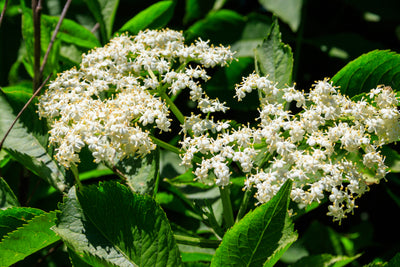
| American elderberry | Mid to late summer | Many species; eaten almost as soon as it ripens | Illinois Extension |
| Red osier dogwood | Late summer to fall (23.4% fat) | Robins, bluebirds, thrushes, vireos, warblers | Cornell Lab; Smith et al. 2013 |
| Spicebush | Early fall, timed to peak songbird migration (48.0% fat) | Migrating songbirds | Illinois Extension; Smith et al. 2013 |
| Arrowwood viburnum | Fall (48.7% fat) | Migrating songbirds | Smith et al. 2013 |
| Flowering dogwood | Fall, scarlet berries | Robins, bluebirds, thrushes, catbirds, cardinals, tanagers, grosbeaks | Cornell Lab |
| Blackhaw viburnum | Fall into early winter | Fruit-eating songbirds | Illinois Extension |
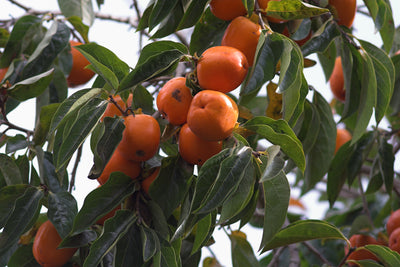
| American persimmon | September to December; stays on after leaf drop | Birds, plus deer, foxes, raccoons | NC State Extension |
| White oak (acorns) | Fall, persisting into winter | Woodpeckers, jays, wild turkeys, grouse, wood ducks | Cornell Lab |
| Hackberry | Ripens in September; often stays through winter | Many birds and small mammals | NC State Extension |
| Chokeberry | Fall, holding well into winter | Increasingly used late in the season | Illinois Extension |
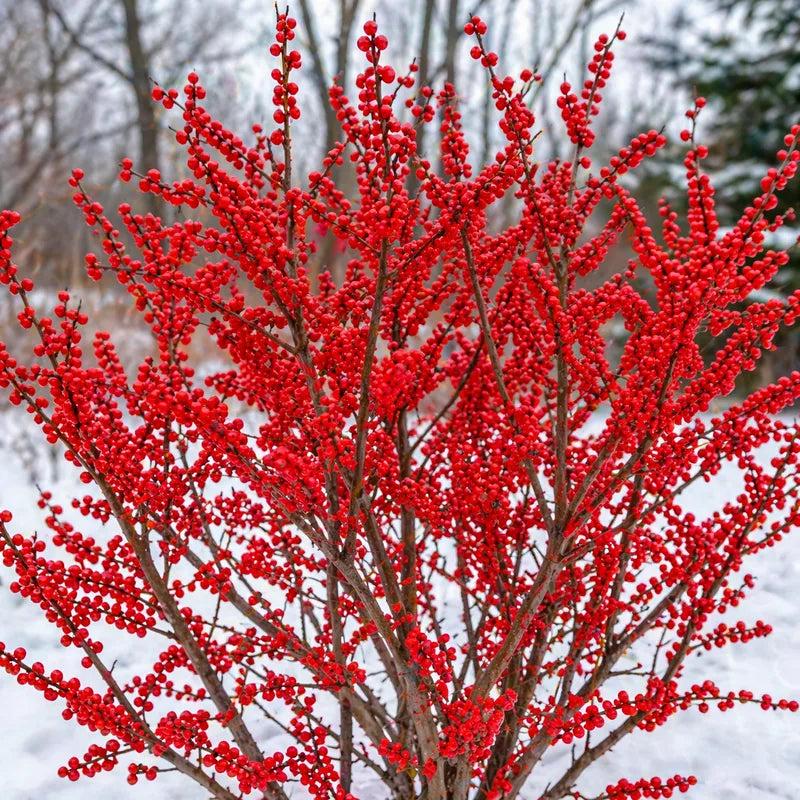
| Winterberry holly | Ripens August to December; persists into winter | 48+ species incl. cedar waxwings, robins, bluebirds | NC State Extension; Cornell Lab |
| American holly | September through February | Songbirds, wild turkeys, quail | NC State Extension |
| Eastern red cedar | Fall, persisting through winter (female trees) | Cedar waxwings, bluebirds | Cornell Lab; Illinois Extension |
| Staghorn sumac | Fall, persisting through winter | Robins, bluebirds, cardinals, chickadees, wild turkeys, pileated woodpeckers | Cornell Lab |
Summer fruit: feeding the nesting season
A winter food plan starts in June. Serviceberry is "one of the first native fruits to ripen each year," and robins, cedar waxwings, catbirds and orioles strip it fast, according to University of Illinois Extension horticulture educator Nicole Flowers-Kimmerle. American elderberry follows in mid to late summer. Illinois Extension's Christopher Enroth notes that "almost as soon as the fruit appears, it disappears to swarms of birds." Summer fruit does not carry birds into winter, but it keeps fruit-eaters coming to your yard and fills the gap before fall shrubs ripen.
Fall fruit: high-fat fuel for migrants
Fall is when fat matters most. Spicebush ripens "in early fall at the right time for the peak migration of many songbirds," Flowers-Kimmerle writes. In the Smith study, spicebush and arrowwood viburnum each topped 48% fat, gray dogwood reached 34.9% and red osier dogwood 23.4%. Native dogwood fruit was also eaten faster than the invasive fruits nearby, which suggests birds know the difference.
The Cornell Lab of Ornithology lists flowering dogwood's fall berries as food for robins, bluebirds, thrushes, catbirds, cardinals, tanagers and grosbeaks. Because these fruits go quickly, they rarely last to the Christmas Bird Count. Their job is to fuel birds before the cold sets in.
Winter-persistent fruit: the Christmas Bird Count pantry
The plants that matter most in December and January are the ones whose fruit hangs on. Several hold fruit because birds pass it over at first. Enroth observes that hollies "tend to have tougher, more waxy fruits, which deters initial bird feeding in the fall," and chokeberry, Flowers-Kimmerle notes, can become "increasingly important later in the season."
- Winterberry holly ripens from August to December, and its fruit "is eaten by over 48 species of birds, including cedar waxwings," per NC State Extension. Plant one male for every 10 to 20 females within 50 feet.
- American holly carries berries "from September through February," eaten by songbirds, wild turkeys and quail, and its evergreen leaves provide winter cover (NC State Extension).
- Eastern red cedar bears pale blue, berry-like cones on female trees that persist into winter, a cedar waxwing favorite (Cornell Lab). Birds also shelter in the dense evergreen foliage.
- American persimmon fruit can "stay on the tree after the leaves have fallen" and feeds birds, deer, foxes, raccoons and black bears (NC State Extension).
- Hackberry fruit ripens in September and "often remains on the tree through the winter" (NC State Extension).
- Staghorn sumac holds its fuzzy red fruit clusters through winter, used by robins, bluebirds, chickadees, wild turkeys and pileated woodpeckers (Cornell Lab).
- White oak acorns feed woodpeckers, jays, turkeys and wood ducks into winter. Cornell notes that white oak "produces acorns every year, unlike other oaks."
Persimmon, American holly and winterberry are dioecious, so only female plants fruit and they need a male nearby. Buy at least one of each.
How to plant a year-round bird buffet
- Cover three seasons. Pick at least one summer fruiter, one high-fat fall shrub and two winter-persistent plants. Our shrubs with berries and birding plants collections are good starting points.
- Replace invasive fruiting shrubs. Bush honeysuckle, buckthorn and multiflora rose fruit tested at under 1% fat. Swapping them for native viburnums, dogwoods and spicebush gives birds more energy per bite.
- Mix in evergreens. Eastern red cedar and American holly provide both food and shelter from wind and predators.
- Plant now. Dormant season planting gives roots time to settle before spring. See our native tree planting calendar for your state's window, and our bloom calendar to match flowers for pollinators.
- Count the results. Join a local Christmas Bird Count circle (December 14 to January 5) or log your yard during the Great Backyard Bird Count, February 12–15, 2027.
About TN Nursery
TN Nursery was founded in 1959 by Roscoe Tate and grows native trees, shrubs and perennials on 170 acres in Tennessee. We have grown roughly 2 million pawpaw trees from about 2 tons of seed and more than 200,000 eastern redbuds, and the U.S. Air Force and Discovery Channel used our maple trees for a time-lapse of a tree going from dormancy to full leaf. Browse our native trees and native shrubs.
Embed this infographic
Bloggers, teachers, bird clubs and journalists are welcome to share this chart with credit. Copy the code below:
<p><a href="https://tnnursery.net/blogs/garden-blog/native-trees-that-feed-birds-in-winter">The Winter Bird Buffet: When 15 Native Trees and Shrubs Put Fruit on the Table</a> (infographic and fruit calendar by <a href="https://tnnursery.net/">TN Nursery</a>)</p>
Need the full-size 1200px PNG for print or a newsletter? Ask our team and we will send it free.
Sources
- National Audubon Society, "About the Christmas Bird Count." audubon.org
- Great Backyard Bird Count, February 12–15, 2027. birdcount.org
- Rosenberg, K.V., et al. "Decline of the North American avifauna." Science, Sept. 19, 2019; summary at 3billionbirds.org
- Smith, S.B., DeSando, S.A., & Pagano, T. "The Value of Native and Invasive Fruit-Bearing Shrubs for Migrating Songbirds." Northeastern Naturalist 20(1):171–184, 2013. eaglehill.us
- Cornell Lab of Ornithology, "The Best Plants and Trees to Plant for Birds: A Starter List." allaboutbirds.org
- Flowers-Kimmerle, N. "From serviceberries to winterberries: Native fruits for birds year-round." University of Illinois Extension, Oct. 30, 2026. extension.illinois.edu
- Enroth, C. "Berry Succession: Creating a continuous food source for birds." University of Illinois Extension, Mar. 14, 2025. extension.illinois.edu
- NC State Extension Gardener Plant Toolbox: Ilex verticillata, Ilex opaca, Diospyros virginiana, Celtis occidentalis
- Jauron, R. "Which trees and shrubs provide food for birds during the winter months?" Iowa State University Extension, updated Mar. 20, 2024. iastate.edu