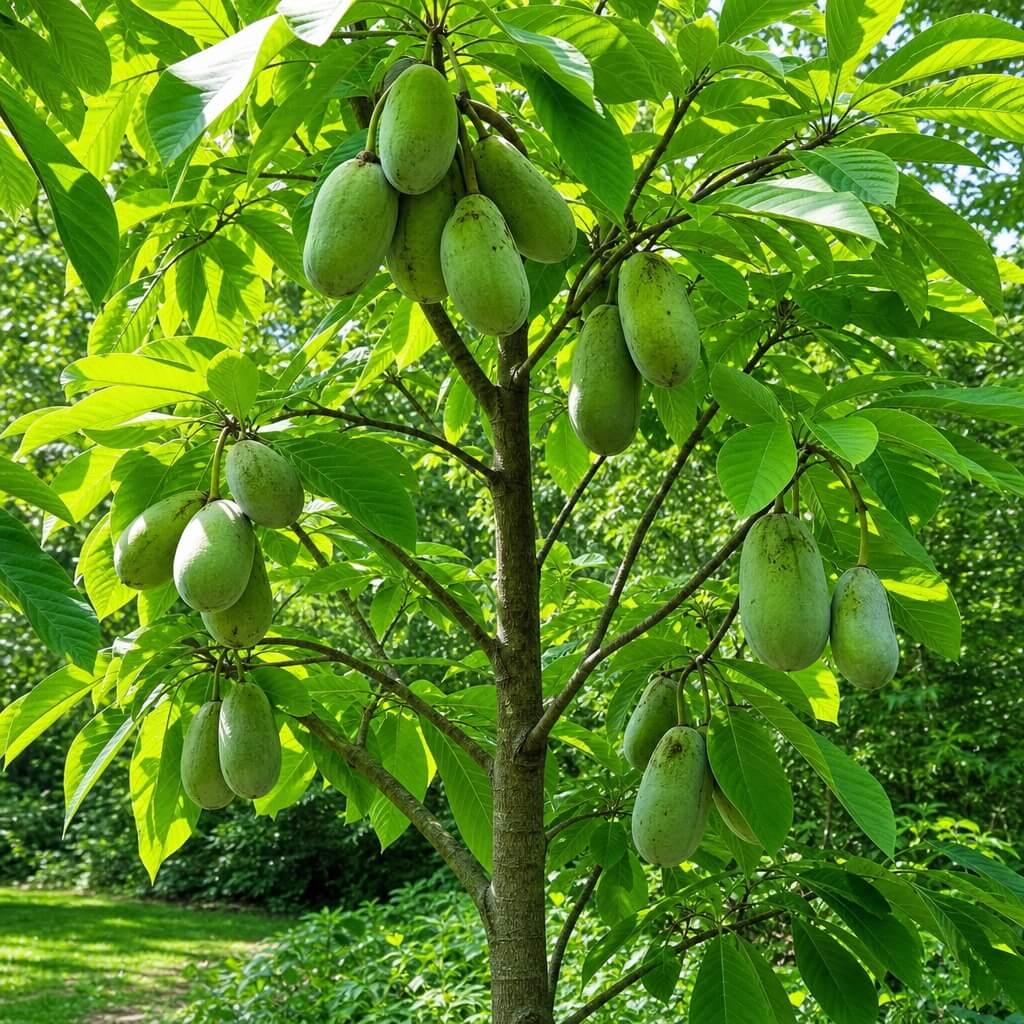
Native fruit and nut trees grow across USDA Hardiness Zones 3 through 9. American plum and American elderberry handle the coldest yards (Zone 3). Persimmon, black walnut, hazelnut and serviceberry start in Zone 4. Pawpaw, pecan and Chickasaw plum start in Zone 5. In Zones 5 to 8, all 11 species in this guide will grow.
This guide puts 11 native North American fruit and nut trees side by side. For each one you get its hardiness zones, mature height, ripening season and the details that decide whether you get a harvest. The data comes from university extension services and the USDA. You can use the tables to plan a backyard orchard, a food forest, a wildlife planting or a school garden.
What do USDA Hardiness Zones mean for fruit and nut trees?
A USDA Hardiness Zone tells you how cold winter usually gets where you live, and that tells you which trees will survive. The 2023 USDA Plant Hardiness Zone Map divides the U.S. into 13 zones. Each zone covers a 10°F range of average yearly low temperature and is split into "a" and "b" half-zones 5°F apart. The map uses weather data from 1991 to 2020. Compared with the 2012 map, about half the country moved into the next warmer half-zone.
For fruit and nut trees, the zone sets the lower limit: a tree rated to Zone 4 should come through a typical Zone 4 winter. Zones say nothing about summer heat, rainfall or soil, so the other columns below still matter. Not sure of your zone? Our USDA Plant Hardiness Zones guide for gardeners walks you through finding it.
Native fruit and nut trees by hardiness zone: the master chart
The table below is the core of this guide. Zone ranges come from the NC State Extension Gardener Plant Toolbox unless noted, rounded to whole zones.
| Tree | Botanical name | Type | USDA zones | Mature height | Ripens | Sun |
|---|---|---|---|---|---|---|
| American plum | Prunus americana | Fruit | 3–9 | 15–25 ft | July–August | Full sun to part shade |
| American elderberry | Sambucus canadensis | Fruit (shrub) | 3–9* | 5–12 ft* | Late summer* | Full sun to part shade |
| American persimmon | Diospyros virginiana | Fruit | 4–9 | 30–80 ft | September–December | Full sun to part shade |
| Black walnut | Juglans nigra | Nut | 4–9 | 50–75 ft | October | Full sun to part shade |
| American hazelnut | Corylus americana | Nut (shrub) | 4–9 | 9–12 ft | September–October | Full sun for best crops |
| Downy serviceberry | Amelanchier arborea | Fruit | 4–9 | 15–25 ft | May–August | Full sun to part shade |
| Red mulberry | Morus rubra | Fruit | 4–8† | 35–50 ft† | May–June‡ | Full sun to part shade |
| Shagbark hickory | Carya ovata | Nut | 4–8* | 70–90 ft* | When the husk splits | Moist, well-drained sites |
| Pawpaw | Asimina triloba | Fruit | 5–8 | 15–20 ft | Mid-September–early October | Full sun to part shade |
| Pecan | Carya illinoinensis | Nut | 5–9 | 70–100 ft | Fall | Full sun to part shade |
| Chickasaw plum | Prunus angustifolia | Fruit | 5–9 | 4–20 ft | Early to mid summer | Full sun to part shade |
* University of Minnesota Urban Forestry Outreach & Research. † Ohio State University plant pages. ‡ NC State University Herbarium. Pawpaw shown as Zones 5–8, the range we use for our own growing guidance.
Which native fruit and nut trees grow in my zone?
Find your zone in the left column to see every tree from the master chart that is rated for it.
| Your zone | Native fruit trees | Native nut trees |
|---|---|---|
| Zone 3 | American plum, American elderberry | None in this guide |
| Zone 4 | American plum, elderberry, persimmon, serviceberry, red mulberry | Black walnut, American hazelnut, shagbark hickory |
| Zone 5 | All fruit species, including pawpaw and Chickasaw plum | Black walnut, hazelnut, shagbark hickory, pecan |
| Zone 6 | All fruit species | All nut species |
| Zone 7 | All fruit species | All nut species |
| Zone 8 | All fruit species | All nut species |
| Zone 9 | American plum, elderberry, persimmon, serviceberry, Chickasaw plum | Black walnut, hazelnut, pecan |
When do native fruit and nut trees ripen?
Native fruit trees ripen from late spring to early winter, so a mix of species can keep you harvesting from May into December. Serviceberry and red mulberry come first, persimmon finishes the year.
| Season | What ripens |
|---|---|
| Late spring (May–June) | Red mulberry; serviceberry fruit starts in May |
| Early to mid summer | Chickasaw plum; serviceberry continues |
| Mid to late summer (July–August) | American plum, American elderberry; hazelnuts start to fill |
| Early fall (September–October) | Pawpaw, American hazelnut, black walnut, pecan, persimmon begins |
| Late fall into winter (November–December) | American persimmon, which can hang on the tree after the leaves drop |
What should I know before planting each tree?
Pawpaw (Asimina triloba)
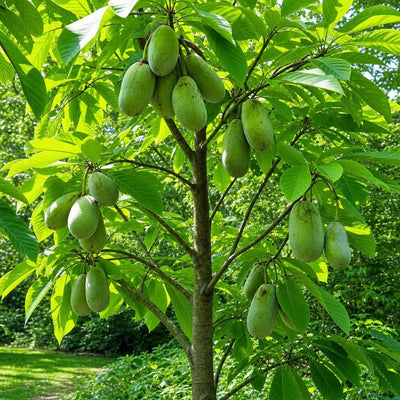
Pawpaw needs a second, unrelated tree nearby to set fruit. NC State Extension notes that pawpaw flowers are self-incompatible, so plant at least two genetically different trees. Expect 4 to 8 years to first fruit. The custard-like fruit ripens from mid-September to early October, and the leaves feed zebra swallowtail caterpillars.
Pawpaw is our number one selling tree here at TN Nursery. We grow about 2 million pawpaw trees a year from about 2 tons of seed on our 170 acres in Altamont, Tennessee. You can start with a pawpaw tree or plant a group of pawpaw seedlings for cross-pollination. For more, read how to grow pawpaw trees and when pawpaws are ripe.
American persimmon (Diospyros virginiana)
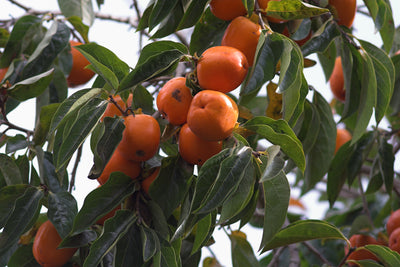
American persimmon needs both a male and a female tree to fruit, because most trees carry only one type of flower. Seedling trees start bearing in 4 to 9 years and grafted trees in about 3, per NC State Extension. Fruit is astringent until very soft, then sweet. Persimmon also hosts luna moth caterpillars and feeds foxes, raccoons, deer and songbirds. Shop persimmon trees or American persimmon seedlings.
American plum (Prunus americana) and Chickasaw plum (Prunus angustifolia)
Native plums are the toughest fruit trees in this guide; American plum is rated down to Zone 3. Both species bloom with fragrant white flowers in March and April before the leaves, and both form thickets that shelter songbirds and quail. They host coral hairstreak, eastern tiger swallowtail, spring azure, viceroy and red-spotted purple butterflies. The fruit is best for jams and jellies. See our American plum tree.
American elderberry (Sambucus canadensis)
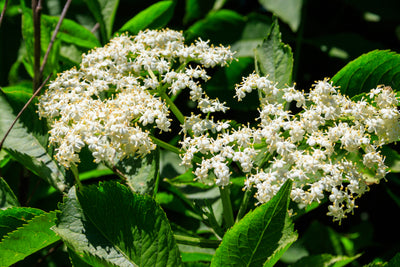
Elderberry is a large, multi-stemmed shrub that fits small yards and hedgerows. Flat clusters of white flowers open in June and turn into purple-black berries in late summer, used for jellies, pies and syrups. It handles moderate drought and moderate flooding. Shop the elderberry and read more about elderberry trees.
Downy serviceberry (Amelanchier arborea)
Serviceberry opens drooping clusters of white flowers from March to April and is among the first natives to fruit. Its small pome fruit turns from red to purple-black between May and August and tastes like a sweeter blueberry. NC State Extension notes it is self-fruitful, so a single tree will bear.
Red mulberry (Morus rubra)
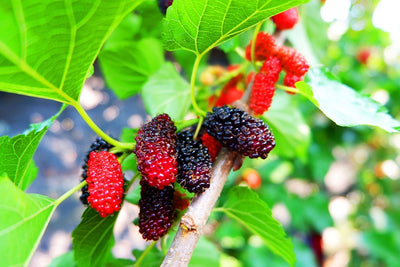
Red mulberry is the native mulberry of the eastern United States. It bears sweet, blackberry-like fruit in May and June and grows 35 to 50 feet tall. Place it away from driveways and patios, since dropped fruit stains. Browse our mulberry trees.
Black walnut (Juglans nigra)
Black walnut is a large, fast-growing nut and timber tree rated for Zones 4 to 9. Nuts develop in October and are a favorite of squirrels. Its roots, leaves and stems contain juglone, which limits some plants under its canopy, such as azaleas, tomatoes and blueberries, so give it its own space. See our black walnut tree.
Pecan (Carya illinoinensis)
Pecan is the largest of the hickories and needs room: 70 to 100 feet tall and 40 to 75 feet wide. Pecan trees are sorted into Type I and Type II for pollination, and NC State Extension suggests planting at least three cultivars with both types for the best nut set. Its deep taproot means you should choose the planting spot once. Shop pecan trees or pecan seedlings.
Shagbark hickory (Carya ovata)
Shagbark hickory is named for its peeling, shaggy bark and bears sweet, thin-shelled nuts inside a husk that splits into four sections when ripe. It grows 70 to 90 feet tall, tolerates occasional drought or flooding, and its nuts feed many birds and mammals. See our hickory tree.
American hazelnut (Corylus americana)
American hazelnut is a 9 to 12 foot shrub that starts producing nuts at 2 to 3 years old. Plant several, because the male catkins and red female flowers on one plant do not pollinate each other. Harvest in September and October while the husks are still green, since wildlife competition picks up once they turn tan. Shop the hazelnut tree.
Which native fruit and nut trees fit a small yard?
American hazelnut (9–12 ft), American elderberry (5–12 ft), Chickasaw plum (4–20 ft), pawpaw (15–20 ft) and serviceberry (15–25 ft) all fit typical suburban lots. Pecan, shagbark hickory, black walnut and persimmon are better for acreage, farm edges and windbreaks. For more ideas, see our fruit trees and nut trees collections, or browse all native trees.
Why plant native fruit and nut trees for wildlife?
Native fruit and nut trees feed wildlife and host native butterfly and moth caterpillars. Pawpaw hosts the zebra swallowtail; persimmon and pecan host the luna moth and hickory horndevil; native plums host five butterfly species; and hazelnuts feed grouse, wild turkeys, chipmunks and black bears. See our butterfly host plant chart for more pairings.
When should I plant native fruit and nut trees?
Plant bare-root trees and seedlings while they are dormant, from late fall through early spring, when the ground is not frozen. Our native tree planting calendar for all 50 states gives the best window for your state based on average frost dates. Seedlings are an easy way to plant a whole grove at once; browse tree seedlings.
How we made this guide
We chose 11 native North American trees that produce edible fruit or nuts and that suit home landscapes from Zone 3 to Zone 9. For each species we took the USDA hardiness zone range, mature size, ripening time and pollination notes from university extension plant databases: mainly the NC State Extension Gardener Plant Toolbox, with the University of Minnesota, Ohio State University and the NC State University Herbarium where noted. Zone definitions come from the USDA Agricultural Research Service. We rounded half-zones to whole zones. Where a source did not give a figure, we left it out rather than estimate.
We add our own experience as a family-owned, third-generation nursery founded in 1959 by Roscoe Tate. Over more than 65 years we have grown native trees on 170 acres in Altamont, Tennessee, and supplied plants to landmarks such as the Washington Monument and Arlington National Cemetery. See what pawpaw, persimmon, elderberry and mulberry offer at the table in our native fruit nutrition comparison.
Share this guide
Teachers, bloggers, master gardener programs, native plant societies and conservation groups are welcome to use these charts and the infographic in lessons, newsletters and articles. Please credit TN Nursery and link back to this page: https://tnnursery.net/blogs/garden-blog/native-fruit-nut-trees-by-zone. Want a print-ready copy of the infographic? Contact us and we will send one.
Frequently asked questions
What is the most cold-hardy native fruit tree?
American plum is the most cold-hardy tree in this guide, rated to USDA Zone 3. American elderberry, a shrub, is also rated to Zone 3.
What zones can pawpaw trees grow in?
Pawpaw grows in USDA Zones 5 to 8. Plant at least two genetically different trees, and expect 4 to 8 years to first fruit.
Do I need two persimmon trees to get fruit?
Usually yes. American persimmon trees are typically male or female, so you need at least one of each for the female tree to bear fruit.
Which native nut tree is best for a small yard?
American hazelnut is the best fit for a small yard. It grows 9 to 12 feet tall and starts bearing nuts at 2 to 3 years old.
How many pecan trees should I plant?
NC State Extension suggests at least three pecan cultivars, including both Type I and Type II pollination types, for the best nut production.
Which native fruit ripens first?
Red mulberry and serviceberry ripen first, starting in May. Persimmon ripens last and can hang on the tree into December.
Sources
- USDA Agricultural Research Service: USDA Unveils Updated Plant Hardiness Zone Map (2023)
- NC State Extension Plant Toolbox: Asimina triloba
- NC State Extension Plant Toolbox: Diospyros virginiana
- NC State Extension Plant Toolbox: Prunus americana
- NC State Extension Plant Toolbox: Prunus angustifolia
- NC State Extension Plant Toolbox: Amelanchier arborea
- NC State Extension Plant Toolbox: Corylus americana
- NC State Extension Plant Toolbox: Juglans nigra
- NC State Extension Plant Toolbox: Carya illinoinensis
- University of Minnesota UFOR: Elderberry (Sambucus canadensis)
- University of Minnesota UFOR: Shagbark Hickory (Carya ovata)
- Ohio State University: Morus rubra
- NC State University Herbarium: Morus in North Carolina
Reviewed by the TN Nursery growing team, November 18, 2026.