William Holman
Overcup Oak Tree

Overcup Oak Tree
Ships Between November 15-29
5-9
40–60 Feet
Low, Moderate, and High
Full sun and Partial shade
March–May
Plant overcup oak trees in full sun in moist clay, silt or loam. Water weekly the first summer, keep a 3-foot mulch ring and shape young trees while dormant.
Full sun, at least 6 hours of direct light daily
Flood-hardy native shade oak , Thrives in wet, heavy clay, Long-lived heirloom tree
William Holman
Overcup Oak Tree
About this plant
The overcup oak tree (Quercus lyrata) is a long-lived native white oak that grows 40 to 60 feet tall with a broad, rounded crown and thrives in wet clay and low spots. Overcup oak is hardy in USDA zones 5–9 in full sun. TN Nursery ships bare-root overcup oak trees 1 to 4 feet tall, Buy 1 Get 1 Free.
Overcup oak belongs to the beech family (Fagaceae) and the white oak group, and is also called swamp post oak and water white oak. The common name comes from the acorn, which sits almost completely inside its scaly cup. In the wild, overcup oak grows on the Atlantic and Gulf coastal plains from Delaware and Maryland to northwest Florida and east Texas, and up the Mississippi River valley into West Tennessee, western Kentucky, southern Illinois and southeastern Missouri.
Yes. The overcup oak tree is one of the most flood-hardy oaks in North America, and in research plantings young trees came through continuous flooding for two full growing seasons.
Overcup oak also leafs out a few weeks later than most trees, which lets the tree ride out late-spring high water. That makes overcup oak a natural answer for a soggy lawn, a pond or detention basin edge, a drainage swale, a large rain garden and packed clay on a new home site.
Overcup oak is the best choice of the three for ground that stays wet the longest and for Southern yards up to zone 9. Swamp white oak reaches farther north, and pin oak brings a pyramid-shaped crown.
| Feature | Overcup oak | Swamp white oak | Pin oak |
|---|---|---|---|
| Botanical name | Quercus lyrata | Quercus bicolor | Quercus palustris |
| Zones | 5–9 | 3–8 | 4–8 |
| Leaf | deep, irregular lyre-shaped lobes | shallow, wavy lobes, two-toned | deep, bristle-tipped lobes |
| Acorn | nearly covered by its cup | on a long stalk | small, striped, shallow cup |
| Best site | the wettest, longest-flooded ground | moist to wet ground | moist, acidic ground |
An overcup oak tree grows at a slow to moderate pace, about 1 to 2 feet per year when young in full sun and moist soil. That steady growth builds dense, strong wood that stands for generations.
Pair an overcup oak with a quick-growing red maple tree for fast color while the oak builds its crown.
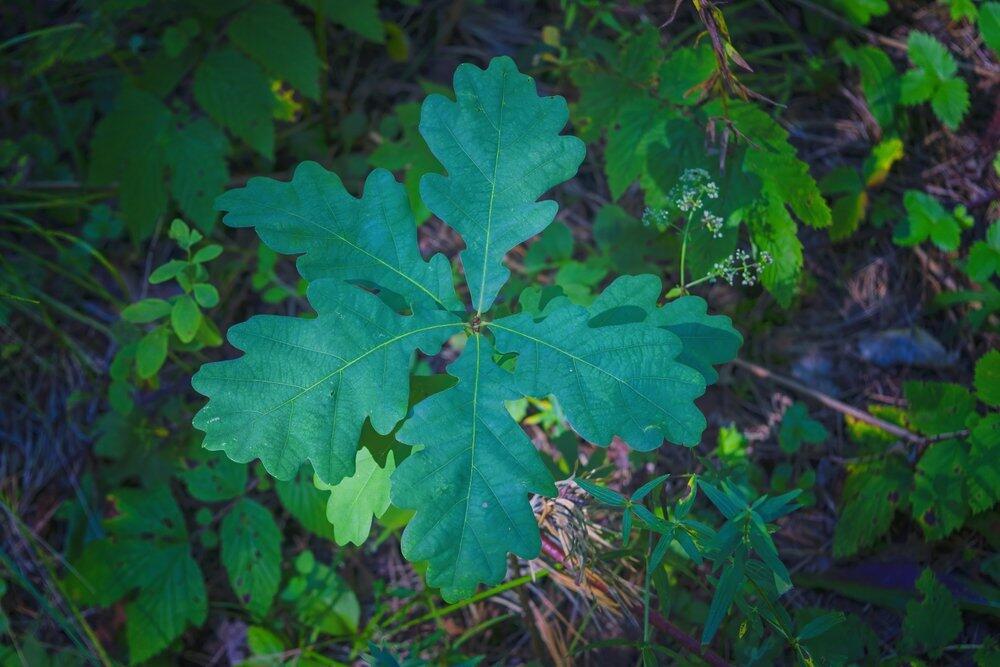
An overcup oak tree has a rounded, open crown, gray-brown bark in rough, scaly plates and long leaves with deep, uneven lobes that look like the outline of a lyre, the harp that gives the species name lyrata.
In autumn the canopy turns yellow, tan and warm brown, with orange tones in some years. The round acorns are the showpiece, each nut almost hidden inside a rough, bumpy cup. Deer, wild turkeys and squirrels eat the acorns, and the broad branches give songbirds nesting cover.
Plant an overcup oak tree in full sun, at least 35 to 40 feet from buildings, in clay, silty or loamy soil with a pH of about 5.0 to 7.0. Overcup oak grows best in a low, open spot where the soil stays moist.
Other wet-ground natives make good neighbors. A bald cypress tree can stand in the wettest spot, while a river birch tree adds peeling bark along a creek. For a matching oak row, plant willow oak trees or pin oak trees. Planting a bottomland tract or duck hole by the hundred? Our overcup oak seedlings come in bulk packs. See more choices in our shade trees and wetland plants collections.
Plant a bare-root overcup oak tree while the tree is dormant, from late fall to early spring, with the root collar level with the ground. Water it in well and once a week through the first summer.
At our Altamont, Tennessee nursery, we dig each overcup oak while it is dormant and pack the roots in damp material, so the tree arrives leafless and ready to go in the ground.
Botanical Name: Quercus lyrata
Plant Family: Fagaceae (beech family), white oak group
Ships: Bare root, 1–2 ft, 2–3 ft and 3–4 ft; ships between November 15 and 29
Planting Zone: 5–9
Height at Maturity: 40–60 feet in landscapes; 60–90 feet in the wild
Spread: 40–50 feet
Growth Rate: Slow to moderate, about 1–2 feet per year when young
Sun or Shade: Full sun
Water Needs: Moderate to high; thrives in wet soil and handles long flooding
Soil: Clay, silt or loam, pH 5.0–7.0
Bloom Season: March–May (catkins)
Fall Color: Yellow, tan and brown, sometimes orange
Native Range: Southeastern coastal plains and the Mississippi River valley
Care: Water weekly the first summer, refresh the mulch ring each spring and shape young trees while dormant.
Plant Attributes: Flood-hardy native shade oak, thrives in heavy clay, acorns for deer and turkeys, long-lived heirloom tree
An overcup oak tree usually grows 40 to 60 feet tall and 40 to 50 feet wide in a yard, and 60 to 90 feet tall in bottomland forests.
Yes. Overcup oak is a member of the white oak group, so its acorns ripen in a single season and its wood is sold as white oak.
Yes. An overcup oak handles seasonal standing water better than nearly any other oak and grows naturally along sloughs, swamp edges and backwater flats.
Overcup oak trees grow in USDA hardiness zones 5 through 9.
Overcup oak is named for its acorn, which is almost completely covered by a rough, scaly cup.
TN Nursery has grown hardy native plants since 1959, more than 65 years of experience, and has supplied plants to major U.S. landmarks like the Washington Monument and Arlington National Cemetery. From our Altamont, Tennessee nursery, we ship overcup oak trees to homeowners, pond owners and landscapers who need shade for wet clay. Read more on our garden blog: How to Choose the Best Tree for Wetland Areas, How Long Do Oak Trees Live? and Facts About Oak Trees for Wildlife and Habitat.

Since 1959, TN Nursery has grown and shipped quality bare root plants nationwide. Shipped during dormancy, bare-root plants develop strong root systems and establish quickly. Our experienced team carefully harvests and packages every order, providing growers with trusted plants backed by over 65 years of nursery experience.
Learn More About
Bare root trees
Broad Canopy:
Offers excellent shade with its expansive, dense foliage.
Unique Acorns:
Features distinctive cup-shaped acorns that add charm.
Strong and Durable:
Robust and resilient, ideal for various weather conditions.
Seasonal Beauty:
Adds vibrant fall color and visual interest year-round.
Fall Digging
Spring Digging
Packing Orders
Customer Unboxing Video
Product Highlight
I am very happy with the Overcup Oak tree I purchased from TN Nursery. It is thriving in my back yard !
I’m so happy with the Overcup Oak tree I received from TN Nursery. It’s thriving in my backyard where drainage is a bit of an issue. This native oak is incredibly resilient, and I can already see strong growth. TN Nursery provided excellent customer support and great care in packaging.
I did a lot of research before purchasing my Overcup Oak, and TN Nursery came highly recommended. The tree was well packaged, the roots were still moist upon arrival, and it had no signs of stress. It’s now growing steadily and already attracting wildlife. This species is great for wetland planting and TN Nursery’s quality can’t be beat.
TN Nursery delivered a healthy, robust Overcup Oak tree that is now growing beautifully in a low-lying part of my yard. It’s the perfect native tree for areas prone to seasonal flooding. The ordering process was smooth, and the tree arrived in excellent condition. Highly recommend for anyone restoring native habitats or improving flood-prone landscapes.
I ordered two Overcup Oak trees from TN Nursery, and they are already establishing nicely. These trees are ideal for wet, clay-heavy soils and provide long-term value for wildlife and shade. TN Nursery provided clear planting instructions, and the packaging ensured everything arrived intact. Very impressed!
The Overcup Oak tree I received from TN Nursery was top-notch. It was shipped quickly, arrived healthy, and showed signs of strong root development. I planted it in a low-lying area of my property, and it’s thriving already. TN Nursery is a great source for native hardwood trees, especially for flood-tolerant species like this one.
I was looking for a tree that could tolerate occasional standing water, and the Overcup Oak from TN Nursery was exactly what I needed. It arrived healthy and well-packed. Within weeks of planting, it began showing new leaf growth. The tree is thriving, and I couldn’t be happier with the entire purchasing experience.
I recently ordered an Overcup Oak tree from TN Nursery, and it arrived in outstanding condition. The roots were moist, the trunk was straight and sturdy, and it showed signs of dormancy without any damage. This native oak species is perfect for flood-prone areas, and I’m thrilled to see how well it’s adapting. TN Nursery’s quality and packaging are excellent.
Overcup Oak Tree