Things to Know About Oak Trees
If you want to build a diverse, wildlife-friendly landscape, oak trees are among the most valuable trees you can plant. Beyond their beauty and shade, oaks support more wildlife than almost any other North American tree. Their acorns are rich in fats, carbohydrates and protein, making them a vital fall and winter food source.
Deer, black bears, wild turkeys, ruffed grouse, wood ducks, blue jays, squirrels and many other animals depend on acorns to build reserves for winter. For any property where you want to attract and support wildlife, oak trees are an outstanding choice.
The Different Types of Oak Trees
Oaks are divided into two main groups: white oaks and red oaks. White oak leaves have rounded lobes, while red oak leaves have pointed lobes tipped with tiny bristles. White oak acorns mature in a single season, are lower in tannins and taste sweeter, which is why deer often seek them out first. Red oak acorns take two seasons to mature and are more bitter, so they often stay on the ground longer, providing food late into winter. Planting both types gives wildlife a dependable food supply year after year.
Acorns can be eaten by people too, but they must first be leached of their bitter tannins by soaking or boiling them in several changes of water. Native Americans relied on acorn flour as a staple food for thousands of years.
Oak Trees Around the World
Oaks belong to the genus Quercus, which includes around 500 species worldwide. About 90 species are native to the United States, including the pin oak, one of the most popular oaks for landscaping thanks to its pyramidal shape and brilliant red fall color.
Most oaks are deciduous, dropping their leaves in fall and leafing out again in spring, though live oaks of the South stay green year-round. Oaks are famously long-lived: many live 200 to 300 years, and some individual trees have lived for many centuries.
Oaks also provide important environmental benefits, helping reduce air pollution, slowing stormwater runoff, preventing soil erosion and storing carbon in their massive trunks and roots.
Choosing the Right Oak
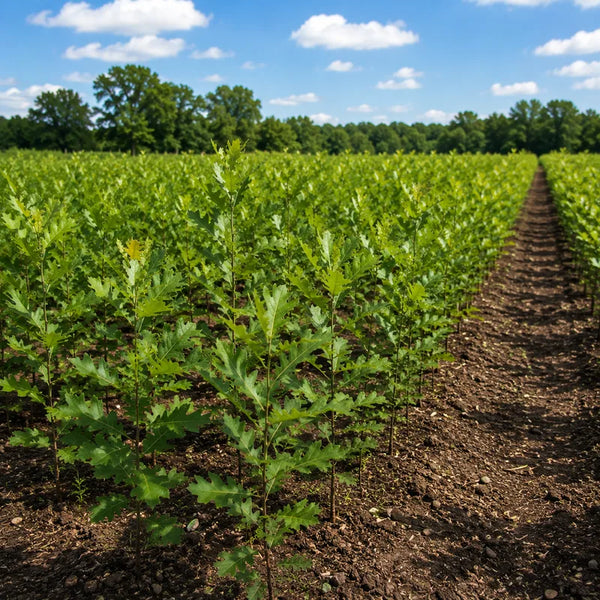
Oaks vary in growth rate and size, so choose the right one for your goals. Faster-growing oaks such as pin oak, willow oak and red oak can grow 1 to 2 feet or more per year when young, while white oak grows more slowly but lives for centuries. Give oaks plenty of room, since most become large shade trees. Keep young trees healthy with regular watering and mulch, and avoid pruning during the spring and early summer to help protect them from oak wilt.
The Role of Oaks in the Ecosystem
Oaks are true keystone species. A single oak can host hundreds of species of caterpillars and other insects, which in turn feed nesting songbirds. Their sprawling branches offer cover and nesting sites, cavities in older trees shelter owls, woodpeckers and squirrels, and their leaves enrich the soil as they decompose. Oak woodlands are a favorite destination for birdwatchers and hunters alike.
Why Plant Oak Trees on Your Property
Planting oaks is an investment in the future of your land. These long-lived trees provide shade, beauty and wildlife habitat for generations, and mature oaks add significant value to a property. For landowners managing land for wildlife or eventual sale, healthy oaks are among the most valuable assets you can have.
Planting and Caring for Oak Trees
Plant oaks in fall or early spring in full sun with plenty of room to grow. Dig a hole twice as wide as the root ball and just as deep, water deeply after planting and spread mulch over the root zone, keeping it away from the trunk. Water regularly during the first few years. With good care, your oaks will grow into magnificent trees that benefit your property for centuries.
A Valuable Investment for the Future
Oak trees are more than a beautiful addition to your landscape; they play a critical role in supporting wildlife and improving the environment. Whether you want to attract wildlife, increase property value or support biodiversity, oaks are an excellent choice. At TN Nursery, we offer a variety of oak species and other beneficial trees for your landscape.
FAQs
What are 5 facts about oak trees?
Oaks can live for hundreds of years; there are around 500 species worldwide; their acorns feed deer, turkeys, bears and many other animals; oak wood is prized for furniture, flooring and barrels; and oaks support more species of caterpillars and insects than almost any other tree, making them vital to songbirds.
What does an oak tree symbolize?
The oak commonly symbolizes strength, endurance, wisdom and longevity. Many cultures have regarded oaks as sacred, and the oak is the national tree of the United States.
What is oak known for?
Oaks are known for their strong, durable hardwood, their cooling shade, their long lives and their acorns, which are one of the most important wildlife foods in North America.
How long do oak trees live?
Most oaks live 100 to 300 years, and some species and individual trees live far longer. Although many oaks grow slowly, their longevity makes them a lasting investment.
Are oak trees protected?
Some cities and counties protect large or historic oaks with tree ordinances that require a permit before removal. Check your local regulations before removing a mature oak.
Why are oak trees so important?
Oaks feed and shelter an enormous variety of wildlife, improve air quality, help control stormwater, store carbon and provide valuable hardwood, all while adding beauty and value to the landscape.