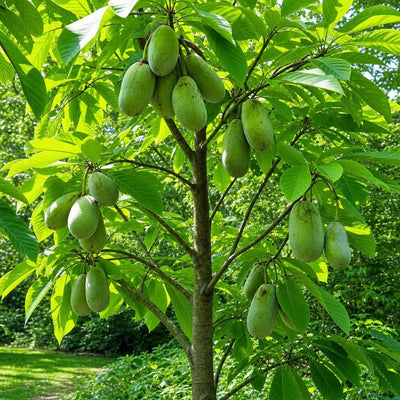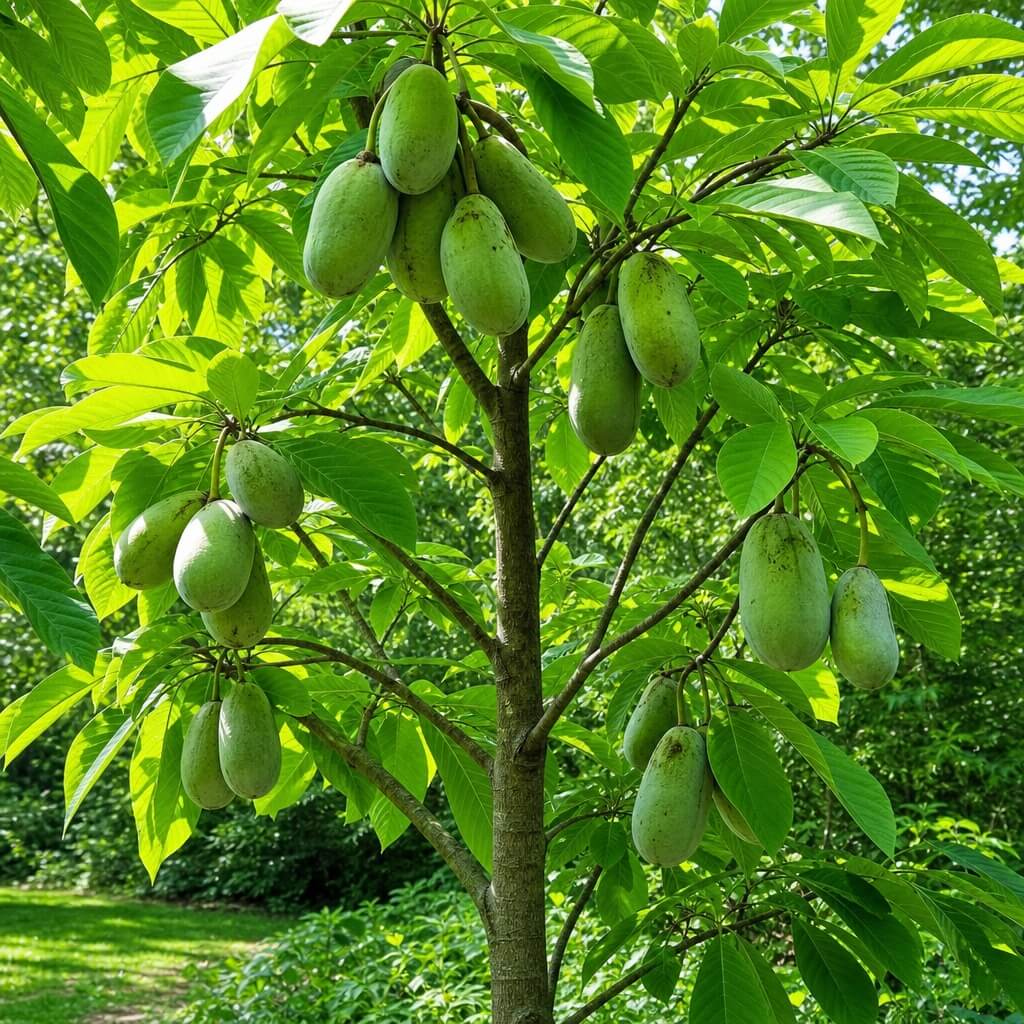
The pawpaw tree (Asimina triloba) is the host plant of the zebra swallowtail butterfly. Zebra swallowtail caterpillars eat only pawpaw leaves, so a yard without pawpaw cannot raise this butterfly. Planting two or more pawpaw trees in USDA zones 5–8 gives the zebra swallowtail a place to lay eggs and gives you fruit from August to October.
The zebra swallowtail is Tennessee's official state butterfly, and late fall is a good time to plan for it. Right now, the season's last caterpillars have become chrysalises that wait out winter near their pawpaw hosts. Iowa State University Extension notes that the caterpillars feed only on pawpaw and that their feeding does not seriously harm the tree. If you want to see these striped butterflies next year, the simplest step is to plant a few pawpaw trees for sale from our nursery.
What is the zebra swallowtail's host plant?
The zebra swallowtail's only host plants are pawpaws in the genus Asimina, and the common pawpaw (Asimina triloba) is the one that grows across Tennessee and most of the eastern U.S. Females lay single eggs on pawpaw leaves, and the caterpillars eat nothing else.
The Missouri Department of Conservation describes the adult as black and white striped with long tails and a wingspan of about 2 to 3 inches. Because the butterfly depends on pawpaw, it stays close to the moist, wooded bottomlands where pawpaw grows wild. Our guide on where pawpaw trees grow best covers those conditions in detail.
How does the zebra swallowtail use pawpaw through the year?
A zebra swallowtail spends its whole life cycle on or near pawpaw: egg, caterpillar and chrysalis all depend on the tree. Several broods hatch each year, so adults fly from early spring into fall.
| Months | Pawpaw tree | Zebra swallowtail |
|---|---|---|
| November–March | Dormant, bare branches | Overwinters as a chrysalis near the host tree |
| Late March–May | Maroon flowers in April–May; new leaves open | First adults fly; females lay eggs on young leaves |
| June–September | Full leaf; fruit sizing up | Caterpillars feed; more broods hatch |
| August–October | Fruit 3–6 inches long ripens | Last adults fly; late caterpillars form chrysalises |
Zebra swallowtail caterpillars prefer tender new leaves, so young pawpaw trees and fresh spring growth are favorite egg sites. To spot the trees in any season, see our pawpaw tree identification guide.
Do zebra swallowtail caterpillars hurt pawpaw trees?
Zebra swallowtail caterpillars rarely cause lasting harm to a pawpaw tree, and they do not reduce the fruit crop. They chew some leaves, and the tree simply pushes out new growth.
That makes a pawpaw a two-for-one planting: a native fruit tree for you and a nursery for Tennessee's state butterfly. Learn more about the harvest in our pawpaw fruit guide.
Why do deer pass pawpaw by?
Deer usually leave pawpaw trees alone because pawpaw leaves, twigs and bark contain natural compounds called acetogenins that give them a taste most deer and rabbits avoid. That makes the pawpaw tree a dependable deer-resistant choice for a native fruit planting.
The zebra swallowtail caterpillar is the notable exception: it is one of the few creatures that feeds on pawpaw leaves. For brand-new seedlings, a simple wire cage for the first few seasons keeps curious deer from stepping on or rubbing young stems.
What should I plant to attract zebra swallowtails?
Plant pawpaw trees for the caterpillars and short-tubed nectar flowers for the adults. Zebra swallowtails have a shorter "tongue" than most swallowtails, so they favor flowers like milkweed, redbud, blueberry and blackberry.
Good plants to start with
- Pawpaw tree: the host plant. Bare-root trees 1–5 ft tall usually fruit 4–7 years after planting. Sold Buy 1 Get 1 Free, Buy 3 Get 2 Free, and in 25-tree packs.
- Pawpaw tree seedlings: sold in packs of 100 or 500 for groves, woodland edges and butterfly habitat. Seedlings usually fruit in 5–8 years.
- Milkweed: a short-tubed nectar flower that adult zebra swallowtails visit.
How do I plant pawpaw for butterflies and fruit?
Plant at least two pawpaw trees within 30 feet of each other, spaced 8–15 feet apart, in USDA zones 5–8. Two trees cross-pollinate for fruit, and a small grove gives zebra swallowtails more leaves to use.
- Pick a spot with moist, well-drained soil.
- Soak bare-root trees, then set them at the same depth they grew in the nursery.
- Water deeply and spread mulch around the base, keeping it off the trunk.
- Plan for size: mature pawpaw trees reach 15–30 feet tall with a 15–20 foot spread.
Read do you need two pawpaw trees for fruit for pollination details, and our full how to grow pawpaw trees guide for year-round care.
What are good companion plants for pawpaw in a butterfly garden?
Good pawpaw companions are native plants that feed butterflies at different stages. Pair pawpaw with these:
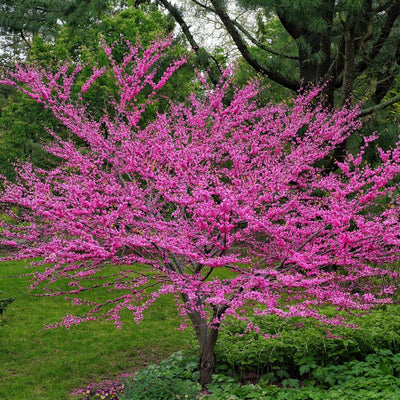
- Eastern redbud: early spring blooms that zebra swallowtails visit for nectar.
- Spicebush: a shade-loving native shrub and host plant for the spicebush swallowtail.
- Purple coneflower and blazing star: summer nectar for many butterflies.
Our post on how to grow milkweed to attract butterflies adds more ideas for the sunny side of the garden.
Frequently asked questions
What is the host plant of the zebra swallowtail?
The zebra swallowtail's host plant is pawpaw (Asimina). Its caterpillars eat only pawpaw leaves, and the common pawpaw, Asimina triloba, is the host across most of the eastern United States.
Do zebra swallowtail caterpillars damage pawpaw trees?
Zebra swallowtail caterpillars eat some pawpaw leaves but rarely cause lasting harm. The pawpaw tree grows new leaves, and fruit yield is not affected.
When do zebra swallowtails fly?
Adult zebra swallowtails fly from about late March into October, with several broods a year. They spend the winter as a chrysalis near pawpaw trees.
Are pawpaw trees deer resistant?
Yes. Pawpaw leaves, twigs and bark contain natural acetogenins that most deer avoid, so deer usually pass pawpaw trees by. A wire cage helps protect new seedlings from rubbing and trampling.
How many pawpaw trees do I need to attract zebra swallowtails?
A single pawpaw tree can host zebra swallowtail caterpillars, but plant at least two pawpaw trees within 30 feet of each other if you also want fruit. A small grove gives the butterflies more young leaves.
What is Tennessee's state butterfly?
The zebra swallowtail is Tennessee's official state butterfly. Its caterpillars depend on pawpaw trees, which grow wild across the state.
Keep reading
- How to Grow Pawpaw Trees: Planting, Care and Fruit
- Pawpaw Fruit: What It Is, What It Tastes Like and How to Get It
- When Are Pawpaws Ripe? Signs, Season and How to Pick Them
- Pawpaw Trees by State: Tennessee, Ohio, Missouri, Indiana, Virginia and Georgia
From our nursery
TN Nursery is a family-owned, third-generation nursery in Altamont, Tennessee, growing plants on 170 acres since 1959. Pawpaw is our #1 selling tree: we grow about 2 million pawpaw trees a year from about 2 tons of seed. Our plants have gone to landmarks like the Washington Monument and Arlington National Cemetery. When you're ready, buy pawpaw trees from us and bring Tennessee's state butterfly home.