
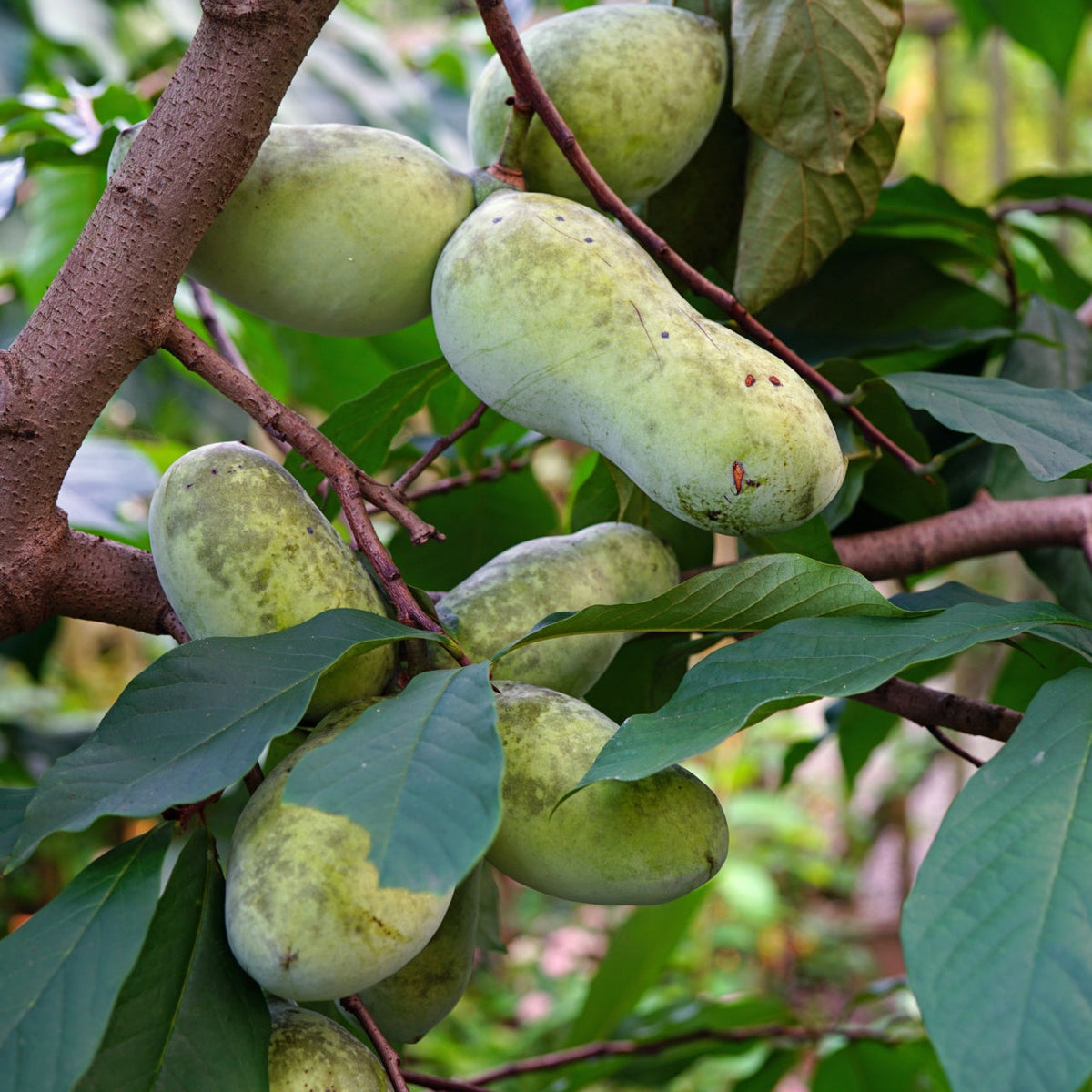
Pawpaw fruit is the largest edible fruit native to North America. It grows on the pawpaw tree (Asimina triloba) and has soft, custard-like yellow flesh that tastes like a blend of banana, mango and melon. Pawpaws ripen from August to October, and because the fruit is so delicate, the surest way to enjoy fresh pawpaws is to grow your own tree.
At TN Nursery, pawpaw is the tree we know best. Our family has grown native plants in Altamont, Tennessee since 1959, and each year we plant about 2 tons of pawpaw seed and grow roughly 2 million pawpaw trees. Here is everything we share with customers who ask what a pawpaw is, what it tastes like and how to get one.
What Is a Pawpaw?
A pawpaw is the fruit of Asimina triloba, a small native fruit tree of the eastern United States and the northernmost member of the custard apple family, Annonaceae. Its tropical relatives include the cherimoya, soursop and sugar apple, which explains the pawpaw's rich, tropical flavor.
The pawpaw goes by many names, including paw paw, common pawpaw, American pawpaw, Indiana banana and Hoosier banana. Wild pawpaw groves grow along rivers, creek bottoms and forest edges from the Great Lakes south to the Gulf states. Thomas Jefferson grew pawpaw at Monticello, and pawpaws fed families across the frontier for generations.
What Does Pawpaw Fruit Look Like?
Pawpaw fruit is oblong and green, about 3 to 6 inches long, and weighs 5 to 16 ounces. The fruit hangs in clusters of two to nine, which is why some growers call a cluster a "hand" of pawpaws, just like bananas.
- Skin: thin and smooth, green when firm and often turning yellow-green as it ripens
- Flesh: creamy, pale yellow to golden orange, with a custard texture
- Seeds: two rows of large, flat, brown seeds, easy to pick out with a spoon
- Aroma: a sweet, fruity fragrance that grows stronger as the pawpaw ripens
What Does Pawpaw Fruit Taste Like?
Pawpaw fruit tastes like a mix of banana, mango and melon, with notes some people compare to pineapple or vanilla custard. The texture is smooth and spoonable, much like a ripe avocado or a soft pudding.
Flavor varies a little from tree to tree. Pawpaws grown from seed carry natural variety, so one tree may lean toward banana and another toward mango. That variety is part of the fun of a backyard pawpaw grove.
When Is Pawpaw Season?
Pawpaw season runs from late August through October across most of the pawpaw's range, with the peak in September. Trees in the South ripen earlier, and trees near the Great Lakes ripen later.
A ripe pawpaw gives slightly when pressed, like a ripe peach, and smells sweet and fruity. Ripe fruit often drops from the tree on its own, and a gentle shake of the trunk brings down the ready ones.
How Do You Eat a Pawpaw?
The easiest way to eat a pawpaw is to cut it in half lengthwise and scoop out the custard-like flesh with a spoon. Set the large seeds and the skin aside as you go, and enjoy the creamy flesh fresh and chilled.
- Choose a pawpaw that is soft to the touch and fragrant.
- Rinse the fruit and cut it in half from end to end.
- Scoop the flesh into a bowl with a spoon.
- Pick out the large brown seeds.
- Eat it fresh, or blend it into a smoothie.
Pawpaw pulp is a favorite baking ingredient. Use it in place of banana in quick breads, muffins and pancakes, or stir it into ice cream, pudding and pies. Pawpaw pulp freezes well, so a fall harvest can last all winter.
Is Pawpaw Fruit Good for You?
Yes. Pawpaw fruit is a nutritious native food. It is a good source of vitamin C, magnesium, manganese and iron, and it provides fiber and antioxidants. Pawpaws are often called a superfruit for their nutrient content.
Where Can You Buy Pawpaw Fruit?
Fresh pawpaw fruit is rarely sold in grocery stores, because ripe pawpaws are so soft and delicate. You may find pawpaws for a few weeks each fall at farmers markets, roadside stands and pawpaw festivals in the eastern states.
The most reliable way to enjoy fresh pawpaws every year is to grow your own pawpaw trees. A backyard planting gives you tree-ripened fruit at its peak, picked the day you eat it. You can buy pawpaw trees from us bare root, and our Buy 1 Get 1 Free offer ships the two trees you need for fruit.
How Do You Grow Your Own Pawpaw Fruit?
To grow pawpaw fruit, plant at least two genetically different pawpaw trees within 30 feet of each other in moist, fertile, well-drained soil. Pawpaw trees grow in USDA zones 5 through 8, in full sun to partial shade, and bare-root nursery trees usually begin fruiting 4 to 7 years after planting.
- Plant two or more trees: pawpaws need a pollination partner to set fruit.
- Give young trees light shade: a little afternoon shade helps them settle in the first one to two summers.
- Keep the soil evenly moist: water deeply in dry spells and mulch the root zone.
- Move into full sun later: established trees bear the heaviest crops in full sun.
For the full planting walk-through, read our guide on how to grow pawpaw trees and our soil preparation guide for pawpaw trees. Planting a grove or orchard row? Our pawpaw seedlings ship in packs of 100 or 500 for the lowest price per tree.
What Grows Well With Pawpaw Trees?
Pawpaw pairs beautifully with other native fruit trees in an edible landscape. An American persimmon tree ripens sweet fruit right after the pawpaw harvest, and an elderberry adds summer berries at the edge of the grove. Explore more options in our fruit trees collection.
Pawpaw Fruit FAQ
Is pawpaw the same as papaya?
No. The American pawpaw (Asimina triloba) is a native North American fruit tree, while papaya (Carica papaya) is a tropical plant. In some countries papaya is called "pawpaw," which causes the mix-up.
Why are pawpaws called the Indiana banana?
Pawpaws earned the names Indiana banana and Hoosier banana because they grow wild across Indiana and the Midwest, and their creamy flesh and fruit clusters resemble bananas.
How long does pawpaw fruit last?
Ripe pawpaws keep about 2 to 3 days at room temperature and up to a week in the refrigerator. Scooped pawpaw pulp keeps for months in the freezer.
Can you grow pawpaw fruit in a backyard?
Yes. Pawpaw trees grow 15 to 30 feet tall, a good size for home yards, and two trees planted 8 to 15 feet apart can supply a family with fruit each fall.
Grow Your Own Pawpaws With TN Nursery
TN Nursery has grown hardy native plants since 1959, when Roscoe Tate started the nursery in Altamont, Tennessee. We have supplied plants to landmarks like the Washington Monument and Arlington National Cemetery, and today pawpaw is our number one selling tree. We grow our pawpaw trees for sale in our own fields, dig them while dormant and ship them bare root, ready to plant for a harvest of your own.