Updated November 2026. Most yards bloom hard for six weeks in spring and then go quiet. Pollinators don't. Bees, butterflies, moths and hummingbirds need flowers from the first warm day of late winter to the last mild night of fall. This calendar lines up 14 trees, shrubs and vines (13 native plus one non-native) by bloom month, so you can plant a yard that has something open nearly every month of the year. Every bloom window and wildlife fact below is cited to university extension or USDA sources. You're welcome to use the infographic and the table with credit and a link.
Infographic at a glance: Native Tree & Shrub Bloom Calendar (2027)
- 75% of the world's flowering plants depend on animal pollinators (USDA NRCS).
- 4,000+ native bee species live in the U.S. (USDA Forest Service).
- 212 of 242 major U.S. cities now leaf out earlier than in the early 1980s, by about 6 days on average (Climate Central, using USA National Phenology Network data).
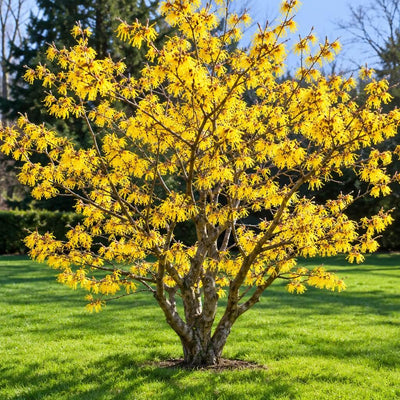
- October to December: witch hazel blooms and is pollinated by moths, after nearly everything else has quit (NC State Extension).
Why a Year-Round Bloom Calendar Matters
According to the USDA Natural Resources Conservation Service, three-fourths of the world's flowering plants and about 35 percent of the world's food crops depend on animal pollinators to reproduce. The USDA Forest Service counts more than 4,000 species of native bees in the United States. Many of them are active for only part of the year, and a yard that blooms only in April leaves the early and late fliers with nothing.
Timing is also moving. A March 2026 Climate Central analysis of USA National Phenology Network data found that first leaves now emerge earlier in 212 of 242 major U.S. cities (88 percent), by six days on average compared with the early 1980s. The Southeast was among the regions with the largest shifts. Planting a spread of bloom times is a simple hedge: if one plant opens early and gets frosted, the next one in line is still coming.
The Month-by-Month Bloom Calendar
Bloom months below are typical ranges from extension sources for the Southeast. Your yard may run a couple of weeks ahead of or behind these windows depending on your zone, elevation and the year. (Not sure of your zone? See our guide to the new USDA hardiness zone map.)
| Plant | Typical bloom | Who it feeds | Source |
|---|---|---|---|
| Red maple | January–March | Bees (nectar and pollen) | Alabama Extension |
| American elm | February–March | Bees (pollen) | Alabama Extension (elms) |
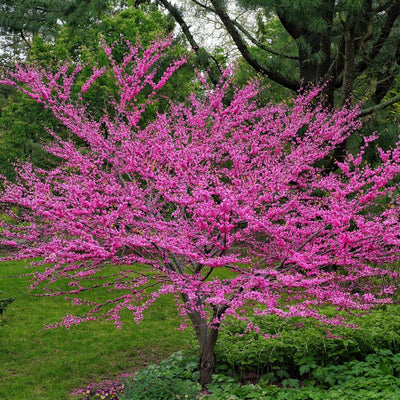
| Eastern redbud | March–May | Bees, butterflies; specialist bee Habropoda laboriosa | Alabama Ext.; NC State |
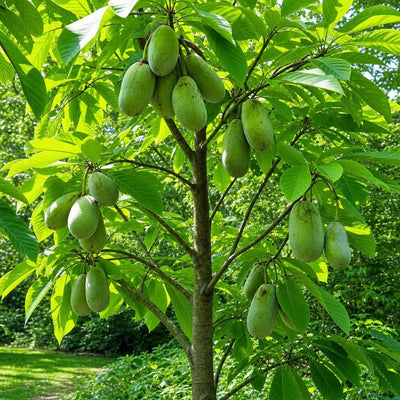
| Pawpaw | Early spring, before leaves | Flies and beetles; zebra swallowtail host | NC State |
| Red buckeye | March–April | Hummingbirds, bees, butterflies | NC State |
| Flowering dogwood | March–May | Butterflies, specialist Andrena bees; spring azure host | NC State |
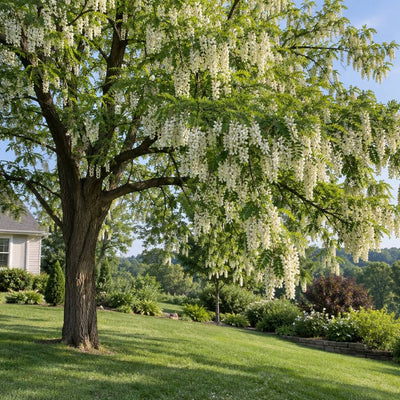
| Black locust | April–June | Bees (nectar and pollen) | Alabama Extension |
| Tulip poplar | April–June | Honey bees: a primary nectar plant | Alabama Extension |
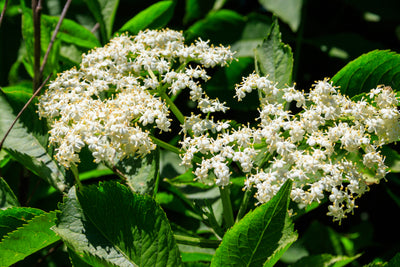
| American elderberry | Late spring–summer, peak June | Butterflies and other insects; songbirds eat the fruit | NC State |
| Sourwood | June–July | Bees (nectar and pollen) | Alabama Extension |
| Buttonbush | June–August (into September) | Bees, butterflies, hummingbirds | NC State |
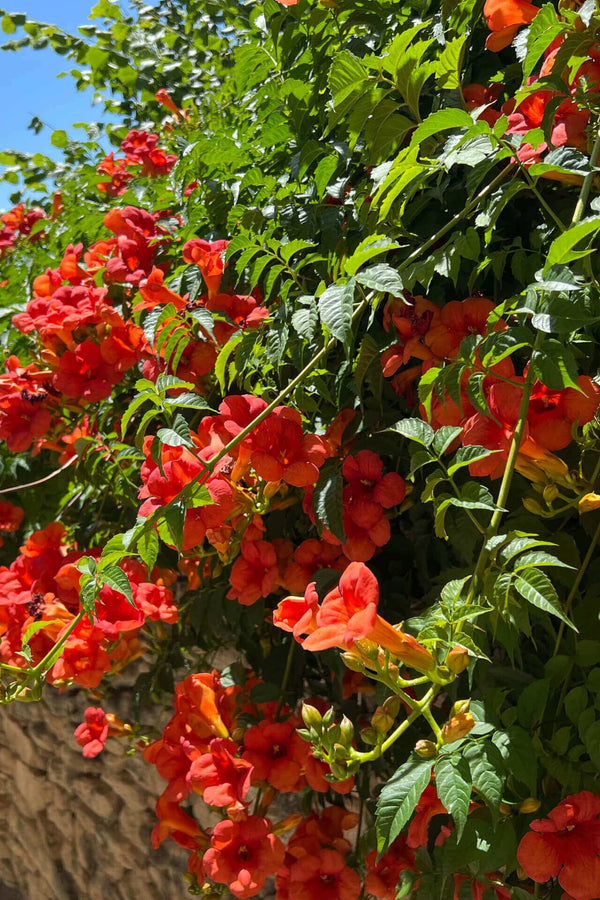
| Trumpet vine | June–September | Hummingbirds (principal pollinator), bees | NC State |
| Crepe myrtle (non-native) | Late June–September | Bees and other pollinators | NC State |
| Witch hazel | October–December (late fall to late winter) | Owlet (noctuid) moths, late gnats and flies | NC State; Northern Woodlands |
Late Winter and Early Spring: The Hungry Gap
The first bees out of winter have few options. Alabama Cooperative Extension lists red maple as a nectar and pollen source from January through March and elms as a pollen source in February and March. These are big trees, and on a warm late-winter day a single red maple in flower can hum with insects while the rest of the yard is still brown.
By March the understory takes over. Eastern redbud flowers before it leafs out, and NC State Extension notes that the genus supports a specialist bee, Habropoda laboriosa. Redbud is close to our hearts: TN Nursery has grown more than 200,000 of them. Pawpaw blooms at the same time with small maroon flowers that most people walk past. NC State explains why they smell faintly of something rotting: the flowers are pollinated by flies and beetles, not bees. Pawpaw leaves are also the larval food of the zebra swallowtail butterfly. We've grown about 2 million pawpaw trees from roughly 2 tons of seed, and that butterfly connection is one of the questions customers ask us about most.
Red buckeye fills March and April with red tubular flowers that NC State lists as a nectar source for hummingbirds, butterflies and bees in early spring. One caution: every part of the plant is highly toxic if eaten, and NC State flags it as a problem for cats, dogs and horses, so site it where pets and livestock won't chew on it.
Mid to Late Spring: The Big Nectar Flow
April through June is when trees carry the load. Alabama Extension calls tulip poplar a primary nectar plant that "produces a high-quality, deep-amber, full-flavored honey," and lists black locust as a nectar and pollen source from April to June. Flowering dogwood blooms from March to May, according to NC State, which notes that three specialized Andrena bees depend on dogwoods and that the tree hosts the spring azure butterfly. Its red fall fruit then feeds songbirds, quail and wild turkey through winter.
Want several spring bloomers at once? Browse our flowering trees collection.
Summer: Shrubs and Vines Step In
Once the trees finish, shrubs and vines keep the calendar going. American elderberry (also sold as Black American Elderberry) blooms in late spring and summer and, per NC State, flowers most heavily in June in broad, creamy clusters that draw butterflies and other insects. The berries that follow feed many songbird species. Sourwood is listed by Alabama Extension as a June–July nectar and pollen plant.
Buttonbush produces round, pincushion-like flower heads from June into August or September. NC State lists bees, butterflies (including eastern tiger swallowtails) and hummingbirds as visitors, and it thrives in wet spots where little else will. Trumpet vine flowers from June through September, and NC State names hummingbirds as its principal pollinator. It spreads by suckers and seed, so give it a sturdy support and an edge you can mow.
Crepe myrtle is the one non-native on our list. We include it because it fills the late-summer slot in a lot of Southern yards. NC State describes summer-blooming crepe myrtles flowering from late June into September and lists them as attracting pollinators. If you'd rather stay all-native, lean on buttonbush and trumpet vine for that stretch.
Fall and Early Winter: Witch Hazel Closes the Year
Witch hazel is the reason this calendar doesn't end in September. NC State lists its yellow, spidery flowers from October to December and notes they are pollinated by noctuid moths. Writing in Northern Woodlands, D. Glenn Miller describes how these cold-adapted owlet moths stay active on nights near freezing by shivering to warm their flight muscles, drawing on the work of biologist Bernd Heinrich. By that timeline, witch hazel should be flowering in Tennessee woods right now. It's one of the best reasons to plant in late fall.
How to Use This Calendar When You Plant This Winter
- Fill the gaps first. Most yards already have April covered. Add a red maple for late winter, buttonbush or trumpet vine for August, and witch hazel for fall.
- Plant during dormancy. Late fall through early spring is prime planting time for dormant trees and shrubs in the South. Our tree planting myths guide covers depth, mulch and watering.
- Plant in groups. Pawpaw needs a second, unrelated plant to set fruit (NC State notes the flowers are self-incompatible), and several plants of one species also make a bigger target for pollinators.
- Skip the spray. NC State's redbud page notes the tree is sensitive to common lawn herbicides. Pollinators are sensitive to insecticides too.
For more options, shop our pollinator plants and native trees collections.
About TN Nursery
TN Nursery was founded in 1959 by Roscoe Tate and grows native trees, shrubs and perennials on 170 acres in Tennessee. Our maple trees were even used by the U.S. Air Force and the Discovery Channel to film a time-lapse of a tree going from dormancy to full leaf.
Embed This Infographic
Bloggers, teachers, extension offices and journalists are welcome to share this bloom calendar. Please credit TN Nursery with a link back to this page. Copy and paste this code:
<p><a href="https://tnnursery.net/blogs/garden-blog/native-tree-shrub-bloom-calendar">Native Tree & Shrub Bloom Calendar (2027)</a>: 14 trees, shrubs and vines that feed pollinators from January to December. Infographic by <a href="https://tnnursery.net/">TN Nursery</a>.</p>
Need the full-size 1200px PNG? Email us and we'll send it.
Sources
- USDA Natural Resources Conservation Service. Insects and Pollinators.
- USDA Forest Service. Bee Pollination.
- Climate Central. Earlier Spring 2026 (March 11, 2026), using USA National Phenology Network First Leaf Index data, 1981–2025.
- Alabama Cooperative Extension System. Nectar and Pollen Producing Plants of Alabama: A Guide for Beekeepers (ANR-0351).
- NC State Extension Gardener Plant Toolbox: Hamamelis virginiana; Asimina triloba; Cercis canadensis; Cornus florida; Aesculus pavia; Sambucus canadensis; Cephalanthus occidentalis; Campsis radicans; Lagerstroemia 'Natchez'.
- D. Glenn Miller. Witch Hazel, The Outside Story, Northern Woodlands (October 30, 2023), citing Bernd Heinrich, Scientific American (1987).