Most tree-planting advice gets handed down from one gardener to the next. Some of it holds up, and some of it quietly kills trees. We asked a simple question: what do university extension services actually say? Below are 10 common tree planting myths, each checked against published extension research, plus a free infographic you can share or embed.
TN Nursery has grown trees in Tennessee since Roscoe Tate founded the nursery in 1959. Today we grow on 170 acres, including roughly 2 million pawpaw trees started from about 2 tons of seed and more than 200,000 redbuds. We've watched a lot of trees go into the ground, and the same mistakes come up every fall. Here's what the research says instead.
Infographic: 10 Tree Planting Myths, Busted
| Myth | What extension research says |
|---|---|
| 1. Spring is the best time to plant | Roots keep growing in fall until soil drops below 40°F |
| 2. Buy the biggest tree you can | In a 10-year study, 1-inch trees outgrew 6-inch trees |
| 3. Dig the hole deep | Only as deep as the root ball, 2–3× as wide |
| 4. Amend the hole with compost or peat | No consistent long-term benefit; use the native soil |
| 5. Gravel in the bottom helps drainage | It does the opposite: water perches above it |
| 6. Fertilize at planting | Nitrogen at planting seems to suppress root growth |
| 7. Cut back a third of the branches | Leaves and buds fuel root growth; prune only dead or broken wood |
| 8. Stake every new tree | Most don't need it; remove stakes after one growing season |
| 9. More mulch is better | 2–4 inches, kept at least 4 inches from the trunk |
| 10. A little water every day | Deep weekly watering: about 10 gallons per inch of trunk diameter |
Sources: UNH Extension; Univ. of Kentucky; Univ. of Maine Extension; Iowa State Extension; Texas A&M AgriLife Extension; Univ. of Maryland Extension; Penn State Extension; Univ. of Illinois Extension. Full citations below.
Myth 1: Spring is the best time to plant trees
Spring feels like planting season, but fall often gives trees a better start. When air temperatures fall below soil temperatures, top growth stops while roots keep developing. University of New Hampshire Extension notes that "roots continue to develop until the soil dips below 40℉" and recommends giving plants at least six weeks of mild weather before hard freezes. In northern New England, it suggests early October as a deadline.
Farther south, the window runs much later. University of Kentucky horticulturist William M. Fountain writes that in Kentucky "the VERY BEST time to plant new trees and shrubs is the fall," and that late October until about the first of the year is the best time. For most of Tennessee and the upper South, that makes November and December prime time for dormant native trees.
Myth 2: Buy the biggest tree you can afford
A big tree looks like a head start. Often it isn't. University of Maine Cooperative Extension reports that in a ten-year study, trees planted at 1 inch in diameter outgrew 6-inch trees planted at the same time, because "smaller trees establish their root systems more quickly after transplanting than larger trees."
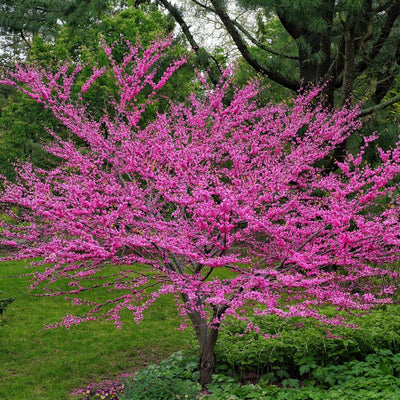
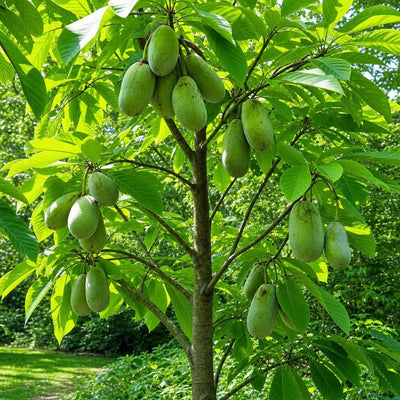
That's one reason young, bare-root stock works so well. A young eastern redbud or pawpaw tree loses less of its root system at transplant and has less top growth to support while it settles in.
Myth 3: Dig the hole deep so roots grow deep
Tree roots don't go looking for depth. University of Maine Extension says about 90 percent of the roots of most woody plants are in the top 12 inches of soil, and recommends a hole "only as deep as the root ball, and two to three times as wide." Iowa State University Extension gives the same 2–3× width and says the trunk flare should sit level with or slightly higher than the surrounding grade.
Planting too deep is not a harmless mistake. Penn State Extension warns that "planting a tree deep can lead to girdling roots, root death, and death of the entire tree." Before you backfill, find the trunk flare, the place where the trunk widens into the roots, and make sure it sits at the soil surface.
Myth 4: Fill the hole with compost or peat moss
Rich backfill seems kind. In practice, roots that find loose, rich soil in the hole tend to stay there. Texas A&M AgriLife Extension's Travis County soil myth-busting guide reviews the research and concludes that "amended soil has no consistent, reliable benefit to woody plant performance," and that woody plants in amended holes "performed no better, long term, than those planted without amendments." Iowa State agrees that the soil removed from the hole "is the most appropriate backfill material."
University of Maine allows one exception: in extremely gravelly or heavy soils such as construction fill, you can amend up to 25 percent by volume.
Myth 5: Put gravel in the bottom for drainage
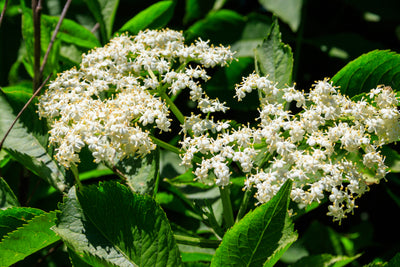
This one is still common, and it backfires. The same Texas A&M guide explains that "while adding coarse materials like sand or pebbles is thought to improve drainage, in fact it does the opposite." Water doesn't move from fine soil into a coarse layer until the soil above is saturated, so a layer of gravel creates a perched water table that holds water around the roots. If a site drains poorly, choose a tree suited to wet soil, such as red maple or Black American Elderberry, rather than trying to engineer the hole.
Myth 6: Fertilize at planting to get it going
University of Maryland Extension is direct: "It is not recommended to fertilize at planting time." It explains that "the application of nitrogen during this period seems to suppress root growth rather than enhance it," and that newly planted trees do not benefit from fertilizer. Penn State adds that "fertilizers are not tree food." Trees make their own food through photosynthesis, so test the soil before adding anything.
Myth 7: Prune a third of the branches to balance the roots
Older planting guides told gardeners to remove a third or more of a young tree's branches to match its smaller root system. Penn State Extension explains why that backfires: branches carry the leaves that make energy and the buds that produce the hormones that drive new root growth. Prune only dead, broken or rubbing branches at planting, and save structural pruning for later years.
Myth 8: Every new tree needs a stake
Trees build stronger trunks and roots when they can sway. University of Maine Extension says small trees that stand firm don't need stakes; stake only on very windy sites or when the root system is small, tie loosely, and "in most instances, remove the stakes after one growing season." Iowa State recommends wide, flexible ties rather than rope or wire.
Myth 9: More mulch is better
Mulch helps, but piling it against the trunk does harm. University of Illinois Extension recommends 2 to 4 inches of mulch, kept "at least 4 inches away from the trunk," and warns that "mulch against the tree can soften the bark, leading to insects, diseases, and root girdling." Penn State sets the ceiling at 3–4 inches and says to top up only every few years when the layer thins. Spread it wide like a doughnut, not a volcano.
Myth 10: A little water every day is best
Light daily watering keeps roots near the surface, where they dry out fastest. University of Maine Extension recommends "a thorough, deep watering that saturates the root zone once a week," especially in the planting year. Penn State gives two rules of thumb: about 1 inch of water over the root zone each week, or 10 gallons per inch of trunk diameter. UNH Extension suggests wetting the soil to a depth of eight to ten inches at least once a week. Fall-planted trees still need water until the ground freezes, and again during dry winter spells in the South.
Putting it together: a research-backed fall planting checklist
- Plant in fall while soil is still above 40°F; in much of the South that runs into December.
- Choose younger trees; they establish faster.
- Dig 2–3 times as wide as the root ball and no deeper. Keep the trunk flare at grade.
- Backfill with the native soil. No gravel, no fertilizer.
- Prune only dead or broken branches.
- Skip the stake unless the site is windy, and remove it after one season.
- Mulch 2–4 inches deep, pulled back from the trunk.
- Water deeply once a week through the first growing season.
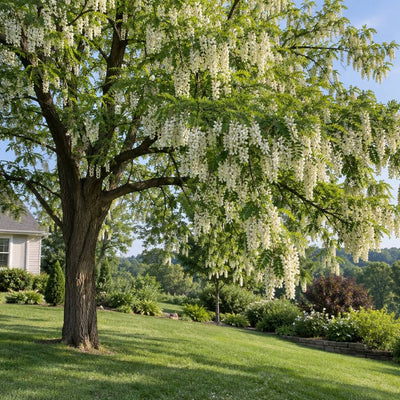
Good candidates for fall planting include white oak, sugar maple, elm, black locust and witch hazel, along with the rest of our shade trees. A little trivia: TN Nursery maple trees were used by the USAF and the Discovery Channel to film a time-lapse of a tree going from dormancy to full leaf. For more numbers on why trees matter, see our tree planting statistics for 2027 and our guide to state trees and Arbor Day dates.
Share this infographic
Journalists, educators, Master Gardeners and bloggers are welcome to use the myth table and infographic, with credit and a link back to this page. Copy the snippet below, or email us for the full-resolution 1200px PNG.
<p><a href="https://tnnursery.net/blogs/garden-blog/tree-planting-myths">10 Tree Planting Myths, Busted: what extension research says</a> (infographic by <a href="https://tnnursery.net/">TN Nursery</a>)</p>
Sources
- University of New Hampshire Extension, "Is fall a good time to plant trees and shrubs?" (Aug. 29, 2019).
- William M. Fountain, University of Kentucky, "Fall Planting," Tree Talk.
- Marjorie Peronto, University of Maine Cooperative Extension, "Bulletin #2512, Debunking Old Gardening Myths: Caring for the Woody Plants in Your Home Landscape" (2011).
- Iowa State University Extension and Outreach, "Tree Planting Basics."
- Texas A&M AgriLife Extension, Travis County, "Soil Myth Busting" (2024).
- University of Maryland Extension, "Fertilizing Trees and Shrubs and Nutrient Deficiency Symptoms" (updated Feb. 17, 2023).
- Vincent Cotrone, Penn State Extension, "Tree Myths and Misconceptions" (updated Oct. 25, 2026).
- University of Illinois Extension, "Proper Mulching Techniques."