Most people buy fruit from the same three bins: bananas, apples and oranges. Meanwhile four fruits that grow wild across the eastern United States, pawpaw, American persimmon, American elderberry and red mulberry, sit in the woods and fencerows each year, mostly eaten by birds and raccoons. We pulled the nutrition numbers for all seven from USDA FoodData Central and Kentucky State University's pawpaw program and lined them up side by side. The short version: on vitamin C, fiber and several minerals, the natives hold their own against grocery fruit, and in some cases they beat it by a wide margin.
Infographic at a glance: Native Fruit vs. Grocery Fruit (per 100 g raw)
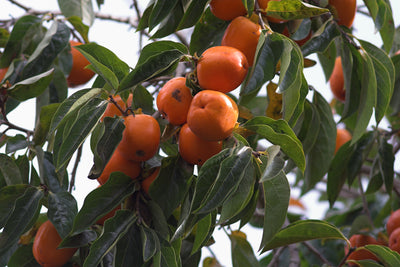
- American persimmon: 66 mg vitamin C, about 14 times an apple (4.6 mg) and 24% more than an orange (53.2 mg).
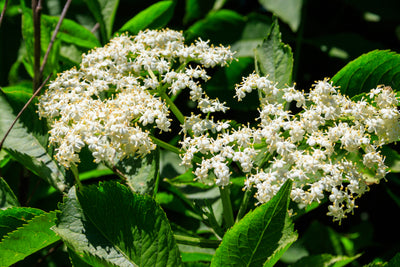
- American elderberry: 7.0 g fiber, nearly 3 times an apple or orange (2.4 g). Cook before eating.
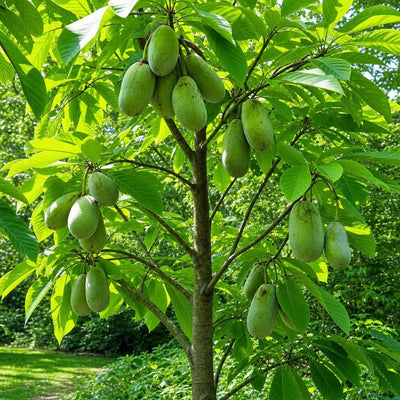
- Pawpaw: 18.3 mg vitamin C, about twice a banana (8.7 mg), with similar potassium (345 mg vs 358 mg).
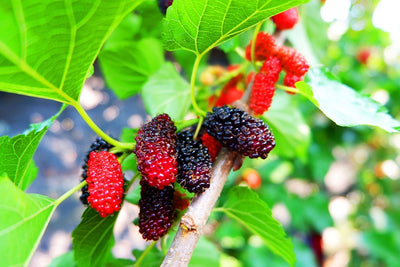
- Mulberry: 36.4 mg vitamin C, about 8 times an apple, at 43 calories.
The Comparison Table
All values are per 100 grams (about 3.5 ounces) of raw fruit. Grocery fruit and three of the natives come from USDA FoodData Central's SR Legacy dataset. Pawpaw comes from Kentucky State University's published comparison table, which notes that the pawpaw sample was analyzed with the skin on.
| Fruit | Calories | Fiber (g) | Vitamin C (mg) | Potassium (mg) | Iron (mg) | Calcium (mg) |
|---|---|---|---|---|---|---|
| Pawpaw (KSU; analyzed with skin) | 80 | 2.6 | 18.3 | 345 | 7.0 | 63 |
| American persimmon | 127 | not listed | 66 | 310 | 2.5 | 27 |
| American elderberry (raw) | 73 | 7.0 | 36 | 280 | 1.6 | 38 |
| Mulberry | 43 | 1.7 | 36.4 | 194 | 1.9 | 39 |
| Banana | 89 | 2.6 | 8.7 | 358 | 0.26 | 5 |
| Apple, with skin | 52 | 2.4 | 4.6 | 107 | 0.12 | 6 |
| Orange | 47 | 2.4 | 53.2 | 181 | 0.1 | 40 |
Sources: USDA FoodData Central SR Legacy; Kentucky State University Pawpaw Program. See the full source list below.
American Persimmon: The Vitamin C Leader
The native American persimmon (Diospyros virginiana) posted the highest vitamin C value in the group at 66 mg per 100 g, ahead of the orange at 53.2 mg and roughly 14 times the 4.6 mg in an apple. It also carries 2.5 mg of iron, nearly ten times a banana's 0.26 mg, and 310 mg of potassium.
It is also the most calorie-dense fruit on the list (127 calories per 100 g), which makes sense to anyone who has eaten a ripe one. They are soft, sticky and sweet, close to a date in texture. Timing matters: Alabama Cooperative Extension warns that unripe persimmons are "powerfully astringent," and suggests waiting until after the first frost to be sure the fruit is ripe. Most persimmon trees are either male or female, so a fruiting tree needs a male nearby, and Alabama Extension puts first fruit at 4 to 9 years for seedlings and 3 to 5 years for grafted trees. Deer, turkeys, squirrels and raccoons all compete for the crop.
American Elderberry: The Fiber Champion
American elderberry (also sold as Black American Elderberry) had the most fiber of any fruit we compared: 7.0 g per 100 g, close to three times an apple or orange. It matches mulberry on vitamin C (36 mg) and carries 280 mg of potassium at only 73 calories.
One caution belongs in every elderberry article. Ohio State University Extension notes reports of toxicity from unripe fruit and from uncooked ripe berries, and advises avoiding unripe berries and cooking ripe ones. That is why elderberries usually end up as syrup, jam, pie or wine rather than eaten off the bush. The USDA values above are for raw berries, so cooked products will differ.
Elderberry is also the fastest of the four to produce. Ohio State expects a light crop in the second year and a full crop in the third or fourth year. Plants sucker freely and can form a solid hedge in two to three years, which makes them a good fit for hedgerows, wet edges and stream banks.
Pawpaw: Banana-Level Potassium, Twice the Vitamin C
The pawpaw (Asimina triloba) is often called a "Tennessee banana," and the numbers back up the comparison. Pawpaw and banana are close on potassium (345 mg vs 358 mg) and fiber (2.6 g each), but pawpaw has about twice the vitamin C (18.3 mg vs 8.7 mg) and fewer calories (80 vs 89).
Kentucky State University's table also lists unusually high minerals for pawpaw: 7.0 mg of iron, 63 mg of calcium and 113 mg of magnesium per 100 g. Read those with care. KSU notes that its sample was analyzed with the skin, which isn't eaten, so some of the fiber and other components would be lost when you scoop the pulp.
According to UT Extension, grafted pawpaws bear in three to four years after planting and seedlings in five to eight. Pawpaw flowers need pollen from a genetically different tree, so plant at least two. In Tennessee the harvest runs September to October. For a full growing guide, see our post on how to grow pawpaw trees, or read about what pawpaw fruit tastes like.
Pawpaw is a fruit we know well. TN Nursery, founded in 1959 by Roscoe Tate, has grown roughly 2 million pawpaw trees from about 2 tons of seed on our 170 acres in Tennessee. Planting a grove or windbreak? Pawpaw seedlings are sold in bundles of 100 and 500.
Mulberry: The Lightest Fruit on the List
Mulberries had the fewest calories we found (43 per 100 g) along with 36.4 mg of vitamin C, about 8 times an apple, and 1.9 mg of iron. The USDA entry is for mulberries generally rather than a single species. Our native red mulberry (Morus rubra) ripens fast: Iowa State University Extension says the fruit matures about two months after the tree flowers in early spring, and the sweet berries draw songbirds, raccoons and squirrels. If you want birds in the yard in early summer, few trees work faster. TN Nursery's mulberry trees come in red and white; choose red if you want the native.
From Planting to First Harvest
| Fruit | Years to first fruit | Pollination note | Source |
|---|---|---|---|
| Pawpaw | Grafted 3–4; seedlings 5–8 | Needs a genetically different second tree | UT Extension D 234-C |
| American persimmon | Grafted 3–5; seedlings 4–9 | Most trees are male or female | Alabama Extension |
| American elderberry | Light crop year 2; full crop year 3–4 | Suckers into a solid hedge in 2–3 years | Ohio State ANR-0110 |
| Red mulberry | Fruit about 2 months after spring bloom | Trees may carry male and female flowers on one or separate trees | Iowa State Extension |
Late fall and winter, while trees are dormant, is a good time to plant all four. If you are building a backyard food forest, our fruit tree collection and fruit and berry plants include these natives along with the American plum, another native fruit tree that birds love.
Why Native Fruit Is Worth Planting
Grocery fruit is bred for shipping and shelf life. Pawpaws bruise within days, ripe persimmons are too soft to stack, mulberries smear and elderberries need cooking, which is exactly why you rarely see them in stores. Growing them yourself is the most reliable way to eat them. Each one also feeds wildlife, fits naturally into an eastern U.S. landscape, and asks for little once established.
A quick note: this comparison is about nutrient content, not health claims. If you have a medical condition or take medications, talk with your doctor before adding new foods or supplements such as elderberry products.
Embed This Infographic
Writers, teachers and extension educators are welcome to use the "Native Fruit vs. Grocery Fruit" infographic and data with credit. Copy this code to embed it with a link back to this page:
<p><a href="https://tnnursery.net/blogs/garden-blog/native-fruit-nutrition-comparison">Native Fruit vs. Grocery Fruit: Nutrition Comparison of Pawpaw, Persimmon, Elderberry and Mulberry</a> (infographic and data by <a href="https://tnnursery.net/">TN Nursery</a>)</p>
Sources
- USDA FoodData Central, SR Legacy: Persimmons, native, raw; Elderberries, raw (FDC 171727); Mulberries, raw; Bananas, raw (FDC 173944); Apples, raw, with skin (FDC 171688); Oranges, raw, all commercial varieties. fdc.nal.usda.gov
- Kentucky State University Pawpaw Program, "Pawpaw Description and Nutritional Information," Table 2: Nutritional Comparison of Pawpaw with Other Fruits. kysu.edu
- Rose, M. and Bumgarner, N., "Pawpaws for Non-Commercial Growing in Tennessee," UT Extension D 234-C (2024). uthort.tennessee.edu
- Alabama Cooperative Extension System, "Native Fruits: Persimmon." aces.edu
- Gao, Slaughter, Barrett and Rivera, "Elderberry Production," Ohio State University Extension ANR-0110 (Jan. 5, 2023). ohioline.osu.edu
- Iowa State University Extension and Outreach, Forestry, "Red Mulberry." extension.iastate.edu