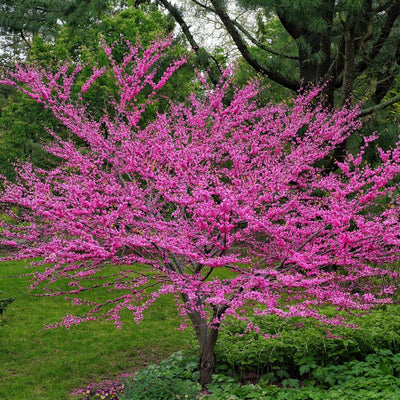
Every state has an official tree, and every state has an Arbor Day. Most people know neither. We put both in one place: all 50 state trees, each state's Arbor Day rule, and the actual calendar date it lands on for the 2026–27 planting season. Teachers, garden clubs, city foresters and reporters are welcome to use the table and the stats below with a link back to this page.
State trees and Arbor Day at a glance
- 49 of 50 state trees are native to their state. Hawaii's kukui (candlenut) is the only exception, according to the USDA National Arboretum.
- Sugar maple is the most-chosen single species. It is the state tree of 4 states: New York, Vermont, West Virginia and Wisconsin.
- Oaks represent 6 states (Connecticut, Georgia, Illinois, Iowa, Maryland, New Jersey), plus Washington, D.C.'s scarlet oak.
- Pines are the most common genus: 10 states picked one.
- 23 states hold Arbor Day on the national date, the last Friday in April. In 2027 that is April 30.
- 9 states hold Arbor Day between November and February, and 5 more do in March.
Infographic: a 1200px version of these stats and the 50-state grid is available free for publication. See "Embed this infographic" below.
All 50 state trees and 2026–27 Arbor Day dates
State trees come from the USDA National Arboretum's State Tree and Flower Chart, updated for Utah, which replaced the blue spruce with the quaking aspen in 2014 (S.B. 41). Arbor Day rules come from the Congressional Research Service's December 2025 Arbor Day Fact Sheet. We converted each rule to a date. States with a fall or December Arbor Day show the next upcoming one.
| State | Official state tree | Arbor Day rule | Next Arbor Day |
|---|---|---|---|
| Alabama | Longleaf pine | Last full week of February | Late Feb. 2027 |
| Alaska | Sitka spruce | Third Monday in May | May 17, 2027 |
| Arizona | Palo verde | Last Friday in April | Apr 30, 2027 |
| Arkansas | Pine | Third Monday in March | Mar 15, 2027 |
| California | Coast redwood & giant sequoia | March 7 | Mar 7, 2027 |
| Colorado | Blue spruce | Third Friday in April | Apr 16, 2027 |
| Connecticut | White oak | Last Friday in April | Apr 30, 2027 |
| Delaware | American holly | Last Friday in April | Apr 30, 2027 |
| Florida | Sabal (cabbage) palmetto | Third Friday in January | Jan 15, 2027 |
| Georgia | Live oak | Third Friday in February | Feb 19, 2027 |
| Hawaii | Kukui (candlenut) | First Friday in November | Nov 5, 2027 |
| Idaho | Western white pine | A day in April | Set each April |
| Illinois | White oak | Last Friday in April | Apr 30, 2027 |
| Indiana | Tulip poplar | Last Friday in April | Apr 30, 2027 |
| Iowa | Oak | Last Friday in April | Apr 30, 2027 |
| Kansas | Eastern cottonwood | Last Friday in April | Apr 30, 2027 |
| Kentucky | Tulip poplar | As designated | Set by proclamation |
| Louisiana | Bald cypress | Third Friday in January | Jan 15, 2027 |
| Maine | Eastern white pine | Third full week of May | Mid-May 2027 |
| Maryland | White oak | First Wednesday in April | Apr 7, 2027 |
| Massachusetts | American elm | Last Friday in April | Apr 30, 2027 |
| Michigan | Eastern white pine | Last Friday in April | Apr 30, 2027 |
| Minnesota | Red pine | Last Friday in April | Apr 30, 2027 |
| Mississippi | Magnolia | Second Friday in February | Feb 12, 2027 |
| Missouri | Flowering dogwood | First Friday in April | Apr 2, 2027 |
| Montana | Ponderosa pine | Last Friday in April | Apr 30, 2027 |
| Nebraska | Eastern cottonwood | Last Friday in April | Apr 30, 2027 |
| Nevada | Singleleaf pinyon & bristlecone pine | Last Friday in April | Apr 30, 2027 |
| New Hampshire | Paper birch | Last Friday in April | Apr 30, 2027 |
| New Jersey | Northern red oak | Last Friday in April | Apr 30, 2027 |
| New Mexico | Pinyon pine | Second Friday in March | Mar 12, 2027 |
| New York | Sugar maple | Last Friday in April | Apr 30, 2027 |
| North Carolina | Longleaf pine | First Friday after March 15 | Mar 19, 2027 |
| North Dakota | American elm | First Friday in May | May 7, 2027 |
| Ohio | Ohio buckeye | Last Friday in April | Apr 30, 2027 |
| Oklahoma | Eastern redbud | Friday after the second Monday in February | Feb 12, 2027 |
| Oregon | Douglas-fir | Month of April | During April |
| Pennsylvania | Eastern hemlock | Last Friday in April | Apr 30, 2027 |
| Rhode Island | Red maple | Last Friday in April | Apr 30, 2027 |
| South Carolina | Sabal (cabbage) palmetto | First Friday in December | Dec 4, 2026 |
| South Dakota | Black Hills spruce | Last Friday in April | Apr 30, 2027 |
| Tennessee | Tulip poplar | First Friday in March | Mar 5, 2027 |
| Texas | Pecan | First Friday in November | Nov 5, 2027 |
| Utah | Quaking aspen | Last Friday in April | Apr 30, 2027 |
| Vermont | Sugar maple | First Friday in May | May 7, 2027 |
| Virginia | Flowering dogwood | Last Friday in April | Apr 30, 2027 |
| Washington | Western hemlock | Second Wednesday in April | Apr 14, 2027 |
| West Virginia | Sugar maple | Second Friday in April | Apr 9, 2027 |
| Wisconsin | Sugar maple | Last Friday in April | Apr 30, 2027 |
| Wyoming | Plains cottonwood | Last Monday in April | Apr 26, 2027 |
Notes: California and Nevada each list two state trees. USDA's chart lists Arkansas's tree simply as "pine" and Iowa's as "oak," with no species named. Where a state sets its date by proclamation or within a month (Idaho, Kentucky, Oregon), check the state forestry agency for the exact day.
What the state tree list tells us
States overwhelmingly chose natives. The USDA National Arboretum notes that every state tree except Hawaii's is native to the state that named it. That makes the list a ready-made planting guide. You can see all of them in one place at the U.S. National Arboretum in Washington, D.C., where the 30-acre National Grove of State Trees, planted starting in 1989, grows a tree for every state and D.C. If you want a tree adapted to your region, your state tree is a reasonable place to start.
Pines and oaks dominate. Ten states picked a pine, from Alabama's and North Carolina's longleaf to Montana's ponderosa. Six picked an oak. That mirrors the trees' economic and ecological weight. Oaks in particular are wildlife workhorses; see our 2027 tree planting statistics for the caterpillar and bird data.
Several states share a tree. Sugar maple leads with 4 states. White oak and tulip poplar are tied at 3 each (Connecticut, Illinois and Maryland for white oak; Indiana, Kentucky and Tennessee for tulip poplar). Eastern cottonwood is shared by Kansas and Nebraska, and Wyoming's plains cottonwood is a subspecies of the same tree. American elm (Massachusetts, North Dakota), flowering dogwood (Missouri, Virginia), eastern white pine (Maine, Michigan) and the sabal palmetto (Florida, South Carolina) each represent two states.
Flowering trees are the exception. Only a handful of state trees are grown mainly for flowers: Oklahoma's eastern redbud, the flowering dogwood of Missouri and Virginia, and Mississippi's magnolia.
Why the South celebrates Arbor Day in winter
The first Arbor Day was held in Nebraska on April 10, 1872, and more than 1 million trees were planted that day, according to the Congressional Research Service. President Nixon proclaimed a national Arbor Day in 1972, now set on the last Friday in April. It is not a federal holiday, and many states keep their own date.
The calendar follows the climate. Texas and Hawaii celebrate on the first Friday in November and South Carolina on the first Friday in December. Florida and Louisiana go on the third Friday in January. Alabama, Georgia, Mississippi and Oklahoma follow in February, and Arkansas, California, New Mexico, North Carolina and Tennessee in March. By late April, much of the South is heading into summer heat, which is hard on new trees.
Cool-season planting gives roots a head start. University of Tennessee Extension foresters and horticulturists note that soil often stays warm enough in fall for root growth, and that this "fall root growth will be valuable in establishing a foundation of healthy, young roots." They also warn that fall is often the driest time of year in Tennessee, so new trees need steady watering.
Tennessee's state tree: the tulip poplar
Tennessee shares the tulip poplar (Liriodendron tulipifera) with Kentucky and Indiana. Despite the name, it is a member of the magnolia family, not a true poplar. The USDA Forest Service's Silvics of North America describes it as "among the tallest of all Eastern United States broadleaf trees." Old-growth trees on the best sites can approach 200 feet, and seedlings and saplings are "capable of making extremely rapid growth."
Tennessee's Arbor Day is the first Friday in March, which is March 5, 2027. That is late enough for the worst cold to have passed and early enough to beat summer heat. TN Nursery grows tulip trees and bare-root tulip poplar seedlings for school, church and community plantings.
How to plant your state tree this season
- Check that it fits your yard. State trees are chosen for symbolism, not lot size. A sugar maple or northern red oak wants room to spread. A redbud or dogwood fits a small yard.
- Plant while dormant. In the South, November through March is prime time for bare-root and container trees. Farther north, plant in fall before the ground freezes or in early spring as soon as soil can be worked.
- Dig wide, not deep. Set the root flare at or slightly above grade, backfill with native soil, and water deeply.
- Mulch and water. A 2–3 inch ring of mulch, kept off the trunk, holds moisture through dry fall and winter weeks.
Not sure which native fits? Browse our native trees and shade trees, or pick a red maple (Rhode Island's state tree), a bald cypress (Louisiana) or a pecan (Texas). If you're replacing a Bradford pear, see our state-by-state Bradford pear ban guide.
About TN Nursery
TN Nursery is a Tennessee native-plant nursery founded in 1959 by Roscoe Tate. Today we grow on 170 acres. We've raised more than 200,000 redbuds, Oklahoma's state tree, and about 2 million pawpaw trees from roughly 2 tons of seed. The U.S. Air Force and the Discovery Channel once used our maple trees to film a time-lapse of a tree going from dormancy to full leaf.
Embed this infographic
You're welcome to republish the table, stats or infographic with credit. Copy this HTML to embed it with attribution:
<p>Source: <a href="https://tnnursery.net/blogs/garden-blog/state-trees-arbor-day-dates">State Trees and Arbor Day Dates for All 50 States (2027 Guide), TN Nursery</a></p>
For the full-resolution 1200px PNG, email us and we'll send it.
Sources
- USDA National Arboretum (U.S. National Arboretum, USDA-ARS). State Tree and Flower Chart (archived copy, last updated Aug. 9, 2006).
- Utah Department of Cultural & Community Engagement, State Library. Utah State Tree: Quaking Aspen (S.B. 41, 2014).
- Congressional Research Service. Arbor Day Fact Sheet, R48749, Dec. 5, 2025.
- U.S. National Arboretum. National Grove of State Trees (archived).
- Beck, D.E. Liriodendron tulipifera, Yellow-Poplar. In Silvics of North America, Vol. 2, USDA Forest Service Agriculture Handbook 654.
- University of Tennessee Extension. Selecting and Establishing the Right Plant: Fall Planting Part 2, Tree News, Nov. 2020.
Counts (states per species or genus, Arbor Day timing) are TN Nursery's tallies from sources 1–3. Dates for 2026–27 were calculated from each state's rule in source 3.