
The short answer
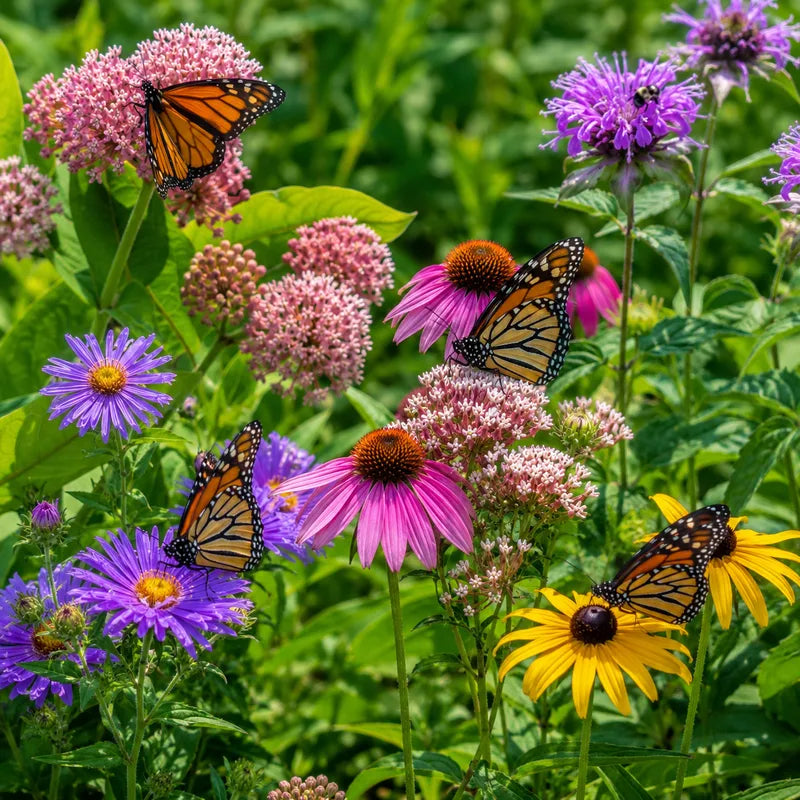
The best plants to attract pollinators are native perennials that bloom in turn. Bee balm draws bees, butterflies and hummingbirds from early summer until frost. Purple coneflower feeds bees, butterflies and hummingbirds through summer into early fall. Blazing star brings bees and monarchs in summer, goldenrod feeds bees and butterflies from late summer through fall, and milkweed hosts monarch caterpillars.
Bees, butterflies and hummingbirds visit a garden for as long as it has flowers to offer. That makes bloom time just as important as color when you choose plants. A bed that flowers in June and then goes quiet loses its visitors by August. A bed planted so that one flower opens as another fades keeps them coming back until the first frost. The five native perennials below do exactly that. Bee balm starts early and keeps going. Coneflower and blazing star fill the middle of summer. Goldenrod takes over in late summer and carries the bed through fall. Milkweed adds something nectar plants cannot: a place for monarch butterflies to lay their eggs. Each plant below lists which pollinators it draws, when it blooms and where it grows best, so you can match it to your yard. A bloom-time table at the end shows how the five overlap, and a ready-made collection is there if you would rather start with one box.
Best plants to attract pollinators
1. Bee balm: bees, butterflies and hummingbirds
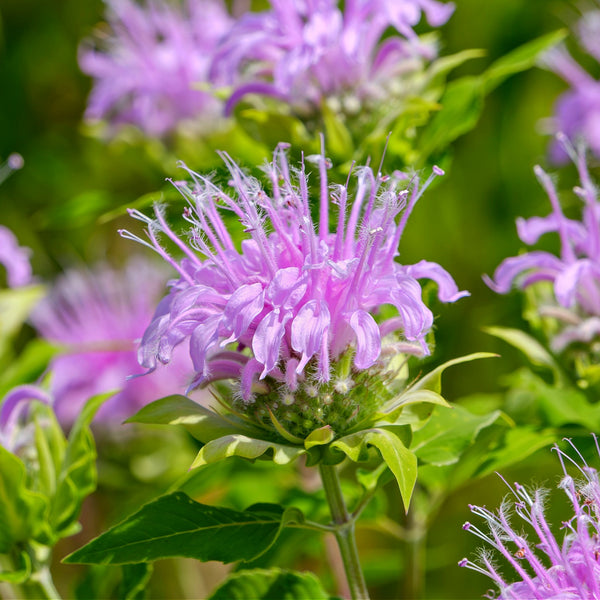
Bee balm is one of the best-known native perennials for a pollinator garden. Its unusual flowers come in red, pink, purple or mauve and offer nectar and pollen to butterflies, hummingbirds and bees. It flowers from early summer until frost, the longest window on this list. Bee balm grows best in a sunny spot and forms clumps that return each year.
Tip: Deadhead spent flowers through the season to encourage new blooms.
2. Purple coneflower: bees, butterflies and hummingbirds
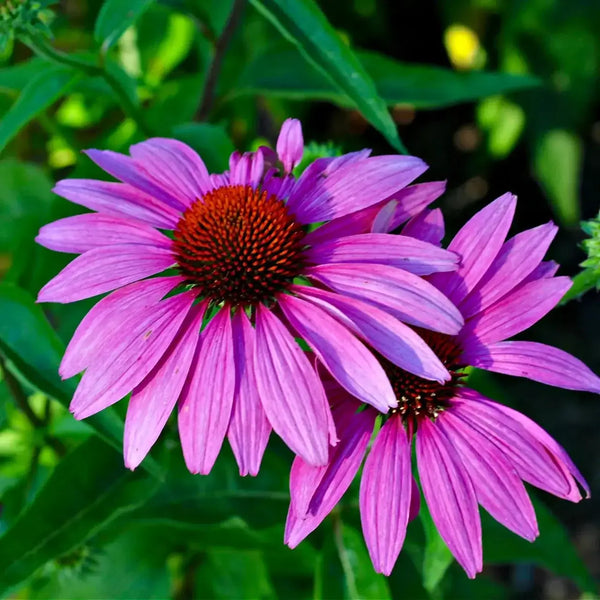
Purple coneflower's wide, open flowers give bees, butterflies and hummingbirds an easy landing platform and easy access to nectar. It blooms from summer into early fall, generally June to September. Give it full sun, six hours or more, and well-drained soil; it handles clay, sand and loam and grows in USDA zones 3 to 9. Plants reach 2 to 4 feet.
Tip: Leave the seed heads standing in fall: songbirds come to eat them.
3. Blazing star: bees, monarchs and swallowtails
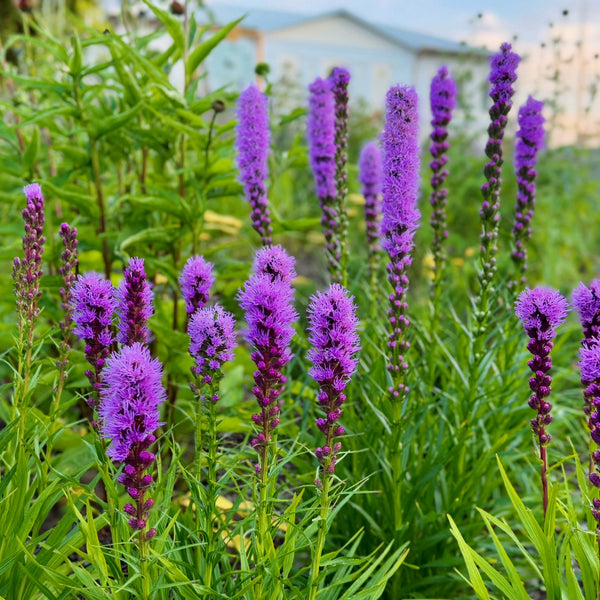
Blazing star is a prairie native with tall, upright spikes of purple blooms that add height to a sunny border. Its nectar draws bees and many butterflies, including monarchs, swallowtails and painted ladies. It blooms in summer and reaches about 4 feet tall, 1 to 2 feet wide. Plant it in full sun for steady flowering; once established, it handles dry spells.
Tip: Goldfinches, chickadees and sparrows eat its seeds later in the year.
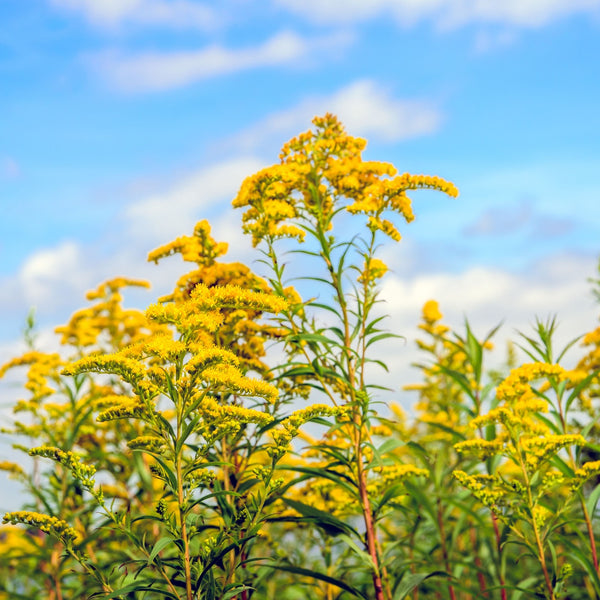
4. Goldenrod: bees and butterflies into fall
Goldenrod is a North American native that turns fields and meadows gold from late summer through fall. Its flowers feed bees and butterflies late in the season, and the plant hosts many kinds of caterpillars. Goldenrod is drought-tolerant and hardy, and its dense roots help hold soil in place. Give it room in an open bed or meadow planting, where it can spread into a golden swath.
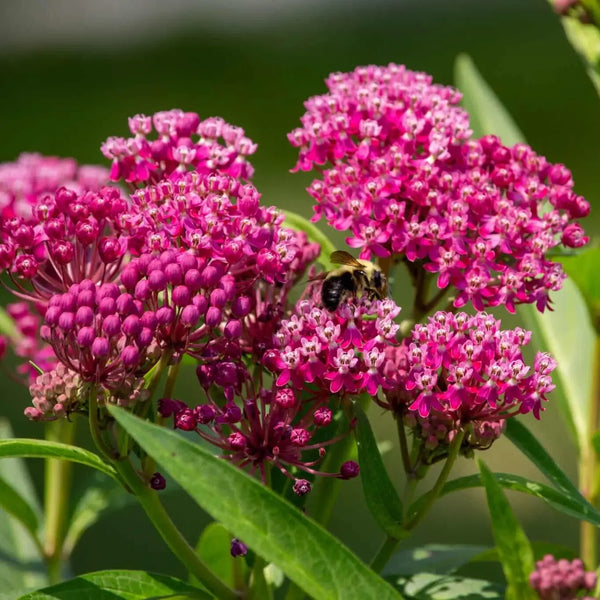
5. Milkweed: the monarch caterpillar host plant
Milkweed is the only host plant for monarch butterflies. Monarchs lay their eggs only on its leaves, and the caterpillars feed on the plant after they hatch. Its clusters of fragrant summer flowers also draw butterflies, bees and other pollinators. Milkweed loves full sun and adapts to many garden settings, from borders to meadows. Keep pesticides away from it to protect the caterpillars.
Tip: Choose the standard swamp milkweed or the Bubble Gum Pink variety.
A ready-made pollinator plant collection
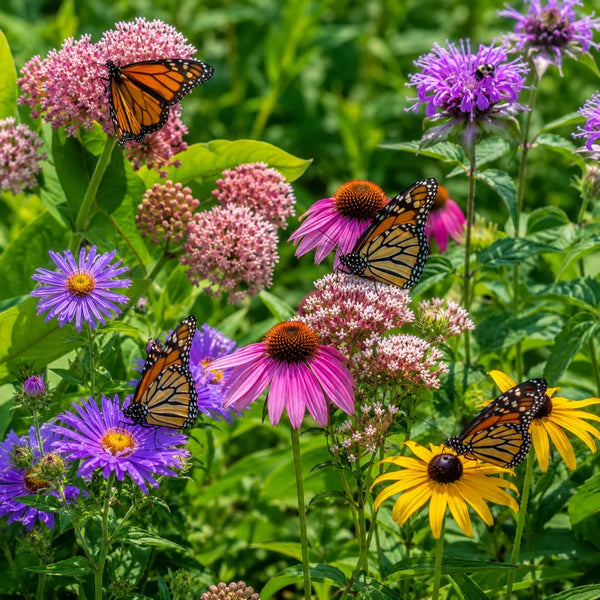
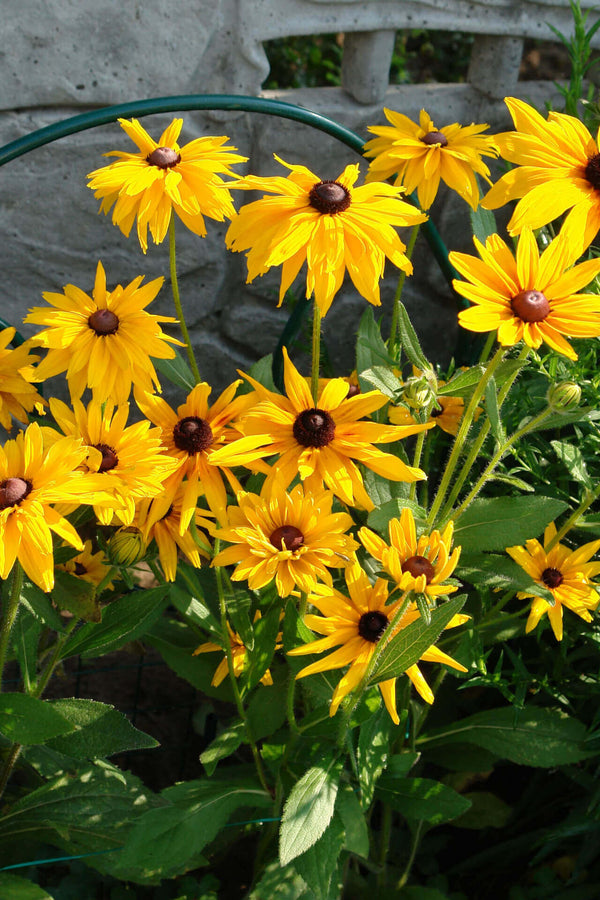
If you are filling a large bed or starting your first pollinator garden, a collection saves you from choosing plant by plant. Our 15 Pollinator Plant Collection was assembled for a butterfly-friendly garden, and its plants include milkweed for monarch caterpillars, along with other plants chosen for butterflies. Planted together, fifteen plants make a small wildflower meadow that welcomes butterflies, bees and other insects. Set them in one sunny area so they fill in as a group. To stretch the season, add a few single plants from the list above, or pair the collection with black-eyed Susan. This native wildflower has golden-yellow petals around a dark center and blooms from early summer into fall, drawing bees and butterflies the whole time. It adapts to many soil types and needs little water, and its brown seed heads feed birds once the petals drop, so it earns its place long after summer.
Care and keeping
Plant in full sun, where these natives flower most. Group three or more of one plant together, since a clump is easier for pollinators to find. Fall is a good time to plant: warm soil and cool air help roots settle before spring. Water well until established, and leave seed heads standing for winter birds.
Frequently asked questions
What is the number one flower that attracts butterflies?
Milkweed matters most to monarchs: it is their only host plant, so females lay eggs on its leaves, which the caterpillars then eat. For nectar, blazing star draws many butterflies, including monarchs, swallowtails and painted ladies. Purple coneflower and bee balm are strong choices too, so plant a mix rather than a single favorite.
What flowers do bees gravitate to?
Bees visit flowers that offer plenty of nectar and pollen. Bee balm ranks high, flowering from early summer until frost. Purple coneflower, blazing star, goldenrod and black-eyed Susan draw bees too. Plant several of them in clumps so bees find steady food from early summer through fall.
When should I plant my pollinator garden?
Fall and spring both work for perennials. In fall, warm soil and cooler air let roots grow before winter, so plants start strong in spring. Aim to plant a few weeks ahead of your first hard freeze and water each plant well; the bed can bloom the next summer.
Pollinator plant bloom times, early summer to frost
| Plant | Blooms | Draws | Grows best in |
|---|---|---|---|
| Bee balm | Early summer until frost | Bees, butterflies, hummingbirds | Sunny spots |
| Black-eyed Susan | Early summer into fall | Bees, butterflies | Many soil types |
| Purple coneflower | Summer to early fall | Bees, butterflies, hummingbirds | Full sun, zones 3 to 9 |
| Blazing star | Summer | Bees, monarchs, swallowtails, painted ladies | Full sun |
| Milkweed | Summer | Butterflies, bees; host for monarch caterpillars | Full sun |
| Goldenrod | Late summer through fall | Bees, butterflies | Open fields and meadows |
Blooms
- Bee balm
- Early summer until frost
- Black-eyed Susan
- Early summer into fall
- Purple coneflower
- Summer to early fall
- Blazing star
- Summer
- Milkweed
- Summer
- Goldenrod
- Late summer through fall
Draws
- Bee balm
- Bees, butterflies, hummingbirds
- Black-eyed Susan
- Bees, butterflies
- Purple coneflower
- Bees, butterflies, hummingbirds
- Blazing star
- Bees, monarchs, swallowtails, painted ladies
- Milkweed
- Butterflies, bees; host for monarch caterpillars
- Goldenrod
- Bees, butterflies
Grows best in
- Bee balm
- Sunny spots
- Black-eyed Susan
- Many soil types
- Purple coneflower
- Full sun, zones 3 to 9
- Blazing star
- Full sun
- Milkweed
- Full sun
- Goldenrod
- Open fields and meadows