
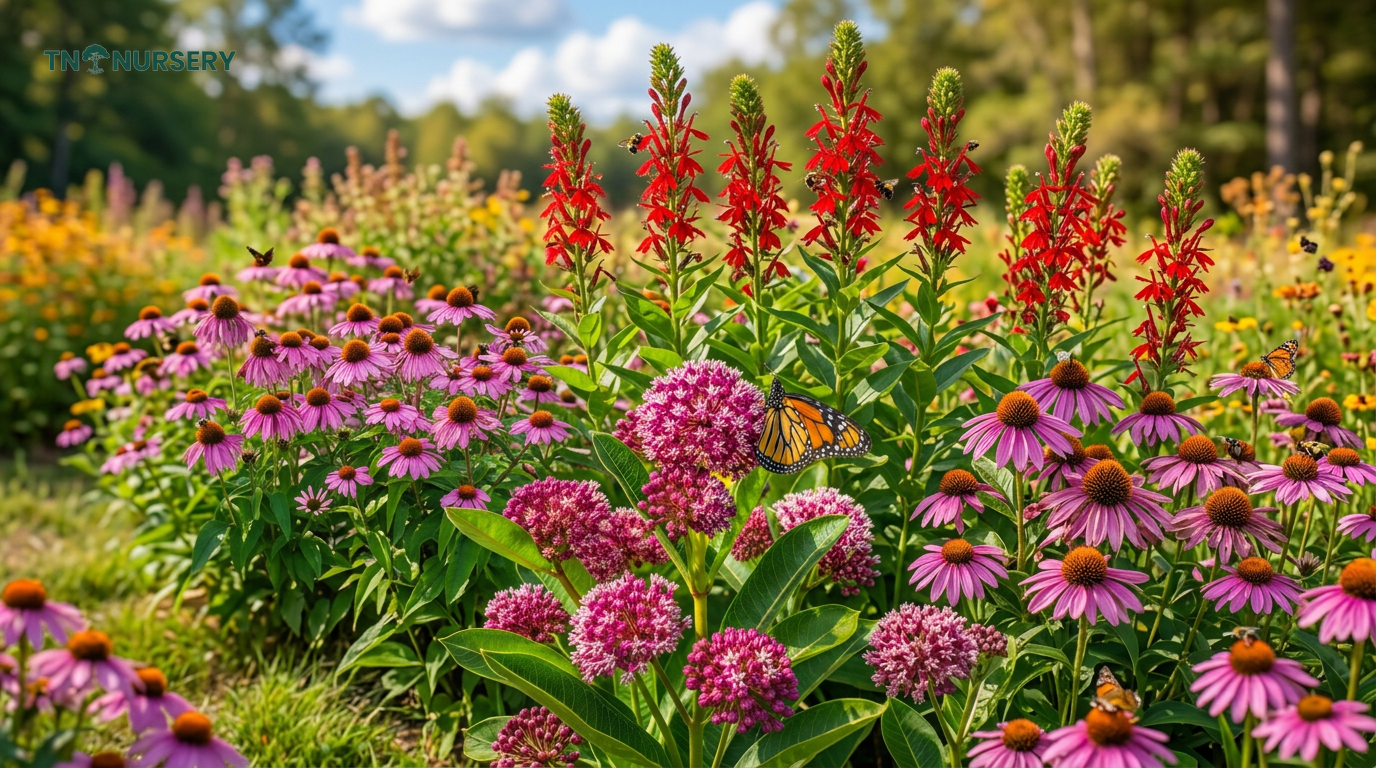
We grow practical picks for real yards. This guide covers full sun perennials, moisture-loving bloomers, and native-style choices that help bees, butterflies, and hummingbirds thrive by zone.
Why Pollinator Perennials Matter in 2026
- How to pick long-blooming perennial flowers for your USDA zone and sun exposure
- How to layer bloom times so pollinators find nectar from spring into fall
- Which TN Nursery picks fit bright borders, damp spots, and native-style mixed plantings
- How recurring perennials can lower yearly replanting costs for home landscapes
How to Choose Pollinator Plants That Keep Working
When customers ask us which flowers earn the most bee and butterfly traffic, we point to pollinator magnet plants with three clear traits: nectar-rich blooms, easy landing space, and a long flowering season. Tube flowers can work, but open daisy, spike, and clustered blooms usually feed more insects in a home landscape. And bloom timing matters just as much as flower color.
How to choose the right pollinator magnet plants?
Start with the light you actually have. For full sun perennials, use plants that can handle six or more hours of direct light and still hold flowers through summer heat. In part-shade edges, pick varieties that bridge brighter beds and wooded borders, so pollinators keep moving through the whole yard.
Next, look at moisture. A dry slope needs different roots than a low spot near a downspout or pond edge. We always tell homeowners to match the plant to the site first, because a stressed plant gives you fewer blooms and a shorter season.
What makes a planting bed feed more pollinators?
Use groups, not singles. A drift of five or seven of the same perennial is easier for bees to find than one plant tucked between shrubs. So if you want perennials that bloom all summer, combine early, mid, and late bloomers instead of expecting one plant to carry the whole bed.
Healthy pollinator beds are usually simple beds. Fewer plant types, planted in larger clumps, often bring better insect activity than a scattered mix.
Practical site breakdown
- Open beds: Choose sun-loving plants with sturdy stems and repeat bloom potential.
- Rain gardens or pond edges: Use moisture-tolerant selections that will not sulk after heavy summer rain.
- Shade-transition areas: Plant species that accept morning sun or bright filtered light.
Build a better bed
- Plant in clumps so pollinators can spot flowers fast.
- Avoid pesticides, especially on buds and open blooms.
- Mix spring, summer, and fall bloomers for a longer food window.
- Leave some spent stems in place until cleanup season.
One honest tradeoff: long-blooming plants often need deadheading or a midsummer trim to stay tidy. But that small bit of work pays you back with more flowers and steadier garden color. If you want late-season support, browse our Fall Blooming Perennials from our perennial nursery.
Shop 7 Full Sun Perennials and Moisture-Loving Picks for Season-Long Pollinator Color
We built this lineup to help you create layered bloom succession, not a one-note display. You’ll find our monarch essential in Milkweed Plant, a durable native-style anchor in Purple Coneflower, and moisture-friendly color from Cardinal Flower, plus four more pollinator magnet plants that keep…


Start Here: The Most Important Pick for Pollinator Gardens

Milkweed: The Monarch Host Plant That Earns Its Space
If you want one of the most useful pollinator magnet plants we carry, start with Milkweed Plant. It blooms in summer with pink, fragrant flower clusters, and it does a job most garden plants cannot do: it feeds monarch caterpillars because monarchs use milkweed as their only host plant. Plant it in full sun with well-drained soil, and keep pesticides away. Once established, it handles dry spells well.
- Summer-blooming pink flowers with fragrance that draw butterflies, bees, and other pollinators
- Needs 6 to 8 hours of direct sun and grows across a wide range of planting zones, from 3 through 10
- Low-maintenance once established, with drought tolerance that suits borders, meadow plantings, and naturalized areas
Build Out Your Full Sun Perennials Border
These five add-on picks help you stretch bloom, layer in height, and give your planting a looser meadow feel. You'll find airy white flowers, purple summer color, blue late-season spikes, and tall yellow stems that keep pollinators active across more of the season.


Frequently Asked Questions
What are the best pollinator magnet plants for full sun?
For a sunny yard, we suggest starting with long-blooming perennials from our Fall Blooming Perennials collection. You'll find flower color late in the season, which helps support bees and butterflies when many summer beds start to slow down. If you want pollinator magnet plants that handle open, bright spots, full sun perennials are usually the strongest place to begin.
Which perennials bloom the longest through summer?
The longest show usually comes from perennials that bloom all summer or carry color into early fall. We focus on plants that keep your garden active past the first flush of spring. But keep in mind, longer bloom often means regular deadheading and a spot with enough sun. If you want steady color with less fuss, late-season perennial nursery picks are often the better fit.
How do I choose plants for my USDA zone?
Start with your USDA zone, then match light and soil moisture. That's the order we use because a plant can love sun and still fail if the winter range is wrong. If your yard has hot, exposed areas, choose sun-loving perennials first. If you have low spots that stay damp, don't force dry-site plants there.
Can I mix moisture-loving and drought-tolerant perennials in one yard?
Yes, but not in the same planting pocket. We recommend grouping plants by water needs, so your dry bed stays dry and your moisture-loving area gets the extra water it needs. Look, this matters more than color matching. If you mix both types together, one side usually struggles.
When does TN Nursery ship live plants?
We ship all items by 3-4 day ground shipping. That gives live plants a shorter travel window than slower methods, which helps during the active planting season. If you're planning around weather, give yourself a little room so you can plant soon after delivery.
What is TN Nursery's return policy?
We do not offer refunds, and we do not accept returns. If there is an issue, we may offer a reshipment based on availability. We also do not offer a warranty on any product unless an extended warranty is purchased at the time of order. In some cases, we may offer in-store credit instead.
How can I contact TN Nursery?
You can reach us at customerservice@tennesseewholesalenursery.com. If you prefer mail, write to Tennessee Wholesale Nursery, 12847 State Route 108, Altamont TN 37301, United States. And if you need help choosing a plant for your yard, include your zone and sun conditions. We can answer faster with those details.
Conclusion
Key Takeaways
- Start with Milkweed, then add Purple Coneflower, Black Eyed Susan, and Cardinal Flower for a longer bloom window.
- Use several perennial types instead of depending on a single flower to feed pollinators all season.
- Match each plant to your zone, sunlight, and soil moisture for better survival and less replanting.
- Plan for bloom succession so your garden supports pollinators from early growth through fall color.

