
The short answer
The blackhaw viburnum growth rate is slow to moderate: usually a foot or less to about two feet of new growth a year once its roots settle in. Grown as a multi-stemmed shrub it matures at 12 to 15 feet tall and 6 to 12 feet wide, and trained to one trunk it can reach 30 feet.
We ship Black Haw Viburnum (Viburnum prunifolium) bare-root in 1-2, 2-3 and 3-4 foot sizes, and the size you start with decides where your shrub stands after its first few years. Blackhaw is native to thickets, streambanks and moist woodlands across central and eastern North America, and it grows in zones 3 to 9. The first season goes mostly to roots, which is why a new planting can look unchanged for months. From the second year on, stems lengthen steadily, and by year four or five you are choosing whether to keep a dense, multi-stemmed shrub or prune toward a small tree. Below is a year-by-year look at what to expect from a bare-root planting, how sun, soil and water move it toward the top of its range, how much room to give it, and how its pace compares with arrowwood viburnum and other viburnums when you want a screen to fill in sooner.
Blackhaw viburnum growth rate and shrubs to pair with it


1. Plant bare-root shrubs while dormant
Set your bare-root blackhaw in the ground between late fall and early spring, while it is leafless. Soak the roots for about an hour, dig a hole wider than the spread roots, and plant at the depth it grew before. Water deeply and add 2 to 3 inches of mulch, keeping it off the stems. A dormant start gives roots time to grow before leaves need feeding.
Tip: Choose the 3-4 foot size if you want a taller shrub sooner.
2. Year one: roots before height
Expect little top growth in the first season. A bare-root shrub spends its first year rebuilding roots, and it may leaf out and then seem to stand still until fall. That is normal. Your shrub will finish the year at roughly the height it arrived. Water weekly in dry spells through the first growing season so the soil stays evenly moist, and keep the mulch ring weed-free so the young roots have the soil to themselves.
Tip: Scratch a twig with a fingernail: green underneath means it is alive and rooting.
3. Years two and three: steady new stems
Once roots are established, blackhaw picks up its pace, adding up to a foot or two of growth a year in a sunny, well-drained spot and less in heavier shade. New stems rise from the base as well as the tips, so the shrub thickens as it climbs. At that pace, a 2-3 foot bare-root plant can stand roughly 4 to 6 feet tall by the end of year three.
4. Years four and five: choose shrub or small tree
By now your blackhaw has several sturdy stems and is settling into its natural form. In full sun and well-drained soil, at up to a foot or two a year, a 2-3 foot plant can stand roughly 6 to 9 feet tall by the end of year five; at a slower pace expect less. Leave all the stems for a dense, multi-stemmed shrub that suits a hedge or mixed border, or keep one strong stem and remove the others at the base to train a small tree.
Tip: A tree-form blackhaw grows taller; a multi-stemmed shrub stays fuller and lower.
5. Mature size and spacing
Grown as a multi-stemmed shrub, blackhaw matures at 12 to 15 feet tall with a 6 to 12 foot spread. Trained to a single trunk, it can reach 30 feet. Give a specimen shrub its full spread from walls and paths. For a hedge or screen, set plants at the low end of that spread, around 6 feet apart, so neighboring branches meet sooner and form a continuous line.
Arrowwood viburnum growth rate compared
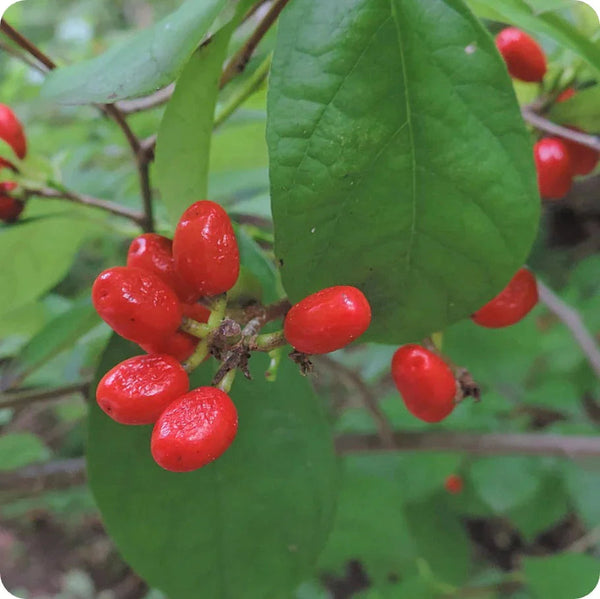
If you want a viburnum that fills in faster, arrowwood viburnum (Viburnum dentatum) is the native to look at. It grows at a moderate to fast rate, quicker than blackhaw, but tops out lower, at 6 to 10 feet tall with a 4 to 10 foot spread. Young plants grow upright, and older stems arch toward the ground for a rounded, umbrella-like form. That makes it a good choice for a hedge you want dense at eye level within a few seasons. Plant a few, since more than one genetic strain is needed for its blue fall fruit. Snowball viburnum (Viburnum opulus) is also fast-growing, quickly filling space as a full, rounded shrub 6 to 10 feet tall and wide, with large, round white blooms in late spring. Blackhaw rewards patience instead: it grows taller than either, can be trained into a small tree, and bears berries that are a favorite with birds.


Care and keeping
Sun and soil set the pace. In full sun and well-drained soil, blackhaw grows toward the top of its one-to-two-foot range. Water each week in dry spells during its first season and keep 2 to 3 inches of mulch over the roots so it moves from rooting to growing sooner.
Frequently asked questions
Does blackhaw viburnum spread?
Yes, gently. Blackhaw has a suckering, multi-stemmed habit, so new shoots come up around the base and the clump slowly widens toward its 6 to 12 foot spread. That habit is what makes it a full, natural hedge. For a single-trunk tree, simply cut the new base shoots each year.
Which viburnum grows fastest?
Among the viburnums we grow, snowball viburnum and arrowwood viburnum are the quicker growers: snowball is fast-growing and arrowwood grows at a moderate to fast rate. Blackhaw is slower, at a slow to moderate pace, but it reaches a greater mature height of 12 to 15 feet as a shrub.
How big does blackhaw viburnum get?
As a multi-stemmed shrub, blackhaw viburnum grows 12 to 15 feet tall and 6 to 12 feet wide. Pruned to a single trunk and grown as a small tree, it can reach 30 feet. At its pace of up to a foot or two a year, it fills out that size over many seasons.