

The short answer
The best coneflower companion plants share its love of full sun and well-drained soil. For a native pollinator bed, pair purple coneflower with blazing star for upright purple spikes, black-eyed Susan for golden-yellow blooms, and bee balm for mid to late summer nectar. Space coneflowers 12 to 18 inches apart so each clump has room to fill out.
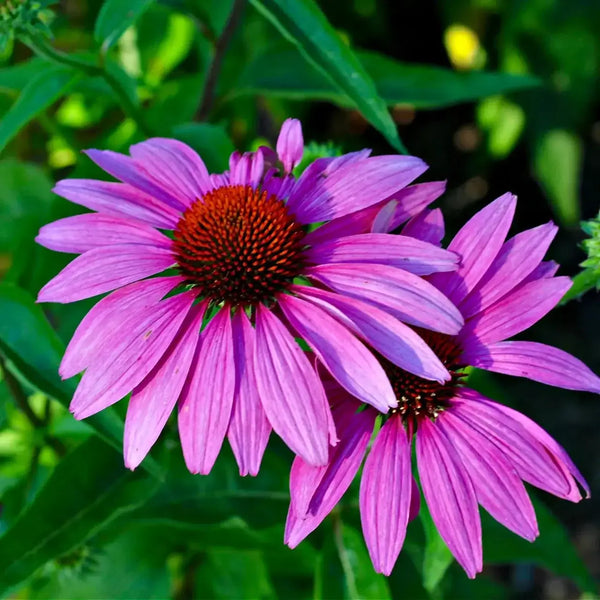
Purple coneflower is a native perennial of the central and eastern United States. It grows 2 to 4 feet tall, blooms from summer into early fall, and draws butterflies, bees and songbirds. On its own, though, one plant gives you one shape and one color. The right partners stretch the season and give pollinators more to visit. The trick is choosing plants that want the same things. Coneflowers thrive in full sun, at least six hours a day, and in well-drained soil, from clay to sand to loam. Every partner in the main bed below is a native sun lover, so one sunny bed suits them all. The steps follow planting order: the coneflowers that anchor the bed go in first, then the partners that fill around them. A plan for a damp corner and a bloom calendar follow. You can find each one in our Perennial Plants collection, shipped bare-root and ready to plant.
Native coneflower companion plants
1. Pick a sunny, well-drained spot
Start with the site, because every plant in this bed is a sun lover. Choose a spot with at least six hours of direct sun a day. Coneflowers thrive in well-drained soil and handle clay, sand or loam. Loosen the soil to a spade's depth and work in a little compost if it is hard-packed. Keep tall shrubs and trees to the north, so their shade falls away from the bed.
Tip: Check the spot in the morning, at noon and late afternoon to see where shade falls.
2. Set coneflowers 12 to 18 inches apart
Purple coneflowers are the anchor, so plant them first. Set them 12 to 18 inches apart in loose groups of three or five rather than a single row. Each clump grows 2 to 4 feet tall and 1½ to 2 feet wide, so this spacing lets them knit together without crowding. Water regularly until they are established. After that, they need water only during dry spells.
Tip: Leave the seed heads standing in fall. Songbirds feed on them.
3. Add blazing star for upright spikes
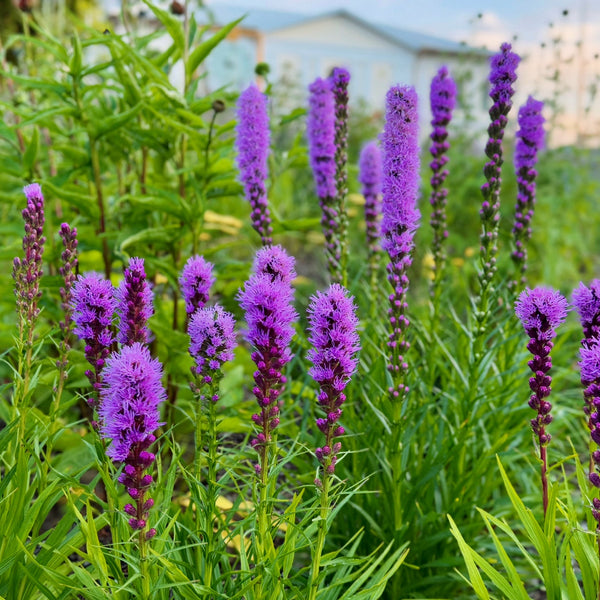
Blazing star brings the shape coneflowers lack. Its long, thin leaves and tall wands of purple flowers add strong vertical lines between the round coneflower heads. It blooms from summer through early fall, so it carries purple well past the first coneflower flush. Give it full sun, at least six hours a day, for the strongest, most upright stems. Tuck small clumps between the coneflower groups.
Tip: Deadhead spent spikes to encourage new blooms through the season.
4. Weave in black-eyed Susan for gold
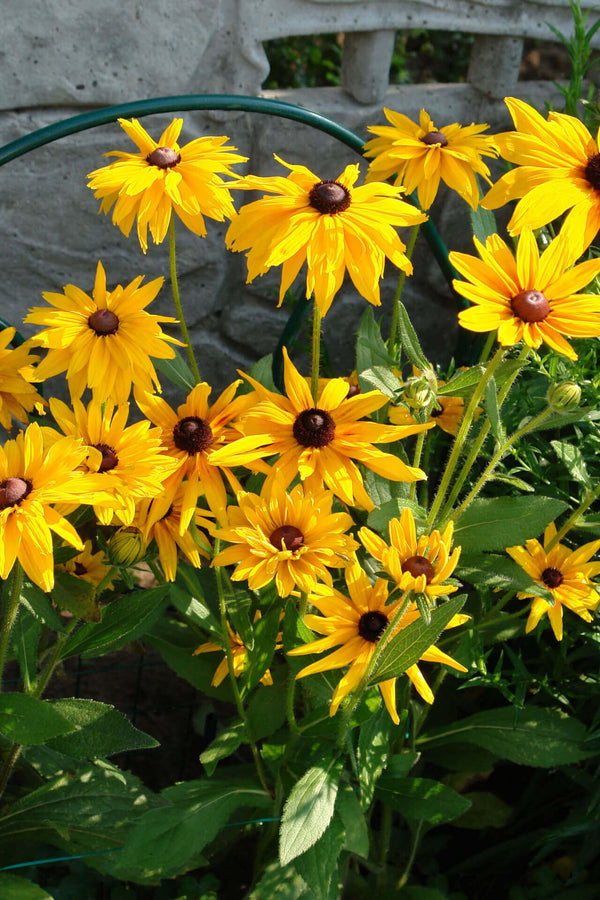
Black-eyed Susan is a native wildflower with golden-yellow petals around a dark brown center. Next to pink-purple coneflowers, it gives the bed its warm contrast. It blooms in summer and draws bees and butterflies to the same patch. Its coarse, deep green leaves grow in a rosette, which helps fill gaps near the front of the bed. Plant it in full sun for the best flowers.
Tip: Repeat the gold in two or three spots so the eye travels across the whole bed.
5. Give bee balm the back edge
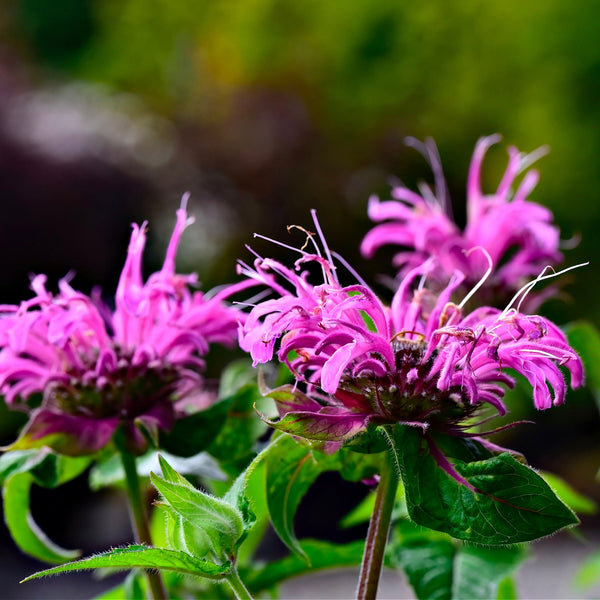
Bee balm finishes the set. It grows 2 to 4 feet tall and carries clusters of red, pink, purple or lavender tubular flowers from mid to late summer. Bees, butterflies and hummingbirds all visit it. Bee balm spreads by underground stems called rhizomes. Give it the back edge or the ends of the bed for room to spread, not for height. There its clumps can widen without crowding the coneflowers.
Tip: Leave a little space between bee balm clumps so air can move through the leaves.
Companions for a damp corner
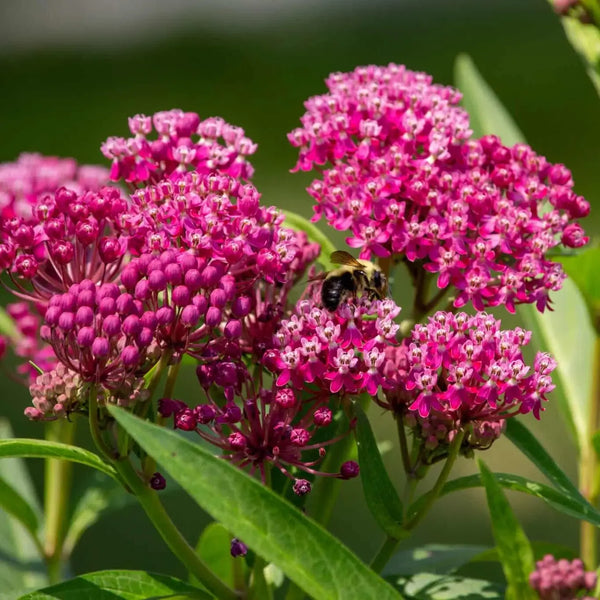
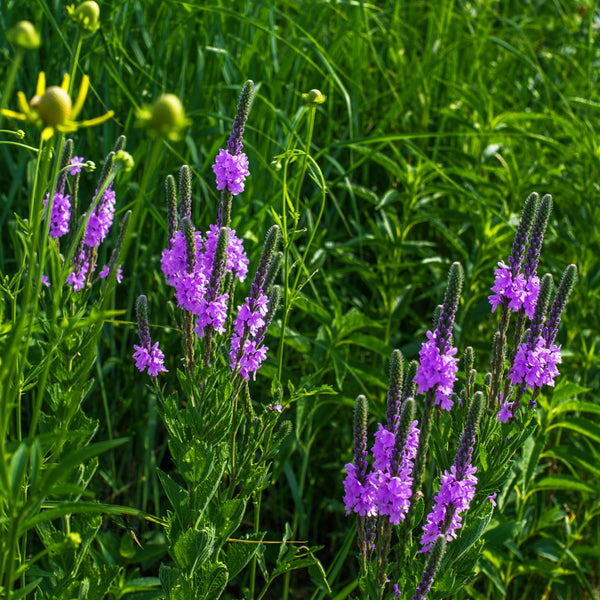
Many yards have one low spot that stays moist after rain. Coneflowers thrive in well-drained soil, so save that damp corner for two natives that love moisture and still feed the same pollinators. Swamp milkweed grows as a clump about 3 to 5 feet tall and blooms in midsummer with clusters of vanilla-scented pink flowers. Monarch caterpillars can only eat milkweed and a few close relatives, so this plant turns a flower bed into a nursery for monarchs. Space it about 18 to 24 inches apart. Blue vervain grows 2 to 6 feet tall and opens slim spikes of tiny violet-purple flowers from July to September. It thrives in moist to wet soil, in full sun to partial shade, and its seeds feed small mammals. Planted a few steps downhill from your coneflowers, these two pick up the color where the ground turns soft. Together, the dry bed and the damp corner keep nectar on offer through summer and into early fall.
Care and keeping
Coneflower beds need little care once they settle in. Water new plants regularly through their first season, then only in dry spells. Add a light layer of mulch in early spring. Deadhead spent blooms in summer to encourage more flowers, but leave the last seed heads standing for birds. Divide crowded coneflower clumps every few years.
Frequently asked questions
What not to plant next to echinacea?
Keep shade-casting shrubs and trees, plants that want constant moisture, and spreading plants out of the coneflower clump. Coneflowers do best beside partners that share full sun and well-drained soil. Set bee balm at the back edge, and give moisture lovers such as swamp milkweed a damper spot nearby.
How close can you plant coneflowers to each other?
Plant purple coneflowers 12 to 18 inches apart. Each clump grows 1½ to 2 feet wide, so at that spacing neighboring clumps grow together into a full drift. Wider spacing leaves more bare soil between them, and closer spacing crowds the clumps and cuts the airflow around their leaves.
Do purple coneflowers spread?
Purple coneflowers grow as clumps rather than running across the bed. Each clump widens to about 1½ to 2 feet and grows stronger each year. If you leave the seed heads standing, some seedlings may appear nearby. Divide mature clumps every few years to keep them vigorous and to fill new spots.
Coneflower companion bloom calendar
Use this chart to plan a full summer of flowers that runs into early fall, and to see where each plant goes in the bed.
| Plant | Bloom time | Light | Spot in the bed |
|---|---|---|---|
| Purple coneflower | Summer to early fall | Full sun, 6+ hours | Middle, in groups of 3 or 5 |
| Blazing star | Summer through early fall | Full sun, 6+ hours | Between coneflower groups |
| Black-eyed Susan | Summer | Full sun, 6+ hours | Front and gaps |
| Bee balm | Mid to late summer | Full sun to partial shade | Back edge or ends |
| Swamp milkweed | Midsummer | Full sun to light shade | Damp corner |
| Blue vervain | July to September | Full sun to partial shade | Damp corner |
Bloom time
- Purple coneflower
- Summer to early fall
- Blazing star
- Summer through early fall
- Black-eyed Susan
- Summer
- Bee balm
- Mid to late summer
- Swamp milkweed
- Midsummer
- Blue vervain
- July to September
Light
- Purple coneflower
- Full sun, 6+ hours
- Blazing star
- Full sun, 6+ hours
- Black-eyed Susan
- Full sun, 6+ hours
- Bee balm
- Full sun to partial shade
- Swamp milkweed
- Full sun to light shade
- Blue vervain
- Full sun to partial shade
Spot in the bed
- Purple coneflower
- Middle, in groups of 3 or 5
- Blazing star
- Between coneflower groups
- Black-eyed Susan
- Front and gaps
- Bee balm
- Back edge or ends
- Swamp milkweed
- Damp corner
- Blue vervain
- Damp corner