
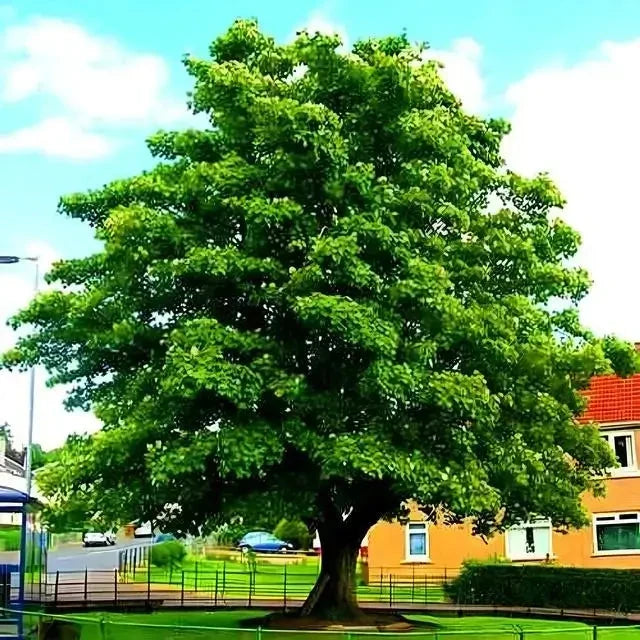
Quick answer: A sycamore tree is the American sycamore (Platanus occidentalis), a fast-growing native shade tree of eastern North America known for peeling, camouflage-patterned bark that reveals white upper limbs. It grows 75 to 100 feet tall and as wide in zones 4 to 9, usually along streams, and has large maple-like leaves and round seed balls.
Quick facts
| Botanical name | Platanus occidentalis (American sycamore, buttonwood, American planetree) |
|---|---|
| USDA zones | 4–9 |
| Sun | Full sun; tolerates light shade |
| Soil | Deep, moist, rich soil preferred; tolerates poor, wet or alkaline soil |
| Soil pH | Not particular: acid, neutral or alkaline |
| Water | Moist sites; tolerates occasional flooding and, once established, moderate drought |
| Mature size | 75–100 ft tall, equal or greater spread |
| Growth rate | Fast, about 2 ft per year |
| Space needed | More than 60 ft of open room; too large for most small yards |
| Fruit | Round seed balls about 1 in. across on 3–6 in. stalks, persisting into winter |
| Native range | Southeastern Canada and the central and eastern United States |
If you have driven along a creek in the eastern U.S. in winter, you have probably seen a sycamore: a huge tree whose upper branches glow white against the sky. Sycamores are among the largest hardwood trees in eastern North America, and they are easy to recognize once you know what to look for. This guide explains what a sycamore is, how to identify one, and whether it belongs in your yard.
What is a sycamore tree?
A sycamore tree, in North America, is the American sycamore (Platanus occidentalis), a large deciduous shade tree in the plane-tree family (Platanaceae). It is also called buttonwood, buttonball and American planetree.
NC State Extension notes that European settlers named it "sycamore" because its leaves resembled the sycamore of the British Isles. That British tree is a maple, not a plane tree, so the two are unrelated despite the shared name. TN Nursery grows the native American species as both a sycamore tree and bare-root sycamore seedlings.
How do you identify a sycamore tree?
Look for mottled, peeling bark that exposes white to cream inner bark on the upper trunk and limbs, very large lobed leaves, and round brown seed balls hanging on long stalks.
- Bark: Clemson Extension describes the lower trunk as red to gray-brown and scaly, while the upper bark peels in large flakes to reveal smooth, white to creamy-white bark. NC State calls it "camouflage bark." It is the easiest winter clue; see more in our winter tree identification guide.
- Leaves: Alternate, simple, with 3 to 5 shallow, coarsely toothed lobes. NC State puts them at 4 to 9 inches wide, often wider than long. They emerge woolly and cream-colored in spring and turn yellow-brown in fall.
- Petiole: Utah State notes the leaf stalk is 2 to 3 inches long and hollow at the base.
- Fruit: A single round seed ball, about 1 inch across, hanging on a 3- to 6-inch stalk and lasting into winter. London planetree usually bears its balls in pairs.
How big does a sycamore tree get?
American sycamores usually grow 75 to 100 feet tall with an equal or wider spread. Clemson Extension says that under ideal conditions they can reach 175 feet with a trunk 10 to 14 feet across.
Young trees are pyramidal; older trees develop a broad, irregular, spreading crown. NC State lists the space needed as more than 60 feet, which is why Clemson notes sycamores are too big for most home lots but excellent for parks, farms, large properties and stream corridors.
How fast does a sycamore tree grow?
Sycamores grow fast, about 2 feet per year according to Clemson Extension. They are also long-lived, from 50 to more than 200 years.
That fast growth makes sycamore a good choice when you want shade quickly on a large property. For other quick options, see our list of the fastest-growing trees by planting zone.
Where do sycamore trees grow?
Sycamores grow naturally in bottomlands and along rivers and streams across the eastern and central U.S. and southeastern Canada. They are hardy in USDA zones 4 to 9.
NC State lists the tree as native in more than 30 states plus Ontario, from Maine and Michigan south to Florida and Texas and west to Nebraska and Kansas. In the landscape, the tree does best in full sun and deep, moist soil, but Clemson notes it tolerates marginal soil with low oxygen and high pH, and Utah State rates its tolerance of drought, poor drainage and alkaline soil as high once established.
How do you plant a sycamore tree?
Plant a sycamore while it is dormant, in late fall through early spring, in full sun with plenty of room, ideally on a moist site.
- Choose the site. Allow at least 60 feet of open space. Clemson recommends keeping sycamores away from lawns, pavement and buildings because of their litter and aggressive roots.
- Dig a wide hole two to three times as wide as the roots and no deeper than they grew.
- Set the tree with the root flare or old soil line at grade. Bare-root seedlings? Follow our bare-root planting guide.
- Backfill, water deeply and mulch 2 to 3 inches deep, keeping mulch off the trunk.
- Water weekly in dry weather the first growing season.
Utah State rates sycamore's transplanting tolerance as high, so young trees usually establish well.
What are the problems with sycamore trees?
The biggest issue is anthracnose, a leaf and twig disease that can strip much of the canopy in cool, wet springs. Sycamores are also messy and have aggressive roots.
- Anthracnose: Clemson calls it the most severe sycamore disease, worst in wet, cool springs. NC State says it can severely damage leaves and twigs and often causes early leaf drop.
- Other diseases: cankers, bacterial leaf scorch, powdery mildew and leaf spot (Clemson).
- Insects: sycamore lace bugs, aphids, scales and borers (Clemson); NC State adds Japanese beetles, caterpillars and spider mites.
- Litter and roots: leaves, twigs, bark and seed balls drop through the year, and Clemson describes the roots as aggressive. For the planetree hybrid, Clemson advises planting at least 6 feet from sidewalks and curbs.
What is the difference between a sycamore and a London planetree?
London planetree (Platanus x hispanica) is a hybrid of American sycamore and Oriental planetree. Clemson says it has a smaller spread, duller bark and seed balls that hang in pairs.
It is planted mostly as an urban street tree, in zones 5 to 8, and some cultivars resist anthracnose and powdery mildew. For natural areas, stream banks and wildlife, the native American sycamore is the better choice.
Is a sycamore tree good for wildlife?
Yes. NC State Extension says purple finches, juncos, American goldfinches and Carolina chickadees eat sycamore seeds, and the tree also feeds small mammals and hosts leafhoppers and wood-boring insects that birds eat.
For wet ground, pair sycamore with other moisture-loving natives such as river birch and bald cypress; see our streambank plant guide for ideas, or shop the full shade trees collection.
Frequently asked questions
What does a sycamore tree look like?
A sycamore is a very large tree with mottled brown, gray and green bark that peels to show white or cream upper limbs, large 3- to 5-lobed leaves, and round brown seed balls hanging on long stalks.
Is a sycamore tree a maple?
No. The American sycamore is a plane tree (Platanus), not a maple. Its name came from the British 'sycamore,' which is a maple with similar-looking leaves.
How long do sycamore trees live?
Clemson Extension gives a lifespan of 50 to more than 200 years.
Are sycamore trees messy?
Yes. They drop leaves, twigs, bark flakes and seed balls, so plant them away from patios, pools, driveways and buildings.
Can sycamore trees grow in wet soil?
Yes. Sycamores grow naturally along streams and in bottomlands and tolerate occasional flooding and poorly drained soil.
Why do sycamore leaves turn brown and fall in spring?
Usually anthracnose, a fungal disease that flares in cool, wet springs. It damages leaves and twigs and often causes early leaf drop.
How far from a house should you plant a sycamore?
Give it plenty of room. NC State lists more than 60 feet of space needed, and Clemson advises keeping sycamores away from buildings and pavement because of their aggressive roots.
What zones do sycamore trees grow in?
American sycamore grows in USDA zones 4 through 9.
Shop sycamore and trees for wet sites


TN Nursery has grown native trees in Tennessee since Roscoe Tate founded the nursery in 1959. If you have the room and a moist, sunny spot, few trees grow faster or look more striking in winter than an American sycamore.


