
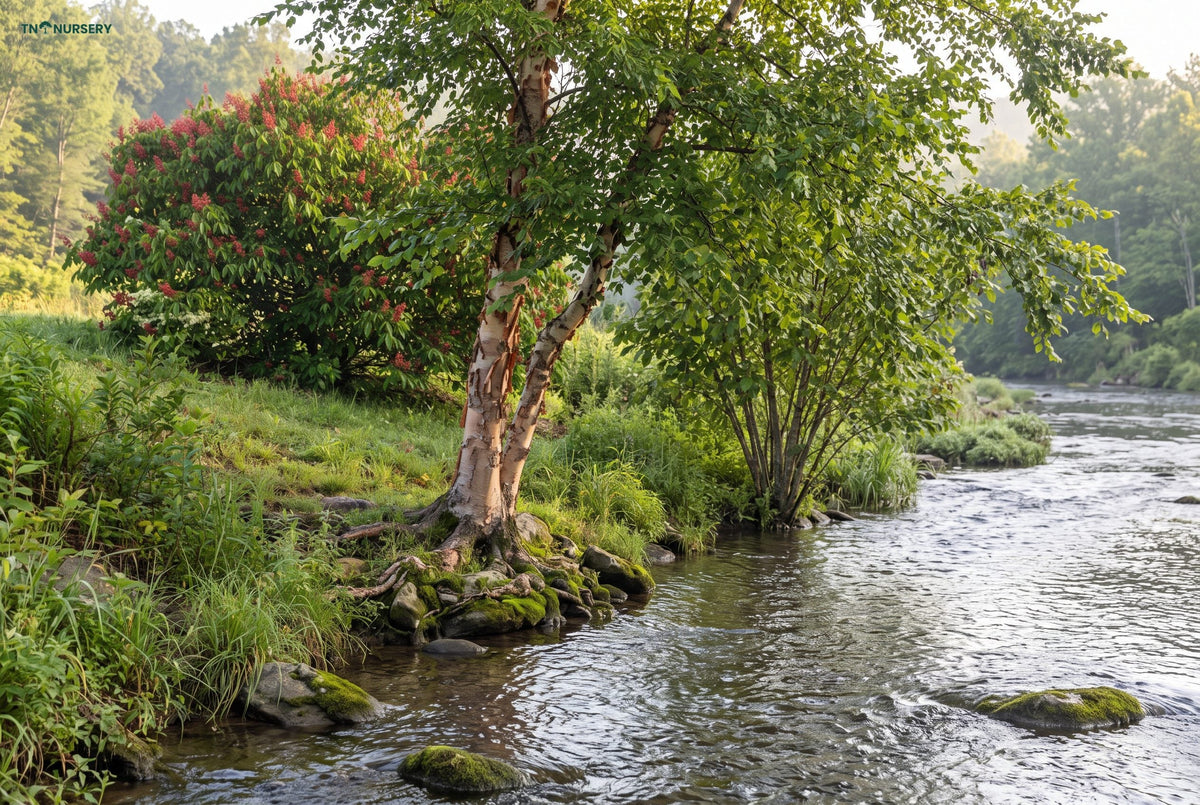
River Birch and Native Plants That Help Hold a Washing Creek Bank
We pair river birch with dense shrubs and low groundcover. Deep roots bind soil over time. For severe erosion or slope failure, call a professional first.
What to Plant on a Washing Out Creek Bank
- Good plants for slope stabilization handle periodic moisture. Their roots survive short floods and bounce back through dry spells.
- Look for roots that fill the soil profile, from dense surface roots near the water line to deeper anchors that grip the bank.
- Match each plant to your site's sun and soil, whether that's heavy clay, sandy loam, full sun, or partial shade.
- Space your plants to leave room for growth, so trees, shrubs, and groundcover can form a layered planting over time.
For the Wet Lower Bank: Native Plants for Stream Bank Stabilization

River Birch Tree (Betula nigra), Bare-Root and Ready to Plant
River birch grows naturally close to water, so we plant it low on the bank where the soil stays damp. It grows fast, tops 25 feet, and handles sun to part shade with at least 4 hours of light. Keep in mind that water flow and good establishment matter as much as the tree itself. We ship every bare-root river birch tree straight from our nursery, and it's a strong fit for creek edges in Zones 4–9.
- Fast-growing native tree that reaches over 25 feet at maturity
- Hardy across USDA Zones 4–9 and grows in sun to part shade
- Ships now as a bare-root tree from TN Nursery
Plant in Layers: Upper, Middle, and Lower Bank Zones
One tree can't hold a whole creek bank. A single river birch anchors a spot, but bare soil around it still washes away in every storm. So we plan banks in three layers, with each zone matched to how wet it gets.
Three Zones of Native Plants for Stream Bank Stabilization
- Upper bank: This is the drier top ground. Larger trees can go here, but set them back several feet from the edge. Their weight shouldn't load a crumbling lip.
- Middle bank: Multi-stemmed shrubs like Smooth Hazel Alder belong here. Dense stems cover the slope, and spreading roots knit the soil together.
- Lower edge: This strip floods now and then. Only moisture-tolerant plants survive here. Browse our Wetland Plants for this wet zone.
Why Layered Plants for Slope Stabilization Work
Each part of a plant does a different job. Leaves and stems break the force of falling rain before it hits bare dirt. Fine, fibrous roots grip the top few inches of soil. Woody roots reach deeper and pin the bank in place. And stems at ground level slow surface runoff, so less soil rides away with it.
Brush Layering Erosion Control
Brush layering is an old restoration method. You bury live woody cuttings and branches in shallow trenches cut across the slope. The cuttings root and sprout, and they add reinforcement fast. Our Brush Layers collection carries live woody material for this job. Keep in mind that steep, engineered, or high-flow sites often need a professional design.
Caution: Never plant large trees straight into a bank that is actively collapsing. Stabilize the slope with shrubs and cuttings first. Add trees once the soil holds.
How to plant bare root river birch
Soak the roots in water for 2 to 4 hours before planting. Dig a hole wider than the root spread, set the root collar level with the soil, then backfill and water deeply. Plant while the tree is dormant, in late fall or early spring.
Building the Shrub Layer Beneath Your Streambank Trees

Smooth Hazel Alder: A Low-Care Shrub for Wet, Heavy Ground
So where does Smooth Hazel Alder fit on your bank? Right below the canopy. Plant it near a river birch, and the alder fills the shrub layer at 10–15 feet tall with an 8–15-foot spread. It grows in full sun or part shade, puts on growth at a moderate pace, and needs little care once established. Moist to wet clay or loam suits it best. It also tolerates occasional flooding, compaction and poor drainage. Keep in mind that it's not the right fit for extremely dry or highly alkaline sites.
- Multi-stemmed, spreading form reaches 10–15 feet tall and 8–15 feet wide
- Handles occasional flooding, compacted clay and poor drainage
- Grows in full sun or partial shade and needs little care once established
Plants for Slope Stabilization Above the Waterline: 4 Upper-Bank Trees
Your river birch belongs down low, near the wet toe of the bank. These four trees go higher up, on the upper slope, the lawn edge, and the drier ground beyond. So plan for mature size, sun, and drainage first. Then set each one well back from the eroding edge.


Spring Planting Checklist for River Birch and Streambank Plants
A river birch planted in April can hold soil for decades. But only if the first few weeks go right. So here's the checklist we follow for spring and early summer streambank projects.
What to plant on a washing out creek bank
Start with deep-rooted woody natives that tolerate wet feet. The River Birch Tree and Smooth Hazel Alder both handle periodic flooding and anchor soil with dense root mats. Fill the gaps with grasses and perennials from our wetland plants for creek banks.
Your Step-by-Step Planting Checklist
- Watch the water first. Visit after a heavy rain. Note where runoff collects, cuts, or pools.
- Wait out saturated soil. Digging mud compacts it and seals the hole walls. Squeeze a handful. If it drips, give it a few days.
- Pull invasive weeds carefully. Remove them in small patches. Stripping a whole bank at once leaves bare soil exposed to the next storm.
- Mark utility lines. Call 811 before you dig. It's free, and required in most states.
- Plant at the original soil depth. Find the root flare or old soil line. Keep it level with the ground.
- Firm soil gently. Press with your hands, not your boots.
- Water for your site. A soggy bank may need little help. A dry upper slope may need weekly soaking all summer.
- Mulch lightly. Two inches is plenty. Keep it a few inches back from stems to prevent rot.
- Protect young plants. Flag them against mowers. Use tree tubes where deer browse, and route foot traffic around new plantings.
How to Plant Bare Root River Birch
Bare-root trees are dormant and fragile. Treat the roots like they're alive, because they are.
- Keep roots moist and cool until planting day. A shaded garage works well.
- If roots look dry, soak them briefly. Don't leave them underwater overnight.
- Dig a wide, shallow hole. Spread roots out naturally, like spokes.
- Backfill with native soil. Skip heavy amendments so roots grow outward.
- Water deeply right after planting to settle out air pockets.
Always follow the product-specific handling instructions included with your order. They override any general advice here.
Where Hydroseeding Fits In
Hydroseeding for erosion control can cover bare soil between woody plants fast. It's a useful complement. Keep in mind, though, that grass roots rarely reach past a foot deep. On steep or scouring banks, the best trees for erosion control on slopes still do the heavy lifting. Pair both approaches with our native plants for stream bank stabilization for a layered root system.
Streambank Planting Questions We Hear Most
Is river birch good for erosion control?
Yes, in the right spot. River birch handles moist, periodically wet soil, and its roots help hold streambanks in place. But one tree won't save a bank by itself. A mixed planting of trees, shrubs, and ground-level plants covers more soil depth and surface area. So treat it as the anchor of a larger plan, not the whole plan.
What should I plant on a washing-out creek bank?
Layer it. Put site-appropriate native trees up top, shrubs like Smooth Hazel Alder along the wetter middle, and lower-growing plants near the waterline. Our ecological restoration plants are a good starting point. Keep in mind that severe erosion, like a collapsing bank or active undercutting, calls for professional guidance before you plant anything.
Can Smooth Hazel Alder grow in a drainage swale?
It can, as long as the swale stays consistently moist to wet with acidic-to-neutral soil. Skip it if the site dries out hard in summer or runs highly alkaline. For other wet-ground options, browse our rain garden plants.
Can I use hydroseeding for erosion control?
Hydroseeding works as supplemental cover. It gets grass or seed mix on bare soil quickly while woody roots establish. It won't replace trees and shrubs on steep or fast-eroding banks, though. Pair it with rooted plantings or brush layers for longer-term hold.
What should I do when my plants arrive?
Open the box right away. We back orders with a 24-hour live arrival guarantee. Inspect everything and report damages, shortages, or concerns within 24 hours of carrier-marked delivery. Include photos and your order number. Proper planting and care are required for the guarantee to apply, so get bare root stock into moist soil promptly.
How long does shipping take, and can I cancel?
We ship all items via 3–4 day ground shipping. Plan your planting day around that window. Once your plants are dug, we can't cancel the order. Have a question we haven't answered? Email us at customerservice@tennesseewholesalenursery.com.
Build a Creek Bank That Holds This Fall
Start low, where the soil stays wet. Plant Smooth Hazel Alder along the damp edge first. Then add river birch and yard trees higher up, matched to mature size, sun, and moisture.
