Once the leaves drop, most people assume tree identification is over until spring. It isn't. Every bare branch still carries a set of clues: the shape and color of its buds, whether those buds sit in pairs or alternate, the texture of the bark, even the smell of a snapped twig. Learn a handful of these and you can name the trees in your yard, along a trail or in a nursery row in the middle of January.
This guide covers 12 native trees and shrubs that grow across Tennessee and much of the eastern U.S. Every identification feature below comes from the Virginia Tech Dendrology fact sheets, a standard reference in forestry classes. Our free infographic puts all 12 on one page.

Infographic: Winter Tree ID at a glance (TN Nursery)
Step 1: Check branching. Opposite pairs? Think MAD Cap Horse (maple, ash, dogwood, Caprifoliaceae, horsechestnut). Most trees are alternate.
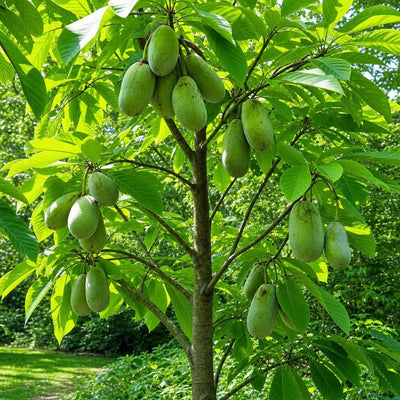
- Pawpaw (alternate): fuzzy, purplish-brown naked buds
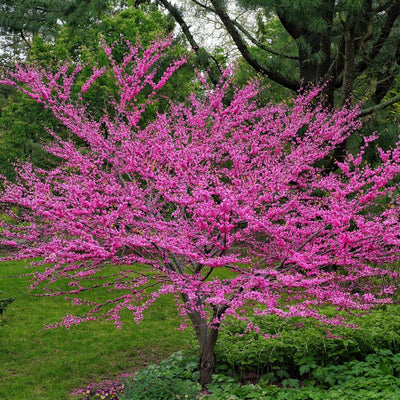
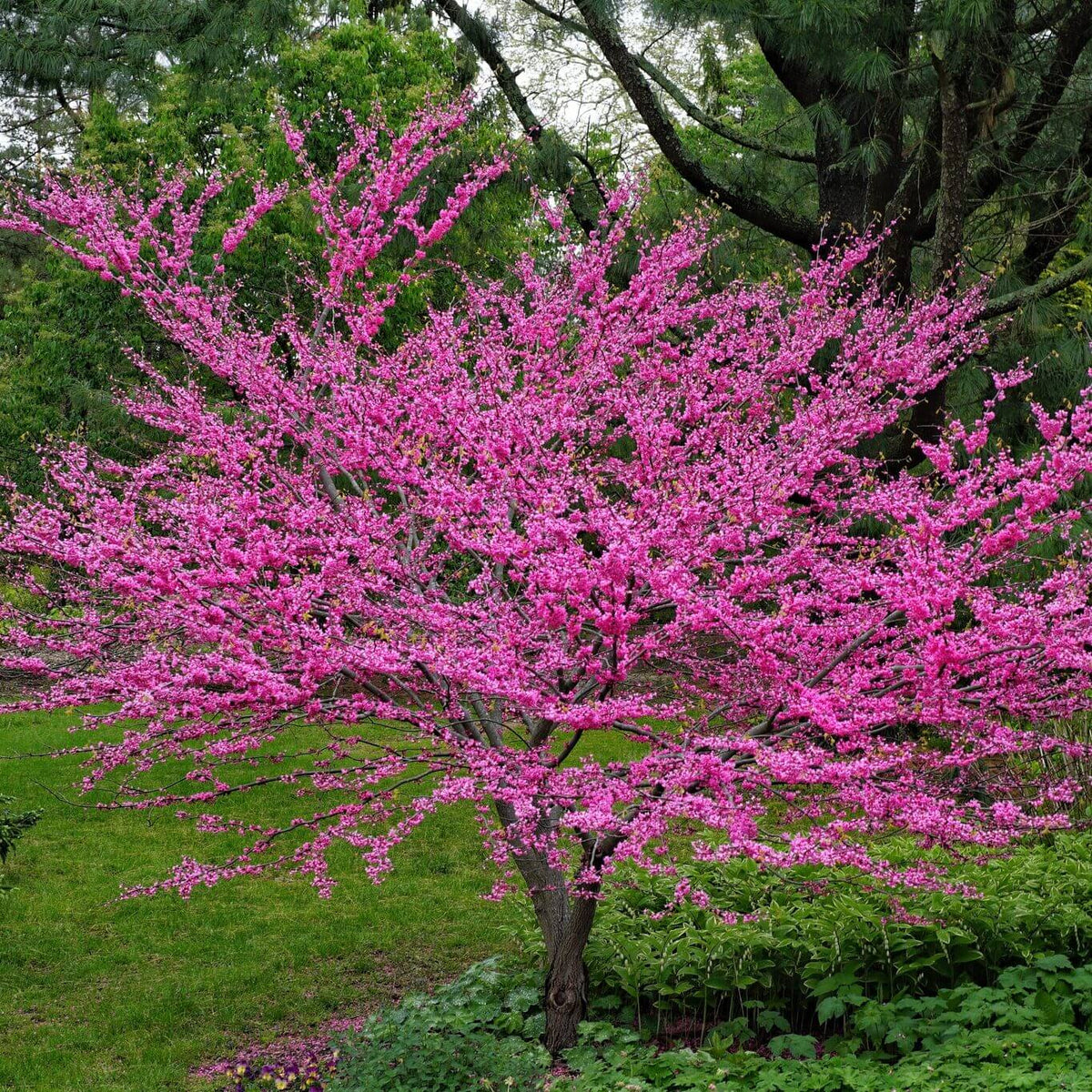
- Eastern redbud (alternate): nearly black zigzag twigs
- White oak (alternate): small rounded clustered buds, ashy gray bark
- Northern red oak (alternate): large conical buds, ski-track bark
- Red maple (opposite): blunt red buds, shiny red twigs
- Sugar maple (opposite): sharp brown buds, tight scales
- American elm (alternate): buds off to one side; layered buff/red inner bark
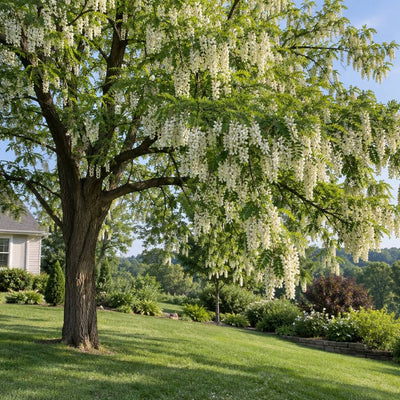
- Black locust (alternate): paired spines, rope-like bark
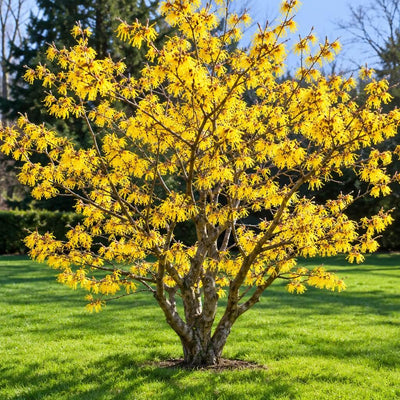
- Witch hazel (alternate): stalked, scaleless buds
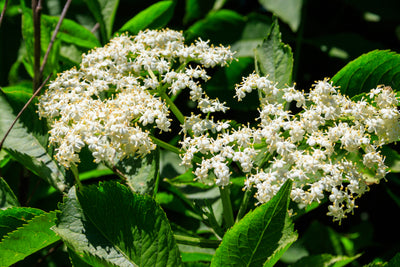
- American elderberry (opposite): large white pith
- Flowering dogwood (opposite): clove-shaped flower buds
- Tulip poplar (alternate): duck-bill buds, spicy-smelling twigs
881 native U.S. tree species · Tennessee is 52% forested · 20 oaks native to Tennessee. Sources: Virginia Tech Dendrology, U.S. Botanic Garden, TN Division of Forestry, UT Extension.
Winter tree ID by the numbers
- 881 tree species are native to the contiguous United States, and 294 of them grow nowhere else (U.S. Botanic Garden; University of Illinois Extension).
- 52% of Tennessee is forested, about 14 million acres, up from roughly 25% in 1914 (Tennessee Division of Forestry).
- 20 species of oak are native to Tennessee alone (University of Tennessee Extension).
- 5 groups cover most opposite-branched trees: maple, ash, dogwood, the honeysuckle family and horsechestnut (Virginia Tech Dendrology).
Step 1: opposite or alternate?
Start with how the buds are arranged. Virginia Tech's dendrology primer notes that most species have alternate arrangement, with one bud at a time, staggered up the twig. If the buds sit in matched pairs across from each other, "there is a very good chance that the tree is a maple, ash, dogwood, Caprifoliaceae (a family), or horsechestnut (AKA buckeye)." Forestry students remember this with the acronym MAD Cap Horse.
That one check splits our 12 trees cleanly. Red maple, sugar maple, flowering dogwood and American elderberry are opposite. Everything else here is alternate. (Elderberry is the "Cap": Virginia Tech lists it in Caprifoliaceae, though newer classifications place it in Adoxaceae.)
Step 2: read the buds
Buds are the most reliable winter clue because they are already formed in fall and hold their shape all winter.
Pawpaw: fuzzy and naked
Pawpaw buds are unlike almost anything else in the eastern woods. Virginia Tech describes them as "purplish brown, fuzzy, naked" buds, meaning they have no protective scales, and the terminal bud is "flattened and often curved," a bit like a tiny paintbrush. The bark is smooth and brown, "splotched with wart-like lenticels." If you find a thicket of small trees with velvety brown buds in a creek bottom, it is almost certainly pawpaw.
Red maple vs. sugar maple
These two opposite-branched maples are easy to separate by bud alone. Red maple has "reddish and lustrous" twigs and buds that are "usually blunt, green or reddish," with several loose scales. Its leaf scars are V-shaped with three bundle scars. Sugar maple buds are brown, "very sharp pointed, with tight scales." Red and blunt means red maple; brown and sharp means sugar maple.
White oak vs. northern red oak
Oaks carry several buds clustered at the twig tip. White oak buds are small, rounded and hairless. Northern red oak buds are "quite large, conical," with red-brown scales that may show a little frosty fuzz at the tip.
Flowering dogwood: clove-shaped buds
Flowering dogwood sets next spring's flower buds in fall, and they sit at the twig tips like small cloves or onion domes. Virginia Tech compares the leaf buds to "a dull cat claw." Twigs are often purple on the sunny side.
Tulip poplar: the duck bill
Tulip poplar, Tennessee's state tree, has long, flattened buds that Virginia Tech says resemble a "duck bill," with a stipule scar circling the twig. Snap a twig and it gives off a "sweet, spicy odor."
Witch hazel: stalked and scaleless
Witch hazel buds are light brown, stalked and lack scales. It is also the one native here that may still be flowering as winter begins: its spidery yellow flowers open "in mid to late fall."
Step 3: check the twigs
- Eastern redbud: "slender and zigzag, nearly black in color." Round flower buds cluster right on older branches and even the trunk.
- Black locust: zigzag, angular twigs with "paired spines at each leaf scar." The buds are hidden beneath the leaf scar, so the twig looks budless.
- American elm: slender, slightly zigzag reddish twigs. The buds are often "placed a little to one side" of the leaf scar.
- American elderberry: stout, gray twigs with warty lenticels. Cut one open and you'll find a "large white pith." The terminal bud is usually missing.
Step 4: look at the bark
Bark changes with age, so use it to confirm what the buds tell you.
- Northern red oak: wide, flat-topped ridges with shallow furrows that look like ski tracks running up the trunk.
- White oak: whitish or ashy gray, scaly to blocky, sometimes with smooth patches on old trees.
- Black locust: thick and deeply ridged, Virginia Tech says it "resembles a woven rope."
- American elm: ashy gray with diamond-shaped fissures. Slice a piece of outer bark and you'll see alternating buff and reddish-brown layers, a classic field test.
- Tulip poplar: flat-topped ridges with conspicuous white furrows in diamond patterns.
- Flowering dogwood: scaly, breaking into small blocks.
- Witch hazel: smooth and gray "even on very old stems."
Bonus clue: what's left hanging
Tulip poplar keeps the base whorls of its seed cones well into spring. From the ground they look like "wooden flowers high in the tree," which makes a tall tulip poplar easy to spot even from a car window.
Quick winter key for these 12 trees
| Tree | Branching | Best winter clue |
|---|---|---|
| Pawpaw | Alternate | Fuzzy, naked, purplish-brown buds |
| Eastern redbud | Alternate | Nearly black zigzag twigs; flower buds on old wood |
| White oak | Alternate | Small rounded clustered buds; ashy gray bark |
| Northern red oak | Alternate | Large conical buds; ski-track bark |
| Red maple | Opposite | Blunt red buds; shiny red twigs |
| Sugar maple | Opposite | Sharp brown buds with tight scales |
| American elm | Alternate | Off-center buds; layered buff and red inner bark |
| Black locust | Alternate | Paired spines; rope-like bark |
| Witch hazel | Alternate | Stalked scaleless buds; late-fall yellow flowers |
| American elderberry | Opposite | Large white pith; warty gray twigs |
| Flowering dogwood | Opposite | Clove-shaped flower buds |
| Tulip poplar | Alternate | Duck-bill buds; spicy-smelling twigs |
Why winter is a good time to plan (and plant)
Learning trees in winter has a practical payoff: dormant season is when many native trees are dug and shipped bare root. At TN Nursery we've been growing natives on our 170 acres since Roscoe Tate founded the nursery in 1959. We've grown about 2 million pawpaw trees from roughly 2 tons of seed and more than 200,000 redbuds, and our maple trees were used by the U.S. Air Force and the Discovery Channel for a time-lapse of a tree going from dormancy to full leaf. Browse our native trees and shade trees, or see our guides to how long native trees live and tree planting myths.
Embed this infographic
Teachers, extension offices, park rangers and bloggers are welcome to use this infographic with credit. Copy the code below:
<a href="https://tnnursery.net/blogs/garden-blog/winter-tree-identification"><img src="https://cdn.shopify.com/s/files/1/0687/5634/1034/files/tn-nursery-winter-tree-identification_1.png?v=1795381114" alt="Winter tree identification infographic: 12 native trees by buds, bark and twigs, by TN Nursery" width="1200"></a>
<p>Infographic by <a href="https://tnnursery.net/blogs/garden-blog/winter-tree-identification">TN Nursery</a></p>
Want the full-size infographic image? Email us and we'll send it.
Sources
- Virginia Tech Department of Forest Resources and Environmental Conservation, Dendrology fact sheets: pawpaw, eastern redbud, white oak, northern red oak, red maple, sugar maple, American elm, black locust, witch hazel, American elderberry, flowering dogwood, yellow-poplar.
- Virginia Tech Dendrology, Basics of Tree ID: Leaf Arrangement.
- U.S. Botanic Garden, Researchers Complete First Comprehensive Threat Assessment of All U.S. Trees.
- University of Illinois Extension, U.S. native tree checklist (Jan 28, 2023).
- Tennessee Department of Agriculture, Division of Forestry, About the Division of Forestry.
- University of Tennessee Extension, PB1731, Identifying Oak Trees Native to Tennessee.