Tree growth rates are usually grouped as slow (12 inches or less of new height per year), medium (about 13 to 24 inches) and fast (about 25 inches or more). Fast native trees include sycamore, river birch, silver maple and pin oak; slow ones include white oak, pawpaw, pecan and Kentucky coffeetree.
This guide puts 40 common North American trees in one chart, so you can see at a glance how fast each one grows, how big it gets and what soil and light it likes. The ratings come from the Missouri Department of Conservation, which runs a state forest nursery, and we added a second opinion from the Morton Arboretum for 18 of the trees so you can see where the experts agree and where they differ.
What counts as a slow, medium or fast growing tree?
Growth rate means how much height a tree adds in a typical year, usually in its first decade after planting. The exact cutoffs vary by source, so it helps to know which scale a chart is using.
| Source | Slow | Medium / Moderate | Fast | Notes |
|---|---|---|---|---|
| Michael Dirr, Manual of Woody Landscape Plants (as quoted by the Arbor Day Foundation) | 12 in. or less per year | 13 to 24 in. | 25 in. or more | Refers to vertical growth unless stated otherwise |
| Missouri Department of Conservation | 12 in. or less | 12 to 24 in. | 24 in. or more (potential) | Used for the main chart below |
| Utah State University Extension TreeBrowser | Under 12 in. | 12 to 24 in. | Over 24 in. | Height growth in the first ten years after planting |
| Morton Arboretum (Northern Illinois list) | Under 10 in. | 10 to 20 in. | Over 20 in. | First ten years; estimates that shift with site conditions |
Most sources land close to the same answer: about a foot a year is slow, one to two feet is medium, and two feet or more is fast. The Morton Arboretum uses slightly lower lines, which is one reason a tree can be "medium" in one chart and "fast" in another.
How fast do 40 common trees grow? The full chart
The table below lists each tree's growth rate from the Missouri Department of Conservation (MDC), along with its mature size class, preferred soil and light. Where the Morton Arboretum rates the same species, its rating appears in the last column. Linked names go to trees we grow here at TN Nursery.
| Tree | Botanical name | Type | Mature height | Soil | Light | Growth rate (MDC) | Growth rate (Morton) |
|---|---|---|---|---|---|---|---|
| American sycamore | Platanus occidentalis | Deciduous | Over 60 ft | Wet | Partial | Fast | Fast |
| Black gum (tupelo) | Nyssa sylvatica | Deciduous | Over 60 ft | Moist | Full | Slow | Moderate |
| Black haw | Viburnum prunifolium | Deciduous | Under 30 ft | Average | Full | Slow | – |
| Black locust | Robinia pseudoacacia | Deciduous | Over 60 ft | Wide range | Full | Fast | – |
| Black oak | Quercus velutina | Deciduous | Over 60 ft | Average | Partial | Medium | – |
| Black walnut | Juglans nigra | Deciduous | Over 60 ft | Moist | Full | Medium | Moderate |
| Bur oak | Quercus macrocarpa | Deciduous | Over 60 ft | Moist | Full | Slow | Moderate |
| Cherrybark oak | Quercus pagoda | Deciduous | Over 60 ft | Wet | Full | Fast | – |
| Deciduous holly | Ilex decidua | Deciduous | Under 30 ft | Wide range | Partial | Slow | – |
| Downy serviceberry | Amelanchier arborea | Deciduous | Under 30 ft | Average | Shade | Medium | Moderate |
| Eastern cottonwood | Populus deltoides | Deciduous | Over 60 ft | Wet | Full | Fast | – |
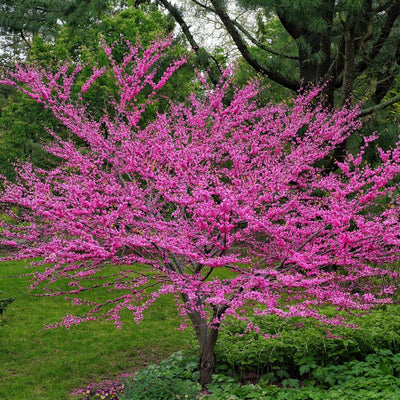
| Eastern redbud | Cercis canadensis | Deciduous | Under 30 ft | Average | Shade | Medium | Moderate |
| Flowering dogwood | Cornus florida | Deciduous | Under 30 ft | Moist | Shade | Medium | Slow |
| Gray dogwood | Cornus racemosa | Deciduous | Under 30 ft | Wide range | Shade | Medium | – |
| Hackberry | Celtis occidentalis | Deciduous | Over 60 ft | Wide range | Partial | Medium | Fast |
| Hawthorn | Crataegus spp. | Deciduous | Under 30 ft | Average | Full | Slow | – |
| Kentucky coffeetree | Gymnocladus dioicus | Deciduous | Over 60 ft | Moist | Full | Slow | Moderate |
| Nannyberry | Viburnum lentago | Deciduous | Under 30 ft | Average | Partial | Fast | – |
| Northern red oak | Quercus rubra | Deciduous | Over 60 ft | Moist | Partial | Medium | – |
| Nuttall oak | Quercus texana | Deciduous | Over 60 ft | Wet | Full | Fast | – |
| Osage orange | Maclura pomifera | Deciduous | 30-60 ft | Wide range | Full | Fast | – |
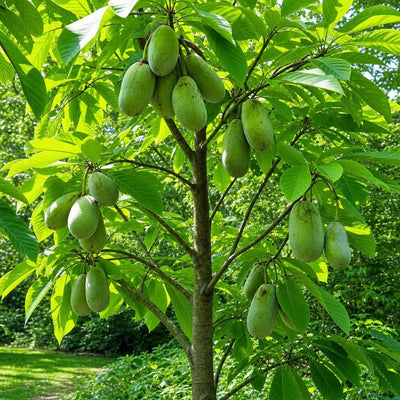
| Pawpaw | Asimina triloba | Deciduous | 30-60 ft | Moist | Shade | Slow | Slow |
| Pecan | Carya illinoinensis | Deciduous | Over 60 ft | Moist | Full | Slow | – |
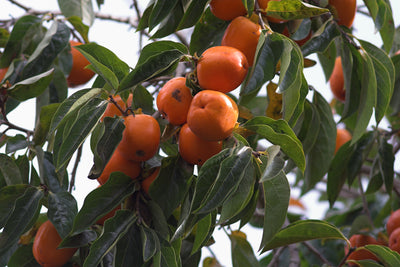
| Persimmon | Diospyros virginiana | Deciduous | 30-60 ft | Average | Full | Slow | Moderate |
| Pin oak | Quercus palustris | Deciduous | Over 60 ft | Wet | Full | Fast | Fast |
| Red mulberry | Morus rubra | Deciduous | 30-60 ft | Average | Partial | Fast | – |
| River birch | Betula nigra | Deciduous | 30-60 ft | Moist | Full | Fast | Fast |
| Roughleaf dogwood | Cornus drummondii | Deciduous | Under 30 ft | Average | Shade | Medium | – |
| Scarlet oak | Quercus coccinea | Deciduous | Over 60 ft | Average | Full | Medium | – |
| Shagbark hickory | Carya ovata | Deciduous | Over 60 ft | Average | Partial | Slow | – |
| Shumard oak | Quercus shumardii | Deciduous | Over 60 ft | Moist | Partial | Medium | – |
| Silver maple | Acer saccharinum | Deciduous | Over 60 ft | Wet | Partial | Fast | Fast |
| Sweetgum | Liquidambar styraciflua | Deciduous | Over 60 ft | Moist | Full | Medium | – |
| Tulip tree (tulip poplar) | Liriodendron tulipifera | Deciduous | Over 60 ft | Moist | Partial | Medium | Fast |
| White oak | Quercus alba | Deciduous | Over 60 ft | Moist | Partial | Slow | Moderate |
| Wild plum | Prunus americana | Deciduous | Under 30 ft | Average | Full | Fast | – |
| Bald cypress | Taxodium distichum | Deciduous conifer | Over 60 ft | Wet | Full | Medium | Moderate |
| Eastern red cedar | Juniperus virginiana | Evergreen | Under 30 ft | Wide range | Full | Slow | – |
| Eastern white pine | Pinus strobus | Evergreen | Over 60 ft | Moist | Partial | Fast | Moderate |
| Shortleaf pine | Pinus echinata | Evergreen | Over 60 ft | Dry | Full | Fast | – |
In the MDC chart, "Light" shows the conditions each tree is suited to: full sun, partial sun, or shade. "Wide range" soil means the tree adapts to many soil types.
Which native trees grow the fastest?
Fourteen of the 40 trees in the chart are rated fast by the Missouri Department of Conservation: American sycamore, black locust, cherrybark oak, eastern cottonwood, nannyberry, Nuttall oak, Osage orange, pin oak, red mulberry, river birch, silver maple, wild plum, eastern white pine and shortleaf pine.
Several of these are bottomland and streamside trees. Sycamore, silver maple, cottonwood, cherrybark oak, Nuttall oak and pin oak are all listed for wet soil, and river birch for moist soil. Plenty of water and sun is a big part of why they grow so quickly. If you want shade sooner, browse our fast growing trees, and see our shade tree placement guide to put them where they cool your home most.
Which fast trees are rated fast by both sources?
American sycamore, river birch, silver maple and pin oak are rated fast by both the Missouri Department of Conservation and the Morton Arboretum. That makes them the safest picks when quick height is the top goal. River birch also brings peeling, cinnamon-colored bark, and pin oak brings a tidy pyramidal shape; our guide to planting a young pin oak covers the first season.
Which trees grow at a medium rate?
Fourteen trees fall in the MDC medium group: black oak, black walnut, downy serviceberry, eastern redbud, flowering dogwood, gray dogwood, hackberry, northern red oak, roughleaf dogwood, scarlet oak, Shumard oak, sweetgum, tulip tree and bald cypress.
Medium growers are often the sweet spot for home landscapes, filling in within a reasonable number of years. The tulip tree is a good example: MDC rates it medium and the Morton Arboretum rates it fast, so expect strong growth on a moist site. Our article How Tall Do Tulip Poplar Trees Grow? goes deeper. Eastern redbud is another medium grower; at TN Nursery we have grown more than 200,000 redbuds, and they remain a favorite for spring color on a small tree.
Which trees grow slowly, and are they worth planting?
Twelve trees are rated slow by MDC: black gum, black haw, bur oak, deciduous holly, hawthorn, Kentucky coffeetree, pawpaw, pecan, persimmon, shagbark hickory, white oak and eastern red cedar.
Slow does not mean small or second-best. Utah State University Extension notes that people tend to choose fast trees that often have fairly short lives, and encourages planting longer-lived trees too. White oak and bur oak are classic examples: slow in a Missouri chart, moderate in Illinois, and capable of shading a property for generations. Read more in The Majestic White Oak Tree Characteristics.
Why is pawpaw slow growing?
Pawpaw is rated slow by both MDC and the Morton Arboretum, and MDC lists it as a moist-soil, shade-suited tree that naturally grows in the understory. Pawpaw is our number one selling tree, and we grow about 2 million pawpaw trees a year from about 2 tons of seed, so we see their patient start every season. Our guide How to Grow Pawpaw Trees explains how to help young pawpaws settle in, and persimmon and black walnut pair well with them in a native fruit and nut planting.
Where do the experts disagree on growth rate?
Of the 18 trees rated by both sources, 9 get the same rating and 9 get a different one. The differences are below.
| Tree | Missouri Dept. of Conservation | Morton Arboretum |
|---|---|---|
| Black gum (tupelo) | Slow | Moderate |
| Bur oak | Slow | Moderate |
| Flowering dogwood | Medium | Slow |
| Hackberry | Medium | Fast |
| Kentucky coffeetree | Slow | Moderate |
| Persimmon | Slow | Moderate |
| Tulip tree (tulip poplar) | Medium | Fast |
| White oak | Slow | Moderate |
| Eastern white pine | Fast | Moderate |
Two things explain most of the gap. First, the Morton Arboretum draws its lines lower (fast starts above 20 inches rather than 24), so borderline trees move up a class. Second, each source reflects its own region and growing conditions. If your tree is listed differently in two places, the truth for your yard is likely somewhere in between, and your soil, rainfall and sun will decide the rest.
What affects how fast a tree grows?
Species sets the potential, but the site decides how much of it a tree reaches. The Arbor Day Foundation, quoting Dirr, lists soil, drainage, water, fertility, light and exposure as key influences.
- Water: trees listed for wet or moist soil, like sycamore and bald cypress, grow best with steady moisture.
- Light: sun-loving trees slow down in shade, while understory trees such as pawpaw, redbud and dogwood are suited to partial shade.
- Soil and drainage: loose, well-drained soil lets roots spread; compacted soil holds a tree back.
- Planting stock and timing: healthy roots planted in the dormant season get off to a strong start. See our native tree planting calendar and how to plant bareroot trees.
How do I choose between a fast and a slow tree?
Choose by the job the tree needs to do and how long you plan to enjoy it. A smart plan often mixes both speeds.
- Quick screening or shade: start with fast growers like river birch, sycamore or silver maple in open, moist spots.
- Long-term legacy trees: add oaks, hickories and black gum (tupelo).
- Small yards: pick trees under 30 feet, such as redbud, flowering dogwood, serviceberry or wild plum.
- Wet spots: bald cypress, pin oak and cherrybark oak are all listed for wet soil.
- Large plantings: tree seedlings are an affordable way to plant many trees at once; our oak tree seedlings guide covers care.
You can browse every species we grow in our native trees collection.
How we made this guide
We built the main chart from the Missouri Department of Conservation's tree growth table, which lists each species' size, soil, sun and growth class, and selected 40 trees that are widely planted in yards and restoration projects. We then matched each species against the Morton Arboretum's Northern Illinois Tree Species List to add a second rating, and compared four published definitions of slow, medium and fast. We did not change any source's rating. TN Nursery is a family-owned, third-generation nursery in Altamont, Tennessee, founded in 1959 by Roscoe Tate, and has supplied plants to landmarks such as the Washington Monument and Arlington National Cemetery. More than 65 years of growing trees on our 170 acres shaped the practical notes in this guide.
Reviewed by the TN Nursery growing team, November 25, 2026.
Share this guide
Teachers, bloggers, extension volunteers and conservation groups are welcome to use this chart in lessons, articles and handouts. Please credit TN Nursery and link back to this page.
Frequently asked questions
How fast does a fast-growing tree grow?
Under the Dirr scale that the Arbor Day Foundation uses, a fast-growing tree adds 25 inches or more of height per year. The Missouri Department of Conservation sets the line at 24 inches, and the Morton Arboretum at more than 20 inches.
Which native trees grow the fastest?
In the Missouri Department of Conservation table, the fast group includes American sycamore, river birch, silver maple, pin oak, eastern cottonwood, eastern white pine and shortleaf pine. Sycamore, river birch, silver maple and pin oak are rated fast by the Morton Arboretum as well.
Is pawpaw a slow-growing tree?
Yes. Both the Missouri Department of Conservation and the Morton Arboretum list pawpaw as slow growing. The Missouri Department of Conservation also lists it as a moist-soil tree suited to shade.
Do oak trees grow slowly?
It depends on the oak. Pin, cherrybark and Nuttall oak are rated fast by the Missouri Department of Conservation, northern red, black, scarlet and Shumard oak are medium, and white and bur oak are slow.
Why do sources list different growth rates for the same tree?
Each source draws the slow, medium and fast lines at different inch values and measures trees in its own region. Soil, water, light and site all change how fast a tree grows, so treat any rating as a typical range rather than a promise.