
Planting a Young Pin Oak in the Yard: What To Know
Are you looking for a tree that is easy to plant in your yard? If so, then the Pin Oak Tree could be the answer. Your Pin Oak should grow well with relatively moist and acidic soil. Fortunately, these requirements are relatively loose because this hardy tree will grow just about anywhere!
Planting a Young Pin Oak Tree
Because the roots of a Pin Oak are relatively shallow, they are easy to transplant. As long as you partner with an excellent nursery with Pin Oaks Pin Oaks experience, it would be best if you had a team to help you move it.
The roots are relatively shallow, so you do not have to dig a deep hole to get your planting the treePin Oak to take root. After planting the tree, ensure you water it regularly, as it will take a few months for your Pin Oak to get used to its new home! Because this is such a strong tree, it should be fine as the anchor in your home or office garden!
Planting Pin Oak
Fast-growing oak for full-sun planting, with mature size around 50 to 70 feet tall and 40 to 60 feet wide
We ship all items by 3-4 day ground shipping. We do not offer refunds, and we do not accept returns. If there is a problem, we may offer a reshipment if the item is available, an extended warranty on a plant, or in-store credit if that product is out. You can reach us at customerservice@tennesseewholesalenursery.com or write to Tennessee Wholesale Nursery, 12847 State Route 108, Altamont TN 37301, United States.
Pin Oak is widely planted as a fast-growing shade tree because it puts on size sooner than slower, heavy-limbed oaks. You can expect a quicker jump in height during its early years if you plant it in full sun and keep the root zone evenly moist. Growth will slow if the site is compacted hard or stays bone dry in summer.
We focus on moisture tolerance, mature size, shade value, upkeep, and USDA zone fit before you plant.
Native trees provide unique benefits to wildlife, which non-native trees rarely offer. These trees serve as critical food sources and habitats for creatures that depend on their flowering, fruiting, and leaf cycles. Specific tree species provide nectar and pollen, which many native pollinators have evolved alongside through coevolutionary processes. When you plant regionally native trees, you maintain the ancient ecological balance between plant life and wildlife, which has developed over thousands of years. Your backyard becomes a lively and balanced habitat where local plants and animals live together without disruption.
Native trees exhibit natural adaptability, one of their primary benefits when planted in their local environment. These species evolved to match local climates and soil conditions, so they usually need less water, fewer fertilizers, and fewer chemicals. These trees face less stress from temperature fluctuations and seasonal precipitation changes because of their adaptation to local pests, reducing the need for additional care. Native trees reduce maintenance expenses over time while helping to preserve essential resources such as water. By staying healthier, native trees require less chemical treatment, which helps maintain environmental health.
Soil and Sunlight for Pin Oak
If your yard stays damp after rain, our Pin Oak Trees give you a practical way to add long-term shade without fighting the site. This oak grows fast, handles moist ground better than many oaks, and reaches about 50 to 70 feet tall with a 40 to 60 foot spread. Keep in mind that it does best in acidic soil and full sun, and it is not the right fit for alkaline ground because chlorosis can become a problem.
The pin oak tree , which goes by the Latin name Quercus palustris , is a large and full finely-shaped shade tree that belongs to the red oak family. The tree has a growth rate of approximately 24 inches per year, considerably higher than most oak trees. The tree has a characteristic pyramidal shape (when young) and glossy green leaves, enhancing its beauty as a shade tree. When the tree matures, it assumes an odd shape: the lower branches hang low, the middle branches stick out like limbs, and the upper branches grow straight upwards.
One of the oak types that grows the fastest is the Pin Oak Tree, which gains about 2 feet each year. This is the best option for people who want results right away. Knowing how fast do Pin Oak Trees grow helps you figure out how far apart they should be and how much shade they will give your yard.
Quercus palustris ( Pin Oak Tree ) has influenced landscapes and ecosystems for hundreds of years before human societies emerged to acknowledge its existence. European botanists first identified and documented this North American native deciduous tree in the 18th century. Indigenous peoples understood the importance of this tree and used it in their building projects, healing practices and spiritual rituals. Early settlers found this species indispensable due to its plentiful availability and durability which they utilized for both structural timber and pasture shade cover.
5. Ferns Shagbark Hickory (Carya ovata): The Shagbark Hickory stands out due to its shaggy bark that peels away in strips. Its foliage, though different in appearance from the Pin Oak, offers similar shade and contributes to its native ecosystem. This tree also produces edible hickory nuts.
If you're building a durable yard, start with the right canopy and the right support plants. We grouped these picks to help you match wet spots, broad shade, and erosion-prone ground with practical, zone-aware choices.
3. Sweetgum Sweetgum ( Liquidambar styraciflua ): The is valued for its star-shaped leaves that combine brilliant colors in the fall. Like the Pin Oak, it adapts well to different soil types and can thrive in wet areas. Its unique spiky fruit balls add visual interest to the tree.
6. Swamp White Oak (Quercus bicolor): As the name suggests, the Swamp White Oak is at home in wetter environments. Its leaves share some similarities with the Pin Oak, and it is appreciated for its adaptability to both damp and well-drained soils.
Soil Adaptability : It favors acidic soil, thriving in environments with a pH level below 7 . This characteristic makes it suitable for a variety of landscapes that might not support other tree types.
The scientific study of plants across North America resulted in Quercus palustris becoming formally classified during the 1770s. European researchers documented the tree's unique growth patterns along with its vibrant autumn foliage and its ability to flourish in diverse soil environments. The Fagaceae family includes Quercus palustris together with multiple species that gained growing importance in forest management and garden cultivation.
Use Overcup Oak for prolonged wet ground, Bur Oak for very large spaces, and Chestnut Oak for better-drained sites.
Pin Oak Problems and Pests
The species shows strong defenses against most prevalent tree diseases and insect pests. Fungal infections and insect infestations happen sporadically but they do not pose a significant threat to its health. The species resists cold temperatures and survives through severe winters, remaining robust against frost and wind, as well as intermittent droughts. This tree can survive for over 100 years when given the right attention and become an enduring presence in its natural surroundings.
Why People Love the Pin Oak
There are several reasons why people love Pin Oak, including:
-
Home
- It is a tree that overgrows, anchoring the rest of your landscape
- The Pin Oak is a tree that is easy to grow and raise, requiring almost no work
It is a vigorous tree that grows well with other trees and flowers in your yard
- It has a unique shape with beautiful colors that everyone will love
The Pin Oak will be a great addition to any landscape!
Pin Oak Care and Watering
If you have more than one shade tree then leave 25 to 30 feet of space between them so that the canopy can grow fully. Cut back branches that are weak or twisted in late winter or early spring. This is a smart routine for tree care for large yards that promotes healthy, aesthetically pleasing growth.
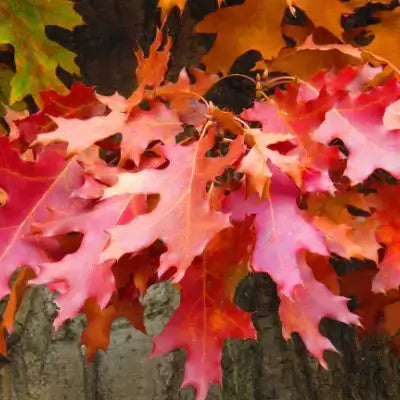
The leaves of this tree maintain a shiny green color in summer yet shift to fiery reds and oranges when temperatures fall. As the tree ages its bark transforms from smooth gray to deeply furrowed which creates a rugged aesthetic. The tree's bare branches in winter form an intricate network of silhouettes which enhances its appeal throughout the year.
8. Bald Cypress (Taxodium distichum): The Bald Cypress is notable for its distinctive appearance - it is a deciduous conifer with feathery foliage that turns rust-colored in the fall before dropping. It is often found in wetland areas and can tolerate standing water, similar to Pin Oak's adaptability to wet conditions.
4. American Sycamore American Sycamore (Platanus occidentalis): With its distinctive mottled bark and large, hand-shaped leaves, the American Sycamore resembles the Pin Oak in terms of its aesthetic appeal. It is often found near water bodies and is known for its rapid growth rate.
At optimum conditions, the pin oak tree needs less or no maintenance. You may need to prune the lower branches as the tree grows to keep them off the ground and create more growing space.
If you need a shade tree for wet soil , start with the site, not the shovel. We want to know how your yard behaves after a hard rain. Watch where water sits for 24 hours, where it drains by morning, and where the ground stays sticky for days. That tells us whether you have seasonal moisture, chronic sogginess, or plain old compaction.
1. Red Maple (Acer rubrum): The Red Maple is a versatile and fast-growing native tree across North America. Like the Pin Oak, its leaves turn vibrant shades of red in the fall. It is well-suited to wet and moist soils, making it an excellent choice for areas with varying water levels.
Watering: Give it regular watering for the first year and then only once in a while after it's established
Cut off any broken twigs in late winter to maintain them in shape. Plants develop in a healthy, balanced way when they are pruned on a regular basis.
Pin Oak Size and Growth Rate
You can also use this tree to prevent erosion in your backyard if it rains heavily. Throughout the year, its leaves start as a glossy dark green color. Then, as the season progresses, the foliage changes to bronze or red. They may even look like russet potatoes. When this tree is fully grown, it reaches 60 and 70 ft in height, with leaves, branches, and roots spreading between 25 feet and 45 feet. It grows well in the southeast, liking zones 4 through 8.
In a garden setting, expect a Pin Oak to reach heights of 60 to 70 feet , while in wild, optimal conditions, it can tower over 100 feet. The canopy, when fully matured, spreads out to create a wide, sheltered area of 25 to 40 feet, providing not just beauty but also a habitat for various bird species and a shaded under canopy that can enhance biodiversity.
Predominantly found across the southeastern United States , especially in hardiness zones 4 through 8, the Pin Oak is a symbol of strength and endurance. It boasts a rapid growth rate of two to three feet per year, depending on the quality of its growing conditions.
9. White Ash (Fraxinus americana): The White Ash is another native tree with compound leaves that resemble those of the Pin Oak. It is known for its tall and straight growth, making it valuable for lumber. Unfortunately, it has been impacted by the invasive emerald ash borer in recent years.
The pin oak tree grows at a higher rate when compared to other landscaping trees. The tree's growth rate is approximately 24" per year at optimum conditions.
Architectural Beauty : From its pyramidal youth to its mature oval canopy, the Pin Oak's branching pattern is both unique and striking, offering visual interest throughout the year.
Pin Oak and Wildlife
Spring Blooms : The appearance of yellow and green catkins in April and May adds a decorative touch to its branches, attracting pollinators and adding to the biodiversity of your garden.
10. Black Gum (Nyssa sylvatica): Tupelo is appreciated for its glossy green leaves that turn vibrant shades of red in the fall. It is often found in moist areas and is an important food source for various wildlife species. Native trees play a crucial role in our ecosystems, offering a myriad of unique and invaluable contributions that shape the environment, support biodiversity, and benefit wildlife and humans.
Quercus palustris holds ecological importance which cannot be defined by its towering size. This species serves as essential sustenance and shelter for numerous distinct and rare animals. Acorns from this tree supply vital nutrition to migratory birds like wood ducks and wild turkeys while small mammals including flying squirrels depend on them for winter survival.
Tennessee Wholesale Nursery Has Happy and Healthy Pin Oak Trees for Sale!
If you are looking for the best Pin Oak Tree, our tree experts can help you. We are Tennessee Wholesale Nursery and have years of experience working with Pin Oak trees of all types. We can help you find the best oak tree for your home or office garden. We can also teach you to take care of this beautiful oak tree. Talk to our tree experts today! The Pin Oak could be the perfect addition to your home or office garden!
Pin Oak Varieties
Preserving native trees thus directly supports the survival of numerous species, contributing to the overall health of ecosystems. Moreover, native trees often offer unique cultural and historical significance. They have played a vital role in indigenous cultures worldwide for millennia, providing resources for food, medicine, shelter, and spiritual practices. These trees hold stories and knowledge passed down through generations, connecting people to their heritage and the land they inhabit. The benefits of native trees extend beyond ecology and culture.
About Pin Oak
7. American Hornbeam (Carpinus caroliniana): Also known as Musclewood, the American Hornbeam is a small tree with distinctive bark that resembles flexed muscles. Its serrated leaves provide a unique texture like the Pin Oak's. It thrives in shaded woodland areas.
2. Northern Red Oak (Quercus rubra): As its name suggests, the Northern Red Oak Northern Red Oak is a member of the oak family. Its leaves resemble the Pin Oak, with deep lobes and pointed tips.
Traditional medicine practitioners believed that its properties helped reduce inflammation which made it effective in treating sore throats as well as diarrhea and skin infections. Nutrition-rich acorns became meal ingredients or flour after tannins were removed through a careful leaching process. Practitioners used bark infusions as fever remedies and crushed their leaves into pastes to heal insect bites and minor burns. While today's medical community uses it less frequently, it continues to be explored within herbal medicine and natural healing practices.


