
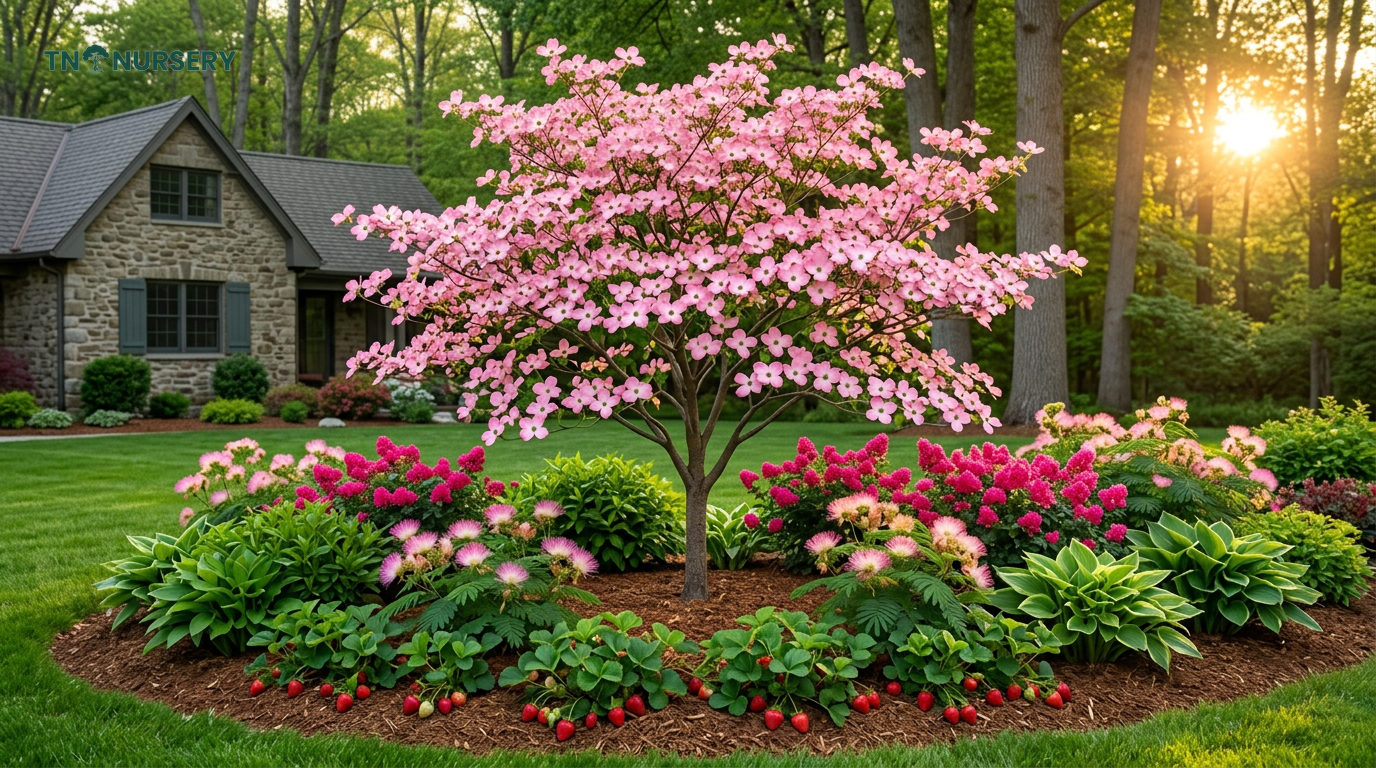
Pink Dogwood Tree for Easy Summer Curb Appeal
Plant a pink dogwood tree for soft bloom, useful shade, and a tidy size that fits real yards. Explore our Dogwood Trees and plan a zone-smart spring or summer update.
Why a Pink Dogwood Changes a Yard Fast
- How flowering dogwood trees compare with cherry-style bloomers such as a kwanzan cherry tree or choke cherry tree
- Where to place one tree near entry paths, corners, and beds for stronger curb appeal
- How to layer trees with groundcover or edible plants for a fuller landscape
- What to watch for when comparing bloom color, mature form, and zone fit
Our Top Pick for Summer Curb Appeal

Pink Dogwood Tree for Layered Yards and Lasting Color
If you want a pink dogwood tree that does more than bloom for a week, this is the one we’d put near the front walk or patio edge. It stays under 25 feet, so you get graceful branching, spring flowers, summer shade, and red-to-gold fall color in a size that fits many home landscapes. Keep in mind that it prefers partial shade to full sun, with morning light being especially helpful, so check your planting spot and zone timing before you order.
- Matures under 25 feet for a manageable flowering focal point in residential yards
- Beautiful pink spring blooms followed by dark green summer shade and red-gold fall color
- Grows in zones 5-9 and works well in partial shade to full sun, including pollinator-friendly shade garden settings
Where a Pink-Flowering Tree Works Hardest in the Yard
A pink dogwood tree earns its keep when you place it where people actually see the branching, bloom, and shape up close. We usually guide homeowners to spots with morning sun, light afternoon shade, and a clear view from the street or front walk. That softer setting suits a layered home landscape better than a tree that wants a big, bold stage.
How to choose the right pink dogwood tree?
Pick the planting spot first. Then match the tree to the light, the viewing angle, and the space between the trunk and your house, walk, or driveway.
Best locations for the strongest visual return
- Front entry views: Set it where you see blooms from the porch and front windows. A side offset often looks better than centering it on the door.
- Foundation bed corners: Corners need height, but not bulk. A pink dogwood gives lift without the heavier mass of some larger flowering trees.
- Mailbox plantings: This is a strong choice if the area gets light shade and enough root room. Keep the trunk back from pavement and post hardware.
- Patio edges: Place it where the canopy softens the seating area, not directly over the main traffic path.
- Open lawn islands: Use it as a focal point when the yard needs shape in spring and branching detail after bloom.
When homeowners compare types of cherry trees, they often want bright spring color. But for a closer, quieter look near the house, this form usually feels more settled.
Spacing, sun, and what to keep in mind
Give flowering dogwood trees breathing room from walls and hard surfaces so air can move and roots can spread. We also like to angle the tree toward the main sightline from the street, because bloom reads best from the front quarter view, not straight underneath. But keep in mind: if your site gets hot, reflected afternoon sun all summer, a white dogwood tree or a tougher open-site choice may handle that exposure better.
Flowering tree for small yards
On a compact lot, bloom alone is not enough. We think a flowering tree for small yards should also bring layered branching, usable scale, and a shape that does not crowd windows or rooflines after ten years.
That is why many shoppers compare a kwanzan cherry tree, choke cherry tree, wild cherry tree, or even a japanese cherry blossom tree before planting. Those trees can deliver a louder spring show. So if your space is tight, filtered shade is part of the site, or you want a gentler outline near patios and beds, a pink dogwood is often the better fit.
Build Around a Pink Dogwood Tree With Color, Fruit, and Slope Support
Start with a pink dogwood as your front-yard anchor, then carry the season with summer bloom, edible edging, and practical erosion control. We grouped these four picks so you can shape a yard that looks finished and holds up over time.


Frequently Asked Questions
Is a pink dogwood tree a good flowering tree for small yards?
Yes. We recommend it often for smaller front yards because it brings spring color, layered branching, and summer shade without the bulky look some larger flowering trees create. If you want the best flowering tree for curb appeal near a porch, walkway, or mailbox bed, this is one of our strongest picks. Keep in mind that you still need to match the tree to your planting zone and give it enough room for airflow.
How is a pink dogwood different from a white dogwood tree or a kwanzan cherry tree?
The biggest difference is the look of the bloom and the overall shape. A pink dogwood has a softer, more natural branching habit, while a white dogwood tree gives you the same classic dogwood form in a cleaner, brighter bloom color. A kwanzan cherry tree usually looks showier and fuller in flower, but it creates a different visual effect. If you want a gentler woodland look, we would stay with dogwood.
What should I plant around a pink dogwood for a fuller summer yard?
We like to build around it with flowering shrubs, perennials, and groundcover from our catalog so the area stays filled after spring bloom season passes. That gives you color at eye level, softer edges at the base, and a more finished bed through summer. If you want a stronger evergreen anchor nearby, a little gem magnolia tree can add a very different texture. But give each planting enough room so the dogwood does not get crowded.
How does it compare with cherry trees like a choke cherry tree or wild cherry tree?
Cherry trees usually read bolder in the landscape, while dogwoods feel lighter and more layered. A choke cherry tree or wild cherry tree can suit a looser, more natural planting style, but they do not give the same classic dogwood silhouette many homeowners want near the house. If your goal is a calm focal point instead of a taller, wilder presence, we would choose dogwood first.
When should I order for spring or summer planting?
Order early enough that you can plant when your local conditions are right for your zone. We always suggest planning around your actual weather, not the calendar alone, because root establishment matters more than chasing a bloom window. For summer planting, be ready to water consistently after planting. That is the tradeoff. Warm soil helps roots move, but hot dry spells can stress a new tree fast.
How does TN Nursery ship live plants?
We ship all items by 3-4 day ground shipping. That timing helps you plan ahead, especially if you want your trees and companion plantings to arrive together for one planting weekend. When your order comes in, unpack it promptly and plant as soon as site conditions allow. That gives your plants the best start.
Can I return a plant if it does not work for my yard, and how do I contact you?
We do not offer refunds, and we do not accept returns. We only offer a warranty if you purchase an extended warranty at the time of order. If that warranty was purchased and the product is available, we can offer a reshipment. If it is out of stock, we can offer in-store credit. You can reach us at customerservice@tennesseewholesalenursery.com or write to Tennessee Wholesale Nursery, 12847 State Route 108, Altamont TN 37301, United States.
Conclusion
Key Takeaways
- Choose a focal flowering tree that matches the size of your yard and the space near walks, windows, and entry areas.
- Check zone compatibility before you buy so your tree has the best chance for long-term survival.
- A pink dogwood gives elegant color and manageable size for homeowners who want season-spanning curb appeal.
- Cherry types create a larger bloom display, while dogwoods usually fit tighter residential spaces more easily.
- Complete the planting with flowering shrubs, groundcover, and other live layers for a fuller summer landscape.


