Everbearing Strawberry Plants: Sweet Berries From Late Spring to Fall
Everbearing strawberry plants (Fragaria × ananassa) are perennial garden strawberries that fruit in repeated flushes from late spring until fall frost instead of one June crop. Plants grow 6 to 12 inches tall, are hardy in USDA zones 4–8 and need full sun. TN Nursery ships bare-root everbearing strawberry plants, Buy 1 Get 1 Free.
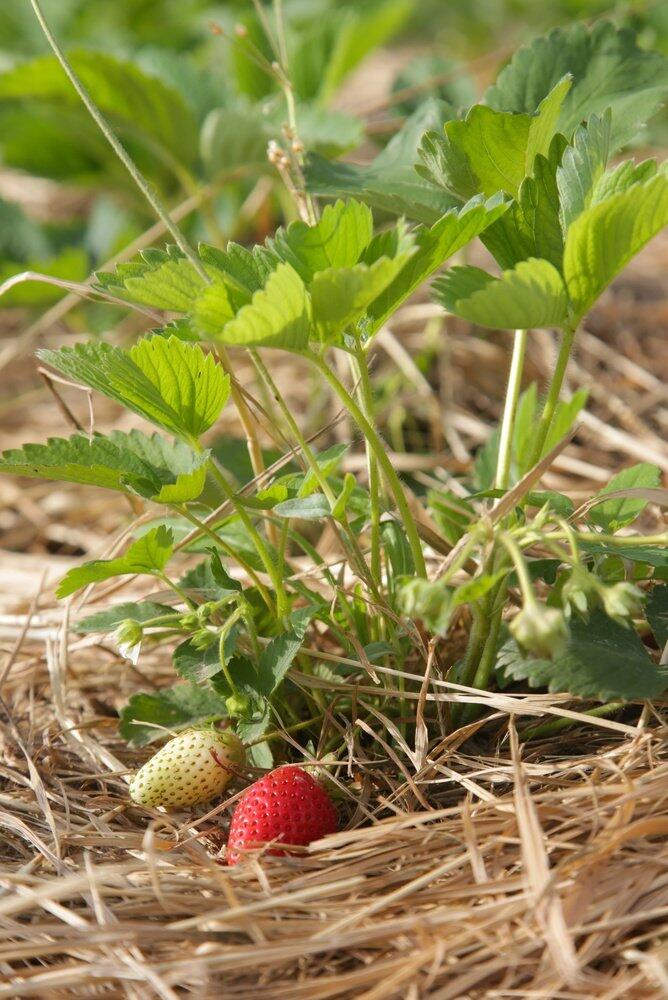
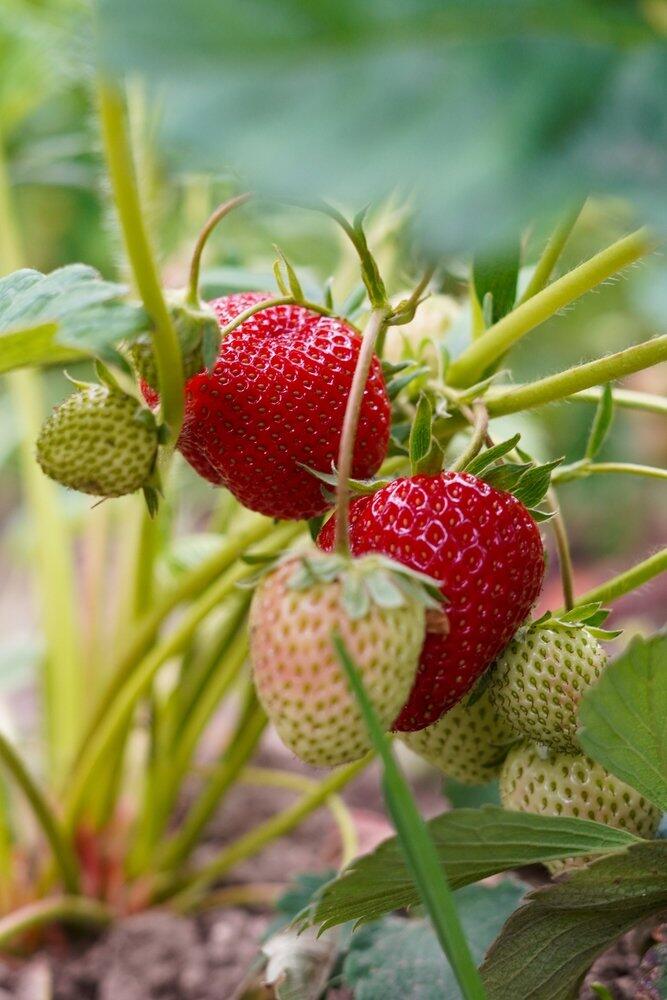
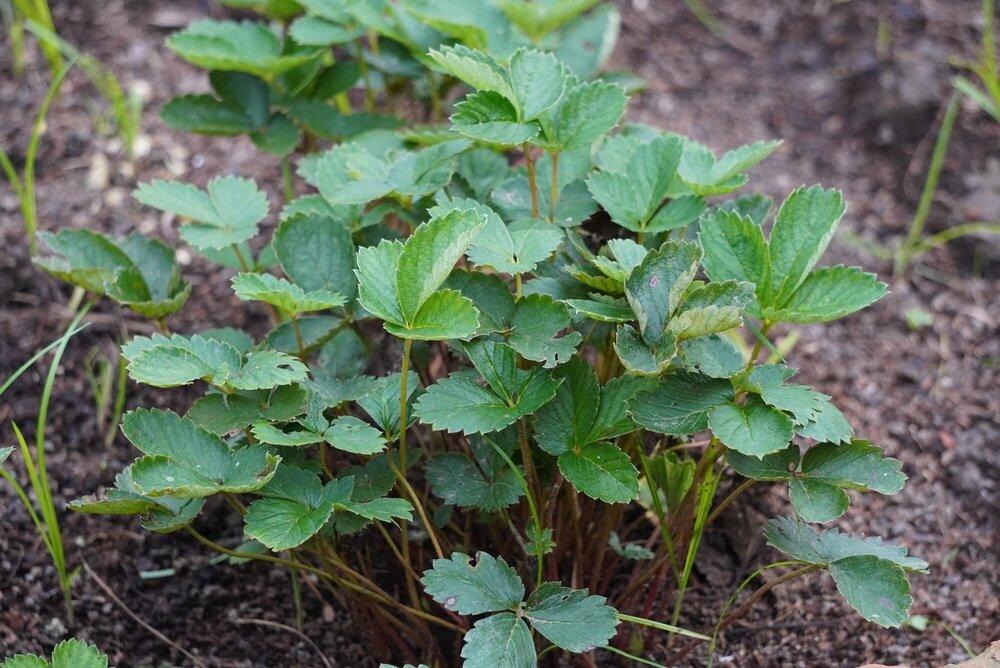
Everbearing strawberries belong to the rose family, Rosaceae, and descend from a cross between two wild American strawberries, Fragaria virginiana of eastern North America and Fragaria chiloensis of the Pacific coast. Gardeners also call them day-neutral or repeat-bearing strawberries. Each plant forms a low crown of glossy, three-part green leaves, opens white five-petaled flowers with gold centers, and ripens bright red berries about 4 weeks after each bloom. The compact habit makes everbearing strawberry plants a natural fit for raised beds, patio pots, hanging baskets and the front of an edible border.
-
Botanical name: Fragaria × ananassa, rose family (Rosaceae)
-
Also called: everbearing strawberries, day-neutral strawberries, repeat-bearing strawberry plants, garden strawberry
-
Flower: white, five-petaled blooms with yellow centers, in repeating cycles from late spring through early fall
-
Fruit: sweet red berries in several harvests from late spring or early summer until frost
-
Best uses: raised beds, containers, hanging baskets, kitchen gardens, edible borders and edging along paths
-
Wildlife value: nectar and pollen for honeybees, bumblebees and other spring and summer pollinators
-
What ships: bare-root plants in Buy 1 Get 1 Free, Buy 3 Get 2 Free, Buy 5 Get 3 Free and 25-plant wholesale bundles
What Are Everbearing Strawberries?
Everbearing strawberries are strawberry plants that keep setting flowers and fruit through the growing season, so one bed gives several harvests from late spring to fall. June-bearing strawberries, by comparison, produce one large crop over 2 to 3 weeks in early summer.
The steady, season-long rhythm is why home gardeners love everbearing strawberry plants. A bed of 10 to 25 plants keeps fresh fruit coming for breakfast and desserts week after week. Everbearing strawberries also make fewer runners than June-bearing types, so the plants put more of their energy into flowers and berries and stay neatly in place in pots and small beds.
When Do Everbearing Strawberries Produce Fruit?
Everbearing strawberries begin fruiting in late spring or early summer and continue in waves until the first hard frost in fall. Each wave of berries ripens about 4 weeks after the flowers open.
| Season |
What everbearing strawberry plants do |
| Early spring |
New leaves emerge; plant bare-root crowns |
| Late spring |
First white flowers and first berries |
| Summer |
Repeating flowers and steady harvests every week or two |
| Early fall |
Another strong flush of berries in cooler weather |
| Late fall to winter |
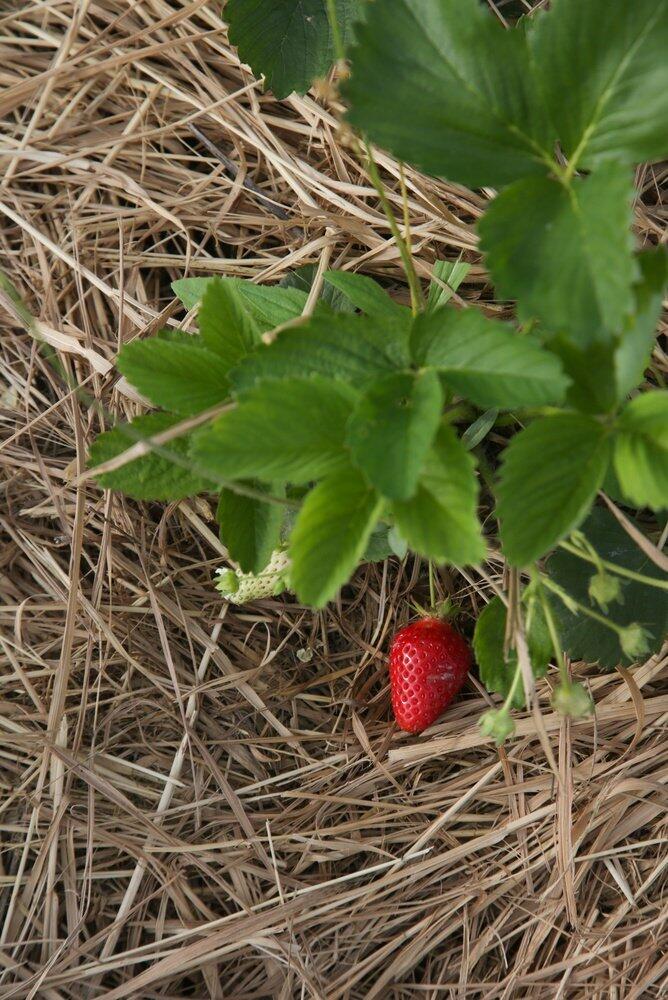
Plants rest under a straw mulch |
Do everbearing strawberries produce the first year? Yes. Everbearing strawberry plants fruit in their first summer. Pinch off the flowers for the first 4 to 6 weeks after planting so the roots and leaves grow strong, then let the plants bloom for berries from midsummer to fall.
How Much Sun Do Everbearing Strawberry Plants Need?
Everbearing strawberry plants need full sun, at least 6 to 8 hours of direct light a day, for the sweetest berries and the biggest harvests. Morning sun is especially valuable because it dries the leaves early in the day.
Everbearing strawberries grow best in loose, well-drained, fertile soil rich in organic matter, with a slightly acidic pH of about 5.5 to 6.5. Raised beds and containers filled with a quality potting mix give excellent drainage. Water about 1 inch per week, and keep the soil evenly moist while the plants are flowering and fruiting. A layer of clean straw or pine needles keeps berries clean, holds moisture and gives the bed a tidy, finished look.
How Do You Plant Bare-Root Everbearing Strawberry Plants?
Plant bare-root everbearing strawberry plants with the crown exactly at the soil line, the roots fully buried and spread downward, and 12 to 18 inches between plants. Plant in early spring, or in fall in mild zones 7 and 8.
At our Altamont, Tennessee nursery, TN Nursery packs everbearing strawberry plants bare root, with no soil around the roots. Each plant arrives as a dormant crown with a full set of fibrous roots, ready to wake up and grow as soon as the plant is set in moist soil.
- Soak the roots in water for 20 to 30 minutes before planting.
- Loosen the soil 8 inches deep and mix in 2 to 3 inches of compost.
- Dig a hole deep enough to spread the roots straight down.
- Set the crown so the middle of the crown sits level with the soil surface.
- Firm the soil, water well, and keep the soil moist for the first 2 weeks.
A Buy 5 Get 3 Free pack of 8 plants fills a 4-by-4-foot raised bed at 16-inch spacing, and the 25-plant wholesale bundle plants a 25-foot row at 12-inch spacing.
What Grows Well With Everbearing Strawberries?
Other berries and pollinator flowers grow well with everbearing strawberries in an edible landscape. Plant a row of pineberry strawberry plants beside the red berries for a white-and-red harvest. Add height and summer fruit with a black raspberry bush or a blackberry shrub at the back of the bed, and train a grape vine on a nearby fence or arbor. Bee balm draws bees and butterflies to the garden all summer, and every visit helps set more berries. Explore more fruit options in our fruit and berry plants collection and our edible plants.
Planting & Growing Information
Botanical Name: Fragaria × ananassa (everbearing type)
Plant Family: Rosaceae
Ships: Bare root, dormant crowns
Planting Zone: 4–8
Height at Maturity: 6–12 inches; spreads 12–18 inches
Spacing: 12–18 inches
Sun or Shade: Full sun, 6–8+ hours daily
Water Needs: Moderate; about 1 inch per week, more while fruiting
Soil: Loose, fertile, well-drained soil; pH 5.5–6.5
Bloom Season: Late spring through early fall, in repeating cycles
Flower Color: White
Harvest: Late spring or early summer until frost
Origin: Garden hybrid of North and South American wild strawberries
Care: Mulch with straw, feed lightly with compost in midsummer, and trim runners so plants focus on fruit. Add fresh plants to the bed every 3 to 4 years for peak harvests.
Plant Attributes: Fruits the first year, multiple harvests, compact, container friendly, pollinator friendly
Everbearing Strawberry Plants FAQ
Are everbearing strawberries perennial?
Yes. Everbearing strawberries are perennial plants that return each spring in zones 4–8 and fruit best in their first 3 to 4 years.
How far apart should you plant everbearing strawberry plants?
Plant everbearing strawberry plants 12 to 18 inches apart in rows or beds, or one plant per 8-inch pot.
Can everbearing strawberries grow in containers?
Yes. Everbearing strawberries grow very well in pots, window boxes, strawberry jars and hanging baskets, because the compact plants fruit all season in a small space.
Do everbearing strawberries produce runners?
Everbearing strawberries produce fewer runners than June-bearing strawberries. Trim the runners that do appear so each plant puts its energy into berries.
When should you plant everbearing strawberries?
Plant everbearing strawberries in early spring as soon as the soil can be worked, or in fall in zones 7 and 8 for an early start the following spring.
What zones do everbearing strawberry plants grow in?
Everbearing strawberry plants grow in USDA hardiness zones 4 through 8.
Grown and Shipped by TN Nursery
TN Nursery has grown hardy plants since 1959, more than 65 years of experience, and has supplied plants to major U.S. landmarks like the Washington Monument and Arlington National Cemetery. At our Altamont, Tennessee nursery, we pack and ship everbearing strawberry plants to home gardens across the country. Each order travels bare root so the crowns settle into new soil quickly and start the season of berries. Want to learn more first? Read June-Bearing vs. Everbearing Strawberry Plants, Strawberry Plants: Care Guide and Strawberry, Raspberry and Blueberry Plants on our garden blog.