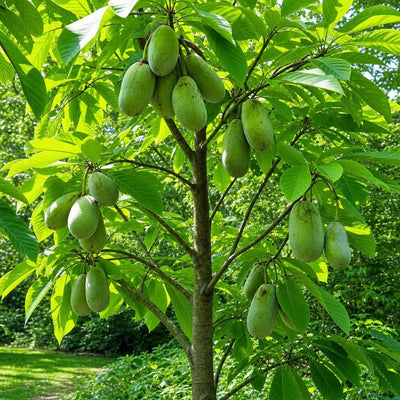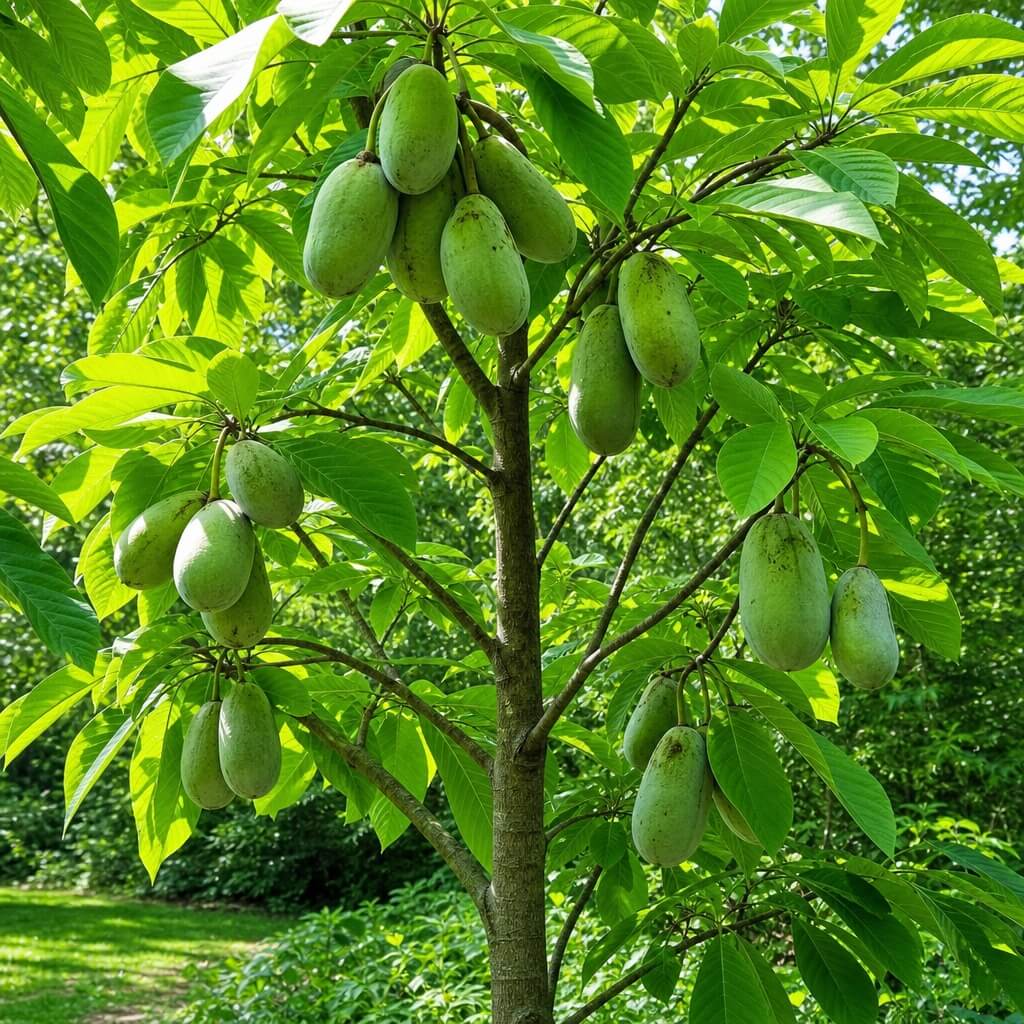
Pawpaw trees (Asimina triloba) fit small yards when you plan for them. Plant two pawpaw trees 8–15 feet apart, keep them within 30 feet of each other for pollination, and allow a 15–20 foot spread. Light pruning in late winter keeps a pawpaw tree at a reachable height, so even a modest backyard can grow fresh pawpaw fruit.
Late November is planning season in Tennessee. Pawpaw trees are dormant, the leaves have dropped, and you can see exactly how much room your yard has. According to the Kentucky State University pawpaw program, pawpaws grow in USDA zones 5–8 and handle anything from full sun to fairly heavy shade, which gives small-yard growers plenty of options. Start with our pawpaw trees for sale, grown on our farm in Altamont, Tennessee.
Is there a dwarf pawpaw tree?
Most people searching for a "dwarf pawpaw tree" want a pawpaw that fits a small space. The pawpaw trees TN Nursery sells are standard Asimina triloba, which reach 15–30 feet tall with a 15–20 foot spread. You keep a pawpaw tree in scale with smart spacing, a sunny edge spot and light pruning, rather than a special variety.
Pawpaw is naturally an understory tree with large, tropical-looking leaves. It stays narrower and smaller than most shade trees, which is why it works well along a fence line or at the back of a border. Our guide How Big Do Pawpaw Trees Get? covers height and spread in more detail.
How much space do two pawpaw trees need?
Two pawpaw trees need a planting strip roughly 25–35 feet long: space the trunks 8–15 feet apart and allow each tree a 15–20 foot spread. Pawpaws need a partner for fruit, so plant at least 2 trees within 30 feet of each other.
| Small-yard planning point | Pawpaw tree (Asimina triloba) |
|---|---|
| USDA hardiness zones | 5–8 |
| Mature height | 15–30 ft |
| Mature spread | 15–20 ft |
| Trees needed for fruit | At least 2 |
| Spacing between trees | 8–15 ft |
| Farthest apart for pollination | 30 ft |
| Bloom time | April–May (maroon flowers) |
| Harvest | August–October (fruit 3–6 in.) |
| Years to first fruit | 4–7 years for bare-root trees; 5–8 years for seedlings |
Why two? Kentucky State University notes that pawpaws generally need cross-pollination, so a pair of genetically different trees is the reliable path to fruit. Read more in Do You Need Two Pawpaw Trees for Fruit?
Where should I plant a pawpaw tree in a small yard?
Plant pawpaw trees where they get morning sun or full sun and deep, well-drained, slightly acidic soil with steady moisture. A sunny side yard, a fence line or the edge of an existing tree canopy all suit pawpaw in a small space.
- Sun for fruit: Mature pawpaw trees fruit most heavily in full sun. Light shade helps young trees settle in during their first seasons.
- Choose the spot once: Pawpaw grows a deep taproot, so pick a permanent home and let the tree stay put.
- Leave walking room: Keep trunks about 8 feet from walls, decks and walkways so the canopy has room to open.
See Where Do Pawpaw Trees Grow Best? for soil and site details.
How do you keep a pawpaw tree small?
Keep a pawpaw tree small by choosing one main trunk, removing root suckers and trimming the top in late winter while the tree is dormant. Light, regular pruning holds a pawpaw tree at a height where you can reach the fruit.
- Pick one leader. Pawpaws can grow several stems. Keep the strongest one for a tidy, single-trunk tree.
- Remove suckers. Pawpaw sends up shoots from its roots. Cut them at ground level if you want one tree instead of a grove.
- Prune in late winter. Shorten tall growth and take out crossing or broken branches before buds swell.
- Prune lightly. In Kentucky State University research, lightly pruned pawpaw trees carried more fruit per tree, while trees trained to a central leader grew larger fruit. Gentle shaping is plenty for a backyard.
How do you plant and care for pawpaw trees in a small yard?
Plant bare-root pawpaw trees while dormant, at the same depth they grew in the nursery. Water deeply, spread 2–3 inches of mulch over the root zone and keep it pulled back from the trunk. Water weekly through the first summer. TN Nursery's bare-root pawpaw trees ship at 1–5 feet tall and usually fruit 4–7 years after planting. For the full walkthrough, see How to Grow Pawpaw Trees.
Products to start with
- Pawpaw Tree – our #1 selling tree, offered Buy 1 Get 1 Free, Buy 3 Get 2 Free and in 25-tree packs, so a small yard gets its pollination pair easily.
- Pawpaw Tree Seedlings – packs of 100 or 500 for neighbors who want to share a planting or start a grove.
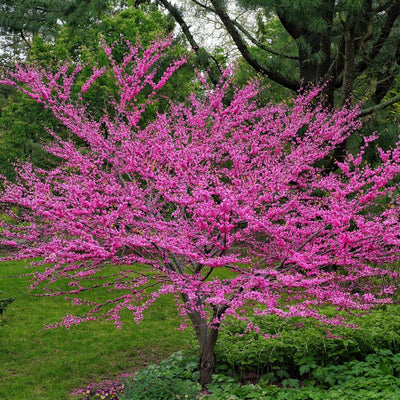
- Eastern Redbud Tree – another compact native tree for spring color nearby.
What grows well under pawpaw trees?
Shade-loving native plants grow well under pawpaw trees and make the most of every square foot in a small yard. Try wild ginger as a low groundcover, Virginia bluebells for spring flowers, Christmas fern for year-round green and mayapple for a woodland look. An eastern redbud at the sunny edge adds pink blooms in early spring.
Frequently asked questions
Can you grow a pawpaw tree in a small backyard?
Yes. A pawpaw tree grows 15–30 feet tall with a 15–20 foot spread, and two pawpaw trees spaced 8–15 feet apart fit along most fence lines or side yards.
How close can you plant two pawpaw trees?
Plant two pawpaw trees 8–15 feet apart. Keep them no more than 30 feet apart so pollination can happen.
Is there a dwarf pawpaw tree for small spaces?
The pawpaw trees TN Nursery sells are standard Asimina triloba. Spacing, a sunny spot and light pruning in late winter keep a pawpaw tree in scale for a small yard.
When should I prune a pawpaw tree to keep it small?
Prune a pawpaw tree in late winter while it is dormant. Remove root suckers and broken branches, and shorten tall growth before buds swell.
Will a pawpaw tree fruit in partial shade?
A pawpaw tree grows in partial shade, but fruit is heaviest in full sun. Give small-yard pawpaws the sunniest spot you can.
Keep reading
- How to Grow Pawpaw Trees: Planting, Care and Fruit
- Grafted vs. Seedling Pawpaw Trees: Which Should You Plant?
- How Long Until a Pawpaw Tree Bears Fruit?
- Best Fruit Trees for Small Yards
From our nursery
TN Nursery is a family-owned, third-generation nursery in Altamont, Tennessee, growing plants on 170 acres since 1959. We grow about 2 million pawpaw trees a year from about 2 tons of seed, and pawpaw is our #1 selling tree. Over more than 65 years we have supplied plants to landmarks like the Washington Monument and Arlington National Cemetery. When you are ready, buy pawpaw trees straight from our farm.