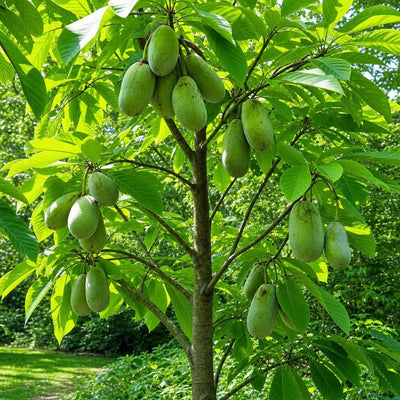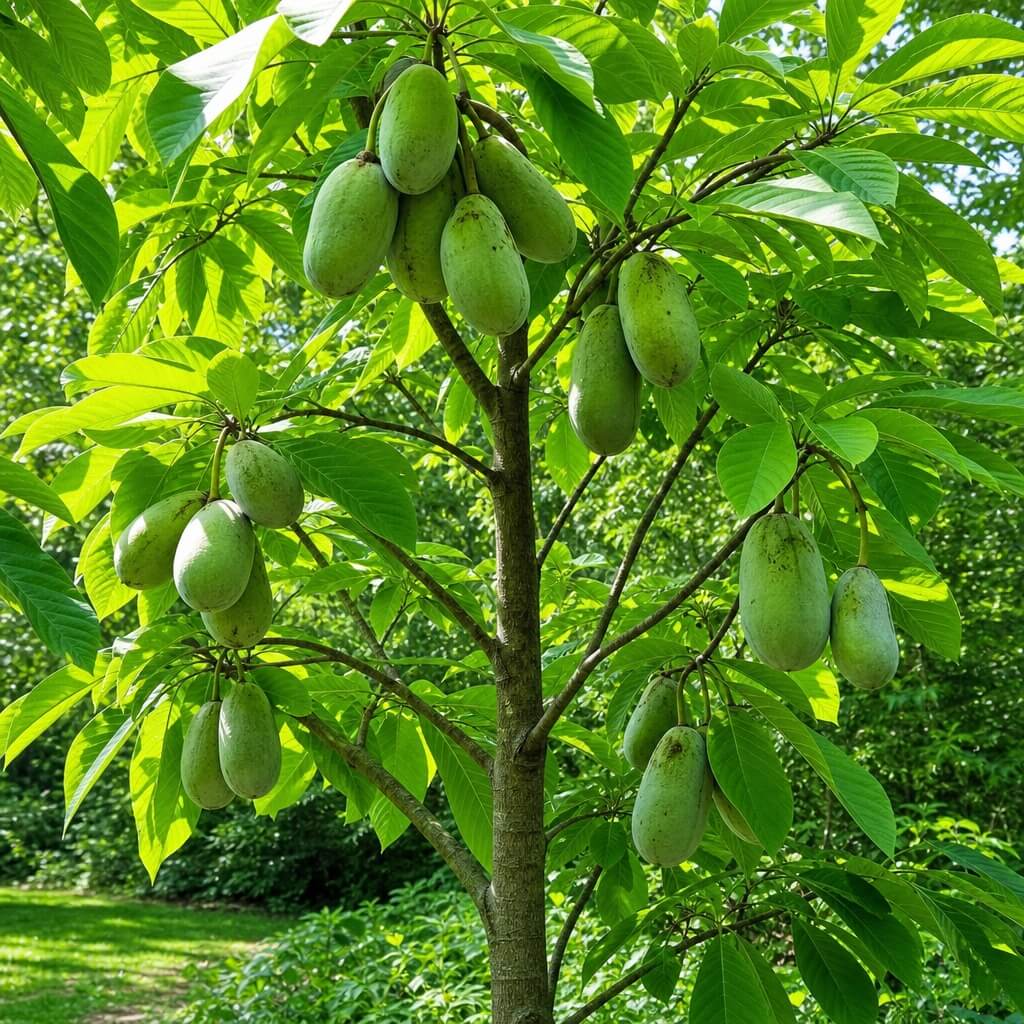
A grafted pawpaw tree is a named variety joined onto a seedling rootstock, so every grafted tree of that variety bears the same known fruit and often flowers sooner. A seedling pawpaw tree grows from seed, so each tree is genetically unique, which gives natural cross-pollination, a lower cost per tree and a strong start for pawpaw groves.
Late November is a good time to settle this question in Tennessee, because the dormant season from November through April is when bare-root pawpaw trees are planted. The Kentucky State University pawpaw program recommends grafted trees when uniform fruit is the main goal and notes that seedlings can always be grafted later. For most home yards, two or more seedling-grown pawpaw trees for sale from a nursery are the simplest way to get a fruiting pair. This guide builds on our main guide, How to Grow Pawpaw Trees.
What is the difference between grafted and seedling pawpaw trees?
A grafted pawpaw tree is a clone of one named variety, while a seedling pawpaw tree is a new genetic individual grown from a seed. Grafting attaches a cutting (the scion) from a chosen variety onto a young seedling root system, and the top of the tree then grows true to that variety.
Both types are the same species, Asimina triloba. Both grow 15–30 ft tall with a 15–20 ft spread, thrive in USDA zones 5–8, bloom with maroon flowers in April–May and ripen 3–6 in. fruit from August to October.
| Feature | Grafted pawpaw tree | Seedling-grown pawpaw tree |
|---|---|---|
| Genetics | Clone of one named variety | Each tree is unique |
| Fruit | Same known fruit on every tree of that variety | Natural variety from tree to tree |
| Cross-pollination | Needs a different variety or a seedling nearby | Any two seedlings can pollinate each other |
| Cost per tree | Higher | Lower, especially in packs |
| Best use | Small orchards focused on one fruit type | Home pairs, groves, food forests, wildlife plantings |
Are grafted pawpaw trees better?
Grafted pawpaw trees are better only when you want every tree to bear one predictable type of fruit. Kentucky State University reports that a grafted pawpaw can start flowering 2–3 years after planting, a head start that commercial orchards value.
For a backyard, a homestead or a woodland edge, seedling-grown pawpaw trees do the job beautifully. You get the same tropical leaves, golden fall color, maroon spring flowers and custard-textured fruit, and each tree adds its own small twist of flavor and size.
Why plant seedling-grown pawpaw trees?
Seedling-grown pawpaw trees are the easiest way to guarantee cross-pollination, because no two seedlings share the same genetics. Plant at least two pawpaw trees within 30 ft of each other, spaced 8–15 ft apart, and they can pollinate one another.
- Built-in pollination partners. Any two seedlings work together, so there is no variety matching. Our guide Do You Need Two Pawpaw Trees for Fruit? explains why.
- Lower cost per tree. Seedling-grown trees make it affordable to plant a group of three, five or 25.
For large plantings, pawpaw seedlings in packs of 100 or 500 are the most economical way to fill an orchard row, a riverbank or wildlife habitat.
Do grafted pawpaw trees need a pollinator?
Yes. Two grafted pawpaw trees of the same named variety are clones, so they cannot cross-pollinate each other, according to Kentucky State University. A grafted pawpaw needs a second, different variety or a seedling-grown pawpaw tree within 30 ft.
How long until grafted and seedling pawpaw trees fruit?
Bare-root nursery pawpaw trees 1–5 ft tall usually fruit 4–7 years after planting, and small pawpaw seedlings usually fruit in 5–8 years. Grafted trees often flower a little sooner. See How Long Until a Pawpaw Tree Bears Fruit? for a year-by-year timeline.
Which pawpaw trees should you start with?
- Pawpaw Tree: bare-root trees in 1–5 ft sizes, sold Buy 1 Get 1 Free, Buy 3 Get 2 Free and in 25-tree packs. The free second tree is your pollination partner.
- Pawpaw Tree Seedlings: packs of 100 or 500 for groves, food forests and wildlife plantings.
How do you plant and care for pawpaw trees?
Plant bare-root pawpaw trees while dormant, from November through April, in moist, fertile, well-drained, slightly acidic soil. Light shade for the first one to two summers helps young pawpaw trees settle in, and full sun gives mature trees the biggest crops.
- Soak the roots in water for 30 minutes to an hour.
- Dig a hole twice as wide as the roots and just as deep, leaving room for the long taproot.
- Set the root collar level with the soil, backfill with native soil and water deeply.
- Mulch 2–3 inches deep, keeping mulch 3 inches from the trunk.
Plan your spacing with How Big Do Pawpaw Trees Get? and prepare the ground with our soil preparation guide for pawpaw trees.
What grows well with pawpaw trees?
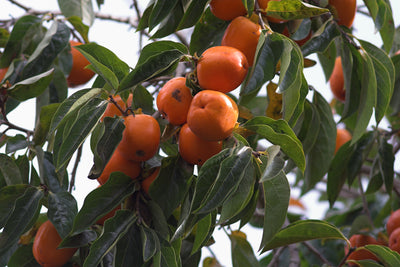
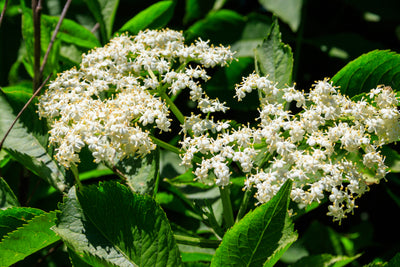
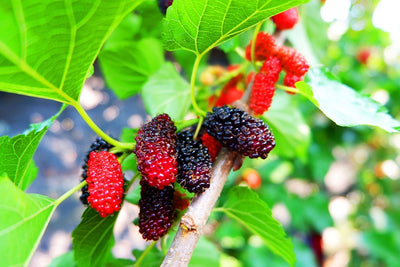
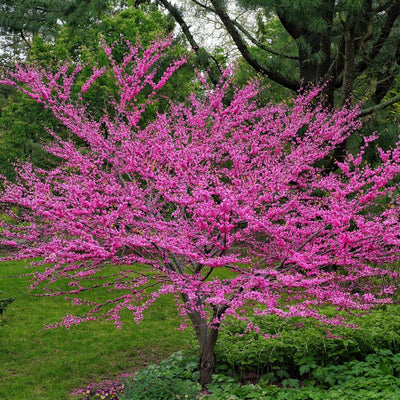
Native fruit trees and shrubs make the best pawpaw companions. A persimmon tree ripens sweet fruit in fall after the pawpaw harvest, an elderberry adds summer berries at the grove edge and a mulberry tree fruits in early summer. An Eastern redbud tree blooms pink beside the maroon pawpaw flowers in April.
Grafted vs. Seedling Pawpaw FAQ
What is a grafted pawpaw tree?
A grafted pawpaw tree is a named pawpaw variety joined onto a seedling rootstock, so the tree bears the same fruit as every other tree of that variety.
Can two grafted pawpaw trees pollinate each other?
Two grafted pawpaw trees of the same variety cannot cross-pollinate each other because they are clones. Plant a different variety or a seedling-grown pawpaw tree within 30 feet.
Do seedling pawpaw trees produce good fruit?
Seedling pawpaw trees produce the same custard-textured native fruit, 3 to 6 inches long and ripening August to October, with natural variety in size and flavor from tree to tree.
How long does a seedling pawpaw tree take to fruit?
Bare-root nursery pawpaw trees 1 to 5 feet tall usually fruit 4 to 7 years after planting, and small pawpaw seedlings usually fruit in 5 to 8 years.
Can you graft a seedling pawpaw tree later?
Yes. A seedling pawpaw tree can be grafted with a named variety later, which is why pawpaw seedlings are also used as rootstock.
How many pawpaw trees should I plant?
Plant at least two pawpaw trees within 30 feet of each other, spaced 8 to 15 feet apart. Three or more trees in a small grove improve pollination and fruit set.
Keep reading
- How to Grow Pawpaw Trees: Planting, Care and Fruit
- Pawpaw Fruit: What It Is, What It Tastes Like and How to Get It
- Do You Need Two Pawpaw Trees for Fruit?
- Where Do Pawpaw Trees Grow Best?
From our nursery
TN Nursery is a family-owned, third-generation nursery in Altamont, Tennessee, growing plants on 170 acres since 1959. Pawpaw is our #1 selling tree: we grow about 2 million pawpaw trees a year from about 2 tons of seed, and we have supplied plants to landmarks like the Washington Monument and Arlington National Cemetery. When you are ready, buy pawpaw trees dug fresh from our fields during the dormant season.