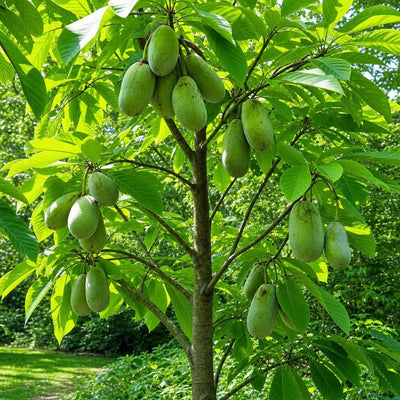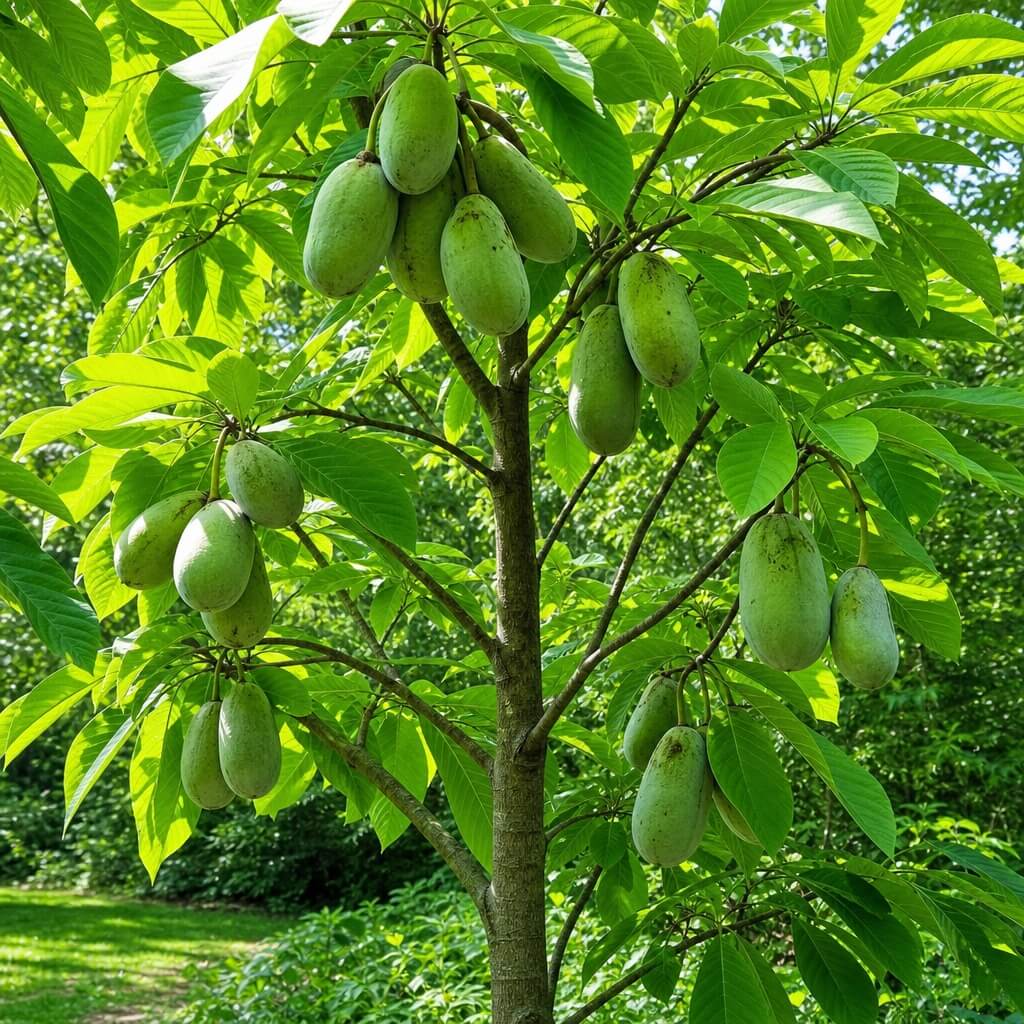
A pawpaw tree usually bears its first fruit 4 to 7 years after you plant a bare-root nursery tree 1 to 5 feet tall, and 5 to 8 years when grown from a small seedling. Pawpaw trees (Asimina triloba) start fruiting at about 6 feet tall and need a second pawpaw tree within 30 feet to set fruit.
Late November is a great time to start that clock in Tennessee. Bare-root pawpaw trees are dormant now and ready to plant. UT Extension's guide to pawpaws for Tennessee gardens notes that pawpaws usually begin fruiting once the tree reaches about 6 feet, and that the first two years are all about root growth. Planting pawpaw trees for sale from our Altamont fields this winter puts you on the path to a harvest of your own. For the full planting walkthrough, see our How to Grow Pawpaw Trees guide.
How long does it take a pawpaw tree to bear fruit?
A bare-root pawpaw tree from a nursery typically fruits 4 to 7 years after planting, while a pawpaw seedling usually takes 5 to 8 years. The starting size of the tree is the biggest factor, because pawpaw trees bloom and fruit once they reach roughly 6 feet tall.
Pawpaw trees grow about 1 to 2 feet per year once established. A 4–5 foot bare-root pawpaw tree has a head start of several seasons over a small seedling, so it reaches fruiting height sooner.
| Type of pawpaw tree | Size at planting | Typical years to first fruit |
|---|---|---|
| Bare-root nursery pawpaw tree | 1–5 feet | 4–7 years |
| Pawpaw seedling | Small seedling | 5–8 years |
| Grafted named-variety pawpaw (per UT Extension) | Varies | 3–4 years |
What happens each year before the first pawpaw fruit?
In year 1, a young pawpaw tree puts most of its energy into roots, so top growth may look modest. In years 2 and 3, pawpaw trees put on strong new growth each season. In years 4 to 7, the first deep maroon pawpaw flowers open in April and May, followed by the first 3- to 6-inch fruit ripening from August to October. Learn the signs of a ready fruit in When Are Pawpaws Ripe?
How can you get a pawpaw tree to fruit sooner?
The fastest way to get pawpaw fruit is to plant at least two larger pawpaw trees within 30 feet of each other and give them steady care for the first two years.
- Plant two or more trees. Pawpaw flowers need pollen from a genetically different pawpaw tree. Our Buy 1 Get 1 Free pawpaw tree offer ships the pair you need. Read more in Do You Need Two Pawpaw Trees for Fruit?
- Start with a larger size. A 3–4 ft or 4–5 ft bare-root pawpaw tree reaches fruiting height sooner than a 1–2 ft tree.
- Shade young trees, then give them sun. Light afternoon shade helps pawpaw trees during their first one to two summers, and full sun gives established trees the heaviest crops.
- Water and feed steadily. Keep the soil evenly moist through the growing season and add a balanced fertilizer in spring, as UT Extension recommends for young trees.
- Mulch and keep weeds back. Spread 2 to 3 inches of mulch, keeping it 3 inches from the trunk, so the roots get the water and nutrients.
Why hasn't my pawpaw tree fruited yet?
Most pawpaw trees that have not fruited are simply still too young or under about 6 feet tall. The next most common reason is a missing pollination partner.
- Age and height: a pawpaw tree planted 3 years ago is often still building roots and branches.
- Only one tree: root suckers from the same pawpaw tree share its genetics, so they cannot pollinate it. Add a second pawpaw tree within 30 feet.
- Deep shade: mature pawpaw trees in full shade grow well but set lighter crops than trees in sun.
Which pawpaw products should you start with?
- Pawpaw Tree: bare-root trees in 1–2 ft, 2–3 ft, 3–4 ft and 4–5 ft sizes, sold Buy 1 Get 1 Free, Buy 3 Get 2 Free and in 25-tree packs.
- Pawpaw Tree Seedlings: packs of 100 or 500 for groves, wildlife plantings and orchard rows. Seedling-grown pawpaw trees offer natural genetic variety that supports cross-pollination.
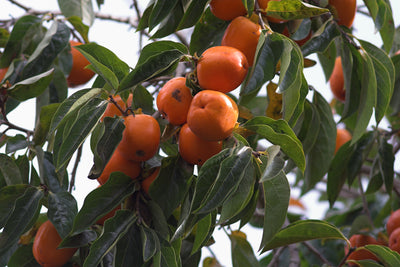
- Persimmon Tree: a native fruit tree that ripens right after the pawpaw harvest.
How do you plant a pawpaw tree for the best start?
Plant a bare-root pawpaw tree while it is dormant, from November through April, in moist, fertile, well-drained, slightly acidic soil. Space pawpaw trees 8 to 15 feet apart in USDA zones 5–8.
Soak the roots for 30 minutes to an hour, dig a hole twice as wide as the roots, set the root collar at soil level and water deeply. Our bare root planting guide and pawpaw soil preparation guide cover each step in more detail.
What grows well with pawpaw trees?
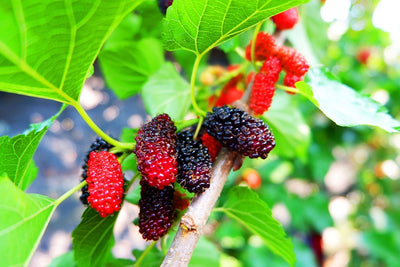
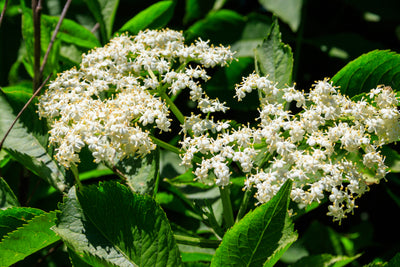
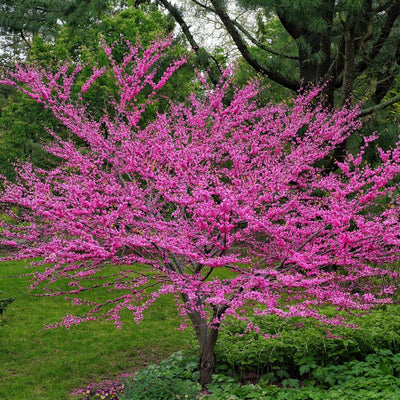
Native fruit trees and shrubs make good companions for pawpaw trees and stretch the harvest season. A mulberry tree fruits in early summer, elderberry adds summer berries at the grove edge, and an American persimmon ripens in fall after the pawpaws. An Eastern redbud tree blooms pink beside the maroon pawpaw flowers in April. Once your trees bear, our how to eat a pawpaw guide covers what to do with the harvest.
Pawpaw Fruiting FAQ
How long does it take a pawpaw tree to bear fruit?
A bare-root nursery pawpaw tree usually bears fruit 4 to 7 years after planting, and a pawpaw seedling usually takes 5 to 8 years.
Can one pawpaw tree produce fruit by itself?
A single pawpaw tree rarely sets fruit because pawpaw flowers need pollen from a genetically different tree. Plant at least two pawpaw trees within 30 feet of each other.
How tall is a pawpaw tree when it starts fruiting?
Pawpaw trees usually start fruiting once they reach about 6 feet tall, according to UT Extension.
What month do pawpaw trees bear fruit?
Pawpaw trees bloom with maroon flowers in April and May, and the fruit ripens from August to October.
Do grafted pawpaw trees fruit faster than seedlings?
Yes. UT Extension reports grafted pawpaw trees bear in 3 to 4 years, while seedling-grown pawpaw trees cost less and bring natural genetic variety that helps cross-pollination in a grove.
When should you plant pawpaw trees in Tennessee?
Plant bare-root pawpaw trees in Tennessee while they are dormant, from November through April.
Keep reading
- How to Grow Pawpaw Trees: Planting, Care and Fruit
- Do You Need Two Pawpaw Trees for Fruit?
- When Are Pawpaws Ripe?
- Where to Buy Pawpaw Fruit, or Grow Your Own
- Pawpaw Fruit: What It Is and What It Tastes Like
From our nursery
TN Nursery is a family-owned, third-generation nursery in Altamont, Tennessee, growing plants since 1959 on 170 acres. Pawpaw is our number one selling tree, and we grow about 2 million pawpaw trees a year from about 2 tons of seed. We have also supplied plants to landmarks like the Washington Monument and Arlington National Cemetery. When you buy pawpaw trees from us, they come straight from our fields, dug while dormant and ready to start growing toward that first harvest.