
The short answer
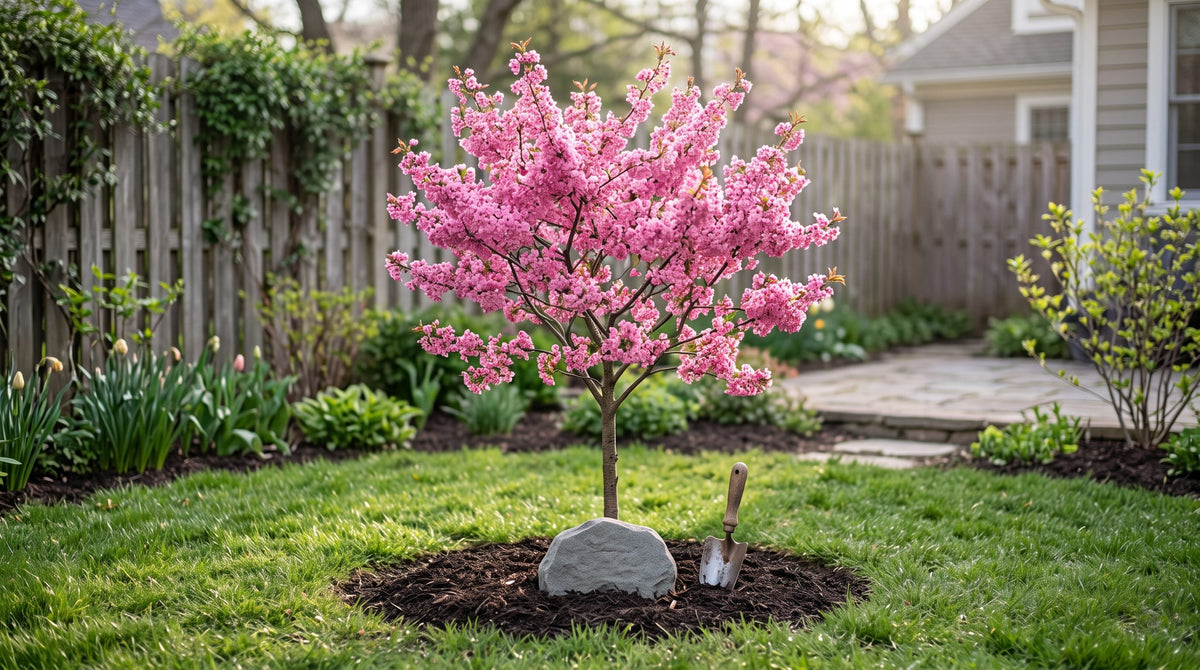
The best memorial trees for deceased loved ones are flowering trees that suit your yard and zone. Eastern redbud (zones 4–9) and weeping cherry (zones 4–8) bloom pink in March and April. White dogwood and kousa dogwood bring white spring flowers. Plant a bare-root tree while it is dormant, in a spot you will visit often.
Planting a tree when someone dies gives grief a place to go. The tree starts small, roots in and grows a little each year, much as a memory settles and deepens. It flowers in the season you choose, feeds bees and birds, and gives shade to sit in. You can pick a tree that suits the person: a pink bloom for someone cheerful, white for quiet grace, a fragrant one for a gardener. Forest planting programs will plant a tree in your loved one's name, often far from home. That is a kind gesture, but you may never stand beside that tree. A tree in your own yard is one you can touch, water and gather around on a birthday. Below are the trees we grow that suit this purpose best, including our Memorial Tree. Each comes with its zone, height and bloom time, then the steps to plant it so it thrives.
Memorial trees for deceased loved ones
1. Match the tree to your zone and space
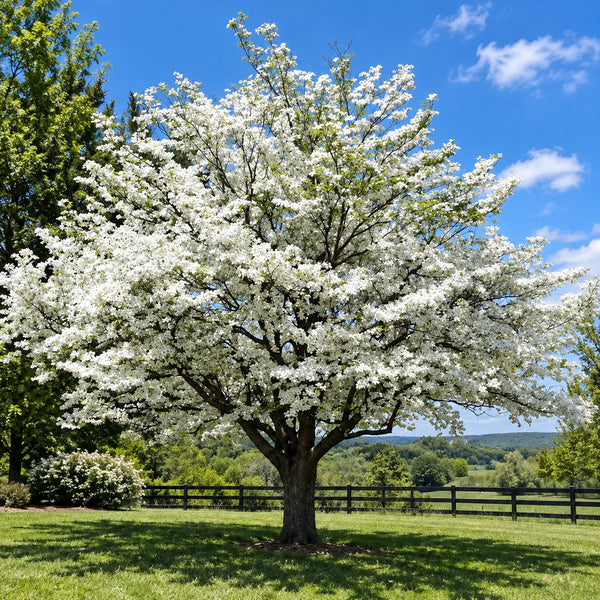
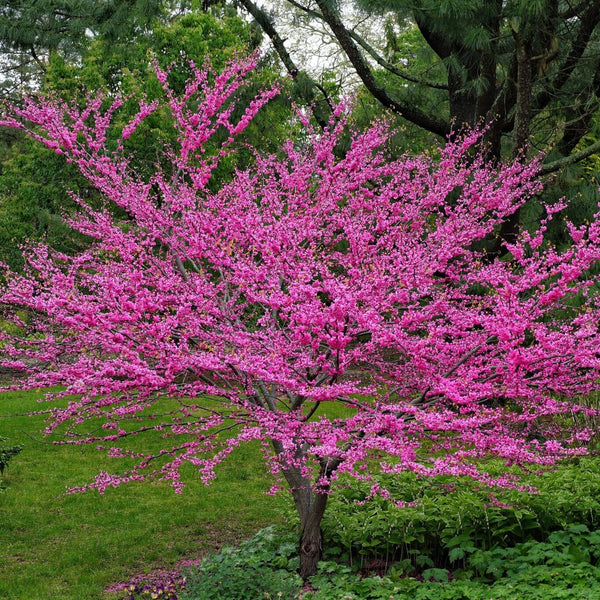
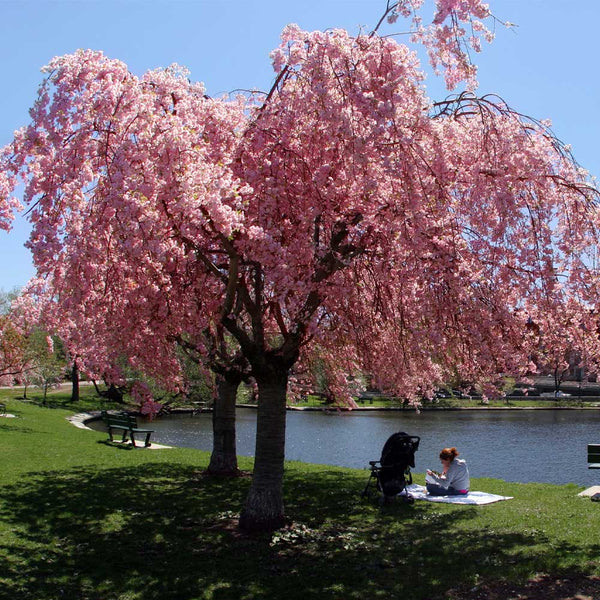
Find your USDA hardiness zone first. This number tells you which trees come through your winters. Eastern redbud grows in zones 4–9 and reaches 20–30 feet. Weeping cherry suits zones 4–8, grows 20–30 feet and has arching branches. White dogwood reaches 15–30 feet with a wide, flat crown. Kousa dogwood fits zones 5–8 at 15–25 feet. Choose a tree whose full-grown size fits the space, not its size on arrival.
Tip: Measure the spot and compare it with the tree's mature height before you order.
2. Choose a spot you will visit
A memorial tree means most where you see it every day. Think of the view from a kitchen window, a corner near a bench, or the edge of a patio. Redbud and kousa dogwood thrive in full sun to partial shade. Weeping cherry thrives in full sun. Give the tree soil that drains after rain, and room away from the house so its roots and branches can spread.
Tip: Pick a spot with space for a small bench or stone nearby.
3. Plant the bare-root tree while it is dormant
A bare-root tree ships without soil while it is dormant, which means leafless and resting. Plant it in late fall, winter or early spring, when the ground is not frozen. Soak the roots in a bucket of water for a few hours. Dig a hole wider than the roots spread. Set the tree at the depth it grew, fan out the roots, fill back in with your own soil and water well.
Tip: Look for the dark soil line on the trunk; it shows the depth it grew.
4. Water and mulch through the first year
The first year is when a new tree builds its roots. Water deeply once a week when there is no rain, and more often in summer heat. Spread a ring of mulch two to three inches deep around the tree, a hand's width from the trunk. Mulch holds moisture and keeps the mower at a distance. Wait to feed the tree until it shows new growth.
Tip: Set a weekly reminder for watering day.
5. Mark the tree and make it a ritual
A simple marker turns a tree into a memorial. Choose a garden stone, a small plaque on a stake, or an engraved tag hung loosely from a branch. Leave room for the tag to slide as the trunk grows. You might gather each year when the tree blooms, take a photo beside it, or tie a ribbon on a birthday. Over the years, the photos show how far it has grown.
Tip: A redbud or cherry blooms each spring, a natural date to gather.
Small memorial trees for small yards
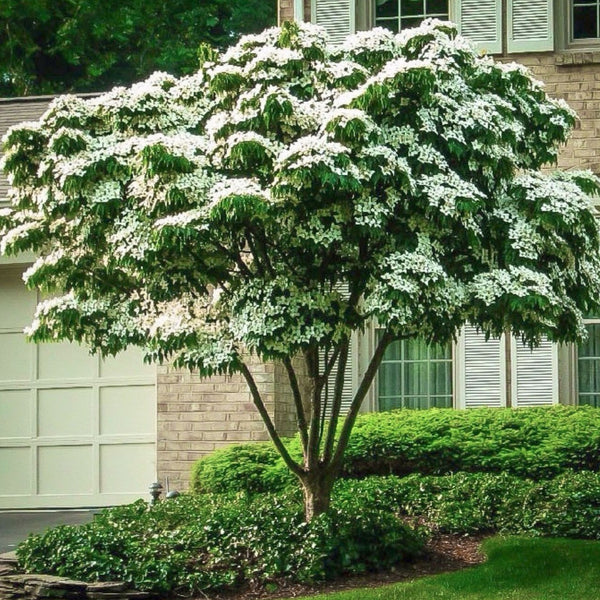
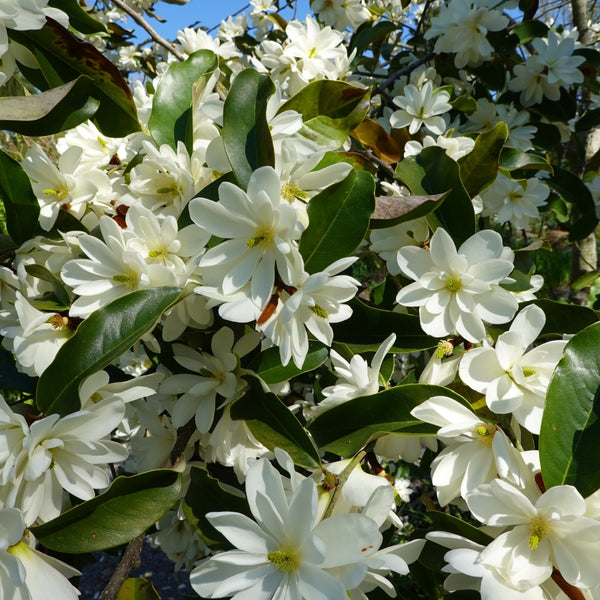
Not every yard has room for a broad shade tree. For a small yard, a patio bed or a corner near the house, choose a tree with a modest crown. It should still give you a season to look forward to. Kousa dogwood grows 15–25 feet tall and wide in zones 5–8. It comes from Asia, so if a native tree matters to you, the eastern redbud is a native understory tree. Kousa's white flowers open in late spring, about four weeks after native dogwoods. Red fruits follow, and the leaves turn orange or deep red in autumn. Sweet bay magnolia grows anywhere from 10 to 30 feet tall. Its creamy white flowers open from late spring into early summer with a sweet, lemony scent. The leaves are dark green above and almost silver beneath. It has long stood for dignity and peace in Southern gardens. For someone who loved to sit outside, it invites a chair beneath it.
Care and keeping
Prune a memorial tree in late winter, while it is dormant, and only to remove dead or crossing branches. Check the marker each spring and loosen any tag or tie that touches the trunk. Keep the mulch pulled back from the bark. In dry summers, give a deep weekly soak for the first two or three years.
Frequently asked questions
What does it mean when you plant a tree when someone dies?
It is a living tribute. The tree grows, blooms and changes with the seasons, so the memory stays present rather than fixed on one day. It gives family a place to visit, sit and talk. A flowering tree also feeds bees, butterflies and birds, so the tribute gives back to the garden too.
How much does it cost to have a tree planted in someone's memory?
Forest planting programs list a tree from about $10 and plant it on public land, often with a card for the family. Planting at home costs the tree, shipping, mulch and a marker. Our Memorial Tree comes in three sizes, from 1–2 feet up to 3–4 feet, and its page shows the current price.
Where can I plant a tree in memory of someone?
The most personal place is your own yard, where you can see and tend the tree. With permission, you can also plant at a family farm, a church ground or a relative's home. Some parks accept memorial trees, so ask the parks office. Check with a cemetery before planting there, as each sets its own rules.
Memorial trees at a glance
| Tree | USDA zones | Mature height | Bloom | Why choose it |
|---|---|---|---|---|
| Eastern redbud | 4–9 | 20–30 feet | Rosy pink to magenta, March–April | Native understory tree; flowers line bare branches |
| Weeping cherry | 4–8 | 20–30 feet | Light pink, March–April | Cascading branches like a weeping willow in bloom |
| White dogwood | See tree page | 15–30 feet | White, spring | Long a symbol of renewal, hope and new beginnings |
| Kousa dogwood | 5–8 | 15–25 feet | White, late spring | From Asia; blooms after native dogwoods, red fruit |
| Sweet bay magnolia | See tree page | 10–30 feet | Creamy white, late spring to early summer | Fragrant flowers; a symbol of dignity and peace |
USDA zones
- Eastern redbud
- 4–9
- Weeping cherry
- 4–8
- White dogwood
- See tree page
- Kousa dogwood
- 5–8
- Sweet bay magnolia
- See tree page
Mature height
- Eastern redbud
- 20–30 feet
- Weeping cherry
- 20–30 feet
- White dogwood
- 15–30 feet
- Kousa dogwood
- 15–25 feet
- Sweet bay magnolia
- 10–30 feet
Bloom
- Eastern redbud
- Rosy pink to magenta, March–April
- Weeping cherry
- Light pink, March–April
- White dogwood
- White, spring
- Kousa dogwood
- White, late spring
- Sweet bay magnolia
- Creamy white, late spring to early summer
Why choose it
- Eastern redbud
- Native understory tree; flowers line bare branches
- Weeping cherry
- Cascading branches like a weeping willow in bloom
- White dogwood
- Long a symbol of renewal, hope and new beginnings
- Kousa dogwood
- From Asia; blooms after native dogwoods, red fruit
- Sweet bay magnolia
- Fragrant flowers; a symbol of dignity and peace