
The short answer
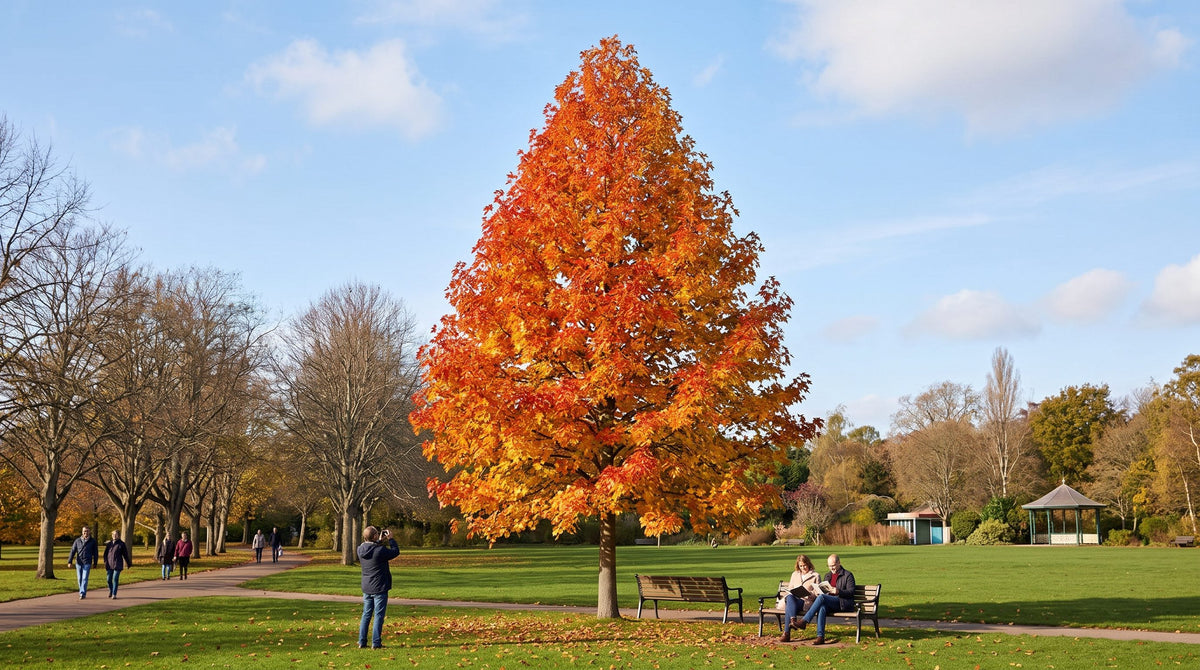
Black gum (Nyssa sylvatica), also called black tupelo or sour gum, is a native shade tree of the eastern United States. It grows in zones 4 to 9, usually reaches 30 to 50 feet in a yard, and turns red, orange, yellow and purple in fall. Female trees carry blue-black fruit that songbirds and wild turkeys eat.
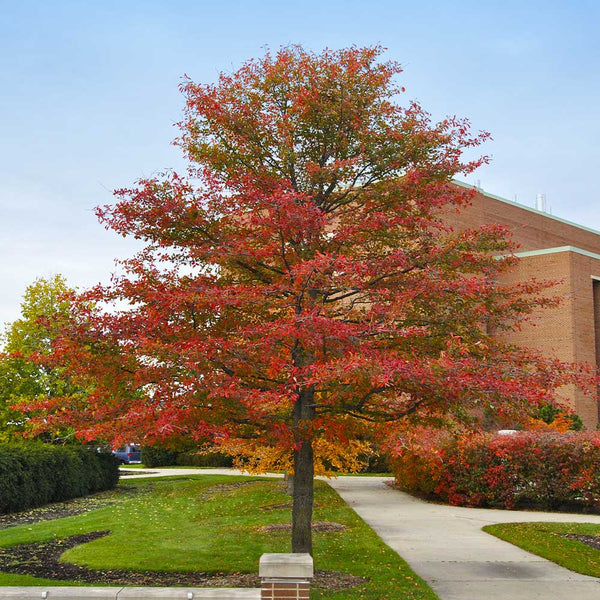
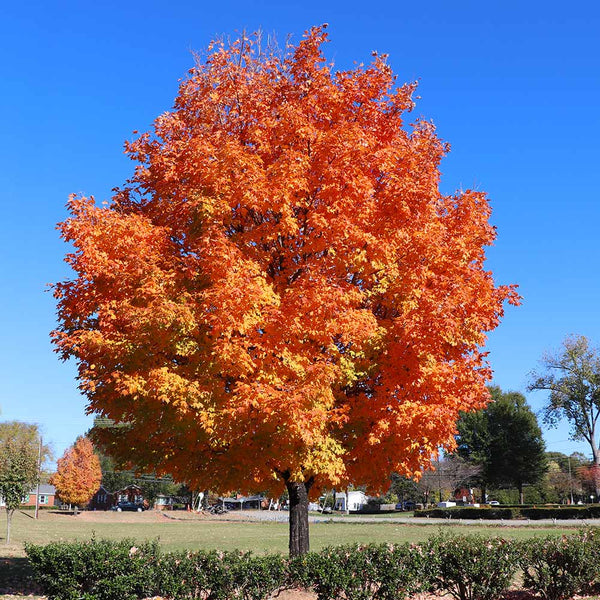
Black gum is one of the best native trees for a yard that wants fall color and birds in the same tree. Its glossy, dark green leaves turn shades of red, orange, yellow and purple in autumn, and it colors best in a sunny spot. In spring, small greenish-white flowers open. They are easy to miss, but they are full of nectar, and bees love them. Black gum is a slow to moderate grower. NC State Extension notes it reaches about 12 to 15 feet in its first 10 years. Older trees grow dark, blocky bark that looks like alligator hide. The tree also has a deep taproot, a single main root that grows straight down. That root helps it settle in for the long term, so it pays to choose its spot once and plant it well. Plant it alone or beside a sourwood or sugar maple, then follow the steps below, from siting to its first summer.
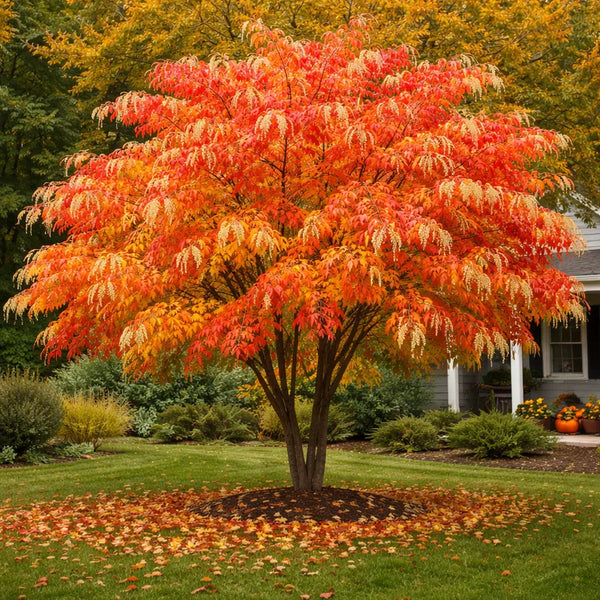
Black gum and its fall partners
1. Choose a sunny, moist spot
Black gum thrives in full sun to partial shade, with at least four to six hours of direct sun a day. It shows its best fall color in a sunny spot. It loves moist to wet, acidic soil, so a low area, a creek bank or a rain garden suits it well. Because of its taproot, pick a spot where it can stay for good. Leave room for a tree that reaches 30 to 50 feet.
Tip: It thrives in acidic soil; a simple soil test tells you where you stand.
2. Plant while the tree is dormant
We dig our tupelos while they are dormant and ship them bare root, with no soil around the roots. Our tupelos ship between November 15 and 29, while the tree is resting. Plant soon after it arrives. Until then, keep the roots moist and out of the sun and wind. Choose from 1 to 2, 2 to 3 or 3 to 4-foot sizes; the smaller ones settle in the fastest.
Tip: Soak the roots in a bucket of water while you dig the hole.
3. Dig wide and set the roots
Dig a hole wider than the spread of the roots and deep enough for the longest one, the taproot. Set the tree so the point where the roots meet the trunk sits at ground level. Spread the side roots out, then fill back in with the soil you dug. Firm it gently with your hands to remove air pockets. Add a ring of mulch, kept a few inches from the trunk.
Tip: Keep the top of the roots level with the ground, not buried.
4. Water well through the first summer
Water the tree deeply right after planting to settle the soil around the roots. Black gum has moderate to high water needs, so keep the soil evenly moist through its first summer. Water regularly while it settles in. Once its roots are down, it handles short dry spells, and you only need to water during long dry periods.
Tip: A slow, deep soak helps the roots grow down, not just near the surface.
5. Expect roots first, then top growth
A young black gum works on its roots before it puts on new top growth. Expect little growth above ground in the first year. That is normal, and it is the tree building a strong base. In good conditions, growth can reach one to two feet a year after that. If it needs shaping, prune in late winter. Otherwise, it needs little care and resists most pests.
Tip: Mark the spot with a stake so no one mows over the young tree.
Black gum for wet spots and rain gardens
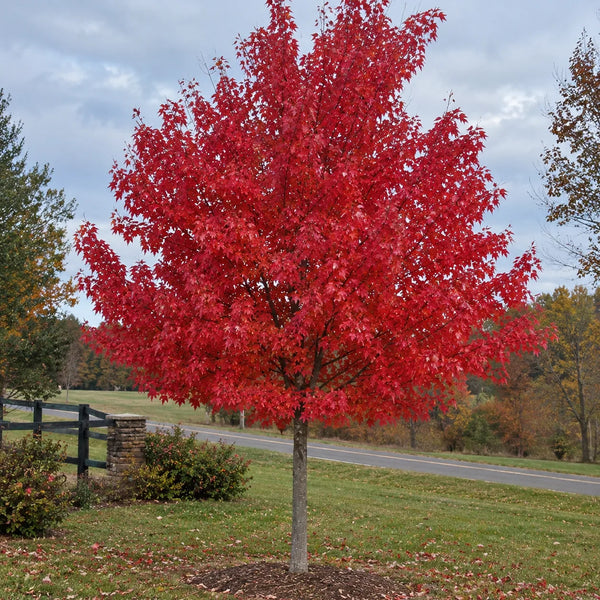
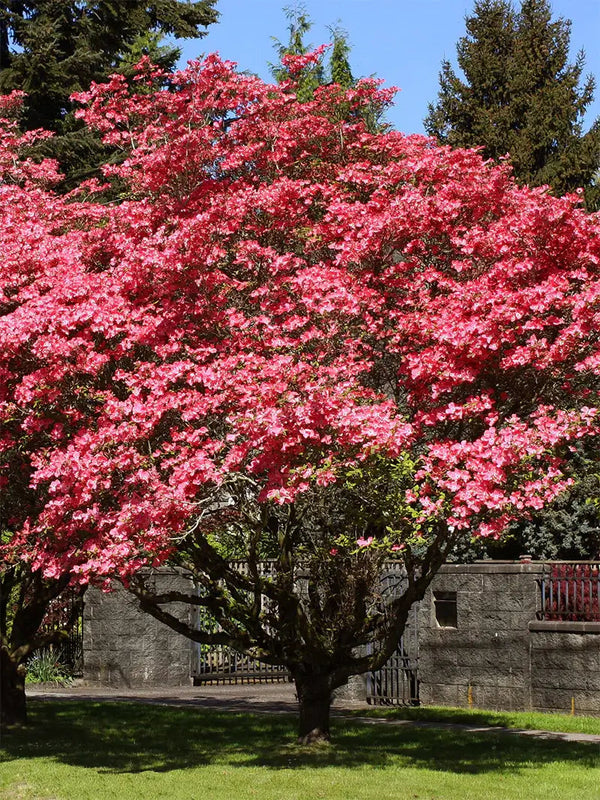
Black gum thrives in moist ground, which makes it a natural fit for the low, soggy parts of a property. It suits rain gardens, creek banks and yards with poor drainage or seasonal flooding near the house. There, its roots help hold the soil, steady slopes and banks, and cut down on erosion. Its broad crown also makes it a fine shade tree for a park or a large lot. For fruit, plant more than one tree. Black gum trees are either male or female, and only female trees carry the blue-black fruit. A small group gives you the best chance of fruit for the birds. Our multi-tree bundles make that easy. For a drier, sunnier part of the same yard, our Red Maple Tree and Red Dogwood Tree are both listed as drought tolerant. The dogwood adds spring flowers. Browse our native trees for more choices by zone and by site.
Care and keeping
Care in the first years: keep the soil around your black gum moist, especially in its first summer, and refresh the mulch ring each spring. It thrives in acidic soil; if summer leaves turn yellow, a soil test can show whether the ground needs help. Prune only in late winter, and only as needed.
Frequently asked questions
Is black gum a good yard tree?
Yes. Black gum is a native tree with glossy summer leaves, bright fall color and fruit that birds eat. It thrives in sun to part shade and moist, acidic soil in zones 4 to 9. It grows at a slow to moderate pace, so it rewards a gardener who plants it once and lets it settle.
Does a black gum tree drop balls?
No. Black gum does not make spiky seed balls; those come from sweetgum, a different tree. Female black gums carry small, blue-black fruit from late summer into fall. Songbirds and wild turkeys pick it quickly, so little is left on the ground. Male trees carry no fruit at all.
What is a black gum tree good for?
Black gum is good for fall color, shade and wildlife. Its spring flowers feed bees, and its fall fruit is one of the most important foods for songbirds on fall migration, according to NC State Extension. It also helps hold soil in wet spots, along creeks and in rain gardens.