
The short answer
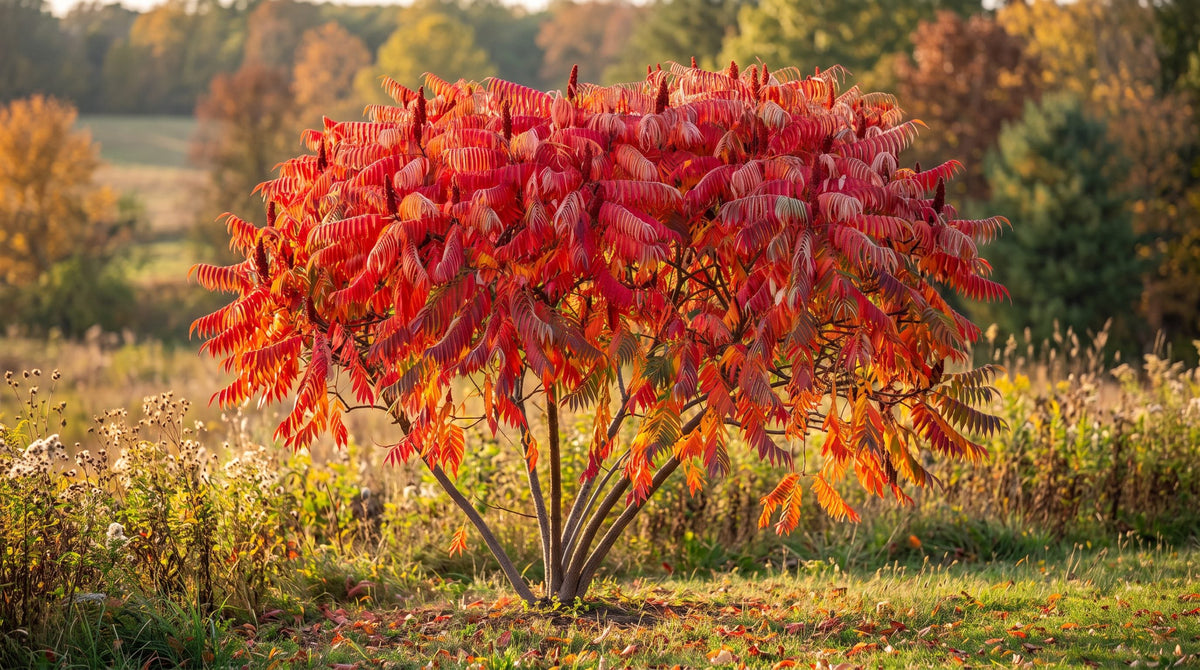
Flame leaf sumac is a native shrub or small tree with red-orange fall leaves and red winter berries. Two plants share the name. Winged sumac (Rhus copallinum) grows 7 to 15 feet in zones 4 to 9. It is the one we ship bare root. Prairie flameleaf (Rhus lanceolata) grows to about 20 feet in Texas and the Southwest.
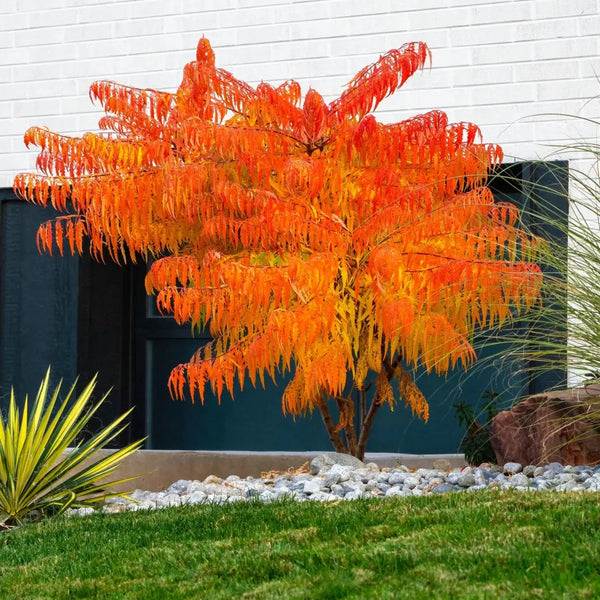
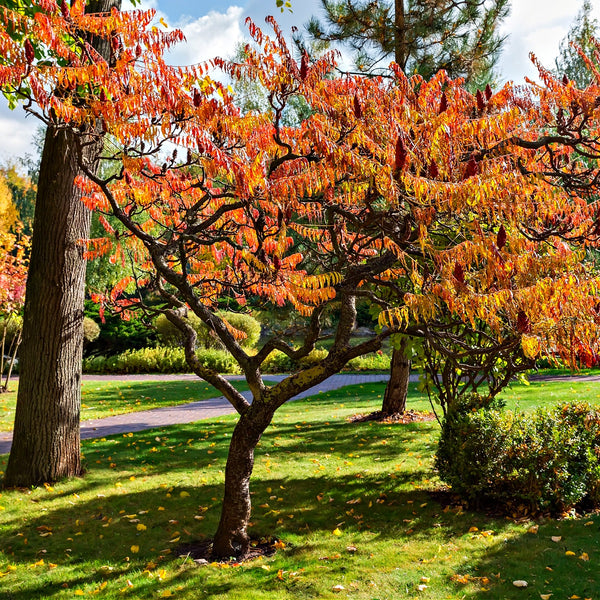
Search for flame leaf sumac and you will find two different plants. One is winged sumac, Rhus copallinum, also called shining sumac for its glossy leaves. The other is prairie flameleaf sumac, Rhus lanceolata, native to Texas and the Southwest, where it grows on dry, limestone soils. Both turn brilliant red and orange in fall, so the names get mixed up. The flameleaf sumac we grow is Rhus copallinum. It is the smallest of our tree-type sumacs, usually 7 to 15 feet tall, and hardy in zones 4 to 9. It ships bare root, ready to plant. In summer, its greenish-yellow flowers draw bees and butterflies. It is also a host plant for the luna moth and the spring azure butterfly. Only female plants make berries, and birds eat them through the winter. In the wild, it grows along roadsides and woodland edges, so it settles easily into tough, sunny spots in a yard.
Flame leaf sumac and companions
1. Match the flame leaf sumac to your zone
Start by checking which flameleaf you need. Our Sumac Tree listing offers Flameleaf Sumac, which is Rhus copallinum, the same plant as winged sumac. It is hardy in zones 4 to 9, so it grows in a wide range of climates. If you garden in Texas, Oklahoma or the dry Southwest, the prairie flameleaf, Rhus lanceolata, is the local native there.
Tip: Not sure of your zone? Look up your USDA hardiness zone by ZIP code before you order.
2. Choose a sunny, well-drained spot
Flame leaf sumac grows fast in full sun and soil that drains well after rain. It thrives in tough, disturbed ground where other plants struggle, such as a dry slope, a fence line or a field edge. Give it room, because the roots send up new shoots, called suckers. Over time, one plant can grow into a thicket.
Tip: For a hedge or summer screen, space plants 6 to 10 feet apart.
3. Soak and plant the bare roots
Your sumac ships bare root, which means it arrives with no soil around its roots. Plant it as soon as you receive it. Soak the roots in water for one to two hours. Dig a hole wide enough to spread them out. Set the plant so the top of the roots is level with the ground. Fill the hole, firm the soil gently and water well.
Tip: Keep the roots damp and shaded until they go in the ground.
4. Water through the first summer
The first summer is when the roots settle in. If rain is scarce, give each plant a good, deep soak once a week. Water at the base so it reaches the roots. After that first year, flame leaf sumac needs little care beyond normal rain. Once settled, it handles heat and dry spells well, which makes it a low-care choice.
Tip: A layer of mulch around the base helps hold moisture in the soil.
5. Guide the spread and leave berries for birds
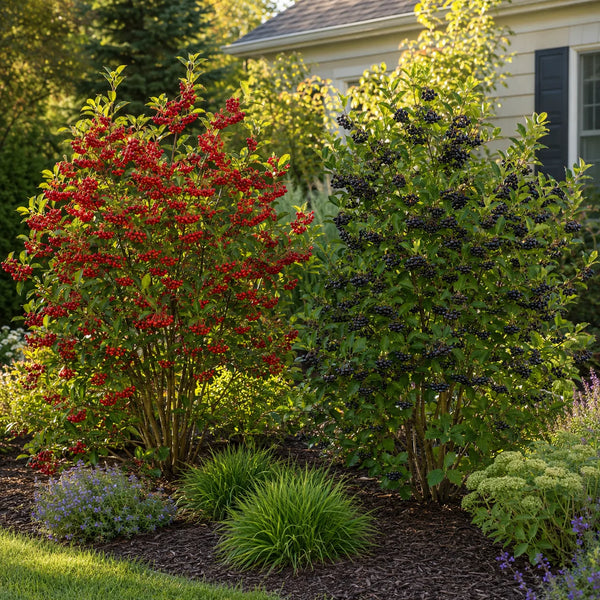
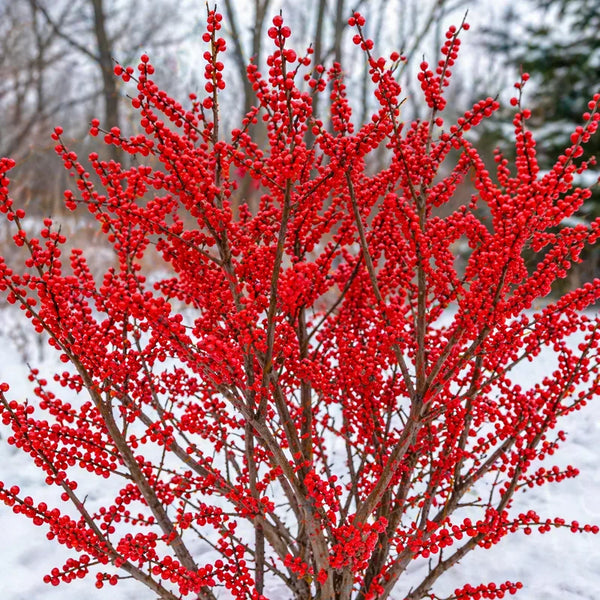
As new shoots come up, decide where the planting should stop. Mow around the edge to keep it in place, or let it widen into a thicket for wildlife cover. Leave the berries on female plants for winter birds. For more bird food, pair it with native chokeberry, or with winterberry holly in a moist, low spot.
Tip: Sumac is leafless in winter, so the red berries stand out on bare branches.
Other native sumacs for your site
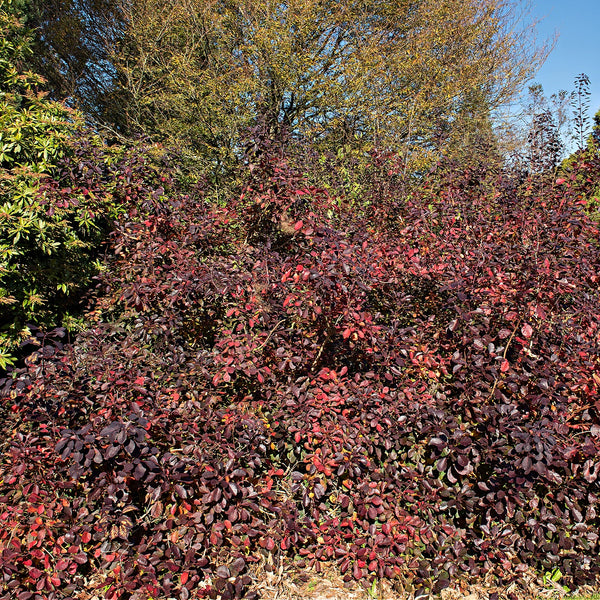
Flame leaf sumac is not the only native sumac with fiery fall color. Our Sumac Tree listing also offers staghorn and smooth sumac. Staghorn sumac is the largest, growing up to 25 feet tall in zones 3 to 8. Its branches are covered in velvety fuzz, like deer antlers, and its fruit forms fuzzy, upright red cones. Smooth sumac grows 10 to 15 feet tall in zones 3 to 9, with hairless stems and upright red fruit. For large plantings, staghorn sumac also comes as seedlings in bundles of 100 or 500. They colonize quickly and help hold soil on dry, rocky or sloped ground. Fragrant sumac is the low grower of the family. Each shrub averages 2 to 6 feet tall and up to 10 feet wide. Its glossy, three-part leaves turn orange, red and burgundy in fall. It also comes as seedlings in bundles of 100 or 500. It spreads into a woody ground cover that suits slopes and native shrub plantings.
Care and keeping
Water weekly during dry spells in the first summer, then let rain do the work. Flame leaf sumac thrives in full sun and well-drained soil. Mow around the planting each season to hold its edge. Its leaves drop after their fall show, so bare winter branches are normal. Leave the red berries on female plants for winter birds.
Frequently asked questions
Can humans eat sumac berries?
Yes. The red, hairy fruits of true sumacs, flameleaf among them, have long been steeped in water to make a tart tea or drink. The Missouri Department of Conservation notes that a very small share of people who are highly sensitive to poison ivy may have a strong allergic reaction. Be certain of the plant before tasting it.
What can be mistaken for sumac?
Poison sumac shares the name but is a different plant. It grows in swamps and wet ground. According to the Missouri Department of Conservation, its berries are green, ripen to white and droop downward. Flame leaf sumac carries red, hairy berries on female plants and green wings along its leaf stems.
How tall does flame leaf sumac get?
The winged form we grow, Rhus copallinum, usually reaches 7 to 15 feet tall. That makes it the smallest of our tree-type sumacs. Prairie flameleaf sumac, Rhus lanceolata, is a thicket-forming small tree that can reach about 20 feet. Both spread by root suckers, so one plant can widen into a thicket over time.