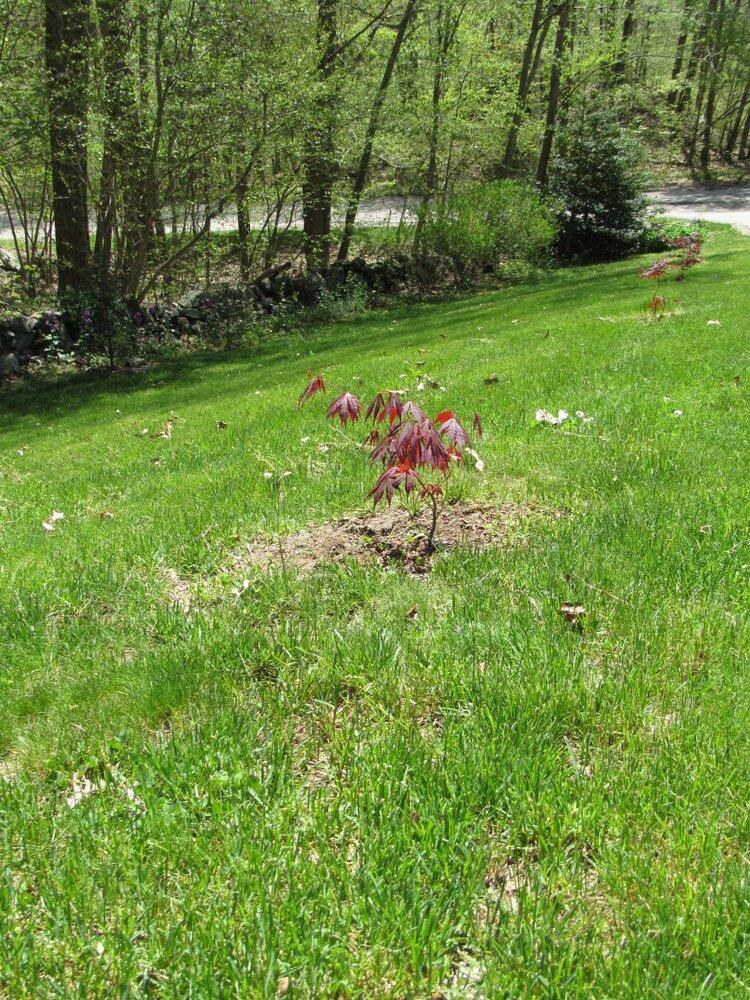
Lisa M.
Tree came in good condition. Excited to plant.

Sugar Maple Tree
Ships Between November 15-29
3-8
60–75 Feet
Low and Moderate
Full sun
Early spring (March–April)
Sugar maples prefer moist, well-drained, loamy soil. Water regularly during dry spells. Spread 2 to 3 inches of mulch around the base, keeping it off the trunk. Prune in summer once the leaves are fully out, to avoid heavy sap bleeding.
At least 4–6 hours of direct sun gives the best fall color; afternoon shade helps in hot climates.
Brilliant fall color , Sap for maple syrup, Long-lived
Lisa M.
Tree came in good condition. Excited to plant.
Sharon Dantini
Very happy with the sugar maple trees ordered from TN Nursery. Healthy root system and nicely shaped trees. Packaged well
Brandon Tarvin
Great people to do business with, my trees came in ,well packaged and arrived right on time, I will definitely make TN Nursery my go to store!!!!!!
About this plant
The sugar maple tree (Acer saccharum) is a native shade tree that grows 60 to 75 feet tall and turns brilliant orange, red and gold in fall. Sugar maple trees are hardy in USDA zones 3–8 and grow in full sun to partial shade. TN Nursery ships bare-root sugar maple trees, Buy 1 Get 1 Free.
Sugar maple belongs to the soapberry family, Sapindaceae, and is native to the hardwood forests of eastern North America, from southern Canada to Tennessee and the Ozarks. Gardeners also know sugar maple as hard maple and rock maple, and it is the state tree of New York, Vermont, West Virginia and Wisconsin. In a home landscape, a sugar maple tree becomes a broad, dense shade tree that lasts for generations.
A sugar maple tree grows 60 to 75 feet tall with a 40- to 50-foot spread at maturity, forming an upright oval to rounded crown. Sugar maple trees grow at a slow to moderate rate of about 1 foot per year and can live 200 years or more.
| Age after planting | Typical height | Landscape role |
|---|---|---|
| Year 1 | 1–5 feet (as shipped) | Roots establish in the new site |
| 5 years | 6–10 feet | Young specimen tree with fall color |
| 10 years | 12–18 feet | Light shade over a patio or lawn |
| 25+ years | 30–50 feet | Full shade tree and yard landmark |
Plant a sugar maple tree at least 20 feet from the house and 30 to 40 feet from other large trees so the crown has room to spread.
The sugar maple is famous for fall color because its leaves turn brilliant orange, red and gold together, often on the same tree. Sugar maple fall color peaks in October and gives New England and the Appalachians their classic autumn scenes.
In autumn, a sugar maple stops making green chlorophyll, which reveals the yellow and orange pigments in the leaves, while sugars trapped in the leaves create the reds.
Yes. Sugar maple sap is the main source of real maple syrup, because sugar maple sap holds about 2 percent sugar, the highest of any maple. About 40 gallons of sugar maple sap boil down to 1 gallon of maple syrup.
Sap runs in late winter, when sunny days above freezing follow nights below freezing. A sugar maple tree is usually ready to tap once the trunk reaches 10 to 12 inches across.
Sugar maple has five-lobed leaves with smooth, rounded gaps between the lobes, while red maple has three-lobed leaves with toothed edges. Sugar maple grows taller (60 to 75 feet), lives longer and gives sweeter sap, while red maple grows faster and suits wetter soils.
Both trees deliver standout fall color, and many landscapes use both. A red maple tree colors up early with scarlet leaves, and the sugar maple follows with orange and gold, so planting the two together stretches the fall show over several weeks.
Native hardwoods and shade-loving understory plants grow well with sugar maple trees. A white oak tree or red oak tree pairs with sugar maple in a classic eastern hardwood grove. At the edge of the canopy, a redbud tree or white dogwood adds spring flowers below the maple's crown. In the shade beneath a mature sugar maple, Christmas fern gives evergreen texture. For windbreaks, reforestation or a future sugarbush, our sugar maple seedlings provide the same species in bulk. Browse more options in our shade trees collection.
Plant a bare-root sugar maple tree while it is dormant, from November through April, with the root flare at soil level in a hole twice as wide as the roots. Water deeply after planting and give the tree about 1 inch of water per week during its first summer.
At our Altamont, Tennessee nursery, we grow sugar maple trees in the field, dig them while dormant and ship them bare root. Each sugar maple arrives as a leafless young tree with its roots packed in moist material, ready for planting.
Botanical Name: Acer saccharum
Plant Family: Sapindaceae (soapberry family)
Ships: Bare root, 1–2 ft, 2–3 ft, 3–4 ft or 4–5 ft
Planting Zone: 3–8
Height at Maturity: 60–75 feet tall, 40–50 feet wide
Growth Rate: Slow to moderate, about 1 foot per year
Spacing: 30–40 feet apart for shade trees; 20 feet from buildings
Sun or Shade: Full sun to partial shade
Water Needs: Moderate; water weekly in dry spells the first two summers
Soil: Rich, moist, well-drained loam, slightly acidic to neutral
Bloom Season: Early spring (March–April)
Fall Color: Orange, red and golden yellow
Native Range: Eastern North America
Care: Mulch each spring and prune in summer, once the leaves are fully open.
Plant Attributes: Native, long-lived, brilliant fall color, sap for maple syrup, dense shade
Sugar maple trees grow in USDA hardiness zones 3 through 8.
A sugar maple tree grows about 1 foot per year once established, a slow to moderate rate that builds strong wood.
Sugar maple trees often live 200 years or more, which makes the sugar maple one of the longest-lived shade trees for a home landscape.
Sugar maple trees turn orange, red and gold in fall, with color peaking in October in most zones.
A sugar maple tree has opposite, five-lobed leaves with smooth edges and U-shaped gaps between the lobes, gray furrowed bark on older trunks and paired winged seeds in fall.
The best time to plant a bare-root sugar maple tree is during dormancy, from November through April, whenever the ground can be worked.
TN Nursery has grown hardy native plants since 1959, more than 65 years of experience, and has supplied plants to major U.S. landmarks like the Washington Monument and Arlington National Cemetery. The Discovery Channel even filmed our maple trees for a time-lapse video showing a tree waking from winter dormancy to full spring leaf, and the U.S. Air Force has used our trees as well. At our Altamont, Tennessee nursery, we grow sugar maple trees in our own fields and ship them bare root in the dormant season, so they root in quickly in their new home. Want to learn more first? Read the Sugar Maple Tree Care and Planting Guide, Legacy Maple Syrup Facts and Information and Advantages of Planting Maples on our garden blog, or browse all our trees.

Since 1959, TN Nursery has grown and shipped quality bare root plants nationwide. Shipped during dormancy, bare-root plants develop strong root systems and establish quickly. Our experienced team carefully harvests and packages every order, providing growers with trusted plants backed by over 65 years of nursery experience.
Learn More About
Bare root trees
Maple Syrup Production:
Beyond its beauty, the Sugar Maple is famous for its sap, which can be harvested to make delicious maple syrup.
Longevity:
This tree is known for its long lifespan, offering years of beauty and shade in your garden.
Shade and Structure:
Its dense, broad canopy provides excellent shade and adds a majestic structure to any landscape.
Versatile Landscaping:
With its adaptable nature, the Sugar Maple fits well in various garden styles and soil types, enhancing both urban and rural settings.
Fall Digging
Spring Digging
Packing Orders
Customer Unboxing Video
Product Highlight
My Sugar maple tree is doing so well. Can't wait for Fall
This Sugar Maple is a real beauty. Its shape is naturally full and balanced, and I can't wait for fall when it really shows off. TN Nursery’s attention to detail is unmatched in online plant buying.
We added the Sugar Maple from TN Nursery to our side yard, and it's thriving already. The branches are full and symmetrical, and it’s a showstopper when the sun hits the leaves. Highly recommend.
My Sugar Maple arrived faster than expected and in pristine shape. The roots were dense and alive, and it’s already pushing new growth. You can tell TN Nursery specializes in quality trees.
This Sugar Maple has already started to show hints of those famous golden and crimson hues. The tree was well-hydrated, disease-free, and came with easy-to-follow instructions. Very happy customer!
The Sugar Maple tree I received was exceptionally healthy and larger than expected. It has quickly become the highlight of our front lawn. TN Nursery really delivers premium-grade trees.
I had a flawless experience buying a Sugar Maple from TN Nursery. The packaging was professional, and the tree was clearly grown with care. Its vibrant foliage is already adding beauty to my yard.
The Sugar Maple I ordered from TN Nursery is absolutely stunning. It arrived in perfect condition—full roots, strong trunk, and budding leaves. I planted it three weeks ago, and it’s already taking off with vivid growth.
Tree came in good condition. Excited to plant.
Very happy with the sugar maple trees ordered from TN Nursery. Healthy root system and nicely shaped trees. Packaged well
Great people to do business with, my trees came in ,well packaged and arrived right on time, I will definitely make TN Nursery my go to store!!!!!!
I’m very please with these trees
All nice healthy well shaped trees. Good root system.
I love this merchant, very polite and courteous.
Received my order quickly and in great shape. I have no complaints whatsoever!
We’ll pkg look good
Thanks order was complete trees look good
Everything was good.
Thanks for the way you packed and shipped the trees.
I was impressed with the root system. They should get a good start this winter, and I am looking forward to seeing how the trees grow in the spring.
Maple trees were received in excellent condition. Can’t wait to see them leaf out in the spring.
Came fast after order. Wish my previous order would that im still waiting on would been this fast.
Trees looked in good condition I had a beautiful day to plant and water them
Very pleased with the product. Was delivered safely and wrapped carefully. Directions were easy to follow. The tree looks very healthy. When planted in the spring, we shall see how it grows.
Very nice quality tree. Thanks
The trees arrived in what seems to be a good packaging. We’ve planted them after soaking the bare roots. There was no instructions on how to plant them what what to do to care for them with the trees packaging. But after a quick Google search we found that information from a master gardener. “ I guess we have to wait for spring to know if they survived.” I really hope they have. These trees are to be my spot light trees in the spring summer and fall months for years to come. So I am really hoping they survive. The TN Nursery shipped them out in a very efficient manner and come spring I hope to tell the world that I made the right choice ! Fingers crossed!!!!
My trees arrived! I was very surprised when I opened the box to see how big the trees were. I was not expecting that for a bare root tree. The roots were healthy and the trees look amazing.
Good roots but won’t really know until spring
So far so good !
just what i ordered
Plant came in perfect condition.
Packaged well and I planted the same day. Can’t wait to see them grow in the spring.
Received good sized trees at a great price and so far, so good after almost 1 year.
It arrived on time, nicely packaged, and presumably in fine shape (it was bare root but after two weeks, it’s beginning to grow leaf buds).