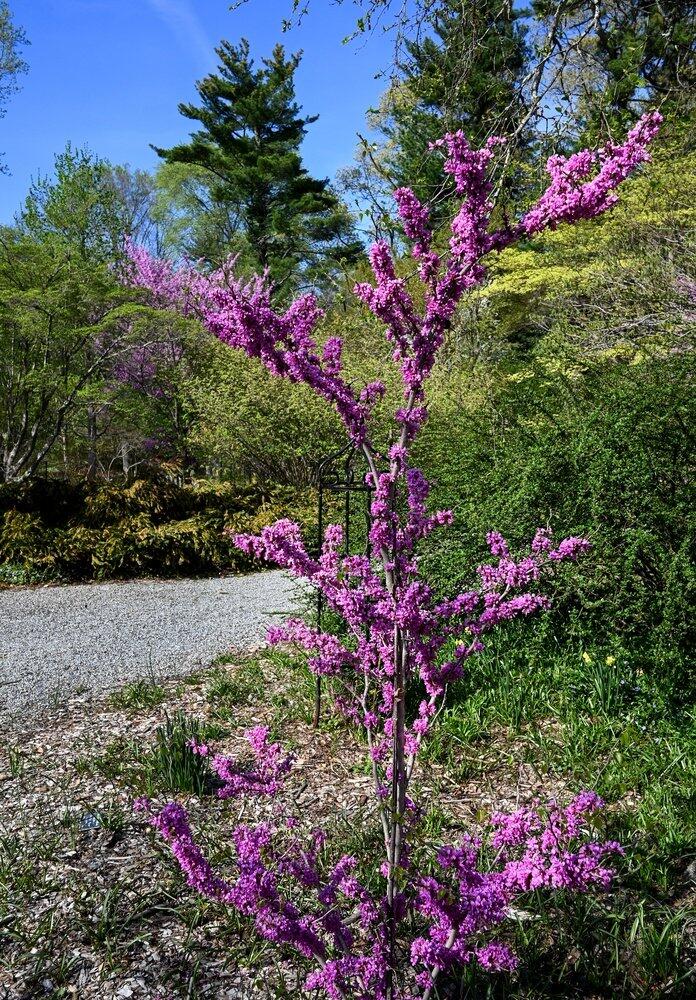
Vibrant pink Redbud tree in full bloom against blue sky

Redbud Tree

1-2 Feet / Buy 1 Get 1 Free
$31.99
Sale price  $31.99 Regular price 
Skip to product information
Vibrant pink Redbud tree in full bloom against blue sky

Redbud Tree

Beautiful, vibrant springtime blooms, Great for small and medium spaces, Provides stunning fall foliage color
$31.99
Sale price  $31.99 Regular price 

Fast Shipping Nationwide

Truck on checkered background
Quantity Buy 1 Get 1 Free

Ship Date: Ships in November 2026

Add 1 plant to your cart, and we'll send you a 2nd one FREE!

Share our plants on social media!

Tennessee Wholesale Nursery

In Stock

Tennessee Wholesale Nursery

Your planting zone -

Tennessee Wholesale Nursery

This plant thrives in zones: 4-9

Tennessee Wholesale Nursery

Delivery to your location

Buy Redbud Tree | Cercis Canadensis

Our Redbud Tree is one of the most striking flowering trees for sale, loved for its elegant heart-shaped leaves and vivid pink-purple spring blooms that light up bare branches before most of the garden begins to grow. The effect is bright, cheerful, and hard to miss. As a deciduous native ornamental, it brings strong curb appeal, dependable seasonal beauty, and easy establishment for gardeners seeking reliable tree seedlings for planting that offer a big visual reward without demanding heavy maintenance.

Vibrant pink Redbud Tree with dense blossoms in landscaped garden bed

Landscape Uses and Maintenance - Redbud Tree (Cercis Canadensis)

The Redbud Tree is a cherished native choice with soft, heart-shaped foliage and small blossoms that emerge right along the bark, creating a bloom pattern that gives spring landscapes real character. We recommend it for borders, front yards, naturalized settings, and mixed landscape designs where a compact ornamental tree can soften hard lines and add welcome color early in the season. As one of our dependable native tree seedlings, it is notably easy to grow and often performs well in the landscape without routine use of fertilizer, herbicides, insecticides, or pesticides.

Prune only when needed to remove rubbing or crossing branches and to help lower the risk of fungal issues. It also handles shaping well if you want to keep it shorter and easier to manage near patios, walks, or foundation beds. One honest note: its biggest floral show is in spring, so while the tree remains attractive afterward, the heaviest burst of color is seasonal rather than constant year-round.

Deer-Resistant Beauty That Welcomes Pollinators

This tree adds more than color. It helps bring the landscape to life by attracting pollinators such as bumblebees and solitary bees during bloom time. It also draws Swallowtail butterflies and serves as a host plant for Henry’s Elfin butterfly, making it an excellent fit for gardeners who want beauty and habitat value in one planting. Its peapod-like seeds may also allow propagation, and with time, you may notice young saplings developing near the base.

Redbud Tree Details - Redbud Tree (Cercis Canadensis)

Family Fabaceae

Light Requirement: Full Sun

Water Needs: Moist

Height: 15 - 35 ft.

Spread: 20 - 35 ft.

Growth Rate: Fast

Bloom Time: Spring

Flower Color: Purple

Wildlife Value: Attracts bees

Noteworthy Characteristics of the Redbud Tree

Unlike many ornamentals that can be tricky to place, the Redbud Tree fits naturally into a wide range of planting plans. Its pleasing leaf shape, open branching habit, and bright spring bloom color pair beautifully with shrubs, perennials, and lawn areas, making it a practical choice for both simple and layered landscapes. Gardeners who enjoy ornamental variation also appreciate that some forms bloom in white, pink, or purple. We grow our trees in Tennessee, and we source seeds from many parts of the United States so we can offer dependable plants suited to a wide range of growing zones.

Bare-root Redbud tree with slender brown trunk and tangled roots

Frequently Asked Questions

__EMOJI_0__Why is the Redbud Tree one of the most popular flowering trees for sale?

The Redbud Tree stands out for its vivid spring blooms, heart-shaped foliage, fast growth, and easy-care nature. It is also a native tree that adds ornamental value while attracting bees and butterflies.

__EMOJI_1__How large will a Redbud Tree become when planted from tree seedlings for planting?

According to the product details, Redbud Tree typically grows 15 - 35 ft. tall with a spread of 20 - 35 ft. It can also be pruned as needed to maintain a shorter, more manageable form.

__EMOJI_2__Does the Redbud Tree support pollinators and wildlife?

Yes. This Redbud attracts bumblebees and solitary bees, draws Swallowtail butterflies, and serves as a host plant for Henry’s Elfin butterfly.

Need Help?

Phone: 931-692-7325

Call Now

Exposure

The Redbud Tree flourishes in complete sun to shade. For best growth and flowering, it favors 4 to 6 hours of total sunlight daily. In hotter climates, some afternoon shade can help prevent leaf scorch.

Height at Maturity

Over 25 Feet

Usage

Flowering

Shipped As

Bare-root

Ships

UPS

Planting Zones

4-9

How To Grow

How to Grow and Care for Bare Root Trees

Bare root trees are shipped dormant without soil, making them lightweight, cost-effective, and easy to plant during the cool months of early spring or fall. To begin, soak the roots in a bucket of water for 4–6 hours before planting to rehydrate them. Choose a sunny location with well-draining soil and ample space for the tree’s mature size.

Dig a hole twice as wide as the spread of the roots and deep enough to keep the root flare (where the roots begin to spread from the trunk) at or slightly above ground level. Create a small mound of soil in the center of the hole, spread the roots evenly over it, backfill with native soil, and gently tamp down to remove air pockets. Water thoroughly after planting.

Keep the soil consistently moist (not soggy) during the first growing season, and apply mulch around the base—avoiding direct contact with the trunk—to conserve moisture and suppress weeds. Stake the tree if necessary, and prune only to remove dead or damaged branches. With proper care, your bare root tree will establish quickly and grow strong for years to come.

Care Tips
Redbud trees prefer well-drained soil and benefit from regular watering, specifically during dry times. They should be trimmed to retain shape and clear dead limbs. In early spring, they should be fertilized. They are relatively low-maintenance and resistant to pests.
Light Requirements
The Redbud Tree flourishes in complete sun to shade. For best growth and flowering, it favors 4 to 6 hours of total sunlight daily. In hotter climates, some afternoon shade can help prevent leaf scorch.
A sun-dappled dirt path winds through a lush, green forest with ferns and wild plants lining its sides.

Grower-Direct Plants Shipped Fast - Satisfaction Guaranteed