Michael Malmstadt
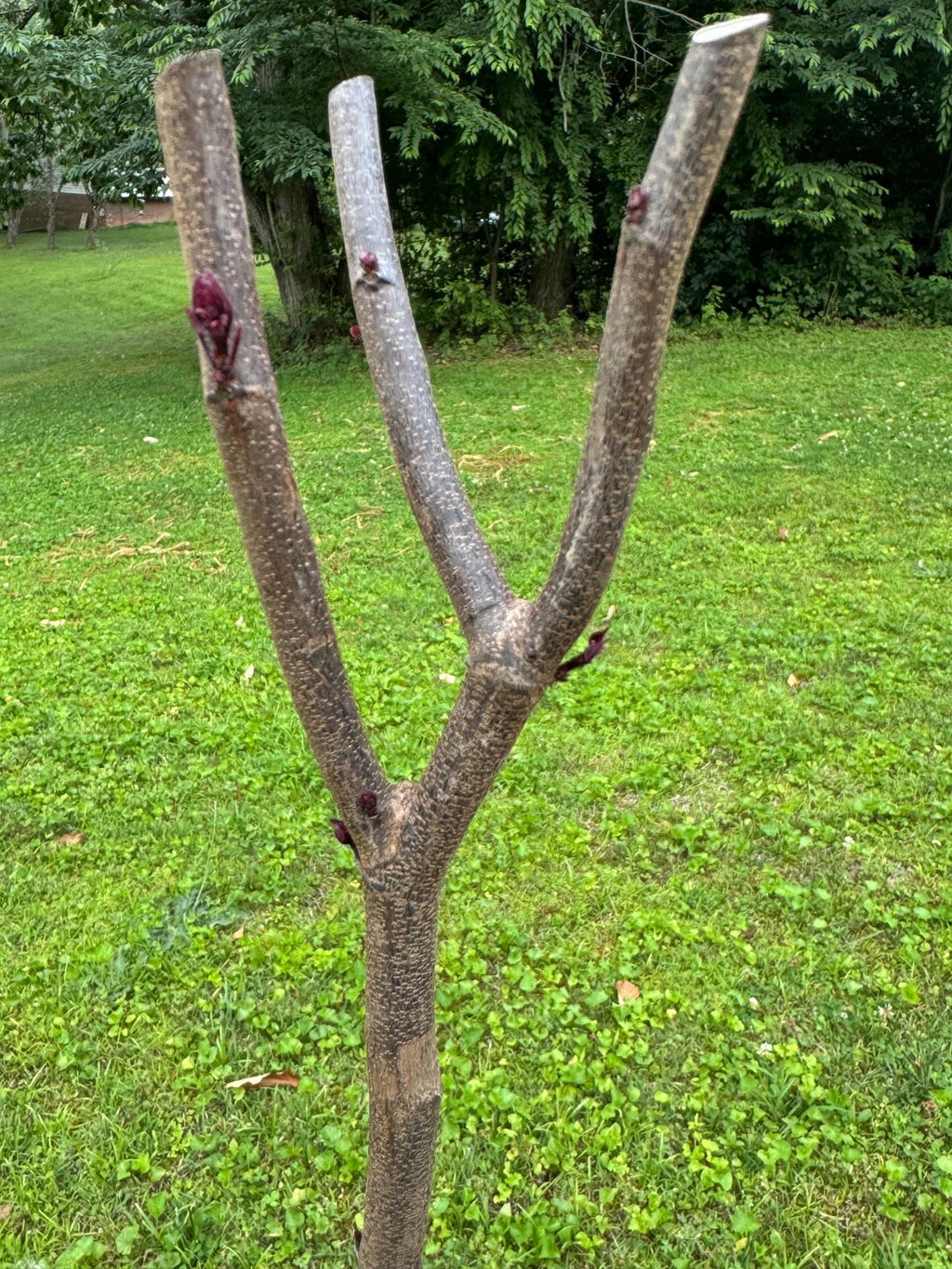
The trunk, limbs and root system looked good. what should I expect, will it flower this spring and how soon should I expect to see buds?

Forest Pansy Redbud Trees
4-9
20–30 Feet
Moderate
Full sun and Partial shade
Early spring (March–April)
Forest Pansy redbud thrives in well-drained soil with regular watering the first year. Prune lightly right after flowering to shape the crown and clear dead branches.
The Forest Pansy Redbud flourishes in full sun to part shade. It prefers 4-6 hours of direct sun daily but can handle some shade, particularly in hotter climates. Ensure it has good light exposure for optimal blooming and growth.
Ecological significance & aesthetic appeal , Shade and cooling effect, Soil stabilization & carbon sequestration
Michael Malmstadt
The trunk, limbs and root system looked good. what should I expect, will it flower this spring and how soon should I expect to see buds?
Customer
Forest Pansy Redbud
Janice C Bizzari
I plant them in an understory type environment beneath tall trees or near the edge of a wooded area where I can see them from spring to fall. I plant multiple ones since I live in a wooded area. They are one of my favorite flowering trees
About this plant
The Forest Pansy redbud (Cercis canadensis 'Forest Pansy') is a burgundy-leaf cultivar of the native eastern redbud. Forest Pansy grows 20 to 30 feet tall and 25 to 35 feet wide in USDA zones 4–9, with rose-purple spring flowers and glossy heart-shaped leaves. TN Nursery ships bare-root Forest Pansy redbud trees, Buy 1 Get 1 Free.
Forest Pansy is a member of the pea family, Fabaceae, and began as a chance seedling found at a Tennessee nursery in the late 1940s. Its parent species, the eastern redbud, grows wild from southern Ontario and New England to Florida, Texas and the Great Plains. What sets the Forest Pansy redbud tree apart is its foliage: the leaves open shiny red-purple, deepen to burgundy, and give the tree color long after the flowers fade. Gardeners also call it purple-leaf redbud, red leaf redbud and Forest Pansy eastern redbud.
Forest Pansy redbud leaves emerge shiny red-purple in spring, turn a deep burgundy-purple in late spring and early summer, soften to a purple-tinged dark green by late summer, and finish in yellow, orange and red-purple in fall. The richest burgundy color forms in full sun.
| Season | Forest Pansy redbud color |
|---|---|
| March–April | Rose-purple flowers cover the bare branches |
| April–May | New leaves unfold glossy red-purple |
| June–July | Deep burgundy-purple canopy |
| August–September | Purple-tinged dark green leaves |
| October–November | Yellow, orange and red-purple fall color |
Forest Pansy and the eastern redbud share the same species, size, flowers and hardiness; the difference is leaf color. A standard eastern redbud has green summer leaves, while Forest Pansy holds burgundy-purple leaves from spring into summer.
Both trees light up early spring with pink-purple blossoms, and both are native-species trees that feed early bees. Want the classic green-leaf form? Shop our eastern redbud tree. Planting a woodland edge, a wildlife area or a long roadside row? Eastern redbud seedlings are priced for planting in bulk. Choose Forest Pansy when you want a single standout tree with color in three seasons.
A Forest Pansy redbud gets 20 to 30 feet tall and 25 to 35 feet wide, with a rounded to flat-topped crown that is often wider than it is tall. Forest Pansy grows at a moderate rate, often 1 to 2 feet per year once established.
A full-grown Forest Pansy redbud usually forms several trunks and a spreading, layered canopy. To grow a single-trunk tree, choose the strongest stem on a young plant and remove the others at the base during the first few years. Redbuds begin flowering young, often within a few years of planting.
Plant a Forest Pansy redbud in full sun to partial shade in well-drained soil. In zones 4 to 6, full sun gives the darkest burgundy leaves; in hot zone 7 to 9 gardens, light afternoon shade keeps the foliage rich and glossy through summer.
Set a Forest Pansy redbud 10 to 15 feet from your house and space trees 20 to 25 feet apart. It shines as a front-yard specimen, a patio tree, a focal point at a bed corner, or an understory tree at the edge of taller shade trees.
The burgundy canopy pairs beautifully with white and green companions. A white dogwood tree blooms alongside the redbud for a classic spring duo, and a kousa dogwood carries white flowers into early summer. Beneath the canopy, Virginia bluebells echo the spring flowers, and Christmas fern and foamflower add green texture in partial shade. Find more spring-blooming choices in our flowering trees collection.
Plant a bare-root Forest Pansy redbud while it is dormant, from November through April, with the root flare at soil level in a hole twice as wide as the roots. Water deeply after planting and weekly through the first summer.
At our Altamont, Tennessee nursery, we dig Forest Pansy redbud trees while dormant and pack the roots in moist material, so each young tree arrives leafless and ready to plant.
Botanical Name: Cercis canadensis 'Forest Pansy'
Plant Family: Fabaceae (pea family)
Ships: Bare root, 1–2 ft, 2–3 ft or 3–4 ft
Planting Zone: 4–9
Height at Maturity: 20–30 feet
Spread: 25–35 feet
Growth Rate: Moderate, 1–2 feet per year
Sun or Shade: Full sun to partial shade; afternoon shade in zones 7–9
Water Needs: Moderate; water regularly the first year
Soil: Well-drained loam, clay or sand
Bloom Season: Early spring (March–April)
Flower Color: Rose-purple
Leaf Color: Burgundy-purple in spring and early summer
Native Range: Species native to eastern and central North America
Care: Water weekly the first summer. Prune right after flowering to shape the tree.
Plant Attributes: Burgundy foliage, early spring flowers, heart-shaped leaves, early nectar for native bees, compact ornamental size
A Forest Pansy redbud gets 20 to 30 feet tall and 25 to 35 feet wide at maturity.
A Forest Pansy redbud blooms in early spring, March to April, with rose-purple flowers that open along the bare branches before the leaves appear.
Forest Pansy redbud leaves are darkest burgundy in spring and early summer, then gradually become a purple-tinged dark green in late summer before turning yellow and orange in fall.
Forest Pansy is a selected cultivar of the eastern redbud, Cercis canadensis, a tree native to eastern and central North America.
Forest Pansy redbud grows in USDA hardiness zones 4 through 9.
Plant a Forest Pansy redbud 10 to 15 feet from a house so the spreading canopy has room to grow.
TN Nursery has grown hardy native plants since 1959, more than 65 years of experience, and has supplied plants to major U.S. landmarks like the Washington Monument and Arlington National Cemetery. At our Altamont, Tennessee nursery, we grow, dig and ship Forest Pansy redbud trees bare root during the dormant season to gardens across the country. Want to learn more first? Read Radiant Redbud Elegance, Small Trees with Excellent Fall Foliage and Best Trees for Small Yards: 7 Compact Spring Picks on our garden blog.

Since 1959, TN Nursery has grown and shipped quality bare root plants nationwide. Shipped during dormancy, bare-root plants develop strong root systems and establish quickly. Our experienced team carefully harvests and packages every order, providing growers with trusted plants backed by over 65 years of nursery experience.
Learn More About
Bare root trees
Ideal for a Colorful Landscape:
Forest Pansy Redbud's leaves blend dark olive green and deep purplish-red, creating a variegated, eye-catching look.
Versatile Landscaping Accent:
Ideal as a unique accent plant, it can be used to frame gardens, patios, or other outdoor features and grows well under larger trees.
Stunning Fall Transformation:
Leaves brighten and lighten to golden yellow and flame-red shades in the fall.
Compact and Versatile:
Typically growing 20 to 30 feet tall, it’s perfect for smaller spaces and can be shaped to fit various landscape designs.
Fall Digging
Spring Digging
Packing Orders
Customer Unboxing Video
Product Highlight
We got 2 of the 3 to 4 foot bare root Forest Pansy Redbud trees from this nursery. We are fairly new to this part of the country, and we have **** planted bare root trees until we moved here. We followed the instructions for planting; within 2 weeks, both trees have put out leaf buds! I am amazed, and can’t wait to see the trees with full canopies!!
I’m amazed at how quickly my Forest Pansy Redbud Tree has grown since I planted it. TN Nursery provided a tree that was not only healthy but also well-branched and visually striking. It's a great ornamental choice for any yard.
This Forest Pansy Redbud Tree from TN Nursery arrived fresh and healthy. Its brilliant purple-red leaves are already catching compliments from neighbors. The packaging was professional, and the plant is growing strong. Highly recommended.
TN Nursery’s Forest Pansy Redbud Tree came with clear planting instructions, a well-moisturized root ball, and zero damage from shipping. It established quickly and is already pushing out new leaves. Excellent customer experience and quality.
The Forest Pansy Redbud I received from TN Nursery has added incredible curb appeal. Its foliage is striking, and the tree arrived in great condition. I’m already seeing signs of growth just weeks after planting. Couldn’t ask for more!
I’ve always loved the Forest Pansy Redbud Tree for its ornamental value, and TN Nursery delivered a fantastic specimen. The tree was well-formed, vibrant, and healthy. The contrast of the purple foliage against my green lawn is stunning.
This Forest Pansy Redbud Tree from TN Nursery is an absolute beauty. The colorful leaves and graceful structure make it the centerpiece of my yard. It arrived healthy with strong roots and took to the soil immediately. Great quality and service.
I couldn’t believe how stunning my Forest Pansy Redbud Tree looked straight out of the box. The foliage had a deep, rich purple tone that really adds elegance to my landscape. TN Nursery packaged it well, and the tree showed no stress after planting. Highly impressed!
The trunk, limbs and root system looked good. what should I expect, will it flower this spring and how soon should I expect to see buds?
Forest Pansy Redbud
I plant them in an understory type environment beneath tall trees or near the edge of a wooded area where I can see them from spring to fall. I plant multiple ones since I live in a wooded area. They are one of my favorite flowering trees
This is my 2nd order for the Pansy Forest Redbud. My puppy decided to chew my last tree order from a 5ft sapling to a 1ft sapling. Both orders were packaged well. Trees are true to height in the 4-5" range. The roots came in a plastic bag with paper shreds around them and moisture in the bag so the roots wouldn't dry out. I live nearby and love driving by the nursery. Such a beautiful landscape. Looking forward to these growing this year!
Received my order and have them all planted. Waiting on spring time to get the results. Very healthy trees and roots. Thanks
This is absolutely stunning! This Redbud is the perfect tree / bush for your shade plants. It gives beautiful color, yet provides protection for your plants that need shade.
We will see how it grows, but trees arrived quickly, we got them in the ground quickly, and we are hoping they thrive in their new home.