
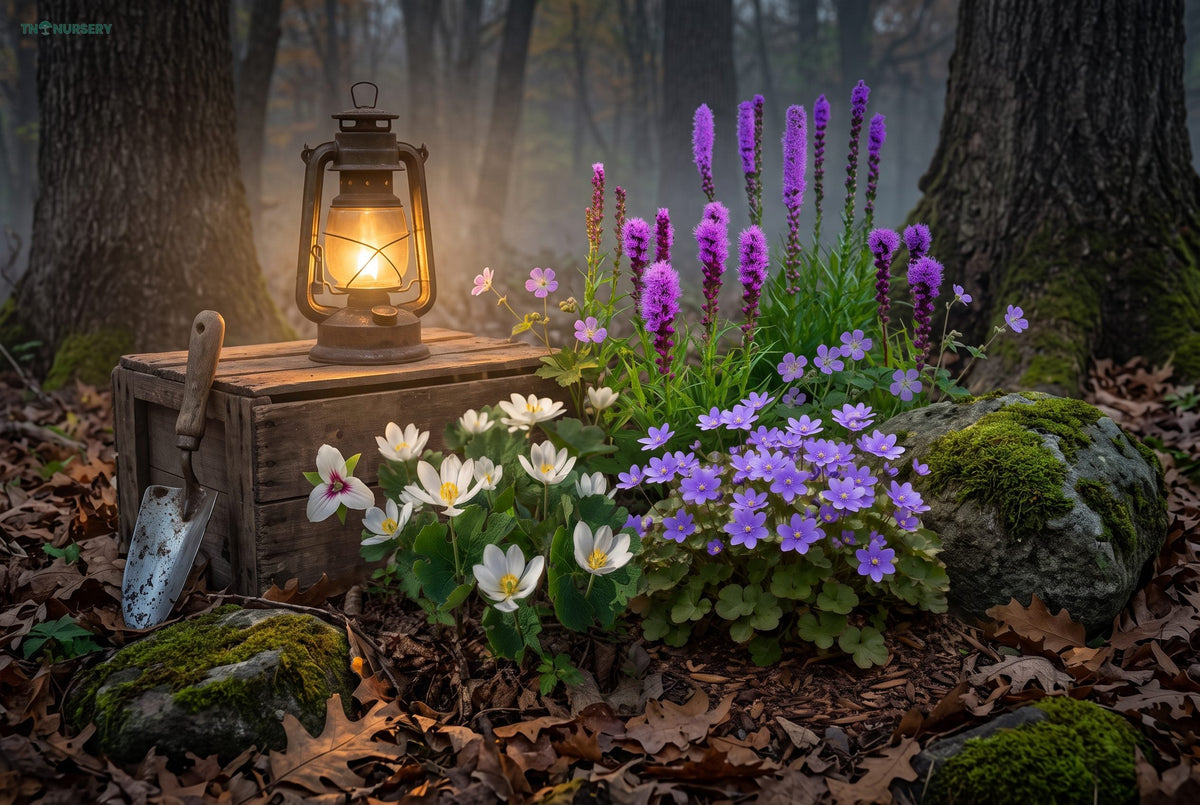
Spooky Native Wildflowers to Plant in Fall for Spring Magic
Fall is a great time to plant many native perennials while the soil stays workable. Bring folklore, a little mystery, and real wildlife value to next year's garden.
Why Plant Folklore Wildflowers This Fall
- Woodland natives that suit shady beds with plenty of fallen leaves
- Sun-loving natives for open borders and brighter garden edges
- The folklore behind each wildflower's name and its traditional associations
- Pollinator support from early spring blooms through late summer spikes
Bloodroot: The Woodland Wildflower That Bleeds Red

Bloodroot (Sanguinaria canadensis), the Red-Sapped Herald of Spring
Snap a bloodroot rhizome and it seeps a sap the color of a blood drop. That's where the name comes from. People have used this sap as a natural dye for maybe a thousand years, and it's deeply rooted in Native American history. (Enjoy the story, but don't ingest it.) The plant itself is gentle and pretty. White flowers with five to eight petals open in early spring, often above deep-lobed leaves that push up as the snow melts. So is it one of the best native wildflowers to plant in fall?
- One of the first white blooms of spring, feeding early bees and butterflies
- Shade-loving woodland native for zones 3-8, staying under 12 inches tall
- Ships bare-root from our nursery and is backed by a 1-year warranty
The Liver-Shaped Leaf: Hepatica and the Doctrine of Signatures

Liverwort Hepatica: A Folklore Wildflower for Shady Nooks
Centuries ago, people followed the doctrine of signatures, an old belief that a plant's shape hinted at its intended use. Hepatica's dark-green, three-lobed leaves looked like a liver to them, which is how it got its name. That's folklore, not medical guidance. So enjoy the story and leave the remedies to history. Among the native wildflowers to plant in fall, this one is small but full of character. It reaches about 6 inches tall and 8 inches wide.
- Three-lobed foliage with star-shaped spring blooms in white, purple, or blue
- Thrives in partial to full shade in zones 3-9 and draws bees
- Naturally avoided by deer, rabbits, and squirrels once established
The Secretive Beauty of the Spring Woods

Painted Trillium: The Wildflower That Looks Spellbound
Three white petals, each brushed with maroon or purple streaks, rise above three broad leaves on the forest floor. It looks enchanted. This perennial grows from a rhizome and wants moist, well-drained soil with plenty of leaf litter. Bees and butterflies visit the blooms and cross-pollinate them. Keep in mind it stays under 12 inches tall. So plant it beside a path, a mossy rock, or a raised woodland bed where you can see it up close.
- Maroon-to-purple streaks on three white, gently wavy petals
- Thrives in dappled light beneath deciduous tree canopies
- Ships bare-root for fall planting in Zones 3-8
From Shadow to Sun: Fall Flowers to Plant Beyond the Forest Floor
Not every native wants the same bed. So we paired a full-sun prairie spike with a shade-loving woodland edge plant, giving you pollinator habitat in both light conditions.

Blazing Star's Purple Torches
A prairie native with fiery purple spikes, Liatris brings bold drama and full-sun color to the folklore garden.
$7.99 View Details
Wild Geranium, the Wayside Wanderer
Loved by hikers in forests, meadows, and roadsides, wild geranium is an easygoing native groundcover with storybook charm.
$7.99 View DetailsHow to Plant Your Folklore Wildflowers This Fall
Autumn is the easiest time to get native wildflowers to plant in fall settled in. The soil stays warm while the air cools. Roots keep growing long after the tops slow down. So how do you set these plants up for spring? Start by matching each one to the right spot.
What native perennials can I plant in the fall?
Painted Trillium, Wild Geranium, and Blazing Star all go into the ground well in autumn. Plant them about six weeks before your ground freezes. That gives the roots time to anchor before winter.
Shade and Woodland Spots
Painted Trillium and Wild Geranium want a forest-floor setup. Here's what that looks like:
- Soil: Work in leaf mold or compost. You want soil that holds moisture but still drains.
- Light: Morning sun or dappled shade. Keep them out of harsh afternoon sun.
Full-Sun Spots
Blazing Star is the sun lover of this group. Give it steady, moderate moisture while it establishes. And leave headroom. Its tall purple flower spikes need space to rise without crowding their neighbors.
Step-by-Step Planting
- Choose a site that matches the plant's mature light needs.
- Loosen the soil across the planting area, not just the hole.
- Set the plant at its existing soil line. Don't bury the crown.
- Backfill gently and firm the soil with your hands.
- Water thoroughly.
- Add a light, breathable mulch.
- Keep watering during dry autumn spells until the ground freezes.
Look, it's tempting to pack plants tight for an instant look. Don't. Space each one by its mature spread, and fill gaps next year if needed.
Keep in mind: Woodland natives rot faster from soggy soil than from a dry week. Skip extra watering once the soil feels damp. And leave Blazing Star foliage standing until it browns. Those leaves feed the roots for next season.
These fall flowers to plant double as Halloween garden plants with real stories behind them. Still wondering about timing, care, or delivery for these native perennials with unusual names? The answers are below.
Fall Planting Questions, Answered
What native perennials can I plant in the fall?
Many of them. You can set out most native wildflowers to plant in fall as long as the soil stays workable and isn't frozen or waterlogged. Match each species to its site first. Then water new plants during dry spells until they settle in.
Should I plant woodland wildflowers in full sun?
No. Painted Trillium and Wild Geranium do best in shade or along a woodland edge. Blazing Star is the opposite. It needs full sun to flower its strongest, so give it your brightest open bed.
How do I prepare soil for native wildflowers?
Work in organic matter where your soil needs better structure. Leaf compost suits woodland species like trillium. But keep drainage in mind. Soggy ground over winter causes more losses than poor soil does.
Does plant folklore and history affect how I grow these plants?
Not really. The old stories explain the names, but site and water decide success. So enjoy the legends, and plant for sun, shade, and drainage.
How quickly does TN Nursery ship?
We ship all items via 3–4 day ground shipping. Keep in mind that we can't cancel an order once your plants have been dug.
What should I do if my plants arrive damaged or short?
Open your box as soon as the carrier marks it delivered. Our live arrival guarantee covers 24 hours. Email customerservice@tennesseewholesalenursery.com within that window with photos and your order number. We don't offer refunds or accept returns, so reporting quickly matters.
Plant Your Folklore Garden Before the Ground Freezes
Fall planting gives roots a head start, so don't wait for the first hard frost. We grow our native wildflowers to plant in fall right here at the nursery. Then we ship them grower-direct to you.
