

The short answer
Many of the best purple flowers for a lasting garden are native perennials that come back each year. Blue flag iris blooms in spring, purple coneflower in summer, blue vervain from summer into fall, and gayfeather liatris from July to September. For part shade, plant violets and lyreleaf sage. Most grow in USDA zones 3 to 9.
Purple flowers come in many forms, from florist blooms to annuals and shrubs. This guide to purple flowers names and pictures sticks to hardy perennials that are native to North America, so they come back each spring and feed local wildlife. Each entry gives you the same five facts, so you can compare at a glance. First comes the common name and the botanical name, which is the two-part Latin name that stays the same in every region. Next is the bloom season, sorted from spring to fall, so you can plan color across the year. Then comes the USDA hardiness zone, the map number that tells you whether a plant survives your winters. Last is the light it loves and the wildlife it feeds. Use the pictures on each plant card to match a flower you have seen. Then check its zone and light against your yard. You can browse more hardy choices in our Perennial Plants collection.
Purple flowers names and pictures
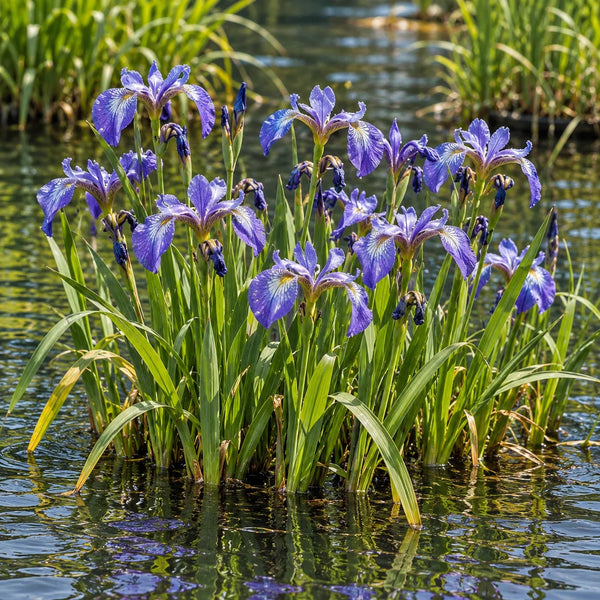
1. Blue flag iris: spring to early summer
Blue flag iris (Iris versicolor) opens blue-violet flowers in spring and early summer. The blooms sit above slender, sword-shaped leaves. It thrives in moist or wet ground, which makes it a fit for ponds, rain gardens and low spots. Give it full sun to part shade. It grows in USDA zones 3 to 9, comes back dependably and draws butterflies.
Tip: To name it, look for sword-shaped leaves growing in a wet spot.
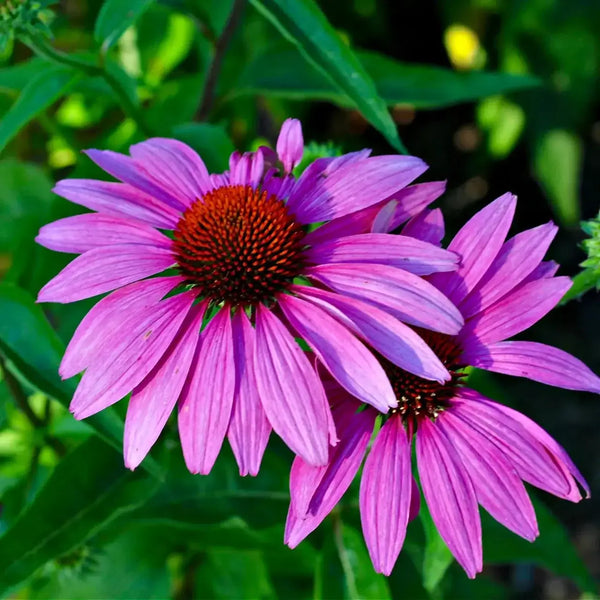
2. Purple coneflower: summer
Purple coneflower (Echinacea purpurea) is native to the central and eastern United States. Its daisy-like flowers have pink to purple petals around a raised orange-brown cone. That cone is the easiest way to spot it. It blooms in summer and grows in zones 3 to 9, in sun or part shade. Butterflies and bees visit the flowers, and songbirds eat from the seed heads later in the season.
Tip: Leave the seed heads standing into fall to feed songbirds.
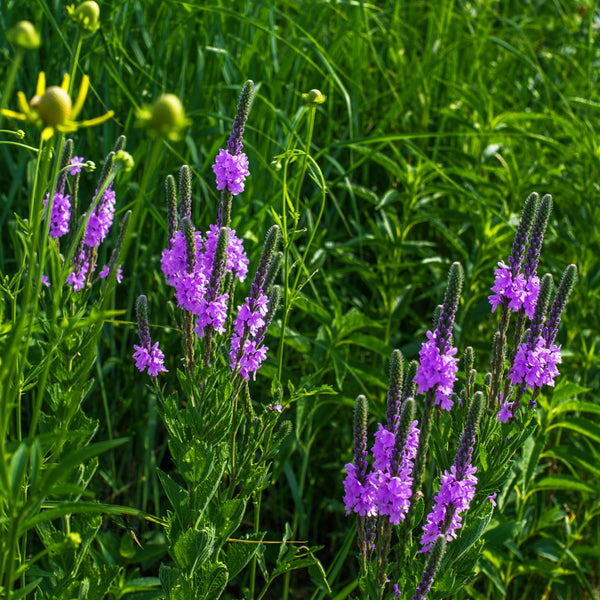
3. Blue vervain: summer into fall
Blue vervain (Verbena hastata) carries many tiny violet-purple flowers on narrow, spear-shaped spikes. Its stems often show red to pink tones, a handy clue when you name it. It blooms in summer and into fall. The plant grows up to 4 feet tall and thrives in moist soil and full sun. Over time it forms colonies with more flower spikes. It is hardy in zones 3 to 9 and draws butterflies.
Tip: Plant it at the back of a moist bed.
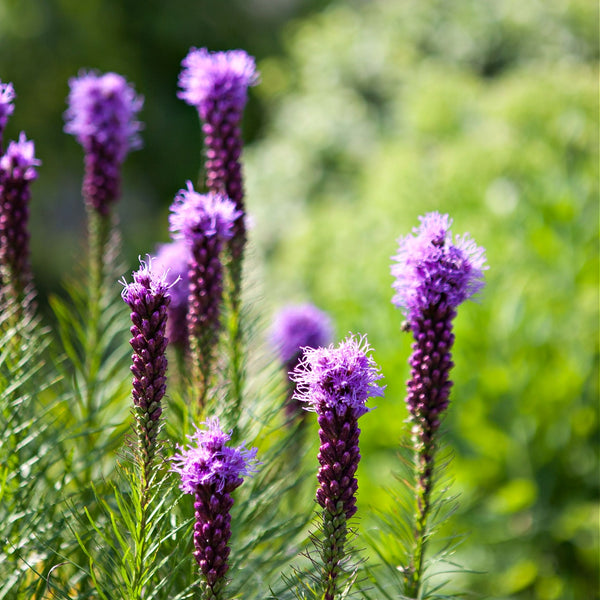
4. Gayfeather liatris: July to September
Gayfeather liatris (Liatris spicata) is a prairie native with fluffy purple blooms on tall, upright spikes. Its other common name is blazing star. It flowers in July, August and September and grows 2 to 4 feet tall. It loves full sun and moist, well-drained soil. Pollinators visit the flowers, it hosts moths, and animals eat the seeds. It grows in zones 3 to 9.
Tip: Deadhead spent spikes to encourage more blooms.
Small purple flowers for part shade
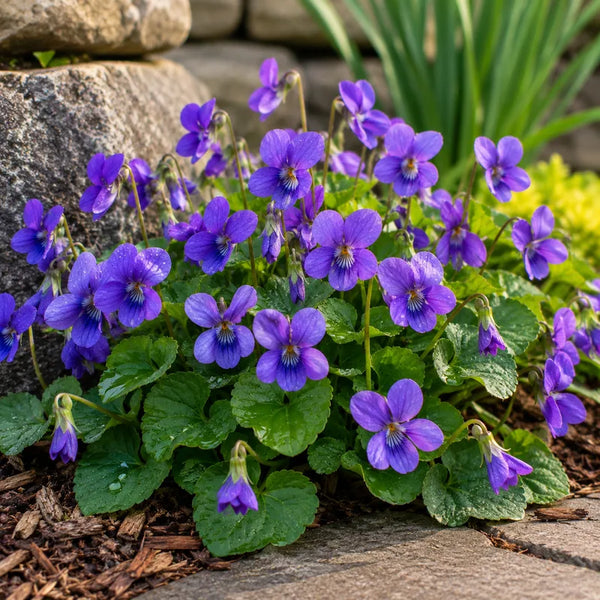
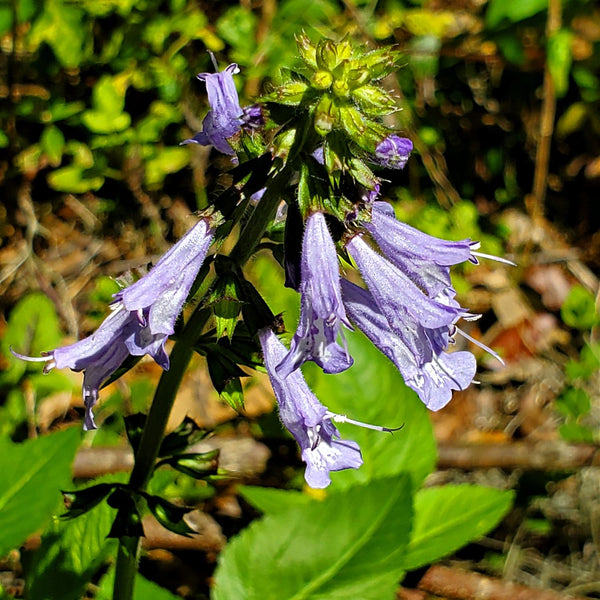
Not every yard gets full sun. Two small native perennials bring purple to spots with part shade. The common blue violet (Viola sororia) has heart-shaped leaves and small, deep purple flowers in spring. It grows in sun or shade, works as a low ground cover, and suits USDA zones 3 to 9. It is also a butterfly plant, which makes it more than a pretty edging. Lyreleaf sage (Salvia lyrata) forms a low, evergreen rosette of leaves shaped like a lyre, a small harp. From April to June it sends up spikes of lavender-blue flowers 1 to 2 feet tall. It grows in full sun to part shade in zones 5 to 9 and is native to the eastern United States. Both plants stay low, so they work well at the front of a bed in sun or part shade. Pair them with the taller sun lovers above where your yard shifts from sun to shade.
Care and keeping
Our perennials ship bare root, which means dormant roots with no soil. Soak the roots in water before planting. Set them in loose soil, firm it gently and water well. Keep the soil evenly moist for the first few weeks while new roots settle in. Label each spot so you can find it in spring.
Frequently asked questions
What are small purple flowers called?
Common small purple flowers include violets and lyreleaf sage. The common blue violet stays low with heart-shaped leaves and blooms in spring. Lyreleaf sage forms a flat rosette and sends up lavender-blue spikes 1 to 2 feet tall from April to June. Both are native perennials that grow in sun or part shade.
What tall purple perennials come back every year?
Gayfeather liatris and blue vervain are two tall native perennials that return each year. Liatris grows 2 to 4 feet tall with fluffy purple spikes from July to September. Blue vervain reaches up to 4 feet with violet-purple spikes from summer into fall. Both grow in USDA zones 3 to 9.
How do I identify a purple perennial flower?
Start with the flower shape, then check the leaves and the bloom month. A raised orange-brown cone means purple coneflower. Fluffy upright spikes in late summer point to liatris. Sword-shaped leaves in wet ground suggest blue flag iris. Heart-shaped leaves on a low spring plant suggest a violet.