
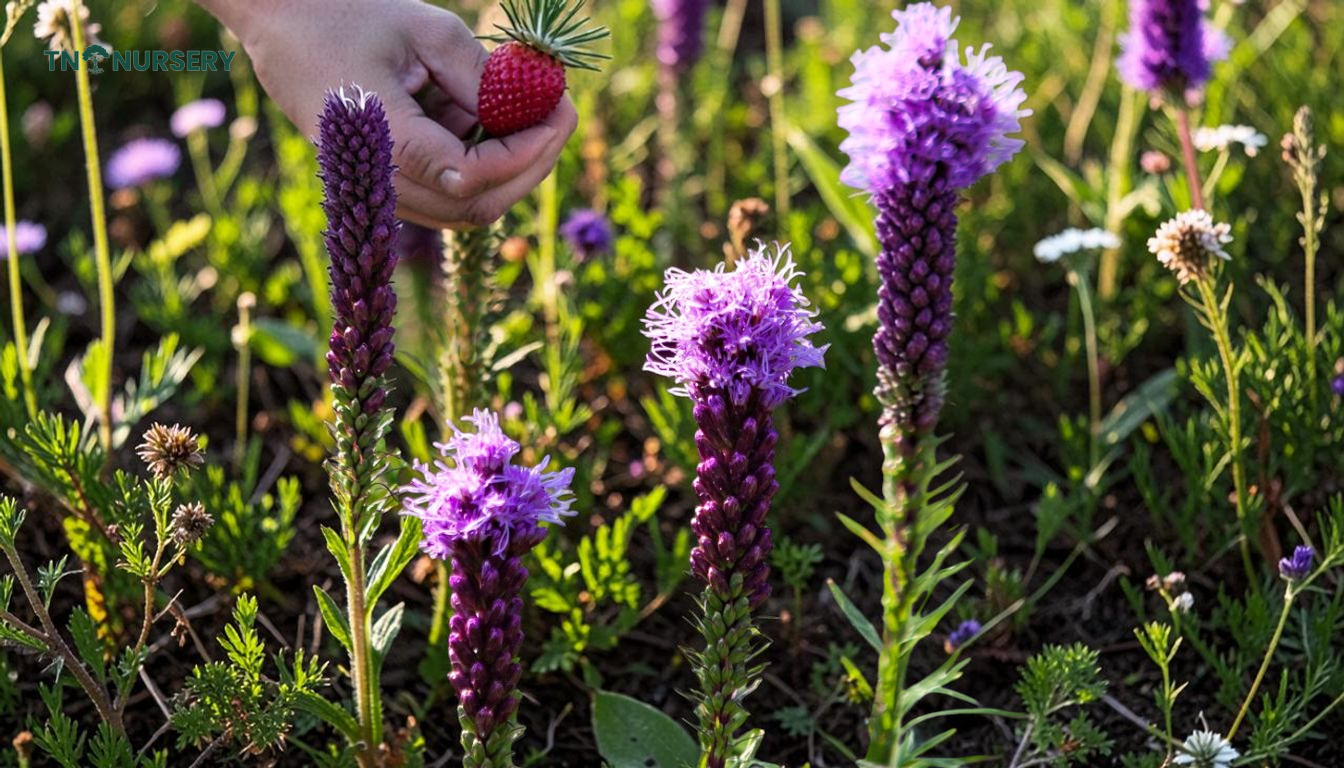
Plants for Native Bees Start With Gayfeather Liatris
Shop our purple perennial flowers for sun. Gayfeather Liatris brings tall bloom spikes, butterfly activity, and hummingbird visits to bright borders. Keep in mind, it performs best with at least si...
What are the best plants for native bees to buy?
- Gayfeather Liatris adds purple flower spikes from mid to late summer
- Full sun performance with hardy growth in planting zones 3-9
- Attracts butterflies, bees, and hummingbirds for a more active garden
- Upright 2-4 ft form helps build a layered pollinator bed
A Top Pick for Plants for Native Bees

Gayfeather Liatris for Sunny Pollinator Beds
If you want a strong vertical accent in a sunny bed, our Gayfeather Liatris plant for native plants and pollinators earns its space fast. It sends up purple flower spikes from summer into fall, attracts butterflies, bumblebees, leaf-cutter bees, digger bees, and hummingbirds, and grows well in Zones 3-9. Keep in mind that it performs best with at least six hours of sun and moist, well-drained soil.
- Bloom Color: Purple
- Planting Zones: 3-9
- Product Attribute 3: Hardy and pest resistant
Native Plants and Pollinators: 5 Picks for Layered Sun Gardens
Build a fuller planting with trees, shrubs, and perennials that bring height, bloom, and shelter into one view. We grouped these plants for native bees with long-term structure in mind, from airy s...


Layer a Sunny Pollinator Bed That Stays Sharp All Season
If you want plants for native bees that read as tidy instead of random, build the bed in layers. We start with a small tree backbone, add a few upright perennial flowers for height, and then repeat strong bloom shapes so your eye knows where to land. That simple structure keeps native plants and pollinators working together from spring into late summer.
What are the best plants for native bees to buy?
For this kind of sunny bed, we would anchor the space with Chestnut Oak Seedlings, then plant drifts of Echinacea Plant and Gayfeather Liatris Plant. Chestnut oak gives you lasting height and structure in zones 4-8, while echinacea blooms from early summer into mid-autumn and liatris carries vertical purple spikes from July through September.
That mix looks planned, not patchy. Echinacea grows 2 to 4 feet tall with a 1.5 to 2 foot spread, so it fills the middle layer well. Liatris stays narrower at about 1 foot wide, which makes it the best choice when you want tall color without a bulky clump.
How we would arrange the bed
- Back layer: Place chestnut oak at the rear or off-center as the long-term frame.
- Middle layer: Mass echinacea in groups so the pinkish-purple petals and orange-brown cones repeat across the bed.
- Vertical accents: Tuck liatris between echinacea clumps for narrow spikes and extra movement.
- Front edge: Leave room for lower perennial wildflowers or ground-hugging bloomers so the planting steps down cleanly.
How to choose the right plants for native bees?
Match bloom timing first. Echinacea starts the summer show, and liatris keeps the purple going later, so your bed never has that empty midsummer gap. If you are planting from wildflower seeds elsewhere in the yard, this bed gives those looser areas a strong focal point.
Keep sun and soil in mind too. Both echinacea and liatris want full sun, and echinacea dislikes wet feet. Chestnut oak handles full sun to partial shade, but give it room. It is a tree, after all.
"The easiest way to make a pollinator bed look intentional is to repeat one shape wide and one shape tall."
One honest tradeoff: chestnut oak is a long game. You will not get instant canopy, but you will get durability and a native framework that makes the whole planting feel settled over time. For more sun-ready choices, you can browse our Pollinator Plants and Sun Perennials collections.
Frequently Asked Questions
What are the best plants for native bees to buy?
For this sunny border, we’d start with plants for native bees that bloom purple and handle open exposure well. Our Gayfeather Liatris Plant grows upright with purple spikes from July through September, and our Echinacea Plant carries pinkish-purple blooms from early summer into mid-autumn. If you want one strong vertical accent, Gayfeather gives you that meadow look fast. If you want longer repeat color, Echinacea is the better pick because it can rebloom in summer.
How much sun do these purple perennial flowers for sun need?
Both featured picks want real sun, not bright shade. Our Gayfeather Liatris does best with at least six hours of direct light, and our Echinacea Plant also performs best in full sun. Echinacea can handle partial shade, but you’ll usually get sturdier stems and better flowering in a brighter spot. Keep in mind that too much shade often means fewer blooms and looser growth.
Which planting zones work best for Gayfeather Liatris and Echinacea?
You’ll find broad zone coverage on both. Our Gayfeather Liatris Plant is listed for planting zones 3-9, and our Echinacea Plant is also suited to zones 3-9. That makes them practical perennial flowers for a wide range of gardens, from colder northern winters to warmer southern landscapes. We still suggest matching your site to the plant’s soil needs too, because zone fit alone does not fix soggy ground.
When do these plants bloom, and will they help butterflies or hummingbirds?
Yes, both support active summer pollinators, but they do it a bit differently. Gayfeather Liatris blooms from July into September and attracts butterflies, bumblebees, leaf-cutter bees, digger bees, and hummingbirds. Echinacea starts earlier, blooming from early summer through mid-autumn, and it draws monarchs, other butterflies, and hummingbirds. If you want one butterfly plant with a longer season, Echinacea usually covers more weeks.
How do we choose companion plants for a sunny native border?
We’d build the border by shape and bloom timing. Gayfeather Liatris gives you narrow vertical spikes at 2-4 feet tall, while Echinacea adds a broader flower form at roughly 2-4 feet with a 1.5-2 foot spread. For contrast, Chicory Plant adds tall blue flowers in full sun, and Pineberry Strawberry Plant works lower to the ground in beds or containers. If you need shade texture nearby, Goat's Beard Plant fits a different light condition, so don’t mix it into the hottest front edge.
How are these plants shipped, and what if there is a problem with the order?
We ship all items by 3-4 day ground shipping. Our Gayfeather Liatris, Echinacea Plant, and Chicory Plant are shipped as bare-root plants, so you should expect dormant roots rather than potted growth. We do not accept returns and we do not offer refunds. But if there is a problem that qualifies for reshipment, contact us at customerservice@tennesseewholesalenursery.com.
Do these plants come with a warranty or return option?
We want to be clear here. We do not offer refunds, and we do not offer a warranty on any product unless an extended warranty is purchased at the time of order. We also do not accept returns. If you need help before ordering, reach out to us at Tennessee Wholesale Nursery, 12847 State Route 108, Altamont TN 37301, United States, or email customerservice@tennesseewholesalenursery.com so we can help you choose sun loving native plants for bees that fit your zone.
Build Your Spring Plan for Plants for Native Bees
Start with Gayfeather Liatris, then map in Echinacea for long summer color and more visits from butterflies and hummingbirds. We ship both bare-root, and they grow well in sunny gardens across zone...
