
The short answer
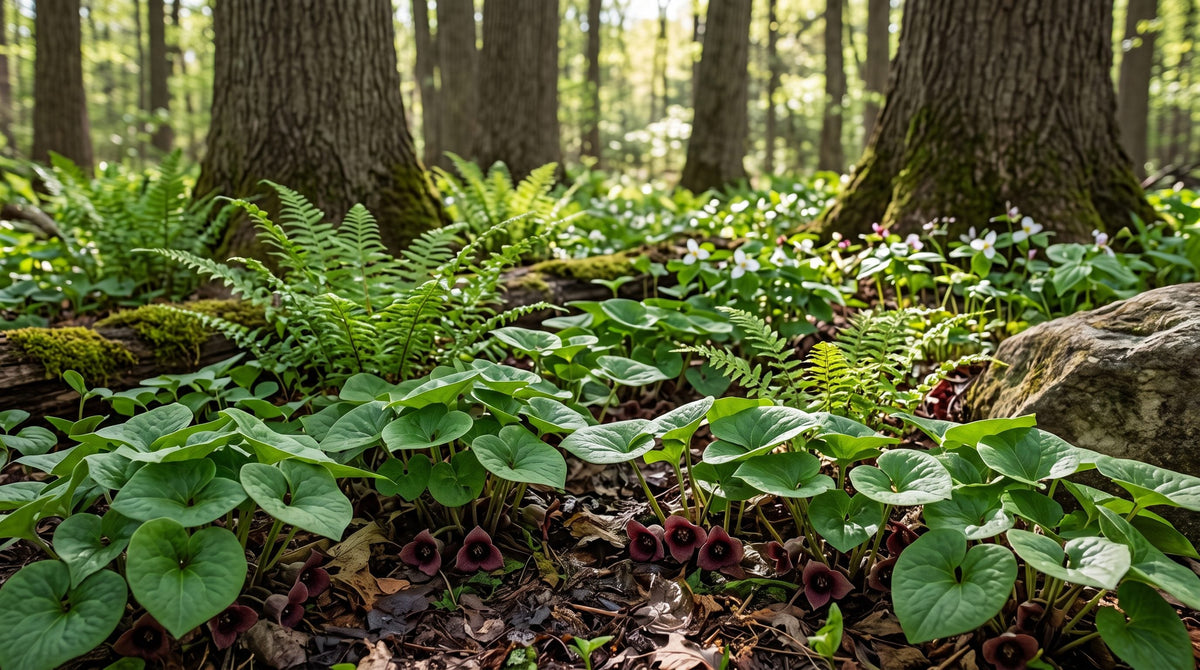
The best native ground cover for shade depends on your soil. In rich, moist shade, plant wild ginger and sensitive fern, and add partridge berry for evergreen cover. For fast cover in part shade, hay-scented fern spreads about 3 feet. Under trees where soil runs dry, Virginia creeper takes full sun to full shade and low to moderate water.
A north wall that stays damp, a woodland edge with dappled light and the dry, root-filled ground under a big tree all count as shade, and each suits a different plant. Before you choose, check two things. First, how much light the spot gets: part shade sees a few hours of sun or steady dappled light, while full shade sees little direct sun at all. Second, how the soil feels a few days after rain. If it stays cool and moist, you have woodland shade, and most native shade plants will settle in. If it dries out fast, you have dry shade, and you need a tougher pick. The picks below are sorted that way, with the height, spread and growth rate from each plant's details, so you can plan spacing and see how soon the ground will fill. For a quick start, our 10 Shade Fern Plants Starter Pack gathers ten varieties chosen for low light. Browse the full range in our Ground Cover Plants collection.
Moist-soil native ground cover for shade

1. Wild ginger for rich, moist shade
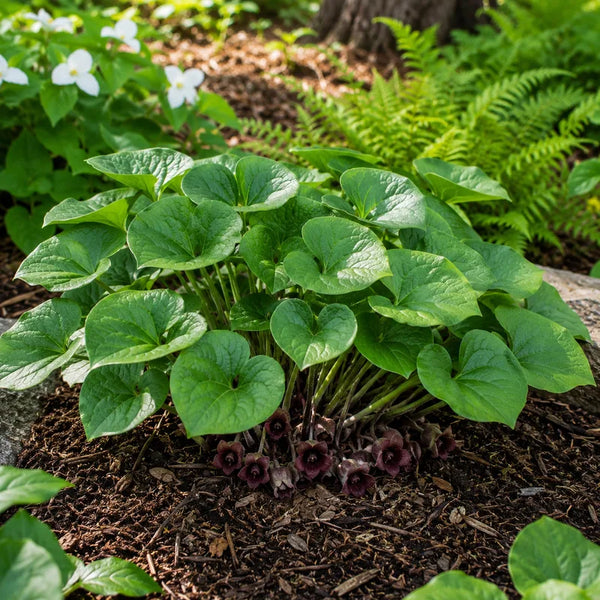
Wild ginger (Asarum canadense) grows on the woodland floor in partial to full shade. Its heart-shaped leaves sit close to the ground and knit into a green carpet as the rhizomes spread into dense colonies. It thrives in rich, moist, well-drained soil and does well under trees. Set plants about 1 foot apart so each has room to run. It dies back in winter and returns in spring.
Tip: Work compost into the soil and water during dry spells while it settles in.
2. Partridge berry for evergreen cover
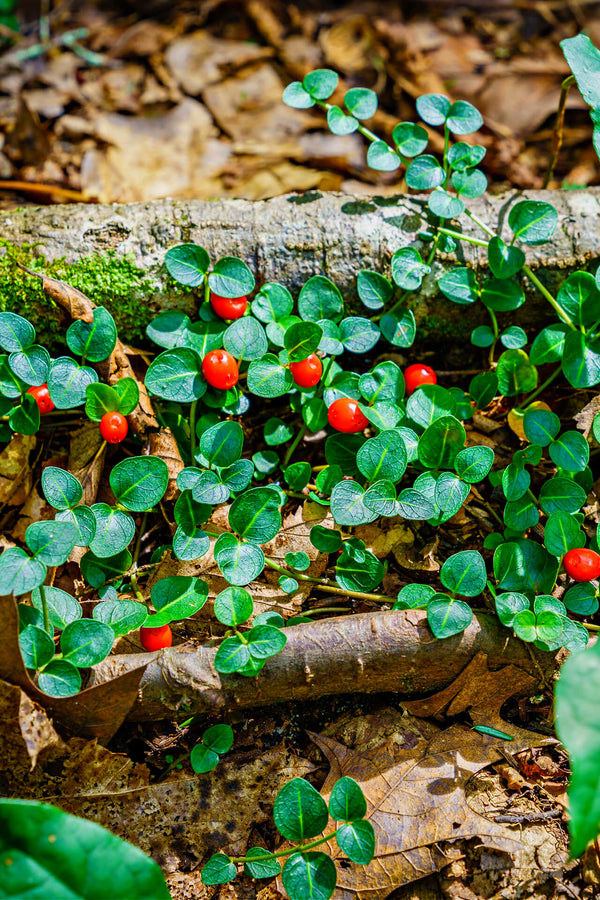
Partridge berry (Mitchella repens) is a low, creeping native of eastern woods that grows where light is too low for most plants. Its small, shiny leaves come in pairs and stay green all winter. Fragrant white flowers open in spring and give way to red berries that birds eat when food is scarce. The trailing stems root as they go, so a few plants widen into a patch.
Tip: Pair it with wild ginger for green cover in winter after the ginger dies back.
3. Sensitive fern for wet, shady ground
Sensitive fern (Onoclea sensibilis) is native to eastern North America and grows wild along stream banks, in swamps and across meadows. It is hardy in zones 3 to 8, wants partial to full shade and has high water needs, so it suits the low, damp corner of the yard. Its bright green fronds form lush colonies and turn golden yellow in autumn before the plant rests for winter.
Tip: Plant it where rainwater collects, such as beside a downspout or in a rain garden.
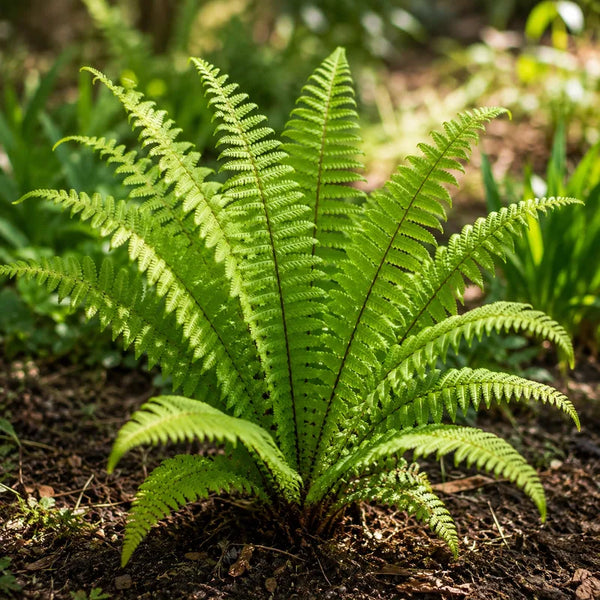
4. Hay-scented fern for fast, wide cover
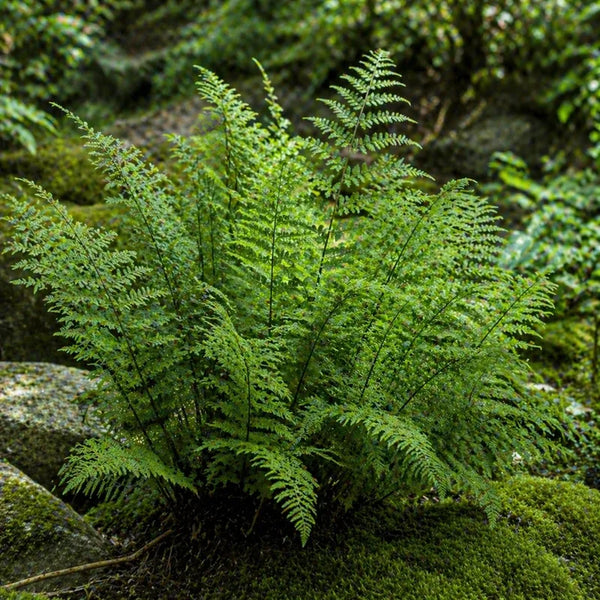
Hay-scented fern (Dennstaedtia punctilobula) is one of the quickest fillers on this list. It grows fast to 1.5 to 3 feet tall and about 3 feet wide, forming colonies of lime green, lace-like fronds that cover wide areas. It is hardy in zones 3 to 8 and takes partial shade to full sun. It grows best in humus-rich, moist, well-drained soil but adapts to a range of soils, even poor ones.
Tip: Crush a frond in late summer to catch its sweet, fresh-cut hay scent.
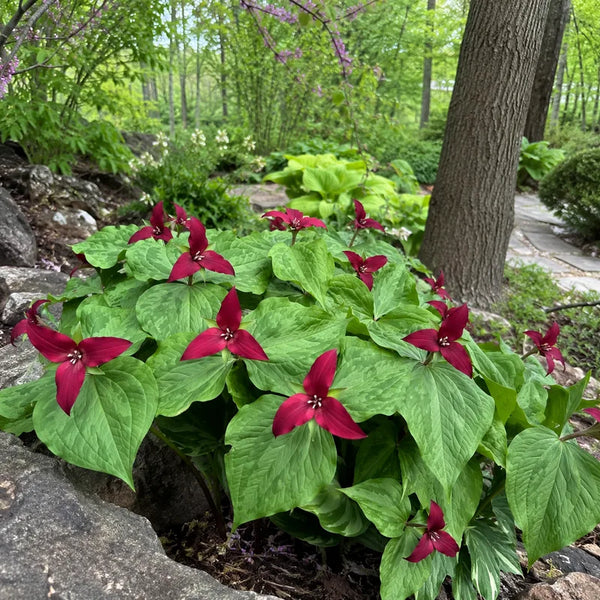
5. Red trillium for spring flowers in shade
Red trillium (Trillium erectum) brings bold, dark red three-petaled flowers to shade in early spring, above patterned green leaves. It grows 8 to 12 inches tall and spreads 12 to 18 inches, at a slow rate, so think of it as an accent among faster ground covers rather than a carpet on its own. It wants shade and moderate water, and its flowers attract bees.
Tip: It is a spring ephemeral, so tuck it among wild ginger or ferns.
Native ground cover for dry shade
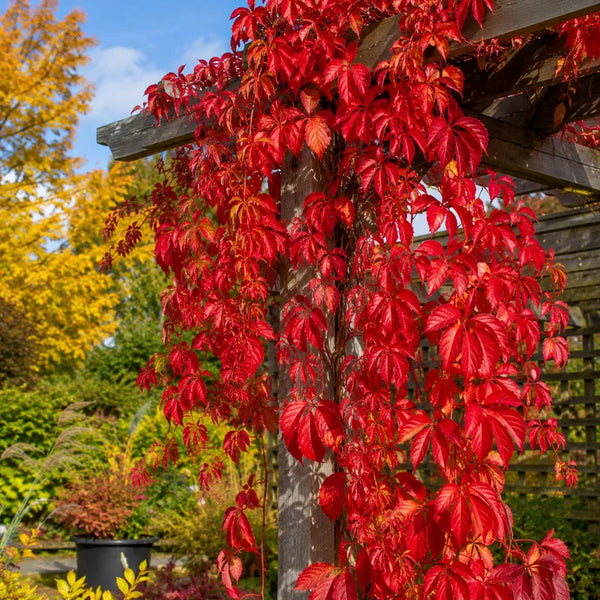
Dry shade under mature trees is the hardest spot to cover, because tree roots take most of the water and the canopy blocks much of the rain. Virginia creeper (Parthenocissus quinquefolia) is the native answer here. It takes full sun to full shade, needs low to moderate water and grows fast, spreading 5 to 10 feet. It only grows as high as the structure you give it, so guide runners away from tree trunks and it will run along bare ground instead. Green leaves turn fiery red in fall, and dark blue berries feed native birds. It thrives in well-drained soil and helps hold banks against erosion. Water it regularly after planting to help it establish. Hay-scented fern, which adapts to poor soils, is a second choice where some sun reaches the ground. For a mix beyond these natives, our 25 Ground Covers pack is picked for your growing zone and suits sunny beds or dappled shade.
Care and keeping
Plant bare-root ground covers in fall or early spring while they are dormant; they can arrive looking like sticks, and fresh growth follows in spring. Space by spread: about 1 foot for wild ginger and red trillium, 3 feet for hay-scented fern. Work in compost and water during dry spells the first season.
Frequently asked questions
What are some good ground cover plants for partial shade?
Wild ginger, partridge berry and sensitive fern all grow well in partial to full shade, with wild ginger and sensitive fern happiest where soil stays moist. Hay-scented fern takes partial shade to full sun and fills in fast. For flowers, add red trillium as a spring accent among them.
What are some examples of fast-growing groundcovers?
Among native plants for shade, hay-scented fern and Virginia creeper both grow fast. Hay-scented fern spreads about 3 feet and forms colonies that cover wide areas. Virginia creeper spreads 5 to 10 feet along bare ground. Wild ginger spreads more gradually by rhizomes, so set plants about 1 foot apart.
What plants do well in both sun and shade?
Virginia creeper grows in full sun to full shade and needs only low to moderate water, which makes it useful where light changes through the day. Hay-scented fern takes partial shade to full sun. Our 25 Ground Covers pack is also chosen for your zone and suits sunny beds or dappled shade.
Quick compare: spread, speed and zones
| Plant | Shade and soil | Water | Height | Spread | Growth | Zones |
|---|---|---|---|---|---|---|
| Wild ginger | Partial to full shade, rich moist soil | Moist, not wet | Close to the ground | Plant 1 ft apart | Spreads by rhizomes over time | — |
| Sensitive fern | Partial to full shade, damp ground | High | — | Forms colonies | — | 3 to 8 |
| Red trillium | Shade | Moderate | 8 to 12 in | 12 to 18 in | Slow | — |
| Hay-scented fern | Partial shade to full sun, adapts to poor soil | Moderate | 1.5 to 3 ft | 3 ft | Fast | 3 to 8 |
| Virginia creeper | Full sun to full shade, dry shade | Low to moderate | Low on open ground | 5 to 10 ft | Fast | — |
Shade and soil
- Wild ginger
- Partial to full shade, rich moist soil
- Sensitive fern
- Partial to full shade, damp ground
- Red trillium
- Shade
- Hay-scented fern
- Partial shade to full sun, adapts to poor soil
- Virginia creeper
- Full sun to full shade, dry shade
Water
- Wild ginger
- Moist, not wet
- Sensitive fern
- High
- Red trillium
- Moderate
- Hay-scented fern
- Moderate
- Virginia creeper
- Low to moderate
Height
- Wild ginger
- Close to the ground
- Sensitive fern
- —
- Red trillium
- 8 to 12 in
- Hay-scented fern
- 1.5 to 3 ft
- Virginia creeper
- Low on open ground
Spread
- Wild ginger
- Plant 1 ft apart
- Sensitive fern
- Forms colonies
- Red trillium
- 12 to 18 in
- Hay-scented fern
- 3 ft
- Virginia creeper
- 5 to 10 ft
Growth
- Wild ginger
- Spreads by rhizomes over time
- Sensitive fern
- —
- Red trillium
- Slow
- Hay-scented fern
- Fast
- Virginia creeper
- Fast
Zones
- Wild ginger
- —
- Sensitive fern
- 3 to 8
- Red trillium
- —
- Hay-scented fern
- 3 to 8
- Virginia creeper
- —