

The short answer
How to keep ferns alive in winter depends on which kind you have. Hardy garden ferns planted in the ground stay outside: leave their fronds standing, spread a layer of shredded leaves over the crown and let them rest. Tender potted ferns, like Boston ferns, come indoors before nights fall below about 50°F.
Most winter fern advice is written for one plant: the Boston fern hanging on the porch. That fern is tender, so it needs a bright room or a cool, frost-free space to get through the cold. The ferns growing in your shade beds are a different story. Woodland ferns such as Christmas fern, ostrich fern and lady fern are perennials built to spend winter outdoors, either staying green or resting underground until spring. They thrive when left mostly alone, with their fronds in place, their crowns covered and their soil moist but well drained. This guide follows both paths. First you will sort your ferns into hardy or tender. Then you will see how to put garden ferns to bed outside, how to carry potted ferns through winter indoors, and how to wake everything up in spring. If you are planting this fall, choosing ferns rated for your USDA zone from our Shade Ferns collection means less winter work every year after.
Winter fern care, step by step



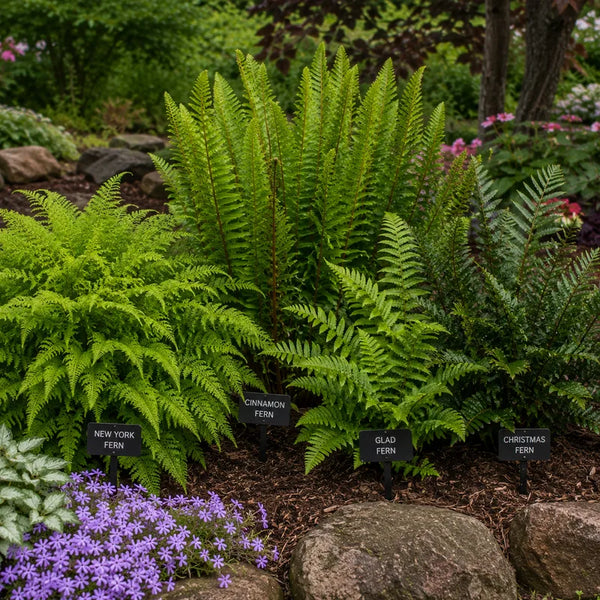
1. Know whether your fern is hardy or tender
Start by sorting your ferns. Ferns planted in the ground in your garden, such as Christmas, ostrich and lady ferns, are usually hardy perennials meant to stay outside. Ferns sold in hanging baskets and porch pots, like Boston and other tropical ferns, are tender and need shelter from frost. If you are unsure, check the plant tag or the USDA zone range for the species against your own zone.
Tip: A hardy fern in a container is more exposed than one in the ground, so treat it as tender.
2. Leave fronds standing and mulch the crown
Hardy garden ferns need very little in fall. Leave the fronds where they are, even after frost browns them, because they shelter the crown through winter. Evergreen types such as Christmas fern stay green all season. After the ground cools, spread a layer of shredded leaves or bark mulch over the root zone, and water the bed before it freezes if fall has been dry.
Tip: Fallen tree leaves make a free, natural mulch for woodland ferns.
3. Bring potted ferns in before cold nights
Tender ferns in pots and hanging baskets should come indoors before the first frost, ideally once night temperatures start falling toward 50°F. Before you move them, trim off brown or damaged fronds, check under the leaves for pests and rinse the foliage with water. Stop feeding them for the season, since their growth slows down in cooler, shorter days.
4. Give indoor ferns light, humidity and less water
Indoors, set ferns in bright, indirect light, such as near an east-facing window, and keep them away from heating vents and cold drafts. Winter air inside is dry, so raise humidity with a pebble tray filled with water, a room humidifier or a bright bathroom. Water when the top inch of soil feels dry, keeping it lightly moist, never soggy.
Tip: Grouping several ferns together helps them hold humidity around their fronds.
5. Tidy up and wake ferns in spring
Wait until late winter or early spring to cut back hardy garden ferns. Snip the old, brown fronds at the base before the new fiddleheads unfurl, and pull the mulch back slightly so the soil warms. Evergreen fronds can stay until fresh growth replaces them. Move potted ferns back outdoors once nights stay mild and every chance of frost has passed.
Tip: Cutting before the fiddleheads appear keeps you from snipping this year's new fronds by mistake.
The garage dormancy method for potted ferns
If you lack a bright spot indoors, you can let a potted fern rest through winter instead of keeping it in active growth. Before the first frost, cut the fronds back to an inch or two above the soil. Move the pot into an unheated garage, basement or shed that stays above about 45°F and never freezes. Dim light is fine, because the plant is not growing. Water lightly about once a month, just enough to keep the roots from drying out completely. In spring, bring the pot into brighter light, water a little more often and watch for new fronds. Once nights stay mild, move it back outside. This method trades a few months of green for very little work. For even less winter work, grow ferns in the ground. Below are a pack of ten fern varieties chosen for shade and a mix of 25 ferns and 25 perennials picked for your zone.


Care and keeping
Check soil moisture rather than watering on a schedule. Indoor ferns like evenly moist soil, while dormant garage ferns need only a light drink about once a month. Outdoor ferns in the ground usually get enough from rain and snow, but a deep soak before the soil freezes helps after a dry fall.
Frequently asked questions
Can potted ferns survive the winter?
Yes. Tender potted ferns, such as Boston ferns, survive winter indoors in bright, indirect light with steady humidity, or resting dormant in a cool garage that stays above about 45°F. Hardy ferns in pots are more exposed than ferns in the ground, so shelter them the same way or plant them in a garden bed before winter.
Are you supposed to cut back ferns in the winter?
Not in fall. Leave the fronds on hardy garden ferns through winter, since they help protect the crown. Cut the old, brown fronds at the base in late winter or early spring, before new fiddleheads unfurl. Potted ferns going into garage dormancy are the exception: cut those back to an inch or two before storing.
Will ferns survive winter in the garage?
Potted ferns can, as long as the garage stays above about 45°F and never freezes. Cut the fronds back, leave the pot in dim light, and water lightly about once a month. In spring, move the fern into brighter light and back outdoors once nights stay mild and frost has passed.