How do you plant a tree with a class? Pick a native tree that fits your school's hardiness zone and space, call 811 two working days before digging, dig a hole two to three times as wide as the root ball but no deeper, set the root flare at the soil surface, mulch 2 to 4 inches deep, and water through the first growing seasons.
This guide is written for teachers, school garden coordinators, scout and 4-H leaders, and parents organizing an Arbor Day or Earth Day planting. It pulls together university extension planting standards, forestry measurement methods used in classroom science, and a species chart of ten native trees, so you can plan the whole project from one printable page. Start by checking your state's date in our state trees and Arbor Day dates for all 50 states.
When did Arbor Day start, and why do schools plant trees?
Arbor Day began in Nebraska. Newspaper editor J. Sterling Morton proposed a tree-planting holiday to the Nebraska State Board of Agriculture on January 4, 1872, and the first Arbor Day was held on April 10, 1872. Prizes went to the counties and people who planted the most trees, and an estimated one million or more trees went into the ground that day.
Nebraska made Arbor Day a legal holiday in 1885 and set it on April 22, Morton's birthday. According to the Arbor Day Foundation, tree planting became a school tradition across the country in 1882, with students learning why trees matter and receiving a tree of their own. By 1920 more than 45 states and territories observed the day, and today all 50 states do.
- National Arbor Day falls on the last Friday in April, which is April 30 in 2027.
- State Arbor Days often shift to match good planting weather, from January and February in the South to May in the far North.
- Your best classroom date is usually your state's own Arbor Day, since it was chosen for local planting conditions.
Which native trees are best for a school planting?
The best school trees are native to your region, hardy in your USDA zone, and sized for the spot you have. A small tree near a building or playground fits better than a giant shade tree that will need 80 feet of room. The chart below lists ten native trees with the mature height and hardiness zones published by university extension services.
| Tree | Botanical name | Typical mature height | USDA zones | What students can observe | Source |
|---|---|---|---|---|---|
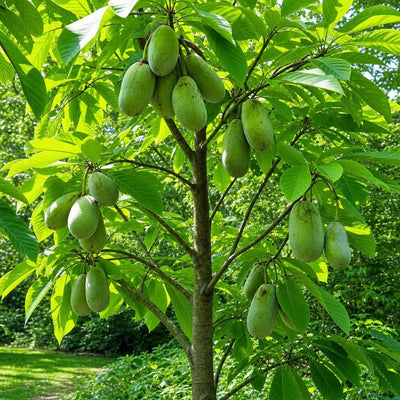
| Pawpaw | Asimina triloba | 15–30 ft | 5–8 | Large tropical-looking leaves, maroon spring flowers, fall fruit; caterpillar host of the zebra swallowtail | NC State Extension |
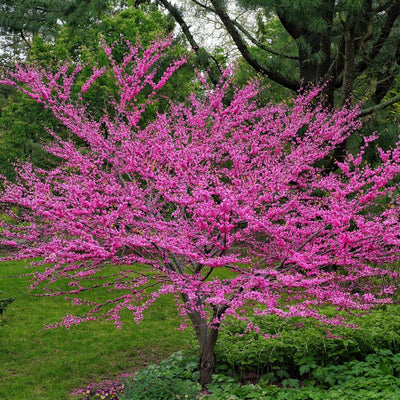
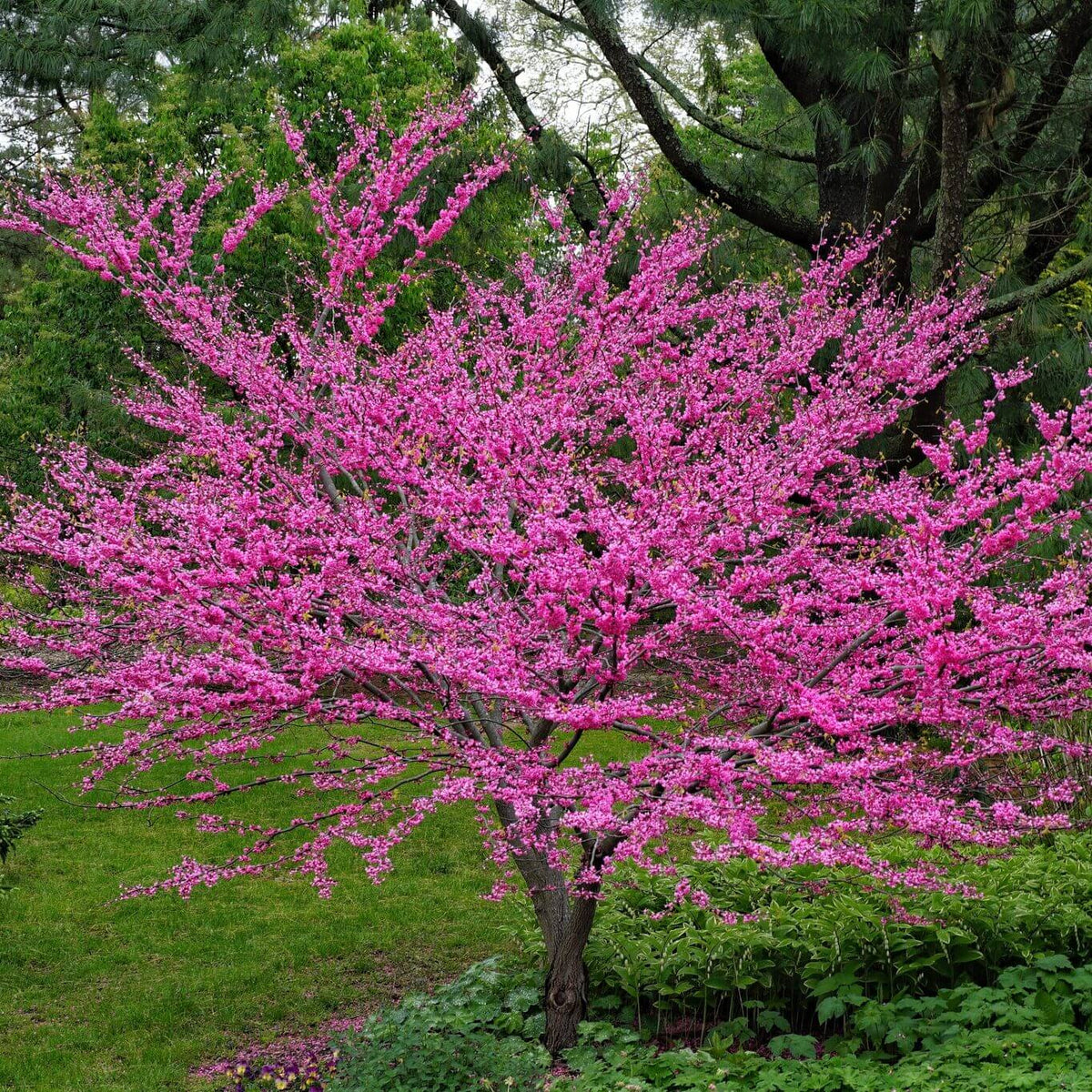
| Eastern redbud | Cercis canadensis | 20–30 ft | 4B–9A | Pink-magenta flowers along bare stems in early spring; heart-shaped leaves; state tree of Oklahoma | UF/IFAS |
| Flowering dogwood | Cornus florida | 20–30 ft | 5A–9A | Showy white bracts in mid-spring and red fruit that birds eat | UF/IFAS |
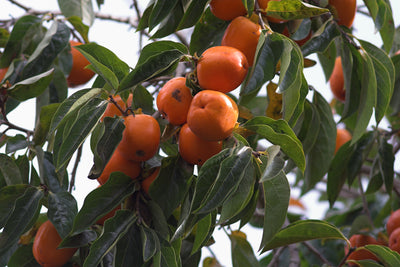
| American persimmon | Diospyros virginiana | 40–60 ft | 4B–9B | Blocky "checkerboard" bark and orange fruit that usually ripens after a frost | UF/IFAS |
| River birch | Betula nigra | 40–50 ft | 4A–9A | Papery bark that peels and curls with age; often multi-trunked | UF/IFAS |
| Red maple | Acer rubrum | 40–60 ft | 3B–9A | Red flowers in late winter before leaves open, then winged seeds (samaras) | Michigan State; UF/IFAS |
| Sugar maple | Acer saccharum | 60–80 ft | 3A–8A | Star-shaped leaves with bright fall color; the most common maple in the East | UF/IFAS |
| Tulip poplar | Liriodendron tulipifera | 80–100 ft | 5A–9A | Tulip-shaped flowers high in the crown; state tree of Kentucky, Indiana and Tennessee | UF/IFAS; Univ. of Minnesota |
| White oak | Quercus alba | 60–100 ft | 3B–8B | Acorns for wildlife; old trees can live several hundred years | UF/IFAS |
| Sycamore | Platanus occidentalis | 75–90 ft | 4B–9A | Showy winter bark and round seed balls; grows quickly | UF/IFAS |
Heights are typical landscape ranges; trees in forests or ideal sites can grow larger. For a small courtyard, look through our small trees for small yards. For a schoolyard woodland edge or a big lawn, the native trees collection has the larger species. Our tree growth rate chart and tree lifespan guide make good companion lessons.
Should a class plant seedlings or larger trees?
Seedlings are the easiest choice for large groups because every student can plant one, they cost less, and they are light enough for small hands. Bare-root pawpaw seedlings, eastern redbud seedlings and other tree seedlings can go home with students or into a schoolyard grove. One larger tree works better for a single ceremonial planting the whole school can watch grow.
How do you plant a tree correctly, step by step?
Dig wide, not deep, and keep the root flare at the soil surface. Every extension guide we reviewed agrees on those two rules, and the University of New Hampshire Extension notes that a hole that is too deep and narrow is one of the most common planting mistakes.
- Call 811. Kansas State Research and Extension advises calling 811 at least two full working days before digging so buried utility lines can be marked. Schools should also check with facilities staff about irrigation lines.
- Find the root flare. The flare is where the trunk widens into the roots. University of Illinois Extension notes it is often buried in the pot or root ball, so brush away soil until you see the first roots.
- Dig a wide, shallow hole. Make it two to three times as wide as the root ball and no deeper than the root ball's height (University of Minnesota Extension). Illinois Extension points out that most tree roots live in the top 12 to 18 inches of soil.
- Remove containers and loosen circling roots. Iowa State University Extension recommends taking off containers and correcting roots that circle the root ball.
- Set the tree and backfill. Place the tree so the flare is even with or slightly above the ground, then fill with the soil you dug out. University of Delaware Extension advises against adding fertilizer or compost to the bottom of the hole.
- Water deeply. Soak the root area right after planting to settle soil and remove air pockets.
- Mulch. Spread 2 to 4 inches of wood chips or bark over the root area, keeping mulch pulled back from the trunk (Kansas State; Illinois Extension).
- Plan follow-up watering. Iowa State notes that small trees usually need watering for one or two growing seasons, so build a summer watering schedule into the project.
Planting bare-root seedlings? Our bare-root planting guide for trees and shrubs covers soaking roots and setting depth, and the native tree planting calendar for all 50 states shows the best planting window by frost date.
How do students measure a tree like a forester?
Foresters measure trunk size as DBH, or diameter at breast height, taken 4.5 feet (about 1.4 meters) above the ground. Measuring at a standard height keeps results comparable, because trunks flare wider near the base.
| Step | What students do | Why it matters |
|---|---|---|
| 1. Find breast height | Measure 4.5 ft up the trunk with a tape; mark it on each student first so they learn where it falls on their own body | The standard forestry height (Univ. of Wisconsin–Stevens Point LEAF program) |
| 2. Measure circumference | Wrap a flexible tape or string snugly around the trunk at that mark | This is circumference at breast height (CBH) |
| 3. Calculate diameter | Divide CBH by 3.14 (π) | CBH ÷ 3.14 = DBH (Wisconsin DNR) |
| 4. Compare heights | Also measure circumference at 1 ft and 2 ft and compare | Shows why foresters use one standard height (Project Learning Tree) |
| 5. Handle slopes | On a hill, measure 4.5 ft on the uphill and downhill sides and use the point midway | Texas A&M Forest Service measurement guidelines |
| 6. Record yearly | Measure the school tree each Arbor Day and graph the results | Turns one planting into a multi-year data set |
International student science programs such as GLOBE use 1.35 meters as breast height so classes in different countries can share data, so note which standard your class uses.
What tree activities fit each grade level?
Match the job to the age group: younger students observe and care for the tree, while older students measure, map and analyze. These are suggested activities built around the planting steps and measurements above.
| Grade band | Planting role | Classroom activity |
|---|---|---|
| Pre-K–2 | Spread mulch, water, name the tree | Leaf rubbings, seasonal drawing journal, count the flowers on a redbud |
| 3–5 | Find the root flare, backfill, write the planting record | Measure circumference with string; graph height every season; learn which butterflies use the tree |
| 6–8 | Measure and lay out the planting site, check zone and spacing | Calculate DBH from CBH; compare growth of two species; map trees on campus |
| 9–12 | Lead the planting plan and the watering schedule | Multi-year DBH data set, site analysis, tree inventory of the school grounds |
A pawpaw is a natural fit for a butterfly lesson, since NC State Extension lists it as the caterpillar host for the zebra swallowtail and calls it an easy-to-grow fruit tree for children's gardens. Our butterfly host plant chart covers 25 eastern butterflies and the plants their caterpillars need. Planting a whole grove? Use the tree seedlings per acre spacing chart to figure your count.
How do you choose the right spot on school grounds?
Choose a spot with enough room for the tree's mature height and spread, clear of utilities, and easy to water. Use this quick checklist before planting day:
- Utilities marked by 811 and cleared with facilities staff.
- Mature height fits under any overhead lines; small trees such as redbud, dogwood and pawpaw suit tight spots.
- Sun and soil match the species (for example, river birch for moist ground).
- A hose or water source within reach for the first one to two growing seasons.
- Away from ball fields and mower paths, or protected with a mulch ring.
- A plan for summer care when school is out.
What has a 65-year-old nursery learned about planting with kids?
TN Nursery is a family-owned, third-generation nursery in Altamont, Tennessee, founded in 1959 by Roscoe Tate. On our 170 acres we grow about 2 million pawpaw trees a year from roughly 2 tons of seed, and we have grown more than 200,000 redbuds. Over more than 65 years we have supplied plants to major U.S. landmarks, including the Washington Monument and Arlington National Cemetery. Our advice for classrooms is the same we give every planter: choose a tree that fits the space, keep the root flare at the surface, and give someone the job of watering it next summer.
How we made this guide
We gathered Arbor Day history from the Arbor Day Foundation, the History Nebraska archive and the N.C. Forest Service. Planting steps come from published extension fact sheets from Kansas State, the University of Minnesota, the University of Illinois, Iowa State, the University of Delaware and the University of New Hampshire. Tree heights and hardiness zones come from UF/IFAS Southern Trees fact sheets, NC State Extension, Michigan State University and the University of Minnesota; where sources differed, we used the UF/IFAS figures. The DBH method comes from the Wisconsin DNR, Project Learning Tree and Texas A&M Forest Service. The grade-level activities are our own suggestions built on those methods. Pawpaw zones reflect our growing experience. Check with your county extension office for local advice.
Reviewed by the TN Nursery growing team, November 27, 2026.
Share this guide
Teachers, school garden programs, scout and 4-H leaders, bloggers, libraries and conservation groups are welcome to use the tree chart, planting steps and measuring activity in lessons, handouts and articles. We ask only that you credit TN Nursery and link to this page: https://tnnursery.net/blogs/garden-blog/classroom-tree-planting-guide. For a free printable infographic version of the chart, contact us through tnnursery.net and we'll send one.
Frequently asked questions
When is Arbor Day?
National Arbor Day is the last Friday in April, which is April 30 in 2027. Many states hold their own Arbor Day on a different date that matches local planting weather, from January in the South to May in the North.
What is the easiest tree for a class to plant?
A small native tree or seedling that fits your zone, such as eastern redbud, flowering dogwood or pawpaw. Seedlings are light and affordable, so every student can plant one.
How deep should you plant a tree?
No deeper than the root ball, with the root flare even with or slightly above the soil surface. Dig the hole two to three times as wide as the root ball instead of deeper.
How do you measure the diameter of a tree?
Measure the trunk's circumference 4.5 feet above the ground, then divide by 3.14. The result is the diameter at breast height, or DBH, the standard foresters use.
How long does a newly planted tree need watering?
Iowa State University Extension notes that small trees usually need watering for one or two growing seasons. Schools should plan who will water over summer break.
Sources
- Arbor Day Foundation: History of Arbor Day
- History Nebraska: J. Sterling Morton creates Arbor Day
- N.C. Forest Service: The History of Arbor Day
- Kansas State Research and Extension: How to Plant a Tree (MF3313)
- University of Minnesota Extension: Planting for the future
- University of Illinois Extension: Tree and Shrub Planting Guide
- Iowa State University Extension: Tree Planting Basics
- Iowa State University Extension: Planting and watering trees
- University of Delaware Cooperative Extension: Plant Installation
- University of New Hampshire Extension: Planting and Mulching Trees and Shrubs
- NC State Extension Plant Toolbox: Asimina triloba
- UF/IFAS: Cercis canadensis, Eastern Redbud
- UF/IFAS: Cornus florida, Flowering Dogwood
- UF/IFAS: Diospyros virginiana, Common Persimmon
- UF/IFAS: Betula nigra, River Birch
- Michigan State University: Red Maple
- UF/IFAS: Acer rubrum, Red Maple
- UF/IFAS: Acer saccharum, Sugar Maple
- UF/IFAS: Liriodendron tulipifera, Tuliptree
- University of Minnesota: Tulip Tree
- UF/IFAS: Quercus alba, White Oak
- UF/IFAS: Platanus occidentalis, Sycamore
- Wisconsin DNR: Tree Math Handouts
- Project Learning Tree: Measuring tree height and DBH
- UW–Stevens Point LEAF Program: Forest Mapping (DBH)
- Texas A&M Forest Service: Tree Measurement Guidelines
- GLOBE Program: How to Measure Trees