
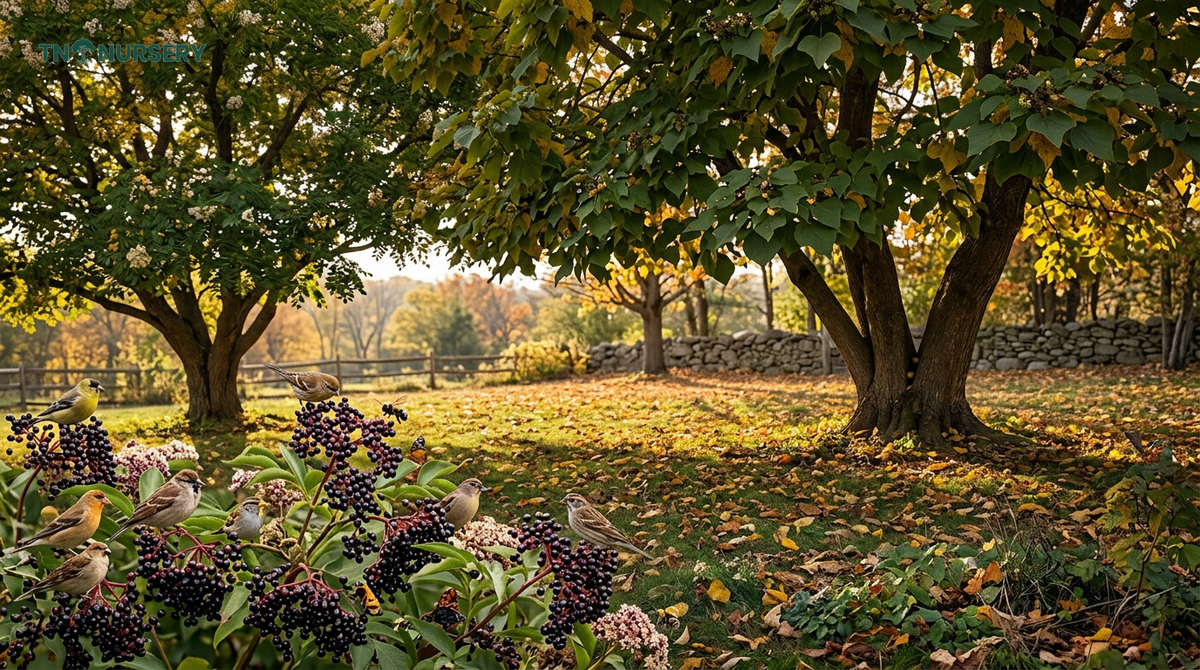
Broad leaves, long pods, and hardy native growth give you quick shade, bird value, and a yard that improves year after year. Start with our planting guide below.
Why Catalpa Makes Sense for Fall Yards
- Fall planting helps roots establish while cooler weather reduces stress
- Catalpa suits yards that need a broad canopy and dependable summer shade
- It adapts to varied soil conditions better than many fussier landscape trees
- Large leaves, flowers, and seed pods support birds, pollinators, and seasonal interest
Our Top Pick for Fall Shade and Backyard Wildlife

Catalpa Tree for Broad Shade, Flowers, and Seasonal Interest
If you want one tree to do a lot of work in your yard, this is the one we’d plant. Our catalpa tree grows into a large, hardy presence with broad leaves for shade, fragrant trumpet-shaped flowers in summer, and long seed pods that keep the branches interesting into fall. It adapts well to sandy, loamy, or clay soil, and it helps support bees, butterflies, birds, and other beneficial insects.
- Large mature size over 25 feet with fast growth for meaningful yard shade
- Thrives in full sun to partial shade and grows across planting zones 4 through 8
- Supports wildlife and helps with erosion control while adding air-purifying landscape value
What Gives Catalpa Its Bold Shade Character
A catalpa tree changes the whole feel of a yard fast. We like it for one clear reason: those huge heart-shaped leaves cast broad, dense shade that reads bold from across the lawn.
You'll notice the texture right away. Many shade trees break light into small flecks, but catalpa throws larger patches of cover over patios, bench areas, and the edge of a family gathering space. That fuller canopy matters in fall planting plans, because you can picture the future shade pattern more clearly.
How to choose the right catalpa tree?
Choose catalpa when you want a canopy with big leaves, visible flowers, and seed pods that stay interesting after bloom. If you need a finer, lighter look, this is not that tree.
Why the canopy looks different
Look, catalpa does not disappear into the background. The leaves are oversized and soft-looking, so the tree reads almost tropical in summer even in a traditional yard. Then late spring into summer brings upright clusters of trumpet-shaped blooms with a light fragrance that pollinators work hard.
After flowering, the long cigar-like pods hang on and keep the silhouette active into fall. That extra season of detail is one reason we point customers toward catalpa when they ask about wildlife attracting trees with more than one visual season.
"If you want shade that looks generous, not lacy, catalpa earns its space."
What are the best catalpa tree to buy?
For most home landscapes, the best choice is a healthy young tree from our Shade Trees selection or our Native Trees collection. We suggest catalpa when you want a hardy native tree for yards that also gives flowers, pods, and habitat value.
Where catalpa works best
- Patios: broad leaves help create deeper afternoon shade
- Lawn edges: the bold outline anchors open space well
- Backyards: flowers support pollinators and pods add seasonal texture
- Focal points: large foliage draws the eye better than fine-textured shade trees
So where should you place it? Give it room to spread, and keep in mind the large leaves and pods will drop. That is a fair trade for gardeners who want a shade tree for fall planting with real presence.
- Pick a sunny site with space for canopy growth.
- Plant at the same depth it grew before.
- Water deeply while roots establish.
If you're wondering how to plant catalpa tree for long-term success, start with open space and plan around the mature shade footprint, not the young trunk you see today.
Build a Better Shade Tree for Fall Planting Plan
Start with our catalpa tree, then round out the yard with canopy and habitat layers that do more than fill space. These four picks help you plan for cooler shade, seasonal texture, and wildlife attracting trees while shopping our live plants by growing zone.


Frequently Asked Questions
Is a catalpa tree a good shade tree for fall planting?
Yes. Fall is a practical time to plant because cooler air and steadier soil moisture put less stress on young roots. We like catalpa for this job because it grows into a broad, useful canopy, not a narrow upright form. Keep in mind, though, it needs real space. If you plant it too close to a house, driveway, or septic area, you will limit that shade spread later.
How large does a catalpa get in a home yard?
Catalpa is not a small ornamental tree. In a yard, you should plan for a tall tree with a wide crown that can cast meaningful summer shade over lawn, sitting areas, or the west side of a home. So give it room from the start. We suggest thinking in terms of future canopy width, not just the size it is when it arrives.
What kind of soil does catalpa prefer?
Catalpa handles a wider range of soils than many fussy landscape trees. It does best in ground that drains reasonably well, but it can adapt to average yard soil and tougher planting spots better than many thin-rooted shade trees. But do not drop it into a hole that stays soggy after rain. Wet, stagnant soil is where young roots struggle.
Is catalpa a good choice for wildlife-friendly yards?
Yes, especially if you want wildlife attracting trees that do more than make shade. Catalpa flowers draw pollinators, and the branching structure gives birds a useful place to perch and shelter. That said, this is a large-growing tree, not a tight patio planting. We recommend it for open yards where habitat value matters as much as appearance.
Where should I plant a catalpa for the best canopy effect?
Plant it where the mature crown can spread without crowding buildings or overhead lines. For the strongest shade payoff, we would place it where afternoon sun hits hardest, often on the western or southwestern side of a yard. Look, spacing matters here. A cramped catalpa never develops the full canopy that makes it such a useful hardy native tree for yards.
How quickly will it establish, and how to plant catalpa tree the right way?
Most young trees spend their early energy on root growth first, top growth second. That is normal. We tell customers to focus on planting depth, firm soil contact, and steady watering after planting. Do not bury the trunk flare. And do not assume fast top growth means the roots are fully settled. A careful start usually beats a rushed one.
How does shipping and replacement work at TN Nursery?
We ship all items by 3-4 day ground shipping. We do not offer refunds or returns. If there is an issue, we may offer a reshipment if product is available, an extended warranty if it was purchased with the order, or in-store credit if the product is out. If you need help, email us at customerservice@tennesseewholesalenursery.com.
Conclusion
Key Takeaways
- Catalpa works best in yards with room for a broad canopy and long-term growth.
- It gives useful summer shade and strong fall-to-winter character with large leaves and hanging pods.
- This tree supports backyard habitat, which makes it a solid pick among wildlife attracting trees.
- Soil flexibility helps, but you should still match the planting site to mature size and cleanup needs.
- For a layered landscape, pair the main tree plan with willow oak, honey locust, and elderberry.
