
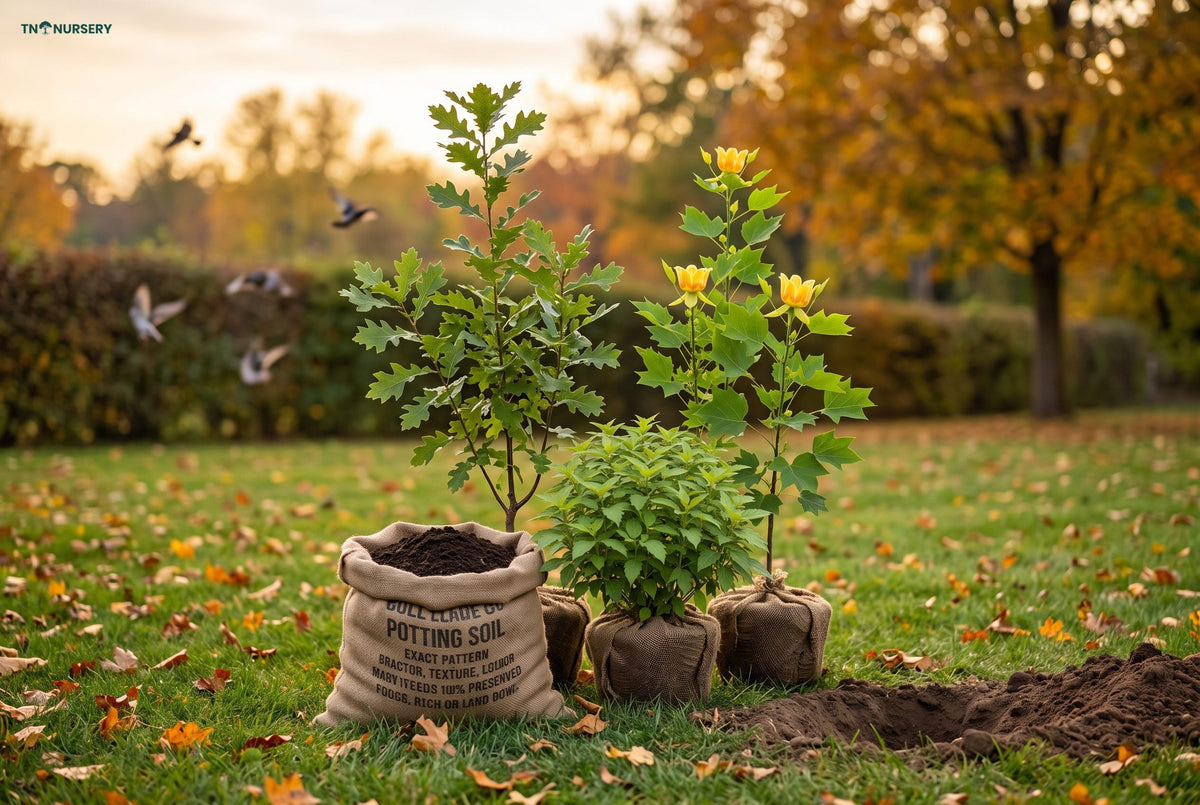
Plant This Fall, Feed Wildlife for Decades
The best native trees for backyard wildlife start as bare seedlings. Put one in the ground this autumn. In a few years, you'll have acorns, nesting cover, and shade.
Planting for the Next Thirty Years, Not Just Next Spring
- Future canopy cover that cools your house and shelters nesting birds
- Seasonal nectar from flowering trees when early pollinators need it most
- Nuts and seeds — if you've asked what trees have acorns, oaks are the answer, and they feed jays, deer, and squirrels
- Protective structure: dense branching gives songbirds cover from hawks and cats
- Improved property character as seedlings mature into real shade
Build Your Habitat in Three Layers
The best native trees for backyard wildlife work as a team, not a row. Think in three layers. Canopy on top, smaller trees underneath, and food sources woven through both. That's how a yard starts acting like a real woodland edge.
Layer one: canopy trees
These are your structure. Tall, long-lived, and full of nesting spots for birds. They shade the house in July and hold the soil for decades. Oaks belong in this layer. Acorns feed jays, woodpeckers, turkeys, squirrels, and deer, and oak leaves host hundreds of caterpillar species that songbirds feed their young. Our oak seedlings are the first thing we'd plant on a bare lot. A future planting plan might add regionally suited options like valley oak or mulberry seedlings, where the site fits.
Layer two: small trees and flowering trees
Under the canopy, small trees and flowering trees give you spring bloom, dense cover, and a softer transition from lawn to woods. Pollinators work the flowers. Birds hide in the branches.
When to plant tree seedlings in fall
Plant after the first cool nights but at least four to six weeks before your ground freezes hard. For most of the country, that means late September through November. Roots keep growing in cool soil even after the leaves drop.
Match the tree to the spot
- Mature size: check spread before planting near the house
- Sunlight: full sun, part shade, or deep shade
- Soil moisture: wet bottomland versus dry slope
- Utility clearance: never under power lines
Keep in mind that diversity beats repetition. Ten identical trees bloom once and drop food once. A mixed planting feeds something every season. Browse our native trees to spread that variety out.
The Habitat Anchor: Northern Red Oak

Northern Red Oak Seedlings — The Backbone of a Backyard Habitat
If you have room for one big, long-lived canopy tree, make it this one. Quercus rubra grows to over 25 feet at maturity, and its wind-dispersed acorns can feed wildlife through the colder months while the spreading crown adds future nesting structure. Those lobed leaves run bright green all summer, then turn vivid red in fall. Give it a spot with well-drained, loamy soil and full sun to partial shade. Plant in late autumn while the seedlings are dormant.
- Wind-dispersed acorns and deep roots make it one of the best native trees for backyard wildlife
- Bright green summer foliage turns vivid red in fall, with mature height over 25 feet
- Hardy in planting zones 3-8 and tolerant of a wide range of soils, though it prefers well-drained loam
- Sold in packs of 25 nursery-grown seedlings, shipping November 15-29 for dormant-season planting
Five Canopy Trees for Building a Backyard Habitat With Trees
These five are our high-canopy picks for big yards, woodland edges, and long-range plans. Sugar Maple seedlings bring classic shade and golden-to-red fall color across zones 3-9. Tulip Poplar seedlings tower over 25 feet with spring tulip-shaped flowers that feed bees and butterflies.


Small Trees for Edges, Entries, and Mixed Borders
These four smaller trees fill the gap between tall canopy oaks and your perennial beds. One is a true native pollinator tree. The other three are ornamental flowering choices that add bloom and structure to a layered yard.


Step-by-Step: Planting Your Fall Trees
Fall is our favorite planting season for a reason. Cool air slows leaf growth while the soil stays warm, so roots keep working for weeks. If you're picking the best native trees for backyard wildlife, our native tree seedlings and oak seedlings for acorns and wildlife go in the ground now.
How to create a backyard habitat with trees
Plant in layers. Put shade trees where they'll have room at full size, then tuck small trees and flowering trees along the edges for nesting cover and early nectar. Acorn-bearing oaks feed the widest range of birds and mammals, so start there.
When to plant tree seedlings in fall
- Pick your window. After summer heat breaks, before the ground freezes.
- Check the site. Look up for wires, out for buildings, and down for standing water.
- Clear a wide circle. Strip turf and weeds three feet out.
- Dig wide, not deep. No deeper than the existing roots.
- Set at original depth. The root flare stays visible.
- Backfill with native soil. Skip the amendments.
- Water deeply to settle air pockets.
- Mulch a wide ring, two to three inches, never touching the trunk.
Why the mulch gap? Mulch holds moisture and blocks weeds. But piled against bark, it traps water and invites rot and rodents.
First-year priorities
- Water through dry fall spells until freeze-up
- Keep weeds off that cleared circle
- Renew mulch each spring
- Guard trunks from deer rubbing and browsing
Spacing, deer pressure, and what to do the day your seedlings arrive? Those come up constantly. We answer them below.
Fall Tree Planting Questions, Answered
When should I plant tree seedlings in fall?
Plant once peak summer heat breaks and nighttime temperatures cool down. In most areas that means late September through November. The goal is roughly six weeks of open soil before it freezes hard. Roots keep growing underground even after the leaves drop. Watch your own local frost dates rather than a calendar rule, since a warm valley and a windy ridge behave very differently.
How far apart should I space wildlife trees?
Space by mature canopy spread, not by how small the seedling looks now. A red oak or sugar maple wants 30 to 40 feet of room. Tuck best native trees for backyard wildlife into layers instead of rows. Keep small trees like dogwood and sourwood at the edge of the canopy line, where they get filtered light and aren't fighting big roots for water.
What trees have acorns?
Only oaks produce acorns. Every species in the genus Quercus makes them, and they feed deer, turkey, blue jays, squirrels and wood ducks. Our Quercus Rubra red oak seedlings are a solid example, since red oak acorns mature in two years and drop heavily in good mast years. Browse more in our oak seedlings selection.
How do I protect young trees from deer?
Use physical protection. A mesh tube, a plastic trunk guard, or a simple wire cage set a foot out from the trunk all work. Repellents help some, but don't count on them alone. Check guards and ties every few months. A tie that fit fine in October can girdle a trunk by the next summer.
Do flowering trees help pollinators?
Yes, and bloom timing matters more than bloom size. Sourwood flowers in midsummer when little else does. Purple leaf plum opens early, before most perennials wake up. Mixing native shade trees for pollinators with smaller flowering species keeps nectar available across more of the season. Native species generally support the widest range of local bees and moths.
What should I do when my shipment arrives?
Open the box right away. TN Nursery offers a 24-hour live arrival guarantee, so inspect your order as soon as the carrier marks it delivered. Report any damage, shortage, or concern within 24 hours with photos and your order number. Email customerservice@tennesseewholesalenursery.com. Proper planting and care are required, and late claims are not eligible for replacement, refund, or store credit. We ship 3-4 day ground, and once plants are dug, orders can't be cancelled.
Conclusion
Key Takeaways
- Canopy first: oaks and maples anchor the habitat and feed the most species
- Add flowering understory trees for pollinators and spring color
- Plant seedlings in fall once leaves drop and soil is still workable
- Mulch, water, and guard trunks through the first full year
- Space for the mature tree, not the seedling in your hand
