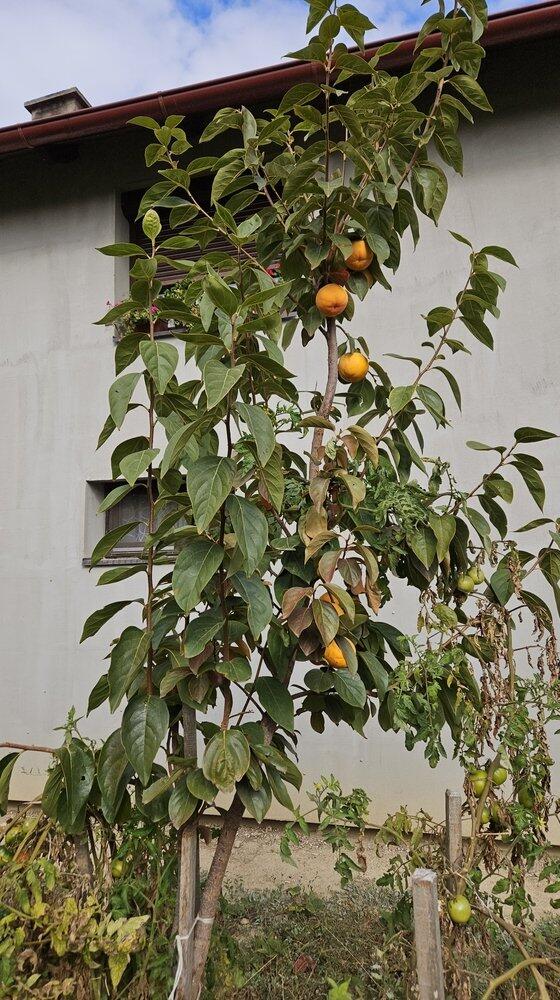
Persimmon Tree Details
American Persimmon Tree - Diospyros virginiana
The American persimmon tree, or Diospyros virginiana, is both tough and sweet. This tree, native to the eastern United States, thrives in a wide variety of conditions and climates, including heat and humidity, drought and heavy rain, and cold winters, and it can even withstand short periods of flooding once established.
Persimmon belongs to the ebony family, and its wood is some of the hardest and heaviest in North America. Golfers once swung clubs with heads made of it. It has few serious pest problems, although a disease called persimmon wilt shows up in parts of the South. These hardy trees also make a striking addition to the landscape and are true four-season interest trees.
Height at Maturity and Aesthetic Characteristics
The American persimmon usually grows 30 to 60 feet tall and 20 to 35 feet wide, with an upright, oval to rounded canopy. Its glossy, dark green leaves transform into a brilliant array of golden yellow, warm orange, or sunset red shades in the fall, with a bark pattern that resembles chunky alligator hide. In the spring, its small, fragrant, whitish-green to yellow-green flowers draw in bees, and its prized fruit develops in late summer.
What Native Persimmon Fruit Tastes Like
Persimmon ripens from September into November and often hangs on after the leaves drop. When it turns soft and wrinkly, almost mushy, this is the time to harvest. The taste is often described as a mix of apricot, honey, dates, pumpkin, and brown sugar - and wildlife often gets to it before people do.
Male and Female Persimmon Trees
The genus name, Diospyros, comes from Greek and is usually translated as "fruit of the gods." The species name, virginiana, refers to Virginia, part of its native range. Persimmon trees are dioecious, meaning each tree is either male or female, and only the females bear fruit. You can't tell which is which until the trees bloom, so plant at least two, and ideally a few, to make sure a male is close by. If a wild persimmon grows nearby, it may handle the pollinating for you.
Persimmon Tree for Sale: Shade for You and Shelter for Wildlife
Come fall, deer, foxes, raccoons, opossums, and songbirds all show up for the ripe fruit. As a bonus, the American persimmon is a host plant for more than 40 native moths and butterflies, including the luna moth and the royal walnut moth, making this cherished tree an excellent choice for backyard orchards, food forests, and restoration projects.
Looking at our persimmon tree for sale? First, think about zones. It's hardy in USDA zones 4 through 9 and bears the most flowers and fruit in full sun. Clay, sand, and loam soil all work as long as water doesn't sit around the roots, though slightly acidic soil suits it best. Ripe fruit drops and sometimes gets messy, so keep it away from driveways, patios, and walkways. Over time, it also sends up root suckers, which you can mow or clip if you'd rather keep a single trunk. Space trees about 20 to 30 feet apart.
This plant ships bare root. Dig a hole deep enough for the taproot to go straight down without bending. Soak the roots for a couple of hours first, then set the tree with the root collar level with the soil, backfill, and water deeply. Spread mulch in a wide ring, keeping it a few inches off the trunk. Persimmons are notoriously slow to wake up after planting, and some don't leaf out until late spring or even early summer. If you're worried, scratch the bark with a fingernail. Green underneath means it's alive and just taking its time. Water deeply once a week through the first summer whenever the weather turns dry. Most trees start bearing within 4 to 8 years, and from then on you can look forward to a fall harvest every year.
Planting & Growing Information
Ships: Between November 15 - 29
Planting zone: 4-9
Height at maturity: 30-60 feet
Water needs: Low to Moderate
Sun or shade: Full sun and partial shade
Bloom season: Late spring (May-June)
Care: American persimmon favors well-drained, slightly acidic soil. Water thoroughly once a week through the first summer. Expect slow leaf-out.
Exposure: Persimmon trees thrive in full sun, requiring at least 6 to 8 hours of direct sunlight daily for optimal growth and fruit production. They can handle partial shade but will produce less fruit.
Plant Attributes: Sweet fall fruit similar to an apricot, host to 40+ native butterflies and moths, golden to red fall leaf color.