
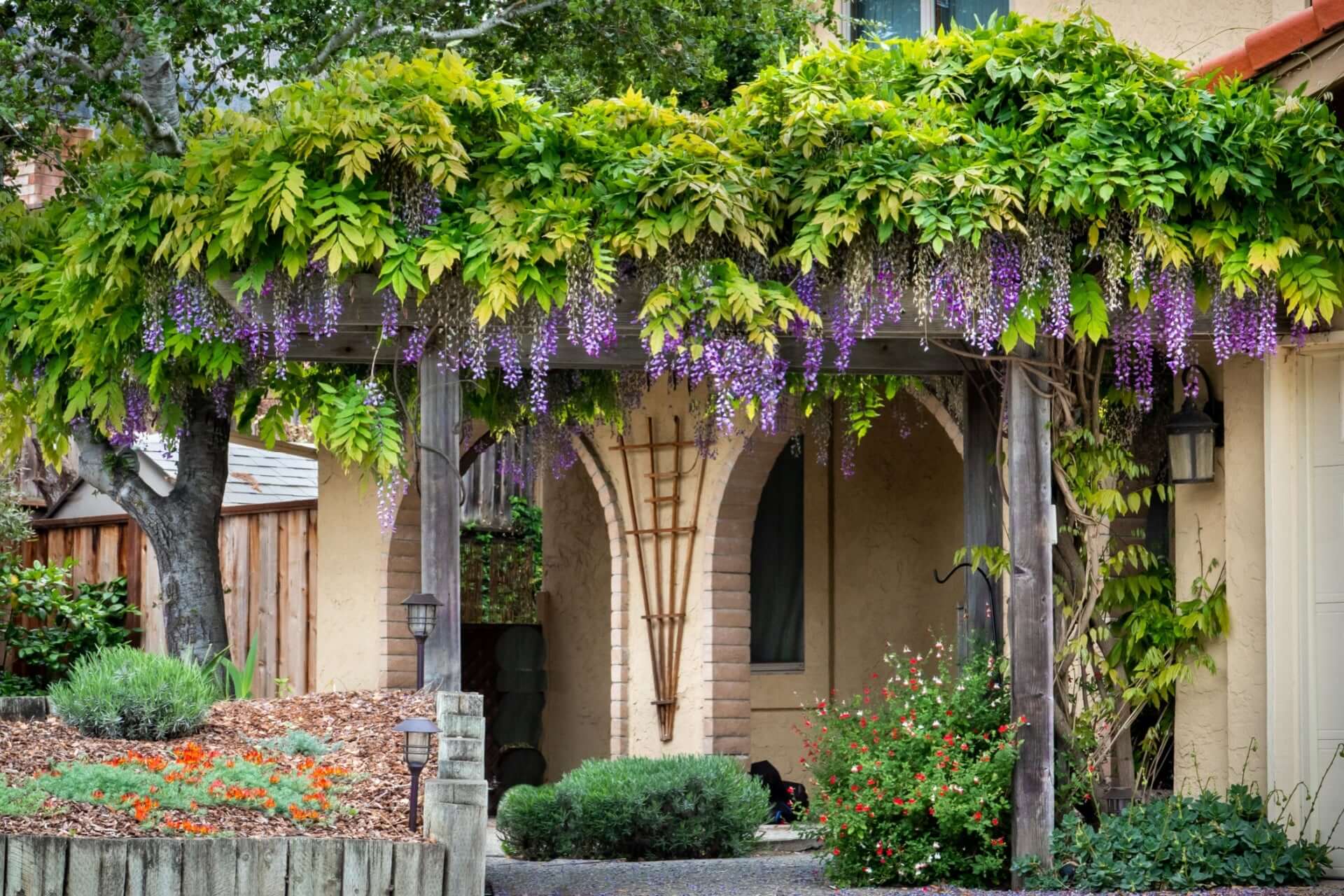
Wisteria vine is one plant that will dress up your garden as you landscape. The blooms flow magnificently, while the foliage is full of texture, and it is a common garden plant for home decorators. Here, we are going to see some of the different ways in which you can landscape with the vine and integrate it into your garden.
Introduction to Wisteria Vine
You'll have to pick the right spot to plant it before you can even landscape with it. It likes full sun, so make sure you plant it in some spot in your garden that has at least six hours of direct sunlight a day.
Wisteria in the Landscape
Landscapers who choose Wisteria experience a dynamic work of art that transforms throughout the seasons while its fragrance captivates people and brings in valuable pollinators. Its timeless elegance and enduring presence make it an invaluable asset in any exterior setting.
Structural Anchor For Wisteria Vine
It's a vine that needs strong support to swell up and show off its spikes of blooms. You can put up a trellis, pergola, or arbor for the vine to stand on. These are pillars that not only bear the weight but also create a pretty attraction for your garden. : Make sure that the scaffolding is strong enough to hold the weight of the fully grown plant.
Trumpet Vine trumpet-vineYou'll need to prune and train your vine so that it stays shaped and large. The right time to prune it is late winter or early spring. Rid the branches of dead or weak material and shorten branching and flowering shoots.
Gardeners look at the vine because of its incredible flowers, but they're also some of its best. Depending on the variety, it gives way to clumsy clumps of fragrant lavender, blue, pink, or white flowers. These flowers are usually present in the spring, so you can enjoy a spectacular display of color and scent in your garden. Just looking at and smellin' the flowers can turn a room outside into a romantic, magical space.
For a more attractive vine, use companion planting. Planting it with plants that will contrast with its color and shape can make it a nice, healthy plant to use in a landscape design. If you have spring bulbs, such as tulips or daffodils, at the base of the plant, for example, you can add more interest and color before the vine flowers.
Planting Wisteria
One of Wisteria's captivating qualities is its vigorous growth rate. Once established, Wisteria grows at an astonishing pace, sometimes as fast as 10 feet per year. However, it's important to note that this fast growth requires patience in the beginning. Wisteria spends its first few years establishing solid roots and a framework for development, so you may not see explosive growth immediately after planting. This slow start can last two to three years, but once the vine finds its footing, it will quickly cover structures like trellises, pergolas, and fences.
When planting, ensure that your wisteria tree will have full sunlight throughout the year to ensure this aromatic plant's proper growth and flowering flowering. Consider adding compost if your yard does not have fertile soil. The best times of year to plant are spring and fall. The hole should be the same depth as the root ball and at least twice the width. Also, make sure to provide 10 to 15 feet around the plant base, away from other trees.Lilac is another gorgeous purple flower plant.
Timing is crucial when planting Wisteria if you want to see the vine thrive for years to come. The best time to plant Wisteria is in the spring or fall. After the frost has ended, spring planting allows the vine to establish roots during the warm growing season. On the other hand, fall planting gives the vine time to settle in before going dormant for the winter, allowing it to focus on root development and emerge stronger when spring arrives. Depending on your climate, you can adjust the planting time. Gardeners in warmer zones might find early spring ideal, while those in cooler climates may benefit from planting in late summer or early fall.
Another con is that Wisteria is a late bloomer in the literal sense. It can take several years, sometimes up to five or more, before Wisteria's as its first flower. This delayed gratification can frustrate gardeners who expect blooms in the first year. Additionally, Wisteria seeds, after flowering, can be messy and detract from the plant's aesthetic appeal. These seed pods are also toxic to pets and humans, making Wisteria a choice for gardens where children or animals frequent.
The best time to plant this tree is in the winter months. During this period, frost damage to the roots or leaves is not dangerous.
When flowers stop blooming the vine's rich green leaves become the main feature. The plant's feathery foliage creates cooling shade which makes it an ideal addition to patios and seating areas. As autumn arrives the foliage transforms into golden yellow hues which provide a vibrant display before winter's stillness sets in.
Research revealed that specific parts of the plant contained harmful toxic substances. Even though the plant held medicinal interest its use demanded cautious handling. Although modern medical practices no longer utilize this vine for treatments its historical exploration during early herbal studies demonstrates the significant interest it generated among both healers and botanists.
Hummingbirds often navigate the vine's cascading flowers to find their food source. The vine's nectar-filled flowers attract these nimble birds which makes it an ideal plant for gardeners who want to draw these flying marvels to their yards.
Early herbalists noticed Wisteria before it gained recognition as an important addition to gardens. Asian traditional medicine practitioners tested various vine components due to their perceived healing properties. Extracts from the plant were used for treating minor digestive issues in some areas while other regions utilized its seeds for their sedative properties.
In gardens that seem like woods, adding Solomon's Seal (Polygonatum biflorum) gives it movement and softness. The plant's arching stems and small white flowers go well with the wisteria's flowing design without taking away from it.
Because of its enduring appeal throughout all seasons this plant becomes a treasured component of any garden. The gnarled, twisting branches of this plant provide architectural beauty to barren landscapes during winter. This plant keeps any outdoor space visually appealing regardless of whether it is flowering or dormant.
Wisteria Care and Watering
Public gardens see increased visitor numbers because people admire the tunnels formed by blooms in shades of violet and lavender with white variations. Parks and historical estates adopted its design elements to maintain admiration for its seasonal beauty throughout generations. Homeowners treasure this feature in their private gardens because it serves as a statement piece while seamlessly integrating with cottage-style landscapes along with formal gardens and wildflower meadows.
About Wisteria
Lastly, as mentioned earlier, Wisteria growth and its tendency to twist around anything in its path can damage garden structures. Its strong, woody stems can grow large and heavy, threatening to break weak trellises or fences. This strength can also make Wisteria control in smaller spaces.
Wisteria trees are toxic to dogs, cats, and horses. If eaten in large amounts, they are also poisonous to humans. Wisteria flowers contain a toxin called wistaria that can cause vomiting, diarrhea, muscle weakness, and seizures.
They will grow in all but the coldest areas of the country, although they will not be able to bloom there because they require warm temperatures to bloom properly.
Wisteria Vine Maintenance and Care
Wisteria is a pretty easy plant, but it needs some TLC to stay healthy. You should also water the plant on a regular basis (during the dry season, especially) to keep the soil moist but not saturated. Also, if you apply a balanced fertilizer to it early in the spring, it will thrive and flower very well.
Wisteria Size and Growth Rate
The vines may grow 10 feet in a year and provide a rich display of blooms during the spring. However, the cascading flower clusters for which it is most well known may take several years to show.
Wisterias are a family of flowering vines with beautiful flowers and ornate leaves. Wisterias are part of the pea family, which makes sense as the flowers of natural wisteria resemble a pea pod in many ways. The wisteria flower is also known as the Japanese wisteria and Chinese wisteria, as well as the Asiatic wisteria or Chinese parasol tree. These trees can grow to be over 30 feet high.
The Blue Wisteria Tree (Wisteria frutescens) is perfect because it is native, doesn't spread, and is quite pretty.
Soil and Sunlight for Wisteria
It can grow to be 10-15 feet tall in approximately five to six years if it gets a lot of sun and has good soil.
Another good friend is Christmas Fern . It stays green throughout winter and stops soil erosion on slopes. Blue Vervain or Jacob's Ladder give vertical interest and attract native pollinators to brighter regions.


