
The short answer
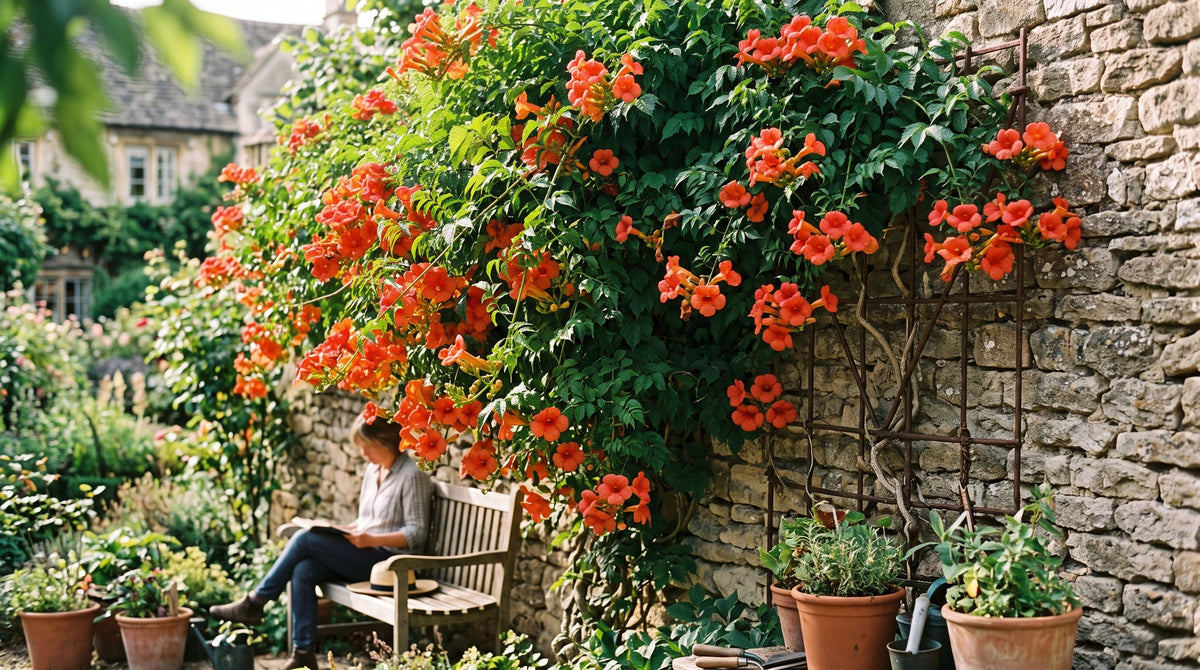
The best climbing flowers for a trellis are trumpet vine for full sun in zones 4 to 9 on a sturdy post or fence, and wisteria for sun to part shade in zones 5 to 9. For shade and red fall color, grow Virginia creeper. Match each vine's zone, light and climbing style to your support.
A trellis fills in fast when the vine suits the spot. The trick is to look past flower color first. Check three things before you buy: your USDA hardiness zone, the hours of sun the spot gets, and the way the vine holds on. A hardiness zone is the map number that tells you which plants come through your winters. Some vines twine their stems around a support. Others grip with small rootlets and thrive on a sturdy post, fence or wall. Size counts too, since several favorite climbers reach 20 to 40 feet or more. Below are four steps to match a vine to your trellis, then our native climbing vines for hummingbirds, bees and shady spots. At the end, a quick table compares each climber's zone, light, bloom season, climbing style and height side by side, so you can choose in a minute and plant with confidence at planting time.
Climbing flowers for a trellis
1. Match the vine to your zone and sun
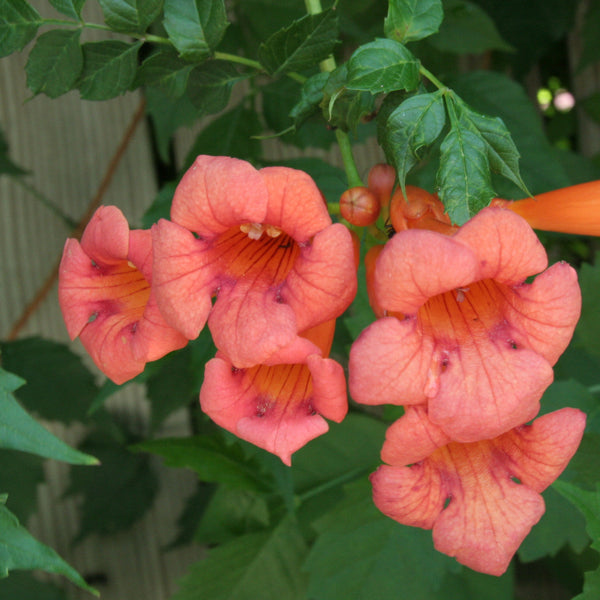
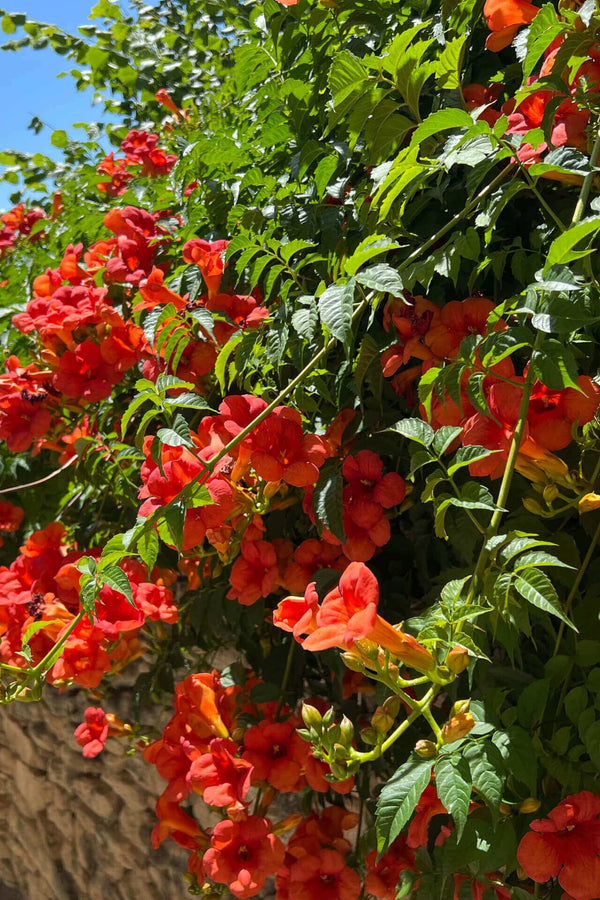
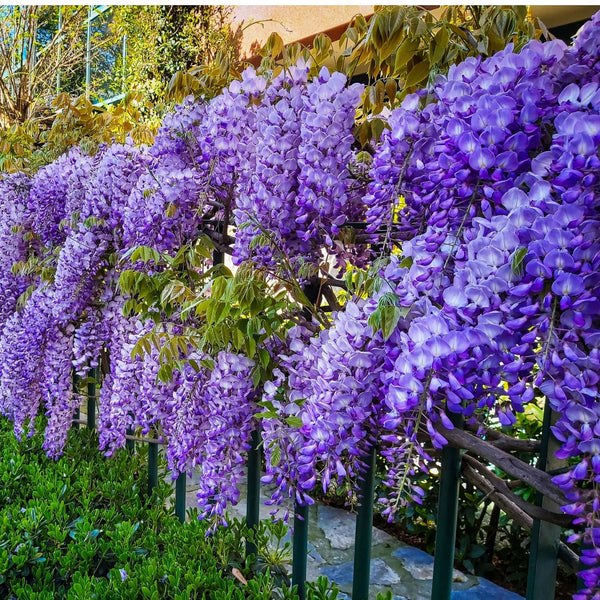
Start with your USDA zone, then watch the spot for a day to count hours of direct sun. Full sun means six or more hours. Trumpet vine is hardy in zones 4 to 9 and blooms best in full sun. Wisteria grows in zones 5 to 9 and flowers in full sun to part shade. For a mixed start, our 15 Trellis Climbing Favorites bundle is chosen for your zone.
Tip: Wisteria flowers most heavily in full sun.
2. Know how your vine climbs
Vines hold on in different ways, and each way suits a different support. Twiners, like wisteria, wrap their new shoots around anything thin enough to circle, such as wire, slim posts or lattice. Trumpet vine climbs with small aerial rootlets, which are short roots along the stem that grip wood, stone and brick. Give rootlet climbers a solid fence, post or wall. Give twiners something to wrap around.
Tip: Use loose ties to guide a young twiner onto its trellis.
3. Size the trellis to the vine
Many climbing flowers grow far taller than a garden trellis. Trumpet vine climbs 25 to 40 feet and spreads 5 to 10 feet wide on a support. Wisteria reaches 20 to 40 feet with a spread of 10 to 30 feet, and its flower clusters hang up to a foot long. These big growers thrive on pergolas, arbors, fences and sturdy posts. A light lattice panel suits smaller vines.
Tip: Space trumpet vines 6 to 10 feet apart along a fence for a solid screen.
4. Plant bare-root vines at the trellis base
Our vines ship bare-root, which means dormant plants with no soil around the roots. Soak the roots in water before planting, as our planting guides show. Dig a hole a short step out from the base of the trellis, wide enough to spread the roots. Set the plant, firm the soil and water well. Lean the stems toward the support so they find it quickly.
Tip: Water regularly after planting while new roots settle in.
Native climbers for shade and hummingbirds
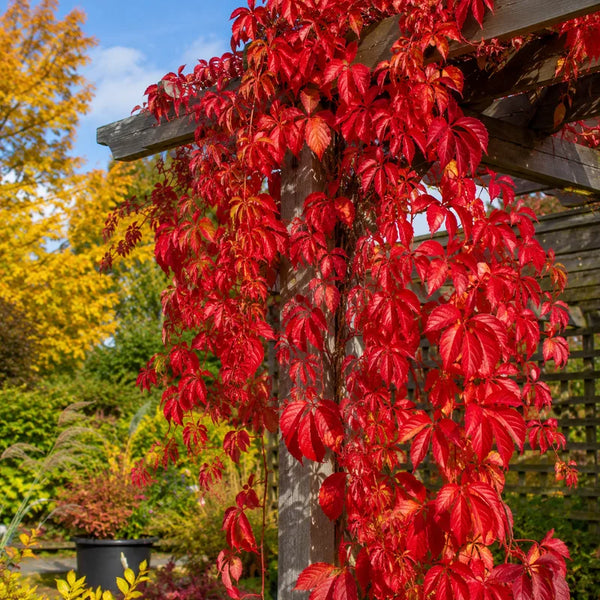
Native vines feed the birds and insects that grew up with them, and they settle into local conditions with less fuss. Trumpet vine, also called trumpet creeper, is native to the eastern and central United States. Its orange-red trumpets open from June to September, and they are a top nectar source for ruby-throated hummingbirds. Bumblebees visit them too. That long bloom season makes it a strong answer if you want a climber that flowers all summer. For a shady trellis, Virginia creeper is a native vine that grows in full sun to full shade, in zones 3 to 9. Its small spring blooms are subtle, and its palm-shaped leaves turn deep red in fall. Dark blue berries follow, and they feed native birds as they prepare for winter. It grows only as high as the structure you give it, so it suits a trellis of any size. Pair them on a long fence for summer flowers and autumn color.
Care and keeping
In the first season, water regularly so new roots settle in, and keep the soil moist but well drained. Guide new shoots onto the trellis with loose ties. Once a vine takes off, little care is needed. Prune fast growers like wisteria and trumpet vine as needed to keep them shaped on their support.
Frequently asked questions
What is the best flower to grow on a trellis?
It depends on your zone and light. For full sun in zones 4 to 9, trumpet vine gives orange-red trumpets from June to September. For sun to part shade in zones 5 to 9, wisteria brings fragrant purple clusters in spring and summer. For a mix, try our zone-chosen trellis bundle.
What climbing plant blooms all summer?
Trumpet vine is a strong pick. It blooms from June through September with clusters of 3-inch trumpets in orange to red. It is hardy in zones 4 to 9 and flowers best in full sun. Hummingbirds visit it all season, so it doubles as a native wildlife plant.
What is the easiest climbing flower to grow?
Choose a vine already suited to your zone and light, and it will need little help. Virginia creeper grows in zones 3 to 9, in full sun to full shade, and adapts to many soils. Wisteria needs little care once it takes off, apart from pruning to keep its shape.
Trellis climbers at a glance
| Climber | USDA zones | Light | Bloom season | How it climbs | Height |
|---|---|---|---|---|---|
| Trumpet vine | 4 to 9 | Full sun | June to September | Aerial rootlets | 25 to 40 ft |
| Wisteria | 5 to 9 | Full sun to part shade | Spring to summer | Twining shoots | 20 to 40 ft |
| Virginia creeper | 3 to 9 | Full sun to full shade | Subtle spring to summer blooms, red fall leaves | Spreads along its support | Up to 30 to 50 ft, only as high as its support |
| 15 Trellis Climbing Favorites | 3 to 9, chosen for your zone | Sun and shade | Spring and summer | A mix of climbers | 10 to 40 ft |
USDA zones
- Trumpet vine
- 4 to 9
- Wisteria
- 5 to 9
- Virginia creeper
- 3 to 9
- 15 Trellis Climbing Favorites
- 3 to 9, chosen for your zone
Light
- Trumpet vine
- Full sun
- Wisteria
- Full sun to part shade
- Virginia creeper
- Full sun to full shade
- 15 Trellis Climbing Favorites
- Sun and shade
Bloom season
- Trumpet vine
- June to September
- Wisteria
- Spring to summer
- Virginia creeper
- Subtle spring to summer blooms, red fall leaves
- 15 Trellis Climbing Favorites
- Spring and summer
How it climbs
- Trumpet vine
- Aerial rootlets
- Wisteria
- Twining shoots
- Virginia creeper
- Spreads along its support
- 15 Trellis Climbing Favorites
- A mix of climbers
Height
- Trumpet vine
- 25 to 40 ft
- Wisteria
- 20 to 40 ft
- Virginia creeper
- Up to 30 to 50 ft, only as high as its support
- 15 Trellis Climbing Favorites
- 10 to 40 ft