
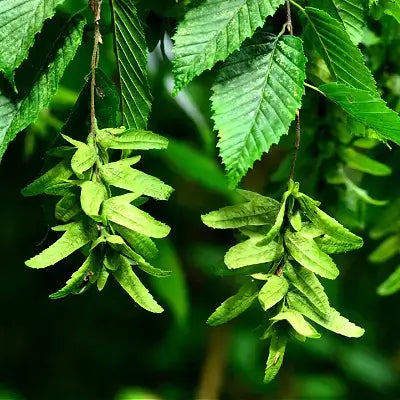
A hornbeam tree is a deciduous tree belonging to the genus Carpinus. It is native to parts of Europe and Asia but can also be found in North America and other parts of the world. The tree grows between 20 and 40 feet tall and has a spread of between 20 and 30 feet.
How Do You Take Care Of Hornbeam Trees?
They need plenty of water during the growing season but only a little fertilizer. When planting, dig a hole two times wider than the root ball and deep enough to accommodate the roots. For the established tree, trim it back by one-third to reduce stress on the plant.
How Much Sunlight Can Hornbeam Trees Take?
They prefer partial shade to full sun. That's at least six hours of sunlight per day.
Do Hornbeam Trees Back Up Every Year?
Yes. They are deciduous. They lose leaves in the fall and regrow them in the spring.
Hornbeam
What Does A Hornbeam Tree Look Like
Hornbeams are known for their beautiful smooth bark. They are also known for their tiny leaves, which are oval-shaped and slightly serrated. The leaves turn yellow in the fall before falling off of the tree.
Where Can Hornbeam Tree Grow?
Hornbeam trees grow well in acidic and neutral soil, with a pH of 4.0 to 7.4. They prefer light and well-draining soil, but they can also tolerate heavy clay soils.
What Are The Environments In Which Hornbeam Trees
Grow?
Hornbeam trees are best suited for USDA zones 3 to 9. Their environment needs to have a lot of sun, as well as well-drained soil and air. They can also tolerate drought conditions.
Are Hornbeam Trees Toxic?
No. Hornbeam trees are not toxic to humans, pets, or wildlife.
Planting Hornbeam
Exceptional hardiness stands out as one of the primary characteristics of Carpinus betulus. This plant demonstrates remarkable resilience by thriving in USDA zones 4-8 where it withstands harsh winters, summer droughts and fluctuating temperatures. It withstands difficult soil conditions including poor quality and compaction as well as alkaline pH which makes it an excellent selection for tough urban landscapes. It defends itself against most typical garden pests and diseases which means only occasional pruning is needed for its upkeep. The combination of its durability and adaptability makes it dependable for landscapes that require lasting beauty and strength. Its practical applications as a focal specimen, windbreak or architectural hedge demonstrate its lasting value to both gardeners and designers through multiple generations.
For many generations, people have appreciated Carpinus Betulus for its characteristics beyond its phenomenal strength. Ancient herbalists from Europe and Asia harnessed different plant parts to create medicinal remedies. People brewed the bark of this plant into teas to reduce fever and inflammation and used crushed leaves as poultices that helped heal wounds. People during the Renaissance period burned its wood to create medicinal charcoal that they believed functioned as a body detoxifier. Extracts from this plant find occasional use in homeopathy by modern herbalists who apply them to strengthen blood vessels and manage circulatory conditions. While the tree lacks broad medicinal use when compared to others its historical contribution to traditional healing methods remains undeniable.
Soil and Sunlight for Hornbeam
Carpinus betulus stands with sophisticated grace and features a dense rounded crown of finely serrated ovate leaves which shift from vibrant green during spring to rich golden-yellow throughout autumn. The smooth gray bark of this tree displays gentle vertical striations that create a nearly sculptural appearance. In early spring delicate hop-like catkins develop on its branches to add understated but intricate beauty to its appearance. Throughout winter the tree keeps its brown foliage which adds texture and interest to the surroundings and stands out as an important landscape feature year-round. The gradual growth of the tree produces a thick canopy that provides excellent shade yet retains a sense of lightness and elegance.
Hornbeam Trees
How Do You Grow A Hornbeam Tree
The soil should be moist but well-drained and acidic. The tree will grow best if you plant it in a spot with plenty of space to spread out.
How Do You Care For Hornbeam Trees?
Prune in the early spring or late fall. Remove diseased or damaged branches from the hornbeam tree.
How Did Hornbeam Trees Get Their Name?
Hornbeam trees get their name from the hardness of their timber. That's why they're known as ironwood.
Hornbeam Care and Watering
The earliest scientific investigation of the Hornbeam Tree occurred during the 16th century when botanists from Europe documented native species based on their distinct attributes and economic importance. In his 1597 herbal encyclopedia English herbalist John Gerard highlighted the tree's fine-grained wood and decorative appeal. In the 18th century, Carl Linnaeus officially categorized it as part of the Betulaceae family because of its resemblance to birch species. Although more commercially successful hardwoods overshadowed this species, arborists and horticulturists maintained its status as an indispensable element in both managed landscapes and natural forests.
Carpinus betulus stands as a preferred choice for landscape architects because of its flexible applications and visual attractiveness. The naturally symmetrical shape and fine-textured foliage make Carpinus betulus a top selection for urban parks as well as grand estate gardens and formal hedging. This species was traditionally used in the parterres and alleys of European palaces and manor homes where landscapers formed it into intricate designs through sculpted rows. The tree maintains an excellent response to pruning techniques while remaining a popular choice for pleaching which involves weaving branches together to create living walls and archways. This tree continues to be the preferred option for street plantings in modern landscapes because of its resistance to pollution and ability to grow in different soil conditions. This species combines structural firmness with a gentle outline, which makes it suitable for both natural garden designs and precise manicured spaces.
Hornbeam in the Landscape
Carpinus betulus ( Hornbeam Tree ) dates back thousands of years as documented in historical texts and ancient forests throughout Europe and western Asia. Research from fossil records shows that Carpinus betulus has survived since the Ice Age while adapting through various climate changes to become an essential component of temperate woodlands. Early civilizations respected this tree which medieval manuscripts described as a symbol of endurance and longevity because of its strong presence in natural landscapes. Builders and woodworkers from ancient Rome through the Middle Ages utilized this tree's dense wood to manufacture long-lasting weapons and structures. Its outstanding endurance secured its legendary status because it represents determination and resilience.
The combination of its rich history with its functional purposes and beautiful appearance illustrates nature's brilliant creativity through Hornbeam Tree . Its essential role in the landscape remains unchanged whether it shapes historical gardens or provides a safe haven for rare wildlife and medicinal benefits. The tree's resilience enables its continued existence across many generations as a silent yet influential force in nature and cultivated areas.
Hornbeam and Wildlife
The Hornbeam Tree fulfills an essential ecological function that extends beyond visual aesthetics by providing both habitat and nourishment to numerous rare and specialized animal species. This tree's blossoms bring in specialized pollinators such as specific solitary bees which depend on early-blooming catkins as their food source. Songbirds find refuge under the tree's thick canopy which also produces seeds that finches, nuthatches and woodpeckers use for food. Its most important ecological function includes supporting rare moth larvae that face population decline due to habitat destruction. The mixed woodlands benefit from biodiversity because this tree supports insect populations that provide food sources for birds. The gnarled trunks and hollows of trees in old-growth forests serve as sanctuaries for bats and small mammals, which underscores their vital role in the larger ecosystem.
The Hornbeam Tree Is A Great Tree To Add To Any Landscape As It's A Medium Size And Resistant To Most Pests And Diseases


