
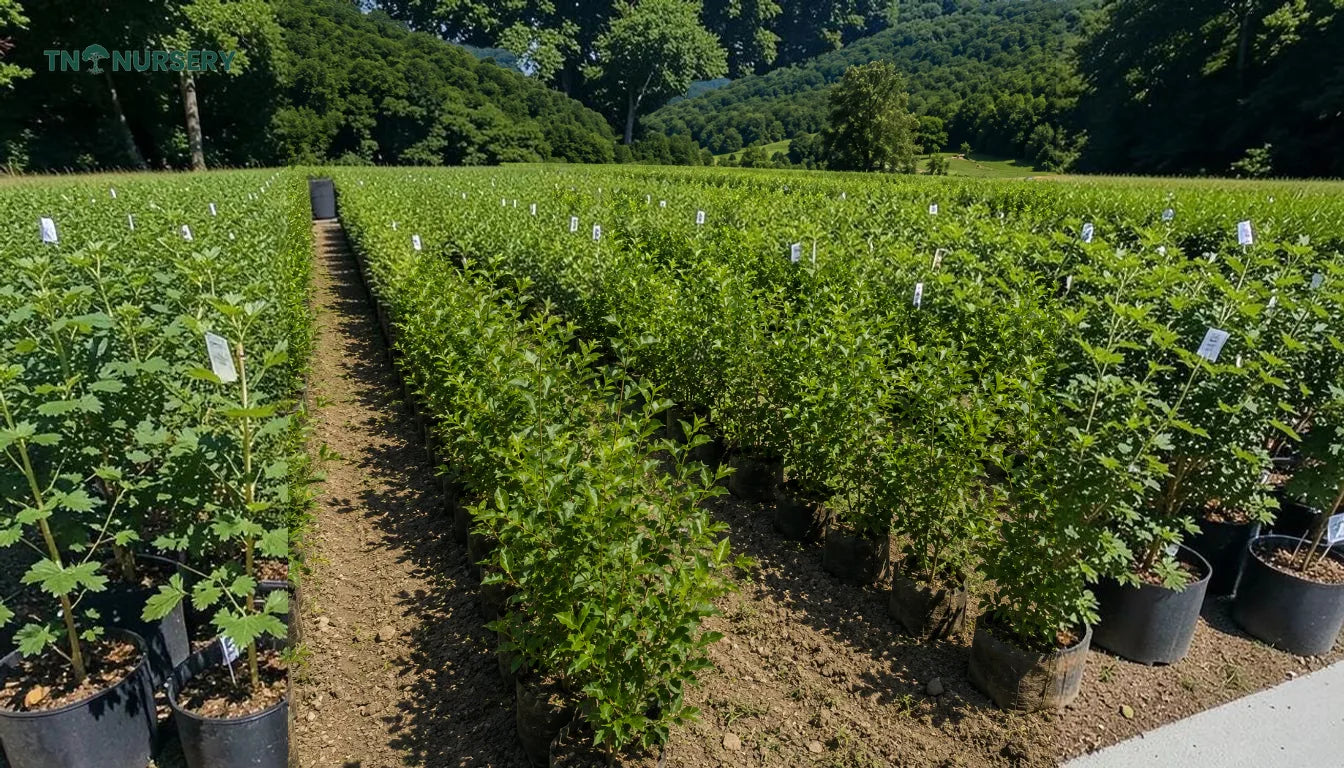
Saplings for Sale: Slippery Elm for Summer Shade
Buy Slippery Elm tree seedlings for a native shade tree for summer. We grow Ulmus rubra for long life, wildlife cover, and durable curb appeal. Keep in mind, it needs room to mature.
How to choose the right saplings for sale?
- Ulmus Rubra Seedlings offer a native shade tree for summer with a broad green canopy
- Grows well in full sun or partial shade and needs little maintenance after establishment
- Supports wildlife habitat while adding textured bark and a natural landscape shape
- Best suited to larger yards where the tree has room to mature over time
Soil and Sunlight for Elm
If you're comparing evergreen trees for privacy screening , here's the honest truth: Cedar Elm Tree for privacy and shade is not evergreen. But it is a strong pick when you want tall trees for privacy that handle heat, dry spells, and mixed soils in Zones 4-9. We use it where a broad summer canopy matters most, especially along lot lines and outdoor living areas.
Our Cedar Elm Tree is listed as fast growing, so it moves quicker than many slower shade trees. That matters if you want a privacy row to start taking shape sooner, not decades from now. But give it room. This tree eventually grows over 25 feet tall, so it is better for larger backyard screens and property lines than tight foundation spots.
Slope-Stabilizing Essentials for Saplings for Sale and White Oak Seedlings Sites
When you need living erosion control around planting areas, we group these three together for a reason. Brush Layer Bundles and Fascine Bundles help hold streambanks and slopes, while Miracle Grow Shake 'N Feed gives saplings a steady start.


Where Slippery Elm Fits in a Shaded Native Landscape
If you're comparing saplings for sale for a big open yard, buy Slippery Elm Tree Seedlings when you want broad summer shade that also supports wildlife. We place Slippery Elm where it has room to mature, because this native hardwood develops a wide green canopy, a strong branching frame, and the kind of long life that pays you back for decades.
What are the best saplings for sale to buy?
For open ground, the best pick here is Slippery Elm. It grows in full sun or partial shade, settles in with few special requirements, and becomes the sort of native shade tree for summer that cools a lawn instead of just decorating it.
That matters if you're planting for real use. Maybe you want shade near a sitting area. Maybe you want a tree line that softens a hot, bright edge of the property. Slippery Elm handles both jobs well, and its textured bark and curving trunk keep the tree interesting long after the first planting season.
Where Slippery Elm works best
- Large yards: Give it space to spread and form a full canopy.
- Restoration areas: Its native habit fits woodland edges and conservation plantings.
- Wildlife-focused landscapes: The canopy adds cover and long-term habitat value.
- Sunny to partly shaded sites: You do not need a fussy planting spot.
"Plant this one where you want future shade, not quick filler. Slippery Elm rewards patience with size, structure, and staying power."
How to choose the right saplings for sale?
Start with mature size and purpose. If you're planting for deep shade, Slippery Elm makes more sense than smaller flowering trees, and it asks for less site-specific planning than many trees started from tree seeds.
Keep one tradeoff in mind. This is not the tree for a tight foundation bed or a narrow strip by pavement. It needs permanent room. If you can give it that, it becomes a long-term anchor in the landscape. Gardeners who also plant White Oak Seedlings, dogwood seedlings, or White Pine Seedlings often use Slippery Elm as the big canopy layer above them.
So, if you want shade, habitat, and a native tree that will still matter years from now, Slippery Elm is the clear fit. You can browse more options in our Native Trees and Tree Seedlings collections, but this is the one we plant when open space needs a real future canopy.
Elm Size and Growth Rate
Cedar Elm grows fast, matures at over 25 feet, and develops a rounded crown that softens hard edges. That makes it useful for a backyard screen that feels natural instead of stiff. Keep in mind, it will drop leaves in fall, so if you need a year-round wall, you'll want to browse our Evergreens or Privacy Plants collections for true plants for privacy screening .
Frequently Asked Questions
What are the best saplings for sale to buy for summer shade?
If you want broad summer shade from a native tree, our saplings for sale focus here is Slippery Elm. We sell it as buy slippery elm tree seedlings for landowners who want a long-lived hardwood with a wide green canopy. Keep in mind that it needs room as it matures, so we suggest planting it where the crown can spread naturally.
How much sun do Slippery Elm seedlings need?
Our Slippery Elm seedlings grow well in full sun or partial shade. That flexibility helps if you have an open yard, a woodland edge, or a mixed planting with other flowering trees. But if the site stays deeply shaded all day, growth will usually be slower.
When should I plant live tree seedlings?
We usually tell customers to plant while conditions are mild and the soil is workable. For bare-root trees, that often means cooler parts of the year instead of peak summer heat. If you are also planning fall planting wildflower seeds, it makes sense to prepare the area at the same time so roots and seed beds are not disturbed twice.
How fast will Slippery Elm seedlings grow?
Slippery Elm seedlings develop into large shade trees with a strong branching structure and a broad canopy. We describe them as rapid developers, especially when they get enough water early on and have space to establish. Look, they are not a tiny patio tree. They are a long-term yard or restoration planting.
How do Slippery Elm seedlings compare with dogwood seedlings or a sweet cherry tree?
Slippery Elm is the better pick when your main goal is shade and wildlife cover. A sweet cherry tree or dogwood seedlings fit smaller ornamental spaces better, while Slippery Elm is meant to become a substantial native shade tree for summer. So if you want canopy first, elm wins.
Do you ship live seedlings, and how are they sent?
Yes. We ship all items by 3-4 day ground shipping through TN Nursery. Some products list their shipping form on the product page. For example, Sycamore Seedlings ship as bare-root, and that is common for live tree stock because it travels efficiently and plants well when handled promptly after arrival.
What is your return, refund, or warranty policy?
We do not offer refunds, and we do not accept returns. We also do not offer a warranty unless an extended warranty is purchased at the time of order. If you need help with an order, contact us at customerservice@tennesseewholesalenursery.com or write to Tennessee Wholesale Nursery, 12847 State Route 108, Altamont TN 37301, United States.
Planting Elm
If you want an elm tree that does more than fill a corner, this is the one we'd plant for lasting shade and structure. It grows in Zones 4-9, handles full sun to partial shade, and ships bare-root for easier planting. Keep in mind that it matures over 25 feet, so it fits best where you want one of the more substantial small trees for landscaping rather than a tight patio specimen.
We use Cedar Elm when you want evergreen trees for privacy screening style with a tougher, shade-ready tree. Fast growth, low upkeep, and planting zones 4-9 make it practical.
We list our Elm Tree for planting zones 4 through 9. That wide range gives many customers flexibility, especially if you want one tree for a front yard planting that handles cold winters and warm summers. Before you order, match your local zone to the product listing. That step matters more than guessing from nearby landscapes.
Stand where you want shade at 3 to 6 p.m. Then picture the canopy at full size, not at planting size. We tell customers to mark a wide circle with a hose or rope and check how that future crown lines up with the patio edge, driveway, windows, and walkways.
We ship the Cedar Elm Tree for planting zones 4 through 9. That wide range is one reason customers use it in different climates, from colder winters to hotter, drier summers. It is also shade hardy and known for handling tough conditions well. So if your site gets heat, wind, or uneven soil, this tree is often easier to place than fussier privacy hedge plants.
First, unpack the tree and check the roots right away. Bare-root stock often looks smaller than people expect, but that does not tell you how it will perform once planted. We ship all items by 3-4 day ground shipping, and our Elm Tree is marked Ships Now. Plant it promptly, water it in well, and give it time to wake up and leaf out.
About Elm
Our current listing shows custom shipping information for the Cedar Elm Tree as: Ships in November 2026. We ship all items by 3-4 day ground shipping once they go out. So the key timing point is the release month, not overnight transit. If you need help before ordering, reach us at customerservice@tennesseewholesalenursery.com.
Use late summer planning wisely. We often see homeowners map new rows before fall, then order in time for the listed November 2026 shipping window.
Shop Saplings for Sale That Shade for Decades
Start with our Slippery Elm Tree Seedlings and build a cooler yard with a native shade tree for summer. They handle full sun or partial shade, grow into broad-canopy hardwoods, and support wildlife while adding habitat and beauty to your landscape.


