
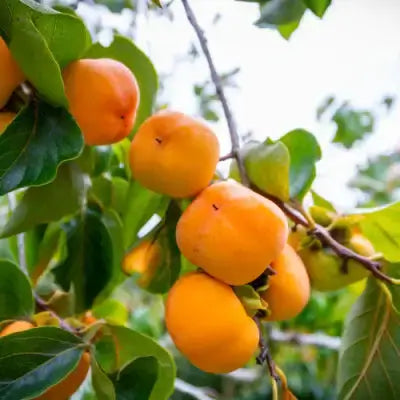

A persimmon tree persimmon tree is a deciduous fruit tree that produces edible fruit. The trees can grow up to 70 feet tall and have leaves divided into three to five lobes. When ripe, the fruit is bright orange with a creamy white pulp.
How Do You Take Care of Persimmon Trees?
Water your plant regularly- ensure the soil is moist. In spring and summer, use fruit tree fertilizer to help your grow faster and healthierpersimmon tree grow faster and healthier.
How Much Sunlight Can a Persimmon Tree Take?
These awesome fruit trees need at least eight hours of direct sunlight each day. They do well in full sun but can also thrive in partial shade.
Persimmon Seedlings
Soil and Sunlight for Persimmon
It stands out as a valued landscape element because of its unique appearance and seasonal changes in both natural settings and cultivated areas. This tree endures across multiple types of soil environments including damp lowlands and arid rocky hillsides which makes it a versatile selection for residential landscapes as well as public parks and city green areas. Winter landscapes benefit from the remarkable texture created by Persimmon Tree's deep ridged bark while its broad glossy leaves deliver sufficient shading during summer months. As fall comes, it transforms into a vivid display of orange and red colors that become the centerpiece of any landscape. Its bright fruit remains on branches throughout the winter period after leaf fall, which gives it the distinctive ornamental value that is preferred by landscape designers who want to create visual interest across multiple seasons.
Match the tree to your site before you think about fruit. Check sun, drainage, zone range, and mature height first, because those four points decide whether a tree settles in or struggles.
These seedlings need full sun for six to eight hours . They also mature at over 25 feet, so give them room away from low roofs and tight corners. That size pays you back with real summer shade.
Are Persimmon Trees Back Up Every Year?
Persimmon trees are perennial, so they will go through a cycle of leafing out in the spring and falling back to sleep in the winter.
Persimmon Problems and Pests
All of the persimmon trees within our inventory are propagated or grafted onsite and then nurtured in Tennessee soils optimized specifically for abundant fruiting, cold resilience through Zone 6 winters, and vigor against regional disease and drought challenges.
What Does a Persimmon Tree Look Like?
A persimmon tree’s leaves turn a deep red, orange, and yellow in the fall and winter and green with dark-colored veins in spring. The fruit is round and has a jellylike consistency when ripe.
Where Do Persimmon Trees Grow At?
Persimmon trees grow best in well-drained, loamy soils rich in organic material. They do not tolerate heavy clay soil.
What Are the Environments in Which Persimmon Trees Grow?
Persimmon trees grow best in soil pH between 6.0 and 6.5. They can grow in USDA zones 4 through 9 and are hardy enough to survive temperatures as low as -25 F.
Are Persimmon Trees Toxic?
No, they are safe to eat. You can take them cooked or raw, but ensure that your animals do not consume them.
Pruning Persimmon
And one last note. If you are comparing types like texas persimmon or japanese forms, make sure your zone and space come first. For many home landscapes, a hardy seedling that handles zones 4-9 and asks for little pruning is the better long-term choice.
How Do You Grow a Persimmon Tree?
You will need to plant it in a sunny spot. The soil should be moist, well-drained, and slightly acidic. Also, give it fertilizer in the first year or two after planting.
Planting Persimmon
Our Persimmon Tree Seedlings are listed for planting zones 4, 5, 6, 7, 8, and 9. That gives many growers a good window, from colder winter areas to warmer summer regions. If you're trying to buy persimmon tree seedlings for a long-term fruit yard, zone fit matters more than anything else. We'd rather help you match the plant to your climate than have you guess.
Plant a persimmon tree that grows over 25 feet, handles zones 4-9, and ships bare-root now. You'll get fruit, cooling shade, and strong curb appeal from one planting.
A persimmon tree changes a yard in more than one season. When you plant Persimmon Seedlings , you get edible summer interest, fall color in orange and red, and a shade canopy that helps cool sitting areas once the tree matures past 25 feet. And because these bare-root trees grow in zones 4-9, many home gardeners can plant them with confidence.
Planting Depth: Dig a hole twice as wide as the root ball and place the tree at the same depth it was in its nursery container. Ensure adequate spacing between trees, typically 15-20 feet apart, to allow for growth.
Soil Preparation Soil Type: Persimmon trees prefer well-draining soil with a pH of 6.0 to 6.5. Sandy loam or loamy soil is ideal for persimmon cultivation. Soil Amendments: Before planting, amend the soil with organic matter like compost or well-rotted manure to improve fertility and drainage.
These seedlings are a long-term planting, not an instant screen. Over time, they mature into a tree that reaches over 25 feet and can cast useful summer shade near patios or open yard areas. The payoff is strong, but you should be patient. If you want a yard built around lasting landscaping trees instead of quick turnover, this is a good fit.
Seeking gorgeous, reliably fruiting "persimmon trees for sale" suited specifically to Tennessee's variable growing conditions? As the state's leading persimmon tree nursery focused exclusively on cold-hardy Southern varieties for over 30 years, TN Nursery offers rare insider guidance so you can plant premium persimmon trees matched precisely to your landscape needs and regional environment - no frustrating trial and error required!
Diospyros kaki displays exceptional hardiness by surviving through a wide range of environmental conditions. The plant flourishes in warm, temperate areas, while established plants show resilience to short cold spells. This plant achieves its best growth with well-drained soil and plenty of sunlight, but demonstrates drought tolerance after reaching maturity. The tree's extensive root system enables it to find water during dry periods, which positions it as a dependable option for areas where weather conditions often change. Because it needs little upkeep and shows resistance to numerous pests and diseases, this plant is a great choice for all gardeners. The species earns its reputation as both resilient and rewarding through its long lifespan which frequently exceeds 100 years.
We ship our Persimmon Tree Seedlings bare-root, so you should expect a dormant young tree without a pot or heavy soil around the roots. That keeps shipping simpler and helps you plant quickly once it arrives. The roots may look plain at first. That is normal. What matters is planting them soon, keeping the roots moist before planting, and setting them in a sunny spot with enough space to grow.
The tree supports a wide variety of wildlife populations, including some endangered and hard-to-find species. The tree's fruit serves as an essential food supply for deer, foxes, and raccoons while its leaves offer shelter for birds and insects. Rare visitors such as the Luna moth whose larvae consume the tree's leaves and the persimmon borer moth which depends on its wood make their habitat at the tree. The tree's blossoms draw various native pollinators such as honeybees and butterflies which supports the ecological balance of the area. Birds utilize this tree as a critical food source when they prepare for their long migratory trips to the south. This tree enhances biodiversity when planted in landscapes because it provides essential habitat for various common and uncommon species.
About Persimmon
Contact our team anytime online or at 931-692-4252 to discuss finding persimmon trees guaranteed to deliver decades of delectable fruit perfectly suited to your precise Zone 6 or 7 micro-climate. We look forward to helping you grow deliciously!
We ship all items by 3-4 day ground shipping. We do not offer refunds, and we do not accept returns. We also do not offer a warranty unless an extended warranty is purchased at the time of order. If you need help with an order, reach us at customerservice@tennesseewholesalenursery.com or write to Tennessee Wholesale Nursery, 12847 State Route 108, Altamont TN 37301, United States.
Shop zone-matched trees now and give your yard a head start on cooler summers, more privacy, and fruit you can actually use. Our bare-root Persimmon Tree Seedlings ship now for zones 4-9.
Persimmon trees is a mid size tree with orange fruits. TN Nursery has 3 year odl persimmon trees for sale that will bear fruit soon.
Traditional medicine has utilized it for its diverse healing abilities for centuries. The Native American population prepared an herbal tea from the bark of the Persimmon Tree to address sore throats, fevers, and digestive disorders. The unripe fruit's astringent qualities served as a treatment for diarrhea and dysentery while crushed seeds offered folk remedies for pain relief. The seeds of this tree served as a coffee substitute during the Civil War when regular coffee supplies were not available. Today's herbalists value its high vitamin content and antioxidant benefits for immune support and digestive assistance.
How Do You Care for a Persimmon Tree?
Water it regularly so that the soil is moist but not soggy. Consider pruning in late winter to remove dead branches and thin out crowded areas of growth that are too close together.
How Did Persimmon Trees Get Their Name?
The word "persimmon" comes from the Japanese kaki and refers to a tree that bears fruit with a sweet, edible pulp.
PersimmonPersimmon Care and Watering
And one honest note: if you want the squat shape of a fuyu persimmon tree , these native seedlings will grow taller and more naturally. But if your goal is summer shade trees for home landscapes with fruit, wildlife value, and low-maintenance fruit trees for zones 4-9, this is the pick we would start with.
Traditional medicine practices have consistently recognized Diospyros kaki as a valuable resource. Healing properties of fruit, leaves, and bark from ancient Chinese and Japanese herbal traditions addressed multiple health issues. The fruit facilitated digestion and constipation relief while its vitamin C abundance supported immune system enhancement. Traditional medicine practices frequently employ unripe fruit high in tannins as a treatment for high blood pressure and excessive bleeding. People brewed antioxidant-packed leaves into teas to help maintain heart health and decrease inflammation. The bark served medicinal purposes when applied to wounds to speed up the healing process. Current scientific research confirms that historical health claims about this species remain valid today just as they were hundreds of years ago.
At TN Nursery, sharing our persimmon wisdom through vibrant, resilient trees motivates everything we do. Expect precise propagation and care practices developed through Midstate-specific trials to yield:
Persimmon Size and Growth Rate
The persimmon tree has a long and storied history, dating back thousands of years. Its origins can be traced to China, where it was cultivated over 2,000 years ago. From there, it spread to Japan and Korea and eventually made its way to other parts of Asia, Europe, and the Americas through trade and exploration.
Prior to European colonization North America's indigenous peoples had identified the valuable properties of the Persimmon Tree. Research shows Native American tribes first gathered and grew its fruit because they understood its dual use as both nutrition and medicine. Native diets included the use of them as documented by early European explorers like John Smith during the early 1600s who also noted its significant cultural importance to multiple tribes. During the 18th and 19th centuries settlers began to include this tree in their gardens and orchards after its popularity spread beyond indigenous communities.
Persimmon in the Landscape
It stands as a treasured element of North America's natural heritage because of its indigenous roots and its ongoing presence in modern landscapes. This species stands out as invaluable because of its adaptability to different environments and its ability to provide health benefits while supporting wildlife. The tree adds value to both cultivated gardens and natural settings regardless of whether it grows in a backyard or the wild. Anyone who desires to grow a tree with significant historical value and ecological benefit will find few options that match its beauty.
Persimmon Varieties
The ancient Chinese civilization initiated the cultivation of Diospyros kaki, which was first documented during the Tang Dynasty (618-907 AD). Selective breeding in Japan and Korea brought about improved fruit quality and adaptability, which led to the rise of Diospyros kaki in these regions. Asian cuisines and healing practices incorporated the fruit as a fundamental element within their cultural customs. 19th-century European and North American horticulturists rapidly adopted Diospyros kaki because of its hardy nature and sweet-tasting fruit. In modern times, the species remains highly valued as it has successfully grown throughout numerous warm, temperate areas around the world.
Diospyros kaki, also known as the Fuyu Persimmon Tree, has held a place of honor in human culture for many centuries, with deep historical and cultural roots. The cultivation of this species began in East Asia, China, and Japan more than one thousand years ago. Folklore and art, as well as traditional agricultural practices have featured the fruit and tree as symbols of prosperity and peace while promoting longevity. Early agrarian societies held this cultivation in high regard, as ancient Chinese manuscripts document its existence 2000 years ago. Buddhist monks distributed their presence throughout East Asia by acknowledging both its spiritual advantages and practical applications. The late 19th century marked its introduction to Western regions, which led to its rapid adoption as a valuable element for both orchards and gardens.
Leveraging 50+ years of insider perspective into Tennessee's unique climate fluctuations, humidity patterns, and other environmental stressors, our experts hand-select only the very best locally adapted persimmon trees as parent stock each year for new special variety additions. Expect exceptional fruiting reliability and tree health compared to imported national nursery stock!
Ranging from short compact garden varieties perfect for easy netting to towering 25-foot giants built for commercial harvests, the persimmon trees within our 100-acre orchard nursery lead the state in terms of cold-hardiness, quality, and range, including:
Harvesting The timing of the harvest depends on the persimmon variety: Fuyu: Harvest when the fruit is firm, glossy, and orange. They can be eaten right away or stored for several weeks.
Early European explorers documented this tree during their expeditions across the Americas. Spanish and English explorers encountered a fruit that was completely different from anything they had previously found. For centuries, Native Americans cultivated the tree before developing methods to dry its fruit for winter storage and fermentation into drinks. Botanists conducted early horticultural research on this tree in the 19th century to develop better varieties. Farmers and naturalists found this species attractive due to its power to adjust and endure, and they wanted to use it in established farming systems.

