
The short answer
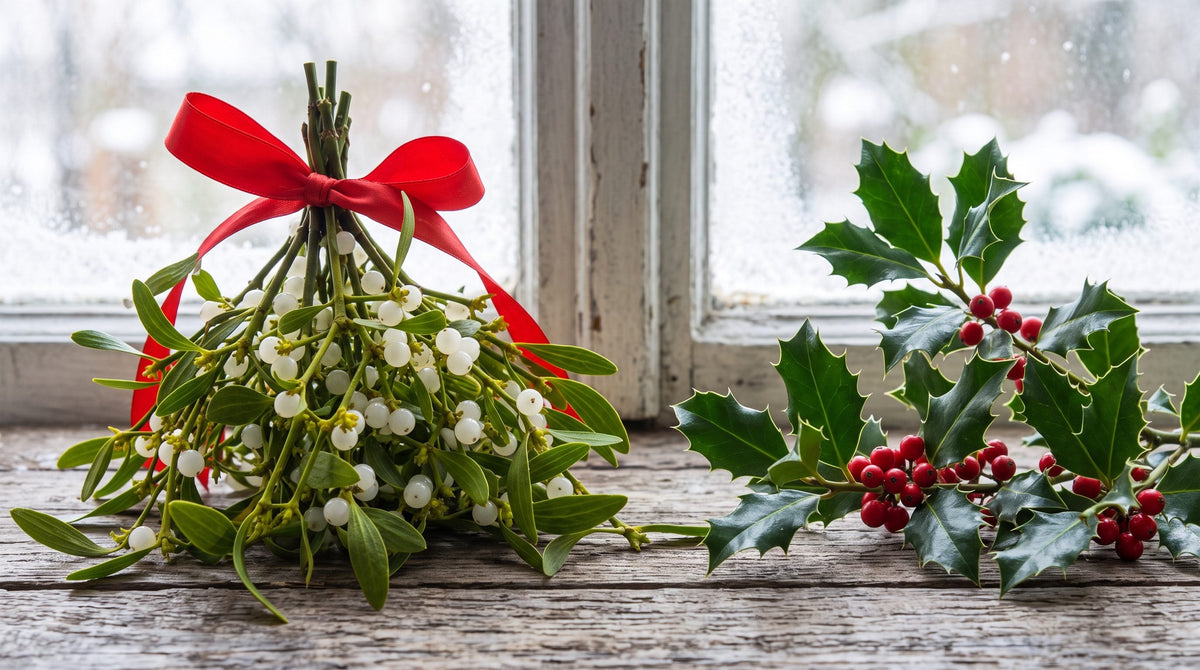
Mistletoe grows as a clump high on tree branches and takes water from its host tree. Its leaves are smooth, leathery and oval, and its berries are small, pearly and white. Holly roots in the soil as its own shrub or tree. Most hollies have glossy, spiny leaves, and female plants carry berries, most often red.
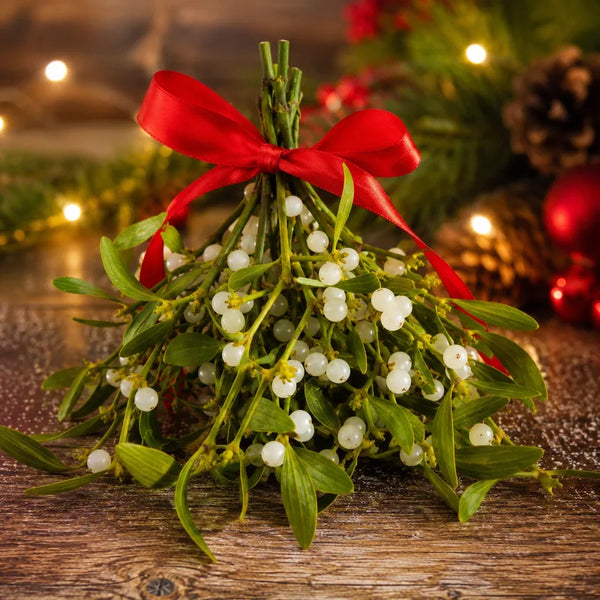
Mistletoe vs holly comes up every holiday season, and for good reason. Both stay green in winter, both carry bright berries, and both end up on the same wreaths and doorways. Out in the yard, though, they live very different lives. Mistletoe is a hemiparasite, which means it makes some of its own food from sunlight but takes water and nutrients from a host tree. It cannot be planted in the ground. Holly is an ordinary shrub or tree that grows from its own roots in the soil. This guide gives you five quick checks to tell them apart on a walk, at a market or in your own trees. It also shows which native holly you can plant for red berries every winter. A side-by-side table at the end sums it all up. Our mistletoe holiday sprigs for decorating and native winterberry holly are shown along the way, so you can compare the real plants up close.
Mistletoe vs holly: real greens
1. Look where the plant is growing
Start by looking up. Mistletoe grows as a rounded clump on the branches or trunk of a living tree. It has no roots in the soil. It draws water and nutrients from its host through root-like parts called haustoria. Holly stands on the ground as a shrub or small tree with its own trunk and roots. A green, leafy clump in a bare winter tree is most likely mistletoe.
Tip: Winter is the easiest time to look, once host trees have dropped their leaves.
2. Run a finger along the leaf edge
Leaves are the fastest clue up close. Mistletoe leaves are small, thick and leathery, with smooth edges and an oval or teardrop shape. Most familiar hollies, like American holly, have glossy, dark green leaves with spiny, scalloped edges that can prick your fingers. Not every holly is spiny, though, so check the berries and stems before you decide.
Tip: Wear gloves when you cut spiny holly for wreaths and garlands.
3. Check the berry color and clusters
Mistletoe berries are small, round and pearly white. They grow in small clusters. Holly berries are most often bright red, though some kinds carry orange, yellow or black fruit. Only female holly plants make berries, and they need a male plant growing nearby to set fruit. So a holly with no berries may simply be a male plant, or a female without a partner.
Tip: A holly with flowers but no berries may just need a male plant close by.
4. Notice how the stems branch
Step back and look at the whole plant. Mistletoe stems fork again and again, which gives the clump a rounded, ball-like shape. That forked pattern is one of its clearest marks. Holly grows like any woody shrub or tree, with a main trunk or several thick stems rising from the ground. Its branches spread outward and upward and grow thicker each year.
5. See if the leaves dropped in fall
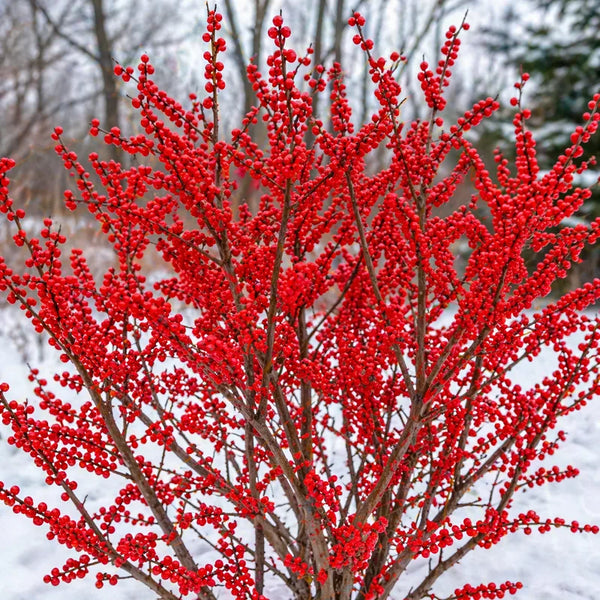
This check sorts out the trickiest look-alike. Mistletoe is evergreen, so its leaves stay on all winter, even when its host tree is bare. Many hollies are evergreen too. Winterberry holly is different. It is a native holly that drops its leaves in fall and keeps bright red berries on bare stems through winter. A leafless shrub covered in red berries is likely winterberry, not mistletoe.
Native hollies to plant for winter berries
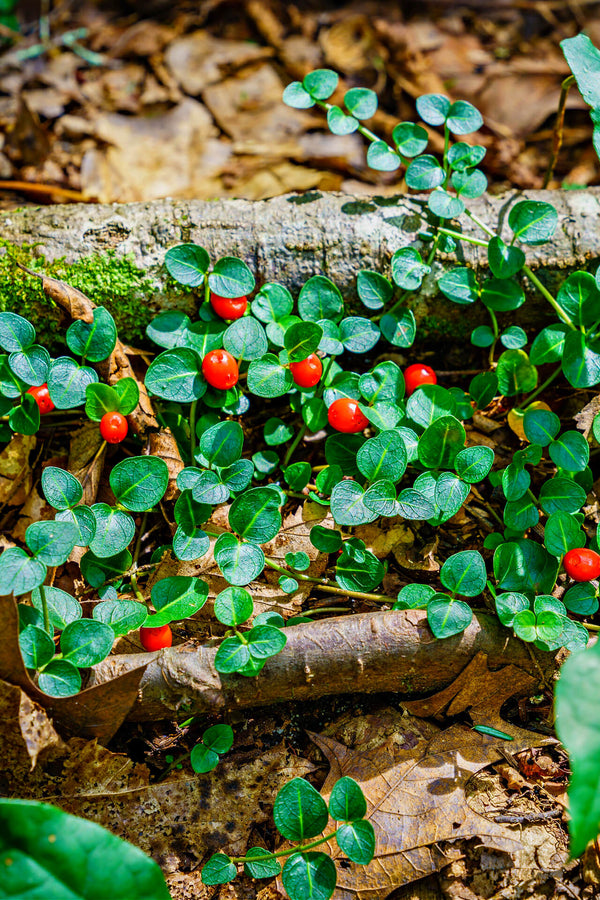
You cannot plant mistletoe in a garden bed. It only grows on a living host tree, so cut sprigs are for the holiday table, not the yard. Holly is the one to plant. Winterberry holly (Ilex verticillata) is a native shrub that reaches nearly 10 feet tall and 6 to 8 feet wide. It thrives in moist, slightly acidic soil and is happy in rain gardens and low spots. Small spring flowers feed bees, and the red berries feed cedar waxwings, robins and thrushes in the cold months. Plant a few females with one male close by so the berries set well. For an evergreen holly with spiny leaves, read our guide to growing American holly. Partridge berry thrives in low light beneath taller shrubs. It is a native evergreen groundcover with shiny paired leaves and red berries that stand out against snow. Birds eat them too when food runs short.
Care and keeping
Mistletoe berries are poisonous, or at least likely to upset the stomach if eaten, according to Penn State Extension. Hang sprigs high, out of reach of small children and pets, and pick up any berries that drop. Some families swap the real berries for artificial ones.
Frequently asked questions
Does mistletoe come from holly trees?
No. They are two separate plants. Mistletoe grows on the branches of living host trees, mostly deciduous ones that drop their leaves in fall. Holly is its own shrub or tree, rooted in the soil. The two share a season and a doorway, not a family tree.
Should mistletoe be removed from trees?
It depends on how much there is. Mistletoe takes water and nutrients from its host. Iowa State University Extension notes that a heavy load can weaken or even kill a tree, especially during drought. For heavy growth on a tree you value, talk with a certified arborist.
Is mistletoe a parasitic plant?
Yes, but only in part. It still has green leaves and makes some of its own food. What it borrows from the tree is water and nutrients. Birds help it move from tree to tree. They eat the berries and leave the sticky seeds on branches, where new clumps take hold and grow.
Mistletoe vs holly side by side
| Feature | Mistletoe | Holly |
|---|---|---|
| Where it grows | On the branches of a living host tree | In the soil, on its own roots |
| Plant type | Hemiparasite (part parasite) | Shrub or tree |
| Leaves | Small, leathery, oval, smooth edges | Glossy, with spiny, scalloped edges on most kinds |
| Berries | Small, pearly white, in clusters | Most often red; some kinds orange, yellow or black |
| How new plants start | Birds leave its sticky seeds on branches | Planted in soil; berries need a female and a male nearby |
| Winter look | Evergreen, even on a bare host tree | Mostly evergreen; winterberry drops its leaves |
| Wildlife value | Nesting sites and winter food for birds | Winter berries for birds such as robins and cedar waxwings |
| Can you plant it? | No, it needs a host tree | Yes; winterberry thrives in moist, slightly acidic soil |
Mistletoe
- Where it grows
- On the branches of a living host tree
- Plant type
- Hemiparasite (part parasite)
- Leaves
- Small, leathery, oval, smooth edges
- Berries
- Small, pearly white, in clusters
- How new plants start
- Birds leave its sticky seeds on branches
- Winter look
- Evergreen, even on a bare host tree
- Wildlife value
- Nesting sites and winter food for birds
- Can you plant it?
- No, it needs a host tree
Holly
- Where it grows
- In the soil, on its own roots
- Plant type
- Shrub or tree
- Leaves
- Glossy, with spiny, scalloped edges on most kinds
- Berries
- Most often red; some kinds orange, yellow or black
- How new plants start
- Planted in soil; berries need a female and a male nearby
- Winter look
- Mostly evergreen; winterberry drops its leaves
- Wildlife value
- Winter berries for birds such as robins and cedar waxwings
- Can you plant it?
- Yes; winterberry thrives in moist, slightly acidic soil
