Every fall, Americans rake, blow, bag and haul away millions of tons of free mulch. Leaves are one of the few garden resources that cost nothing, arrive on schedule and land exactly where trees grow. We pulled together the best numbers from the U.S. EPA, university extension research and conservation groups to show what fallen leaves are worth to your lawn, your soil and the insects and birds that share your yard. The infographic below is free to share, with credit.
Share this infographic
FacebookPinterestXLinkedInEmailWant it on your website? Scroll down for the free embed code.
How many leaves end up in the trash?
The EPA groups leaves with grass clippings and brush as "yard trimmings." In 2018, the most recent year in its national Facts and Figures series, Americans generated 35.4 million tons of yard trimmings, or 12.1% of all municipal solid waste. About 22.3 million tons were composted or mulched, a 63% composting rate. That is the good news. The rest is not: landfills took in about 10.5 million tons of yard trimmings, 7.2% of everything landfilled that year, and another 2.6 million tons were burned in combustion facilities with energy recovery (EPA).
Curbside programs help, but they still mean trucks, fuel and time. The National Wildlife Federation estimates that roughly 30% of yard waste bags go straight to the landfill, and its 2026 Leave the Leaves survey found that 52% of respondents said they must remove leaves because of HOA or city rules. If your rules allow it, the simplest fix is to keep leaves on your own property.
A woodlot drops about 3,000 pounds of leaves per acre
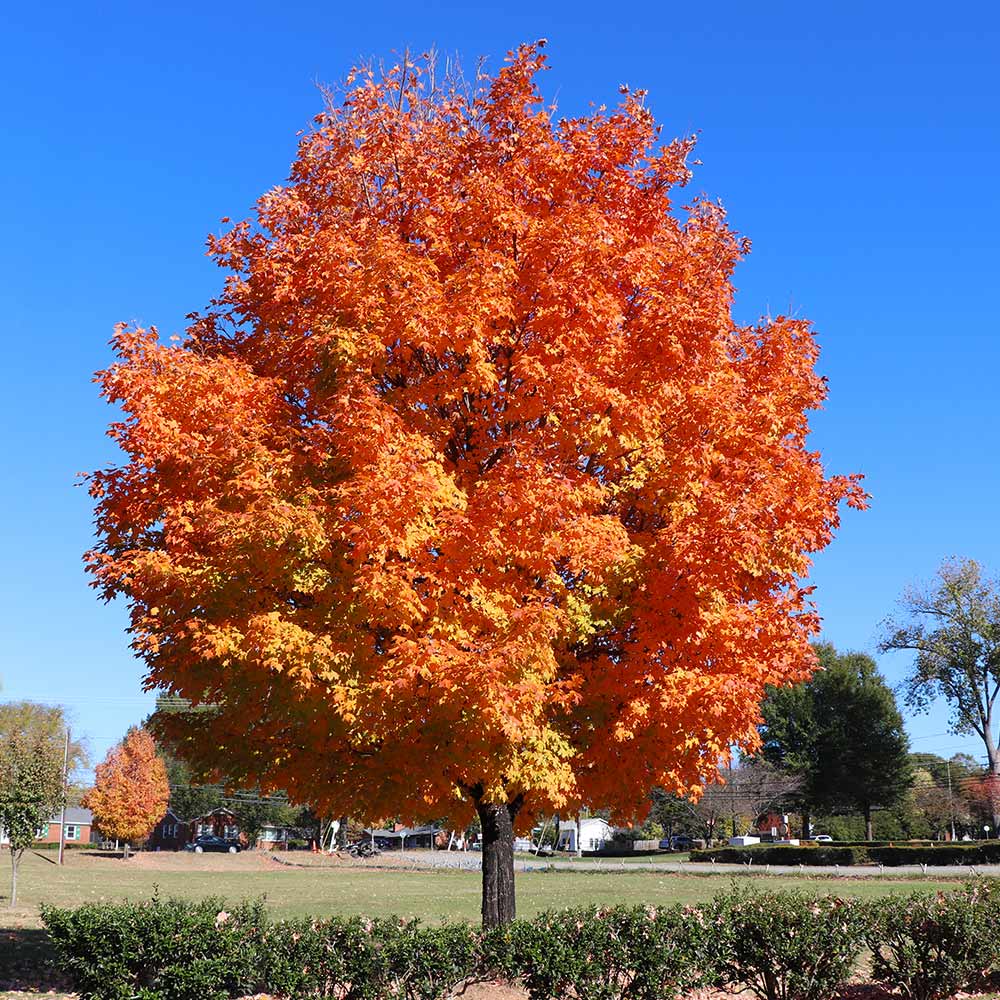
Forests never rake. University of Missouri turfgrass specialists James Quinn and Brad Fresenburg note that a typical woodlot drops about 3,000 lbs of leaves and litter per acre each year, and that litter feeds the soil as it breaks down. Their review of university trials found that mowing leaves into turf raised soil organic matter without changing soil pH. Big shade trees such as sugar maple, white oak and red oak are the heavy producers in most yards, so the more of them you plant, the more free soil amendment you get every November.
Mow them in: what Michigan State found
Michigan State University Extension's Rebecca Finneran sums up two decades of MSU turf research this way: mulching mowers can handle up to 6 inches of leaves at a time, and lawns where leaves were mulched in for three years saw nearly a 100 percent decrease in dandelions and crabgrass. Colorado State University Extension recommends at least two passes so pieces are small enough to settle down between grass blades.
A few practical rules from the Missouri review: more than 3 to 4 inches of whole leaves at once is probably too much for most mowers, and leaves should not sit on the lawn for more than about four days before you mow them in. Dry leaves shred best.
Use leaves in beds, as winter protection and as compost
Lawns are only one option. Colorado State Extension (GardenNote #655) suggests working six to eight inches of leaves into a vegetable or annual flower garden each year, and piling three to six inches of shredded leaves inside a wire cage around tender plants for winter. Shredded leaves also make a good mulch around trees and shrubs. Keep mulch off the trunk; our post on tree planting myths covers why mulch volcanoes do harm. For a compost-pile approach, see Fall Leaves Makes Compost Gold.
Why the leaf layer matters to wildlife
Leaf litter is a winter home for a surprising number of animals. The Xerces Society notes that approximately 70 percent of all bee species nest in the ground, often in yards and garden beds, and that the vast majority of butterflies and moths don't migrate. Instead they ride out winter as eggs, caterpillars, cocoons or adults, many of them in fallen leaves. Xerces also warns that shredding leaves can destroy those eggs, caterpillars and cocoons, so leave some areas whole. University of Illinois Extension horticulture educator Nicole Flowers-Kimmerle made the same point this month: a thorough fall cleanup can reduce the beneficial insects gardeners want next year.
The National Wildlife Federation points to fireflies, whose larvae live in moist leaf litter (the common eastern firefly spends 1 to 2 years as a larva and only about 30 days as an adult), and to the mourning cloak butterfly, which overwinters as an adult and can survive temperatures as low as -76°F. Luna moths spend the winter as cocoons in the leaf layer. University of Maryland Extension adds that only about 2% of described insect species are pests; predators such as lady beetles, assassin bugs and minute pirate bugs overwinter in leaf litter and help control pests the following year.
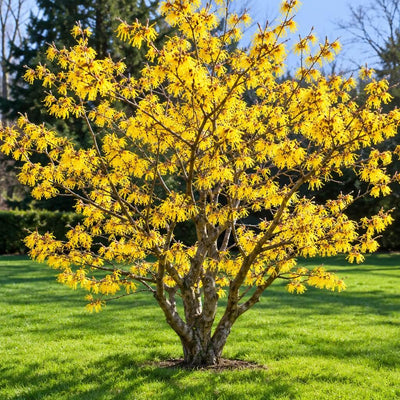
A good compromise: mow leaves into the lawn, and rake the rest into beds and under trees and shrubs, where they can stay whole. Native shrubs and ground covers like witch hazel and Christmas fern are at home in a deep leaf layer.
The leaf blower math
If you do move leaves, how you move them matters. The California Air Resources Board's small off-road engine fact sheet says one hour of a commercial gas leaf blower emits smog-forming pollution comparable to driving a new passenger car about 1,100 miles, roughly Los Angeles to Denver. A rake, a mulching mower pass or simply leaving leaves in beds avoids most of that.
Plant the trees that make the mulch
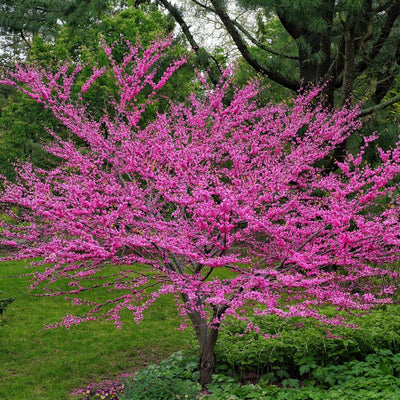
Every yard that leaves its leaves still needs trees to make them. Fall and winter are good planting seasons in much of the country while roots keep growing in cool soil. Not sure what grows in your area? Try our free planting zone calculator, then browse our native trees and shade trees. Flowering natives like eastern redbud and red maple add their own leaf drop to the mix.
Shop trees and plants that build a healthy leaf layer


Share this infographic
Share this infographic: copy the code below and paste it into your website, blog or newsletter. It shows the infographic with a credit link to TN Nursery.
<p><a href="https://tnnursery.net/blogs/garden-blog/leave-the-leaves-by-the-numbers">Leave the Leaves by the Numbers</a>: a free infographic from <a href="https://tnnursery.net">TN Nursery</a>, a Tennessee native-plant nursery since 1959.</p>
Teachers, journalists and bloggers can find all of our charts on the free infographics page.
About TN Nursery
TN Nursery was founded in 1959 by Roscoe Tate and grows native trees, shrubs, ferns and perennials on 170 acres in Tennessee. We have grown about 2 million pawpaw trees from about 2 tons of seed and more than 200,000 redbuds, and our plants have been supplied to the Washington Monument and Arlington National Cemetery.
Sources
- U.S. EPA, Yard Trimmings: Material-Specific Data (2018 data; page updated Mar 19, 2026).
- Rebecca Finneran, Michigan State University Extension, Mulch Leaves into Turf for a Smart Lawn (2016) and It's not too late to mulch fallen leaves into lawns (2014).
- Colorado State University Extension, Using Leaves in the Landscape, GardenNote #655 (A. O'Connor; reviewed 2024).
- James Quinn and Brad Fresenburg, University of Missouri IPM, Want to reduce waste and time? Try mowing leaves rather than removal (2013).
- Xerces Society, Leave the Leaves! (J. Wheeler, S. H. Black, D. Seiler; Sep 17, 2026).
- National Wildlife Federation, Leave the Leaves to Save Fireflies and How Fallen Leaves Support Moths and Butterflies (2024, updated 2025); 2026 Leave the Leaves survey (Sep 9, 2026).
- Aaron Anderson, University of Maryland Extension, Leave the Leaves for Natural Pest Control (updated Dec 2, 2025).
- California Air Resources Board, Small Off-Road Engine (SORE) fact sheet.
- Nicole Flowers-Kimmerle, University of Illinois Extension, Leave the leaves: Fall cleanup affects beneficial insects (Nov 11, 2026).