
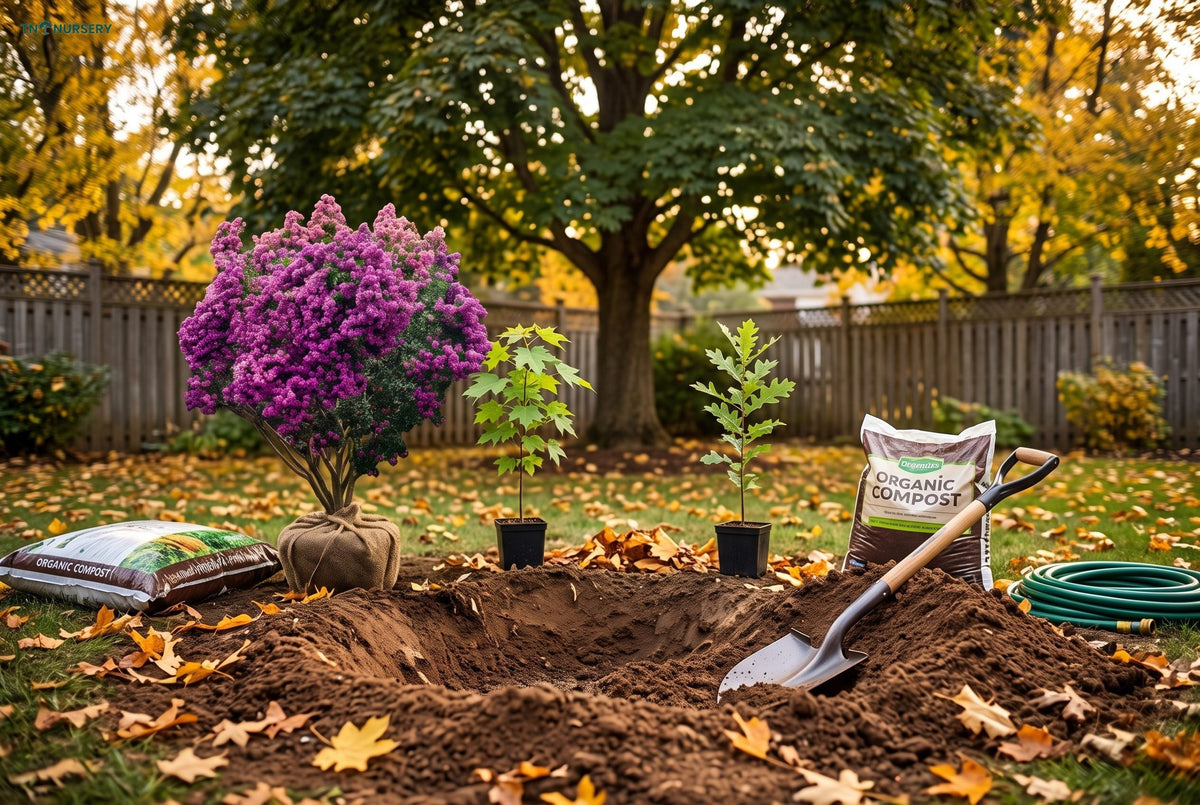
Plant Trees This Fall. Give Roots Time.
Our fall tree planting guide covers site match, planting depth, and moisture through dormancy. Spring growth starts with roots.
Plant for Roots Before Winter
- Assess sun exposure and the tree's mature height and spread
- Inspect roots and stems for damage before planting
- Dig a wide hole and set the root flare at the proper height
- Backfill gently, water deeply, then mulch and monitor soil moisture
Three Planting Decisions That Set Trees Up Well
A fall tree planting guide starts before you touch a shovel. Picture the tree at full size, not at the height it reaches in its nursery pot. That simple shift prevents crowded branches, blocked views, and roots pressed against hardscape years later.
How to choose the right fall tree planting guide?
Choose the planting spot around mature height, canopy spread, and light needs. Check your USDA zone, then mark overhead utility lines, buildings, driveways, and nearby landscape beds. Also watch water after rain. A low spot that stays wet needs a tree suited to wet soil, not a deeper hole.
Tip 1: Plan for the canopy
- Full sun or shade: Match the site’s daily light to the tree’s needs.
- Long-term shade: Decide where a broad canopy will cool a patio or lawn.
- Clearance: Leave room for branches above roofs, paths, and utility lines.
Look, a young tree can seem small enough for any open corner. It will not stay that way. Plan its mature footprint now, especially beside a driveway or foundation.
Tip 2: Inspect roots before planting
Use these tree planting tips for healthy establishment before the tree goes into the ground. Check for firm, healthy stems, moist roots, and a visible root flare where the trunk widens into roots. Do not bury that flare.
How to plant bare root trees
Keep bare roots damp and shaded while you work. Spread them gently in the hole, and never let wind or sun dry them out. Dry roots can struggle before the tree has a chance to settle.
Keep in mind: The root flare belongs at or slightly above finished soil level, not hidden below it.
Tip 3: Dig wide, not deep
Make the hole roughly two to three times wider than the root mass. Keep its depth no deeper than the roots or existing container soil. Width gives new roots room to grow outward. An overly deep hole can settle later and pull the root flare below grade.
Next, match your goal to the site: broad shade, a native landscape presence, or flowering ornamental trees.
How to Plant Bare Root Trees for the Right Fall Site
Use this fall tree planting guide after checking hardiness zone, mature space, sun, and drainage. For spacious sites, Sycamore Tree for fast-growing shade grows over 25 feet in zones 4–9. Southern Red Oak seedlings for future canopy suit larger properties and native planting in zones 6–10.


Set Depth, Backfill, and Water for Root Growth
This fall tree planting guide now turns to the work below ground. Set the root flare where the trunk widens into roots at, or slightly above, finished grade. Buried flare tissue can stay damp and decline.
How to choose the right fall tree planting guide?
Choose guidance that tells you where the root flare belongs and how to check moisture below the surface. Those two checks prevent common planting errors. They also help roots begin growing into surrounding soil.
How to plant bare root trees
Find the original soil line on each seedling before digging. Plant at that same depth, then spread the roots outward in the hole. Do not fold long roots upward or bury the trunk deeper.
- Backfill: Use the native soil you removed unless a soil test or local extension office directs an amendment.
- Settle soil: Break up large clods and work soil gently around roots to close major air pockets.
- Avoid compaction: Do not stomp or heavily tamp the hole.
Keep the root flare visible after planting and after mulching.
Tree planting tips for healthy establishment
Water slowly and deeply right after planting. Then adjust watering for rainfall, soil texture, and drainage. Sandy soil dries sooner, while clay soil can remain wet longer.
Check moisture several inches below the surface with your fingers. Dry-looking topsoil can mislead you. The root zone should feel moist, not constantly saturated.
For a real-world focal point, picture a Sycamore Tree set in an open lawn. Its future shade and broad form depend on this careful start. The same depth and watering habits also support ornamental trees near patios or entry paths.
Fall Tree Planting Guide: Plan for the Canopy

American Sycamore for Spacious, Sunny Sites
Our American Sycamore bare-root tree grows quickly, often up to six feet yearly, then reaches roughly 75–100 feet tall and wide. Give it full sun, substantial clearance from homes, utilities, hardscape, and smaller plantings. It thrives in cool, rich, moist soil and handles wet situations, but do not plant it in a permanently waterlogged hole.
- Hardy across USDA planting zones 4–9
- Broad 75–100-foot mature canopy for large landscapes
- Mottled cream and light-brown bark with buttery yellow-brown fall leaves
Tips 6 and 7: Mulch and First-Winter Care
This fall tree planting guide finishes with two habits that protect new roots after planting day. Mulch the soil, then watch moisture through winter. Those simple jobs prevent many early setbacks.
How to choose the right fall tree planting guide?
Choose guidance that keeps the root flare visible and treats watering as an observation, not a calendar task. This applies whether you are learning how to plant bare root trees or setting out container-grown ornamental trees.
Tip 6: Mulch the root zone, not the trunk
Spread a 2–3 inch layer of organic mulch across the root zone. Extend it outward from the planting hole, where new roots will grow. Keep mulch pulled back from the trunk so the root flare stays visible and the bark stays dry.
- Moderate soil temperature: mulch softens sharp day-to-night temperature swings.
- Hold moisture: it slows evaporation from the planting area.
- Limit weeds: fewer weeds compete with young roots for water.
“Build a wide mulch ring, not a mulch volcano.”
Tip 7: Check soil moisture through winter
Check the root zone during dry autumn weeks, winter warm spells, and early spring before leaf-out. Water when the soil around the roots begins drying. Do not follow a rigid weekly schedule.
For tree planting tips for healthy establishment, protect the trunk from mower decks and string-trimmer strikes. A small nick can damage thin young bark. And skip heavy fertilizer at planting unless a soil test or qualified local guidance supports it. New roots need steady moisture first.
Frequently Asked Questions
How to choose the right fall tree planting guide?
Use this fall tree planting guide to match the tree to your USDA zone and local soil. Then plant at the root flare, water the root zone deeply, and mulch correctly.
How late can I plant a tree in fall?
Timing depends on your local soil, weather, tree type, and USDA zone. Plant while you can still work the soil and roots have time to settle before hard freezes.
Should I water a newly planted tree after leaves fall?
Yes, check the soil during dry fall and winter periods. Roots can still need moisture after leaf drop, so water deeply when the soil feels dry below the surface.
How much mulch should I use around a new tree?
Apply a 2- to 3-inch layer in a wide ring over the root zone. Keep mulch several inches away from the trunk, since piled mulch can trap moisture against bark.
Will frost kill a newly planted tree?
A hardy tree matched to your zone can handle normal seasonal cold when planted correctly. Drought, shallow planting, and exposed roots create more stress than a typical frost.
Should I fertilize when planting?
Prioritize proper planting depth, deep watering, and mulch first. Use a soil test to guide nutrient decisions, especially when following tree planting tips for healthy establishment.
Do bare-root trees need different fall planting steps?
Yes. When learning how to plant bare root trees, keep roots moist, spread them naturally in the hole, and cover them with loosened native soil. Do not let roots dry out while planting.
What are TN Nursery's shipping, return, and warranty terms?
We ship items by 3-4 day ground shipping. We do not offer refunds or accept returns. We do not provide a warranty unless you purchase an extended warranty at checkout. For order questions, email customerservice@tennesseewholesalenursery.com.
Conclusion
Key Takeaways
- Match each tree to your planting zone, mature size, sun, and soil.
- Dig a wide hole and keep the root flare level with the surrounding ground.
- Water deeply after planting and keep mulch from touching the trunk.
